
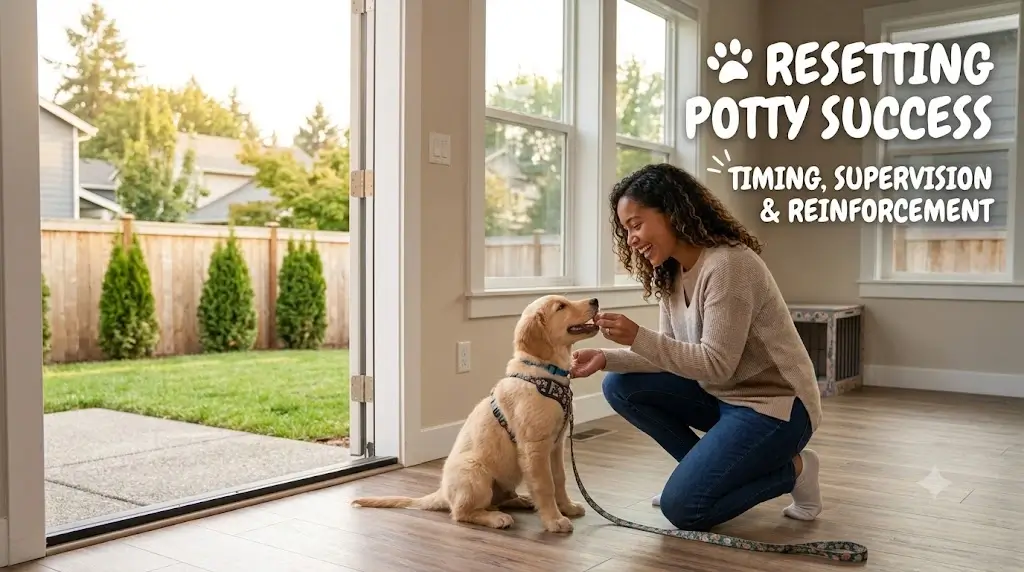
How to House Train a Puppy: The Complete Step-by-Step Guide
A comprehensive guide on how to house train a puppy, build a predictable potty routine, manage environmental transitions, prevent indoor accidents, and house train a puppy with long-term reliability.
If you want to understand how to house train a puppy effectively, the process relies on structured environmental management, timing, close supervision, immediate positive reinforcement, and gradual freedom. Every dog owner learning how to house train a puppy must understand that puppies learn where to eliminate based on habitual substrate preferences and predictable daily patterns.
To successfully house train a puppy, execute this precise behavioral loop consistently:
Accidents are diagnostic signs that scheduling failed. When learning how to house train a puppy, remember that punishing an accident after the fact only prolongs training.
What to Do Before You Start House Training a Puppy
Knowing how to house train a puppy begins days before the dog enters your home. Early house training is an exercise in environmental design: you are setting up physical barriers and predictable pathways so your dog has virtually no chance to practice mistakes on indoor flooring. When you house train a puppy, preventing initial accidents is half the battle.
Young dogs develop distinct substrate preferences early on. If you want to house train a puppy cleanly, you must prevent them from eliminating on indoor rugs and carpets, which can confuse their bathroom preferences.
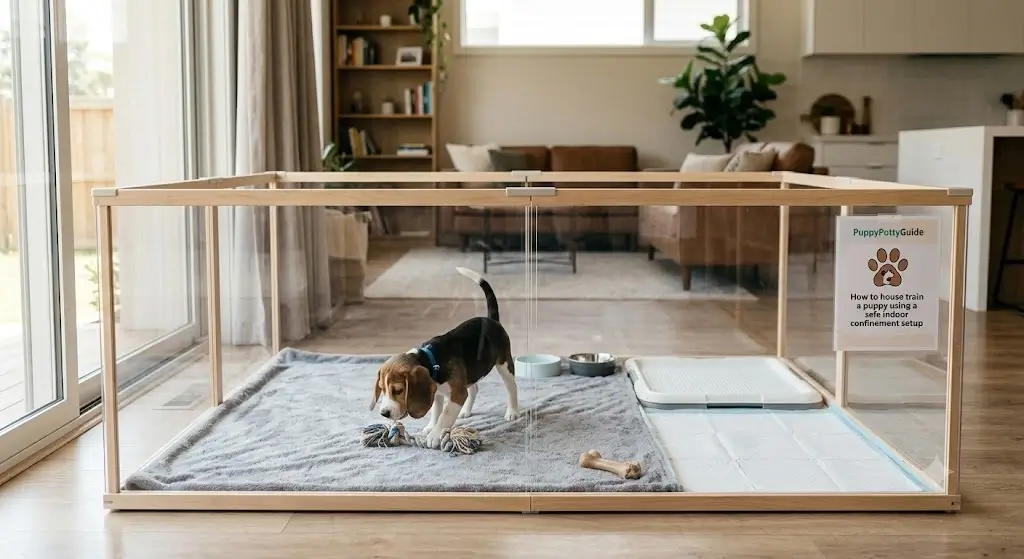
Essential gear to house train a puppy properly:
- Fixed-length 6-foot leash: Keeps your dog focused on bathroom trips without wandering out of reach.
- Harness or collar: Allows rapid, comfortable transitions outside whenever you house train a puppy.
- High-value treats: Tiny food rewards reserved solely for outdoor bathroom success.
- Exercise pen or baby gates: Creates dedicated containment zones that make it easier to house train a puppy.
- Dedicated crate with divider: Preserves your dog’s instinctive desire to keep their resting space clean.
- Enzymatic pet cleaner: Permanently breaks down organic scent markers that derail efforts to house train a puppy.
If you live in an apartment, knowing how to house train a puppy means factoring in elevator delays and hallway walks. Carry young puppies until you step onto outdoor grass to avoid hallway accidents.
Choose the Bathroom Location
Selecting a dedicated bathroom location is essential when you house train a puppy. Bringing your dog to the exact same patch of grass creates powerful scent cues that prompt swift elimination and speed up the entire process.
Key criteria to house train a puppy in the right spot:
- Immediate accessibility: Quick to reach during urgent trips.
- Consistent footing: Grass or gravel provides clear tactile cues when you house train a puppy.
- Low distraction: Away from busy roads and heavy foot traffic.
- Sheltered perimeter: Protection from heavy rain keeps your puppy willing to go outside.
Practical Rule: When you start to house train a puppy, keep them inside a designated 10×10-foot area until they finish.
Understanding Puppy Bladder Capacity and Daily Schedules
To successfully master how to house train a puppy, you must work within canine biological limits. A young puppy lacks full sphincter control until roughly 5 to 6 months of age. Anyone learning how to house train a puppy must adjust expectations to their dog’s age.
The Age-to-Hour Rule to House Train a Puppy
A reliable standard when you house train a puppy is one hour per month of age for resting confinement capacity.
| Puppy Age | Resting Crate Hold | Active Daytime Potty Trips | Nighttime Schedule |
|---|---|---|---|
| 8–10 Weeks | 1–2 hours | Every 30–45 minutes | 1–2 scheduled bathroom breaks |
| 10–12 Weeks | 2–3 hours | Every 45–60 minutes | 1 scheduled bathroom break |
| 3–4 Months | 3–4 hours | Every 1–2 hours | Often sleeps 6–7 hours straight |
| 4–6 Months | 4–5 hours | Every 2–3 hours | Full night (7–8 hours) |
| 6+ Months | 5–6 hours | 3–4 times per day | Full night reliably |
Resting hold time differs greatly from active hold time. When awake and moving, a young puppy produces urine faster and needs breaks every 20 to 45 minutes.
High-Value Trigger Events
Take your dog outside immediately during these key moments as you house train a puppy:
- The exact moment they wake up from sleep.
- 5 to 20 minutes after finishing a meal.
- Within 10 minutes of drinking water.
- During and right after active play.
- Following excitement or visitors arriving.
- Immediately upon release from a crate.
Daily Routine to House Train a Puppy
| Time | Activity | House Training Action |
|---|---|---|
| 6:30 AM | First morning bathroom break | Carry puppy directly outside to their spot. No indoor play beforehand. |
| 7:00 AM | Breakfast and fresh water | Feed on a strict schedule to keep bowel movements predictable. |
| 7:20 AM | Post-breakfast bathroom trip | Reward immediately after elimination outside. |
| 8:30 AM | Pre-nap potty trip & crate rest | Potty trip, then settle in crate with safe chew toy. |
| 11:30 AM | Midday break & outdoor visit | Immediate trip outside upon waking from rest. |
| 1:00 PM | Afternoon rest / pen time | Quiet rest period to build bladder capacity. |
| 5:30 PM | Dinner mealtime | Consistent feeding supports a predictable evening routine. |
| 6:00 PM | Post-dinner bathroom trip | Take to designated outdoor spot on leash. |
| 8:30 PM | Water cutoff window | Pick up main water bowl to reduce overnight bladder pressure. |
| 10:00 PM | Final bedtime bathroom trip | Calm, business-only outdoor trip right before sleep. |
Need a daily roadmap? Follow our step-by-step 7-Day Puppy House Training Plan to build clean habits quickly.
How to House Train a Puppy: Step by Step
Always snap a 6-foot leash on your puppy before heading outside. Walking directly to the spot teaches your puppy that outdoor trips begin with business, not free play.
Plant your feet, keep the leash relaxed, and remain quiet. Give your puppy 3 to 5 minutes to sniff and trigger elimination without play or excessive chatter.
As your puppy begins eliminating, quietly state a cue like “Go potty.” Repeating this cue every time you house train a puppy builds a reliable command for adult life.
The second your puppy finishes, mark the behavior and deliver a high-value treat on grass. Rewarding on the spot ensures your puppy associates the reward with outdoor elimination.
If your puppy does not eliminate after 5 to 7 minutes, bring them back inside to their crate or tether them for 10 to 15 minutes of close supervision, then try again outside.
How to Teach Outdoor Bathroom Training
A major hurdle when learning how to house train a puppy is accidentally making bathroom breaks feel like the end of fun. If you immediately drag your puppy indoors the moment they finish, they may learn to delay going just to stay outside longer.
Structure each trip so bathroom success unlocks positive rewards:
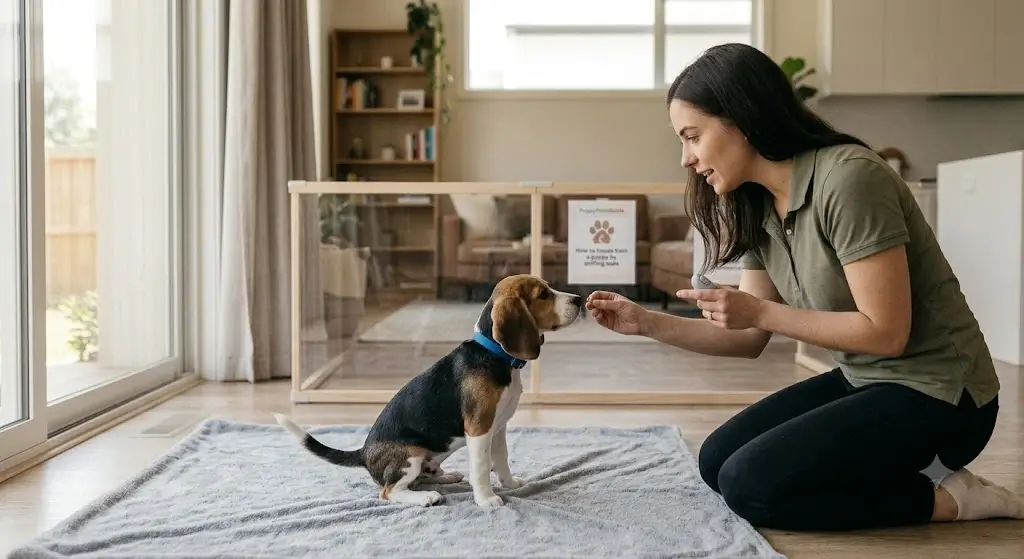
Potty first at the designated spot → treat reward → 5–10 minutes of fun walking or play → return inside.
Handling Bad Weather
Cold rain, snow, and wind often make it harder to house train a puppy. To keep progress moving:
- Acclimate your puppy to a lightweight rain jacket early.
- Clear a clean, dry patch of grass during heavy snow or mud.
- Stay calm and positive; puppies mirror human reluctance in poor weather.
- Use extra high-value treats exclusively during stormy or freezing weather.
How to Use Rewards and Reinforcement Correctly
Positive reinforcement is the fastest way to house train a puppy. However, delivery timing determines how well your dog connects the reward to the desired behavior.
The Three Golden Rules of Reinforcement
- Instant delivery: Reward right on the grass. Rewarding inside the house reinforces walking into the kitchen, not going potty outside.
- High-value treats: Use fragrant, soft treats like real chicken or freeze-dried meat that hold your puppy’s focus outdoors.
- Jackpot rewards: When your puppy goes during rain or signals at the door, give 3 to 4 treats in a row with enthusiastic praise.
Using a Crate to House Train a Puppy
Using a crate is one of the most effective tools when learning how to house train a puppy. Dogs naturally avoid soiling their sleeping area, which helps them develop healthy bladder control.
Sizing the Crate Accurately
Proper sizing is vital to house train a puppy with a crate:
- Correct dimensions: Your puppy should have just enough room to stand up, turn around, and lie flat on their side.
- Divider panels: Adjust the divider backward as your puppy grows to prevent extra space where they could soil one corner and sleep in another.
- Bedding adjustments: If your puppy soils plush bedding, remove it temporarily; absorbent fabrics make accidents comfortable rather than motivating them to hold it.
For detailed dimensions and setup tips, read our guide on How Crate Training Helps With House Training.
Active Supervision and Tethering Techniques
When you house train a puppy, active supervision prevents unmonitored wandering. Most indoor accidents occur when an owner glances away for just 30 seconds.
The Tethering (Umbilical Cord) Method
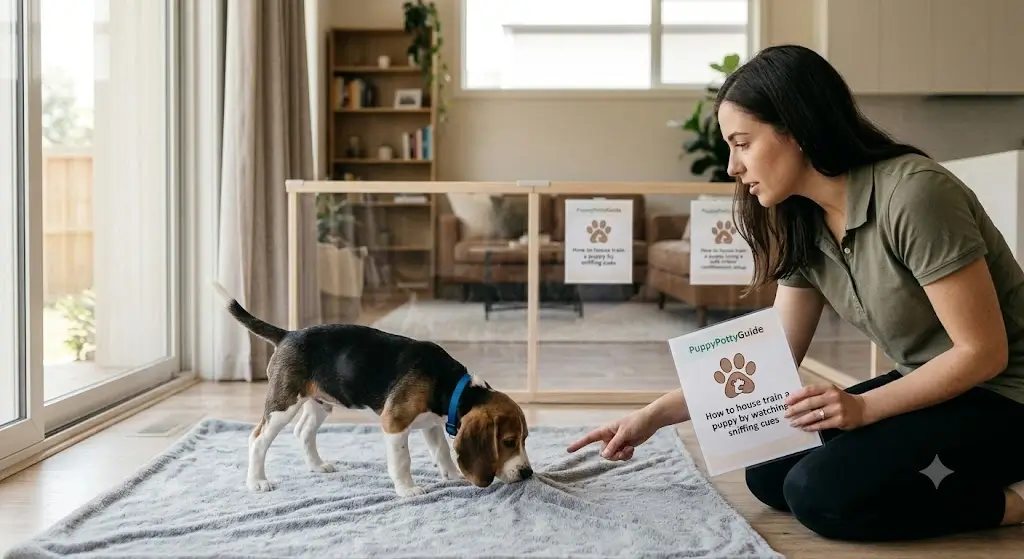
Tether your puppy to your waist with a 6-foot leash whenever they are out of the crate. This keeps your dog in view at all times, making it easy to intercept sniffing before an accident occurs on the floor.
Subtle Elimination Signs
- Abruptly stopping play to sniff the floor in tight circles.
- Drifting quietly toward peripheral rooms, entryways, or furniture.
- Sudden pacing, agitation, or low whining.
- Squatting posture or sudden tail elevation.
What to Do When Your Puppy Has an Accident
Accidents are normal when you house train a puppy. Responding calmly protects your bond and keeps training on track.
If Caught in the Act
- Interrupt calmly with a gentle sound (“Oops, outside!”).
- Carry or guide your puppy straight to their outdoor potty spot.
- Praise and reward if they finish remaining urine or stool outside.
Why Punishment Fails
Rubbing a puppy’s nose in waste or yelling does not teach bathroom habits. It only teaches your dog that eliminating in front of humans is unsafe, leading them to hide behind furniture to soil the house secretly.
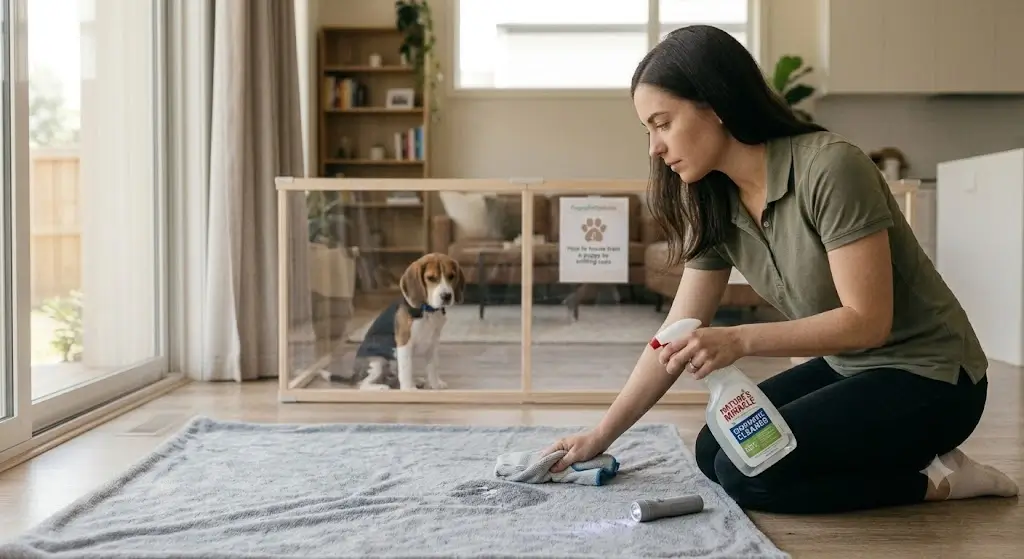
Use Enzymatic Cleaners
Standard household detergents leave uric acid crystals behind. Dedicated enzymatic cleaners break down these crystals completely so scent markers do not attract your puppy back to the same indoor spot.
How to House Train a Puppy at Night
Knowing how to house train a puppy overnight requires keeping nighttime trips quiet and strictly focused on business.
Overnight house training strategy:
- Manage evening water: Pick up the water bowl 1.5 to 2 hours before bedtime.
- Place the crate in your bedroom: Keeping your puppy close helps them settle and lets you hear early stirring.
- Set a proactive alarm: Waking an 8-week-old puppy at 2:30 AM proactively prevents distressed whining and barking in the crate.
- Keep it low-key: Keep lights dim, avoid playful talk, carry your puppy straight outside, reward calmly, and return straight to bed.
How to House Train a Puppy in an Apartment
Learning how to house train a puppy in an apartment requires planning for hallway and elevator delays.
Apartment guidelines:
- Keep gear ready: Store leash, shoes, and treats by the door for instant departures.
- Carry through common areas: Carrying young puppies activates a natural reflex to hold their bladder until reaching outdoor grass.
- Balcony grass trays: Real-grass boxes on balconies provide a safe outdoor-style substrate on high floors.
If you used pee pads initially, read our guide on How to Transition From Pee Pads to Outside.
How to House Train a Puppy While Working Full Time
You can house train a puppy while working full time by setting up a safe long-term confinement area. Leaving young puppies crated for 8 to 9 hours forces them to soil their bedding and disrupts house training.
Safe Confinement Setup
Use an exercise pen on waterproof flooring with an open crate and bed at one end, fresh water in the middle, and a designated relief surface at the far end.
Midday Support
- Hire a dog walker or pet sitter for a midday potty break.
- Ask family or neighbors to share daytime visits.
- Adjust work hours during the initial weeks of training.
Why Puppy House Training Can Regress
House training setbacks happen. A dog that has done well for weeks may suddenly make mistakes due to routine changes or developmental shifts.
Common causes of regression:
- Premature freedom: Giving full run of the house before habits are solidified.
- Adolescent changes: Hormonal shifts between 6 and 10 months can temporarily disrupt routines.
- Schedule changes: Travel, moving, or guest visits create stress.
- Teething discomfort: Teething between 4 and 6 months causes distraction.
If setbacks occur, tighten supervision and read our comprehensive guide on Puppy House Training Regression.
When Bathroom Problems Require Veterinary Attention
Medical issues can make it impossible for a puppy to hold their bladder, regardless of training consistency.
If your puppy shows straining, blood in urine, frequent small dribbles, or sudden lethargy, consult your veterinarian immediately.
Common medical issues:
- Urinary Tract Infections (UTIs): Causes frequent, urgent urination in small amounts.
- Intestinal parasites: Causes sudden diarrhea and loss of bowel control.
- Food sensitivities: Sudden diet changes trigger urgent bowel movements.
How Long Does It Take to House Train a Puppy?
It typically takes 4 to 6 months to reliably house train a puppy, with full trustworthiness across all indoor environments developing by 8 to 12 months of age. A puppy is reliably trained once they have gone 60 consecutive days without an indoor accident.
For a detailed breakdown by developmental stage, read How Long Does It Take to House Train a Puppy?
Common Mistakes When You House Train a Puppy
- Granting unearned freedom: Allowing unmonitored roaming too early.
- Expecting the puppy to signal: Relying on door signals before establishing a routine.
- Delayed treat delivery: Giving treats inside the house instead of on the grass.
- Using punishment: Scolding creates fear and encourages hidden indoor elimination.
- Inconsistent meal times: Irregular feeding creates unpredictable bathroom times.
- Using standard cleaners: Household cleaners leave scent markers that attract dogs back to soiled areas.
Frequently Asked Questions
What is the fastest way to house train a puppy?
The fastest way to house train a puppy combines crate training, close leash supervision indoors, a strict feeding schedule, and immediate high-value treats for outdoor elimination.
How often should I take my puppy outside to potty?
Take young puppies outside every 30 to 45 minutes during daytime activity, plus immediately after waking, eating, drinking, or active play.
Can you house train a puppy in 7 days?
A structured 7-day protocol establishes strong foundational routines and prevents initial accidents, but full physical bladder maturity takes several months of consistent management.
Why does my puppy pee inside right after being outside?
Puppies often get distracted outdoors and forget to go until they return to quiet indoor flooring. Keep outdoor trips calm, stationary, and focused on elimination first before play.
Should I use pee pads or house train a puppy outside directly?
Whenever practical, house train a puppy directly outdoors. Pee pads teach dogs that soft indoor surfaces are acceptable toilets, which can lengthen the transition to outdoor grass.
