
AKC & VCA DIURNAL UROLOGY PROTOCOLS 2026
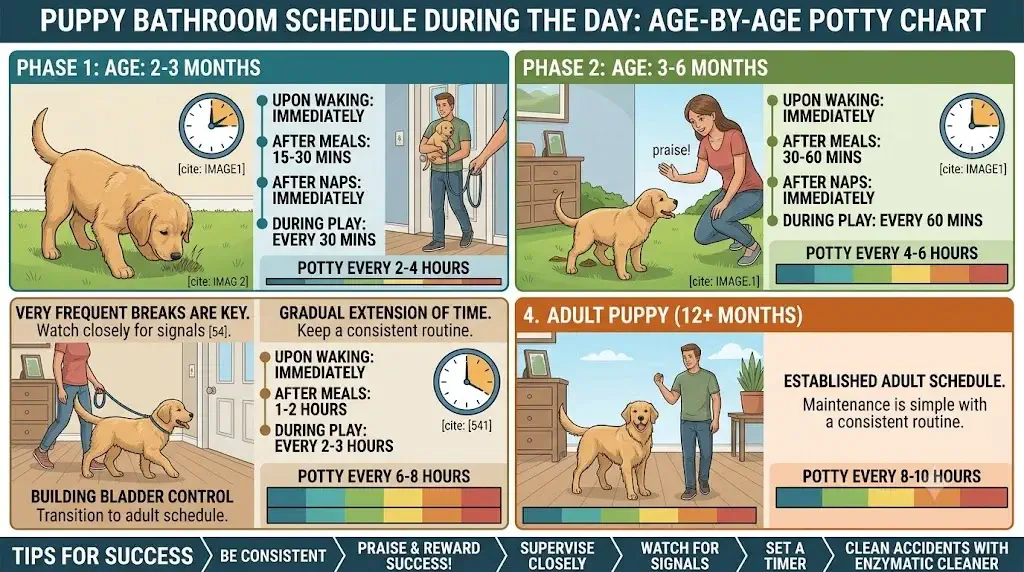
Puppy Bathroom Schedule During the Day: Age-by-Age Daily Potty Chart
A calibrated puppy bathroom schedule during the day coordinates waking metabolic fluid filtration rates with biological behavioral triggers to maintain domestic cleanliness. Active daylight hours significantly accelerate glomerular filtration, gastrocolic motility, and physical bladder compression compared to sedentary nocturnal sleep. Executing a successful puppy bathroom schedule during the day requires anchoring outdoor relief breaks to chronological age limits, post-nap transitions, mealtime digestion windows, and structured play sessions to prevent indoor carpet accidents.
Quick answer: how often should a puppy go out during the day?
A puppy requires an outdoor bathroom opportunity every 60 to 90 minutes while awake and active, plus immediate trips upon waking from naps, 15 to 20 minutes post-feeding, after deep water drinking, and following active play sessions.
Rather than relying on a rigid timer, combine age-based holding thresholds with biological transition anchors. Escort your puppy outside on a fixed lead, verify completed elimination on grass, deliver immediate ground-level praise within three seconds, and maintain close indoor supervision between trips.
Quick Reference Specification: Daytime Canine Elimination Matrix
This calibrated physiological matrix benchmarks daytime age brackets, diurnal digestive and renal mechanisms, tactical outdoor interventions, maximum awake holding dwells, and veterinary safety standards in 2026.
| Daytime Developmental Phase | Diurnal Renal / Gastrocolic Mechanism | Tactical Outdoor Intervention | Peak Awake Dwell | Safety Benchmark |
|---|---|---|---|---|
| 8–10 Weeks Old | Rapid metabolic fluid transit; unconditioned sphincters | Outdoor escort every 45–60 mins awake + all activity shifts | 1 hour maximum awake dwell | VCA Pediatric Hospital Protocol |
| 10–12 Weeks Old | Developing detrusor elasticity; predictable bowel motility | Scheduled breaks every 60–90 mins on fixed 6-foot leash | 1.5 hours maximum awake dwell | AKC Pediatric Elimination Standard |
| 3–4 Months Old | Strengthening striated urethral muscular retention | Breaks every 2–3 hours; pause play sessions at 30 mins | 2–3 hours awake dwell | AAHA Canine Life Stage Guideline |
| 4–6 Months Old | Maturing neuromuscular voluntary cortical inhibition | Breaks every 3–4 hours + post-meal digestive checks | 4 hours awake dwell | AVMA Juvenile Urology Matrix |
| 6+ Months (Adult) | Mature endocrine concentration & full bladder volume | 4–6 hour maintenance outings; respond to door signaling | 6–8 hours resting capacity | PuppyPottyGuide Master Protocol |
The Basic Daytime Puppy Bathroom Schedule
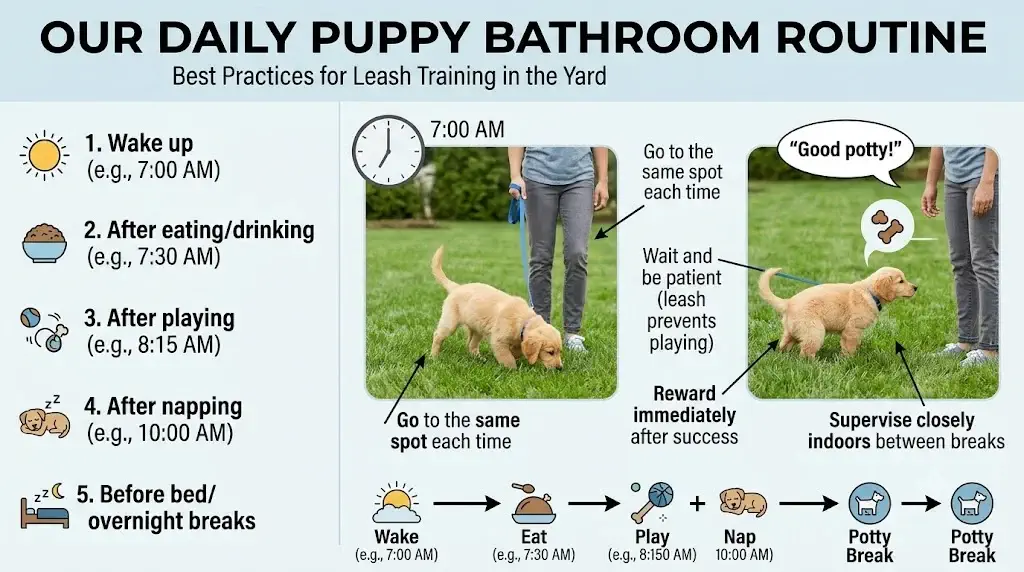
A functional daytime housebreaking system integrates scheduled temporal opportunities with immediate biological trigger responses. Relying entirely on an alarm clock causes handlers to miss urgent post-play or post-water eliminations, while relying solely on behavioral signaling invites accidents from young puppies who have not yet learned doorway communication.
Structuring your daily routine requires balancing two operational management layers:
1. Scheduled Temporal Breaks
Establish predictable baseline trips every 60 to 90 minutes throughout the day, guaranteeing that fluid volume never exceeds anatomical bladder capacity.
2. Event-Based Trigger Trips
Provide immediate outdoor access following specific biological transitions: waking from sleep, post-meal digestion, deep water intake, and active floor play.
The combination is far more reliable than either strategy in isolation. A puppy frequently needs to eliminate well before their next hourly timer sounds simply because a nap ended or high-energy wrestling compressed the bladder.
The daytime operational rule:
Schedule predictable baseline opportunities, then let biological activity triggers accelerate the timeline.
For complete 24-hour master routines, review our comprehensive Puppy House Training Schedule.
Puppy Bathroom Schedule During the Day by Age
Chronological age dictates anatomical bladder volume, internal urethral sphincter tone, and neurological retention capability. While age provides a foundational developmental baseline, dynamic factors like body size, fluid volume, and motor activity determine real-time holding performance:
| Puppy Age | Daytime Holding Approach | Management Priority | Indoor Freedom Level |
|---|---|---|---|
| 8–10 weeks | Outdoor breaks every 45 to 60 minutes while awake plus all triggers. | Strict accident prevention and constant visual supervision. | Restricted: umbilical leash or small exercise pen only. |
| 10–12 weeks | Breaks every 60 to 90 minutes while awake; monitor individual patterns. | Reinforce outdoor substrate preferences on grass. | Limited: expand into single puppy-proofed room after voiding. |
| 3–4 months | Structured breaks every 2 to 3 hours combined with trigger trips. | Recognize early sniffing cues and build reliable routines. | Moderate: supervised multi-room access following outdoor success. |
| 4–6 months | Space routine trips every 3 to 4 hours based on demonstrated control. | Maintain consistency across varied household environments. | Expanded: full room freedom during awake supervised periods. |
| 6+ months | Predictable 4-to-6-hour maintenance trips; respond to signals. | Habit maintenance and monitoring sudden health changes. | Full domestic freedom when reliably clean and trustworthy. |
Do not turn age capacity into an endurance test.
A theoretical holding calculation reflects maximum sedentary bladder capacity during quiet sleep, not an active daytime target. A puppy displaying pre-potty restlessness must be taken outside immediately, even if the schedule indicates time remains.
For age-based frequency comparisons, examine our master guide on How Often Should You Take a Puppy Outside?
Example Daytime Puppy Bathroom Schedules
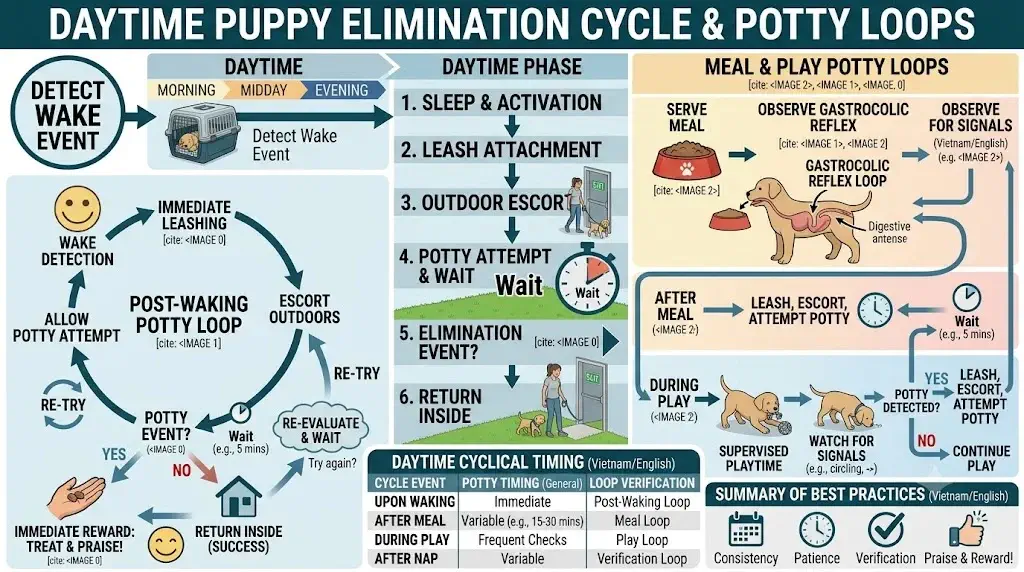
A structured chronological schedule synchronizes canine metabolic turnover with daily domestic household activities. The following daytime routines provide practical frameworks for young puppies and growing juveniles:
Example schedule for an 8- to 10-week-old puppy
7:00 AM — Morning Wake-Up Potty First
Carry the puppy directly from the crate to outdoor grass within 60 seconds to empty overnight urine.
7:30 AM — Breakfast
Serve measured morning meal; allow 15 minutes to eat, then lift the bowl. Supervise quietly on leash.
7:50 AM — Post-Breakfast Potty Digestive Trip
Escort outside 20 minutes post-bowl; confirm bowel evacuation stimulated by the gastrocolic reflex.
8:30–9:45 AM — Morning Crate Nap
Place the puppy in their sleeping crate for undisturbed restorative morning sleep.
9:45 AM — Wake From Nap Potty Trip
Go directly outside to turf immediately upon waking before starting morning floor play.
11:00 AM — Mid-Morning Potty Break
Provide scheduled outdoor break following gentle indoor handling and training practice.
12:00 PM — Lunch
Serve midday puppy meal for pups on three feedings daily; provide fresh hydration.
12:20 PM — Post-Lunch Potty Digestive Trip
Take the puppy outside; confirm urination and stool before transitioning to afternoon rest.
1:00–2:30 PM — Afternoon Crate Nap
Allow deep restorative sleep in a quiet, properly sized sleeping crate.
2:30 PM — Wake From Afternoon Nap Potty Trip
Escort directly to grass; expect immediate urine elimination stimulated by waking.
4:00 PM — Late Afternoon Potty
Scheduled break following afternoon play and chew toy enrichment.
5:30 PM — Dinner & Evening Transition
Serve evening meal, transitioning smoothly into the evening routine and bedtime schedule.
Sample daytime schedule for a 3- to 4-month-old puppy
As puppies mature into their third and fourth months, expanding detrusor elasticity allows wider daytime intervals while maintaining predictable routines:
| Approximate Time | Daily Household Activity | Mandatory Potty Action |
|---|---|---|
| 7:00 AM | Morning wake-up | Potty immediately on grass within 60 seconds. |
| 7:30 AM | Breakfast feeding | Potty break 20 minutes post-bowl (gastrocolic trigger). |
| 9:30 AM | Morning crate nap ends | Potty break immediately upon crate exit. |
| 11:30 AM | Active indoor training/play | Potty break directly following exercise session. |
| 12:30 PM | Lunch feeding | Potty opportunity 20 minutes afterward. |
| 2:30 PM | Afternoon deep nap ends | Potty break immediately before granting indoor freedom. |
| 5:00 PM | Mid-afternoon interval ends | Scheduled outdoor relief trip before evening meal. |
The Daytime Potty Triggers That Matter
Visceral neuro-hormonal reflexes override standard hourly clock intervals in active canine puppies. A puppy resting calmly inside a crate experiences slow, steady urine accumulation; however, physical movement, eating, drinking, or emotional arousal instantly alters bladder pressure:
Waking From Naps
Motor arousal immediately releases parasympathetic bladder inhibition. Escort the puppy to grass within 60 seconds of waking.
Post-Prandial Digestion
Ingested food distends the stomach and triggers colonic peristalsis via the gastrocolic reflex 15 to 25 minutes post-bowl.
Rapid Water Absorption
Large drinks filter through the kidneys into the bladder within 20 minutes, demanding a proactive outdoor checkpoint.
Active Floor Play
Physical running, jumping, and wrestling compresses abdominal organs; pause play sessions every 20 to 30 minutes for a trip.
How to Decide the Interval Between Trips
Documented accident timestamps determine the correct operational interval for an individual puppy. If an accident occurs indoors at the 75-minute mark, expecting the puppy to reach a theoretical 90-minute goal is an environmental management error.
When establishing your daytime schedule, calculate intervals using observed performance rather than generic formulas:
- Establish a baseline: Start with a conservative 60-minute daytime interval for puppies aged 8 to 12 weeks.
- Track success: If the puppy stays clean for seven consecutive days, widen the interval by 15 minutes.
- Respond to accidents: If an accident occurs, immediately shorten the schedule by 15 minutes for one full week.
- Differentiate sleep vs. active awake states: Allow longer intervals during sedentary crate naps; use tighter intervals during active floor play.
Morning-to-Evening Daytime Routine
A standardized morning-to-evening rhythm creates reliable behavioral conditioned reflexes that make house training automatic. Transitioning between structured crating, supervised play, meals, and relief outings establishes predictable circadian expectations:
- Morning Double-Void: Empty overnight urine immediately upon waking at 6:30 AM, feed breakfast, and provide a second trip at 7:15 AM.
- Structured Morning Nap: Confine to crate for 90 minutes of quiet rest while handlers manage household tasks.
- Midday Meal & Relief: Escort outside immediately upon waking, feed lunch, and conduct a verified post-meal relief trip 20 minutes later.
- Afternoon Rest Period: Return to crate or exercise pen for an extended two-hour afternoon nap.
- Late Afternoon Outdoor Trip: Direct leash escort to grass immediately upon waking from afternoon rest.
- Evening Transition: Dinner kibble, post-dinner elimination, supervised family interaction, and final bedtime potty trip.
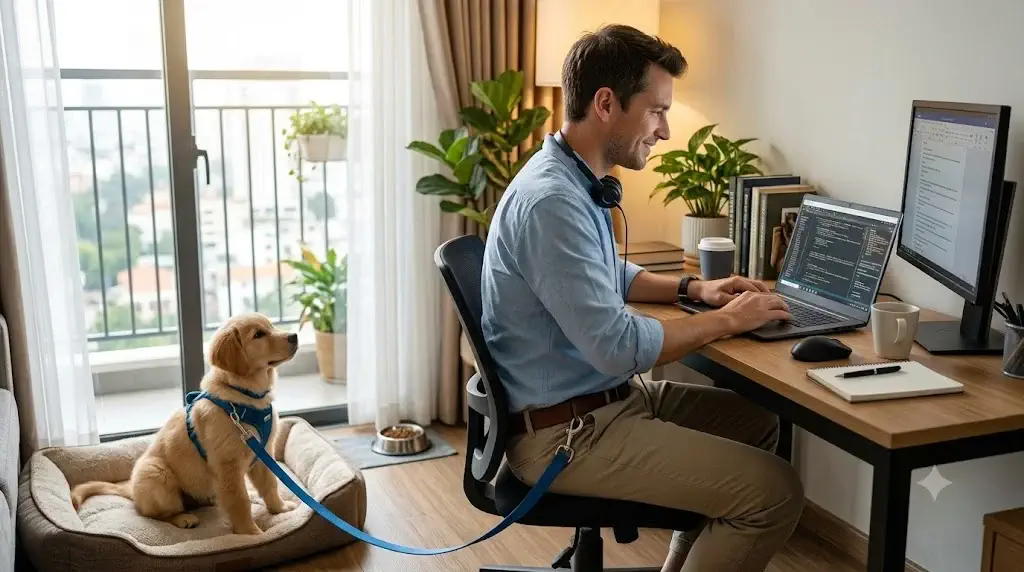
Daytime Schedule for Working Owners
Professional workplace commitments require integrating external human assistance to respect pediatric canine holding limits. An eight-to-ten-hour workday inevitably exceeds juvenile bladder capacity, forcing puppies under six months old to soil sleeping quarters if left unassisted.
Working households must implement one of three proven operational management models:
Professional Midday Walker
Hire a vetted dog walker or pet sitter to conduct a 30-minute visit between 11:30 AM and 1:00 PM for outdoor elimination, water, and lunch feeding.
Long-Term Exercise Pen Setup
When midday human visits are impossible, confine the puppy to an exercise pen featuring an open crate and a real-grass turf box to protect clean den habits.
Apartment and Small-Home Schedules
Vertical residential transit introduces travel delays that must be subtracted from daytime schedule intervals. Navigating multi-floor elevators, carpeted hallways, and security gates consumes valuable holding minutes during peak urgency.
In high-rise apartment settings, stage slip-on footwear, leash, and treats directly beside your entry door. Physically carry young puppies through interior corridors and down elevators to suppress the physical squatting reflex until reaching outdoor street turf.
Water, Meals, and Daytime Potty Timing
Unrestricted daytime hydration supports healthy renal filtration and should never be restricted as a housebreaking shortcut. Withholding water during the day creates medical dehydration risks without teaching active voluntary sphincter control.
Maintain free daytime bowl access, but observe when your puppy drinks deeply. Schedule an outdoor potty checkpoint approximately 20 minutes following substantial hydration to capture filtered urine before pressure peaks.
Fixing Daytime Accidents
Recurring indoor accidents during daytime hours indicate an environmental management breakdown rather than canine defiance. Scolding or punishing an infant puppy causes anxiety, teaching them to hide future accidents behind furniture.
Decontaminate accident areas immediately using a certified bio-enzymatic cleaner to eliminate residual uric acid crystals. Tighten your daytime timer by 20 minutes, restrict unsupervised indoor room freedom, and enforce umbilical leash tethering.
For proven behavioral protocols to break recurring accident cycles, review How to Prevent Repeat Puppy Accidents.
How to Personalize the Schedule
A written behavioral elimination log provides objective data to refine generic timelines into an individualized home routine. Record timestamps for seven consecutive days, noting sleep times, feedings, water intake, outdoor successes, and accident locations to reveal your puppy’s exact biological patterns.
Frequently Asked Questions
How often should a puppy go outside during the day?
Young puppies generally need an outdoor potty break every 60 to 90 minutes while awake, plus immediate trips after waking, meals, drinking, active play, and before bedtime.
What is a good daytime potty schedule for a puppy?
A reliable daytime schedule combines predictable hourly opportunities (every 1 to 2 hours) with immediate trigger-based trips following sleep, feeding, drinking, and exercise.
How long can a puppy hold pee during the day?
While awake and moving, an 8-to-10-week-old can hold for about 1 hour; a 10-to-12-week-old can hold 1.5 to 2 hours; and a 3-to-4-month-old can hold 2 to 3 hours during quiet periods.
Should a puppy go outside after every meal during the day?
Yes. Ingesting food triggers the gastrocolic reflex within 15 to 25 minutes, stimulating colonic peristalsis and bladder pressure that demands an outdoor break.
How many potty breaks does a puppy need while I am at work?
Puppies under 16 weeks need at least one, and ideally two, daytime breaks during an 8-hour workday. Arrange a professional dog walker or utilize an exercise pen setup.
Should a puppy have water available during the day?
Yes. Daytime water must never be withheld to prevent accidents. Provide open bowl access and schedule a relief trip 20 minutes following deep drinking.
What should I do if my puppy keeps having daytime accidents?
Shorten schedule intervals by 15 minutes, eliminate unmonitored indoor freedom, tether the puppy to your waist on an umbilical leash, and clean accident spots with bio-enzymatic cleaner.
When can a puppy have fewer daytime potty breaks?
Gradually widen intervals in 15-minute increments once your puppy demonstrates 100% clean reliability under their current schedule for seven consecutive days.
The Bottom Line on Daytime Potty Schedules
A successful puppy bathroom schedule during the day balances developmental holding limits with proactive biological event management.
Anchor regular breaks every 60 to 90 minutes while awake, and provide immediate outdoor trips after waking, meals, water intake, and energetic play. Supervise closely using an umbilical leash, verify elimination on turf, reward immediately at ground level, and adjust intervals based on observed performance. By working in harmony with juvenile canine physiology, daytime house training becomes reliable, predictable, and stress-free.
Editorial references
- American Kennel Club — How to Potty Train a Puppy
- American Kennel Club — Setting Schedules and Developing a Routine for Your New Puppy
- American Kennel Club — Puppy Potty Training Timeline
- VCA Animal Hospitals — House Training Your Puppy
This article provides general educational information and does not replace individualized veterinary advice.
