
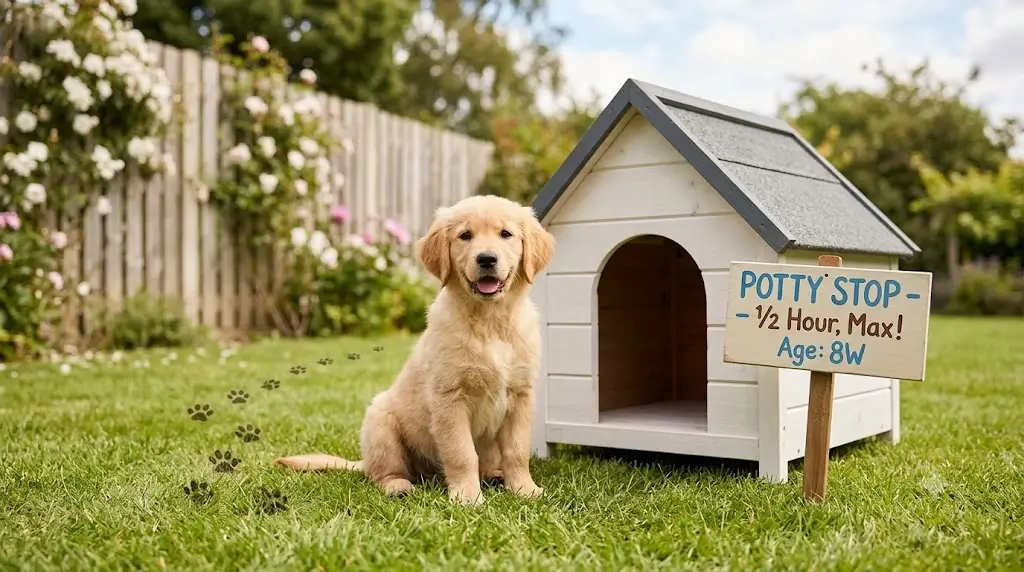
Puppies need more frequent bathroom opportunities than adult dogs, especially during the first weeks of house training. Learn how often to take a puppy outside, what changes the timing, when to go after meals and naps, how nighttime needs differ, and when frequent urination may deserve veterinary attention.
Quick Answer: How Often Should a Puppy Go Outside?
If you are wondering how often a puppy should go outside, a young puppy should generally be given frequent opportunities throughout the day, with extra trips after waking, eating, drinking, playing, and naps.
There is no single interval that works for every dog. When deciding how often a puppy should go outside, factors like age, individual development, size, sleep, activity, food and water intake, previous training, and travel distance to the potty area all play a role.
For successful house training, knowing how often to take a puppy outside means providing an opportunity before the puppy is desperate rather than testing bladder endurance.
How Often Should a Puppy Go Outside?
During house training, understanding exactly how often a puppy should go outside helps prevent repeated indoor accidents. The younger the puppy, the more important frequent opportunities become.
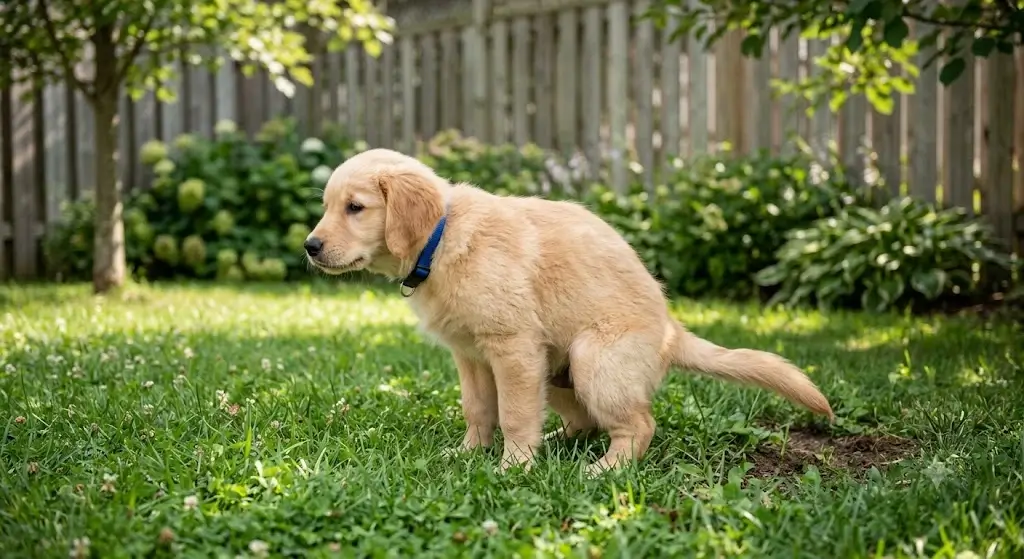
Instead of relying on a single formula to decide how often a puppy should go outside, use three layers:
- Age and development provide a starting point.
- Daily events create additional bathroom opportunities.
- The puppy’s actual pattern determines adjustments.
This is why deciding how often a puppy should go outside is not simply about watching a countdown timer—it is a flexible routine that adapts as your puppy grows.
How Often Should Puppies Go Outside by Age?
Age provides a useful framework when determining how often a puppy should go outside, but it is not a guaranteed bladder-capacity chart. Two puppies of the same age can have different bathroom patterns.
| Puppy age | House-training stage | Practical approach | High-priority trips |
|---|---|---|---|
| 8–10 weeks | Very early training | Very frequent opportunities and close supervision | Wake, meals, naps, play, bedtime |
| 10–12 weeks | Routine developing | Frequent trips with careful observation | Same event-based triggers |
| 3–4 months | Increasing reliability | Gradually extend successful intervals | Wake, food, activity, sleep |
| 4–6 months | Developing control | More flexible routine when reliable | Events plus individual signals |
| 6+ months | More mature routine | Transition toward normal household schedule | Routine plus behavioral cues |
These categories are planning ranges to help determine how often to take a puppy outside, not strict guarantees of holding time.
How Often Should an 8-Week-Old Puppy Go Outside?
An 8-week-old puppy is at an early stage of house training. When considering how often an 8-week-old puppy should go outside, bathroom trips should be very frequent, and supervision should be close.
Prioritize trips immediately after waking, after meals, after naps, after active play, and before bedtime.
If an 8-week-old puppy repeatedly has accidents between planned trips, shorten the interval rather than expecting the puppy to simply wait longer.
How Often Should a 3-Month-Old Puppy Go Outside?
Around three months, many puppies are beginning to develop a more predictable routine, but frequent bathroom opportunities are still important.
You can start using successful patterns to refine how often to take a puppy outside. For example, if your puppy consistently eliminates shortly after breakfast, make that trip a permanent part of the routine.
Do not extend intervals simply because the puppy has reached three months. Extend them because the puppy is demonstrating reliable success.
How Often Should a 4-Month-Old Puppy Go Outside?
A four-month-old puppy may be able to follow a somewhat more predictable routine than a very young puppy, but individual differences remain large.
If the puppy has been consistently successful, gradually increase the time between routine trips while keeping event-based trips in place.
A puppy that starts having accidents after an interval is extended is giving you useful information: the new interval is not yet reliable.
How Often Should a 6-Month-Old Puppy Go Outside?
By six months, many puppies can follow a more flexible household routine, especially when house training has progressed well.
However, age alone does not eliminate the need for regular bathroom opportunities. Long periods of confinement, unusual water intake, excitement, travel, and changes in routine can all affect timing.
A six-month-old puppy that is reliably house trained may need fewer scheduled trips than an eight-week-old puppy, but the routine should still include normal morning, meal-related, activity-related, and bedtime opportunities.
When Should You Take a Puppy Outside?
The most reliable approach combines elapsed time with predictable events.
| Trigger | Why it matters | Action |
|---|---|---|
| Immediately after waking | The puppy has been resting and may need to eliminate. | Go directly to the bathroom location. |
| After a meal | Eating can be associated with predictable elimination. | Provide a bathroom opportunity. |
| After drinking | Fluid intake can affect later urination. | Monitor timing and provide an opportunity. |
| After a nap | Sleep changes the puppy’s activity state. | Go out when the puppy wakes. |
| After active play | Activity can change elimination timing. | Provide an opportunity after play. |
| Before bedtime | Creates a predictable nighttime routine. | Complete a final bathroom trip. |
How Often Should a Puppy Go Outside After Eating or Drinking?
Meals are useful scheduling anchors because they happen at predictable times in many households.
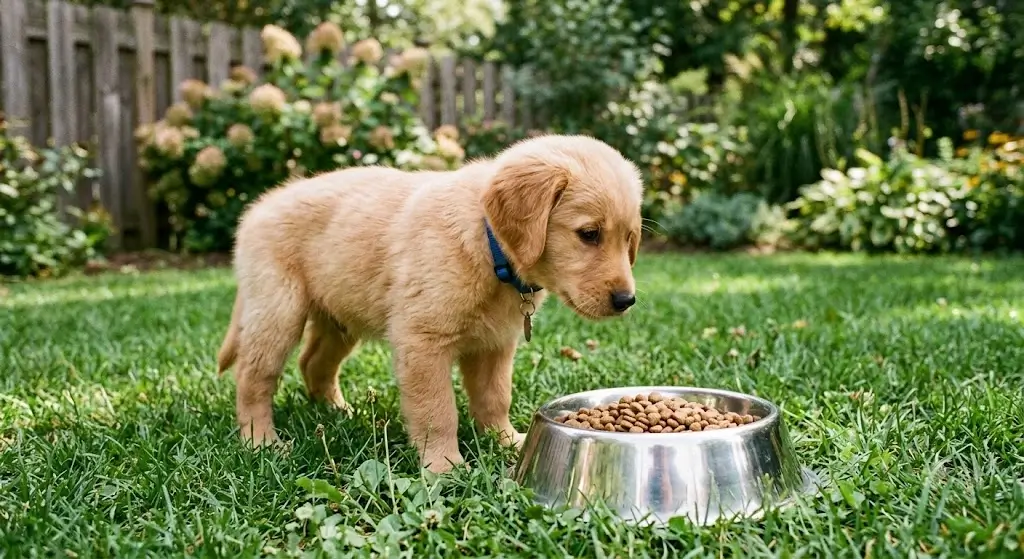
A puppy’s post-meal bathroom timing can vary, so avoid treating a specific minute mark as universal. Instead, observe the puppy’s pattern and use it to refine the routine.
Use meals as routine anchors
A simple structure is:
- Meal.
- Calm activity.
- Bathroom opportunity.
- Supervised play.
- Additional trip if the puppy’s behavior suggests a need.
Water should be available appropriately for the puppy rather than deliberately restricted as a house-training shortcut.
Should a Puppy Go Outside After Every Nap?
For young puppies, taking them to the designated bathroom location after waking from a nap is one of the simplest scheduling rules to follow.
This works because the trigger is easy for the owner to recognize: sleeping has ended.
As the puppy matures and becomes more reliable, the routine can gradually become less restrictive.
Should a Puppy Go Outside After Playing?
Active play should be treated as a schedule-changing event rather than ignored because the previous bathroom trip was recent.
After a period of energetic play, give the puppy another opportunity to eliminate before allowing unrestricted access to the home.
This is especially useful during early house training when the puppy has limited ability to communicate its needs.
How Often Should a Puppy Go Outside at Night?
Nighttime needs depend heavily on age and individual development. Very young puppies may not be able to sleep through the entire night without a bathroom opportunity.
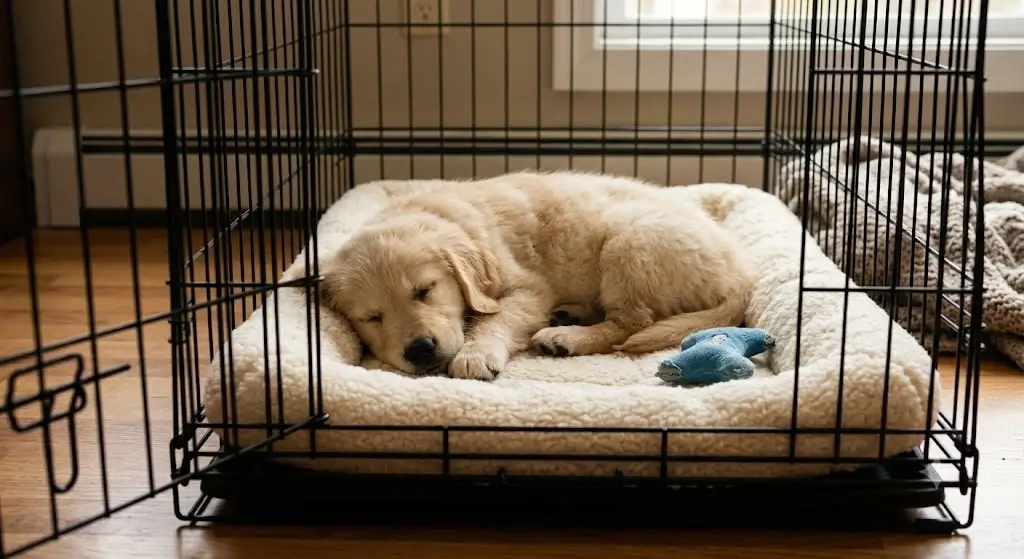
A nighttime trip should be quiet and boring. The objective is bathroom elimination, not playtime or extended social interaction.
Before bedtime
Give the puppy a final bathroom opportunity as part of the normal bedtime routine.
If the puppy wakes
If the puppy wakes and shows signs that it needs to eliminate, take it to the appropriate bathroom location and return to sleep afterward.
As the puppy matures
Nighttime bathroom trips can often be reduced as the puppy demonstrates reliable overnight control. Let successful patterns guide the change.
How Often Should a Puppy Go Outside in an Apartment?
Apartment puppies may need a more conservative schedule because the physical distance between the living area and outdoor bathroom location can be substantial.
An elevator, hallway, lobby, stairs, locked door, or parking area adds time between recognizing the need and reaching the destination.
In an apartment, begin the trip early enough to account for this travel time.
What If Your Puppy Has Accidents Before the Next Trip?
Repeated accidents between scheduled bathroom trips usually mean the current schedule is not matching the puppy’s needs.
Step 1: Look for the trigger
Check whether the accident happened after eating, drinking, sleeping, playing, waking, or a change in supervision.
Step 2: Shorten the interval
Give the puppy another bathroom opportunity sooner.
Step 3: Increase supervision
Keep the puppy close enough that you can notice sniffing, circling, wandering, sudden restlessness, or attempts to leave the area.
Step 4: Expand the interval later
Once the puppy is consistently successful, extend the schedule gradually rather than making a large jump.
Can a Puppy Go Outside Too Often?
During house training, frequent bathroom opportunities are generally useful. The objective is not to minimize the number of trips; it is to create repeated successful experiences in the correct location.
There is little training value in deliberately making a puppy wait simply to reduce the number of outdoor trips.
Once the puppy is reliable, the schedule can become more efficient naturally as the puppy’s needs and routine change.
When Frequent Puppy Urination May Need Veterinary Attention
House-training frequency and medical urination frequency are not the same question. A puppy that needs frequent bathroom trips during early training may simply be developing normal control.
However, a sudden or persistent change in urination should not automatically be treated as a training problem.
Puppies can have medical conditions that affect urination, and a training schedule cannot diagnose the underlying cause.
If the puppy had been reliably house trained and suddenly begins having repeated accidents without an obvious environmental explanation, veterinary evaluation may be appropriate.
Common Mistakes When Deciding How Often a Puppy Should Go Outside
Using one universal interval
Puppies vary. A number that works for one puppy may be too long for another.
Ignoring waking and naps
Event-based trips are often more useful than simply watching the clock.
Waiting for the puppy to signal
A reliable signal develops through learning. Early in training, owners should proactively provide bathroom opportunities.
Extending intervals too quickly
Progress should be based on successful repetitions, not simply age.
Restricting water to prevent accidents
Deliberately limiting water is not a substitute for a good training routine and may create health concerns.
Ignoring a sudden change
A new pattern of frequent urination may require veterinary attention rather than another schedule adjustment.
How to Build the Right Frequency for Your Puppy
Start with frequent opportunities appropriate for the puppy’s age and training stage. Then track what happens.
For several days, note:
- Wake-up time.
- Meal times.
- Water intake patterns.
- Bathroom trips.
- Successful eliminations.
- Accidents.
- Naps.
- Periods of active play.
- Overnight wake-ups.
Patterns become much easier to identify when they are written down. If accidents consistently occur after the same event, modify that part of the routine instead of changing the entire schedule.
To implement your routine effectively, review our complete guide on how to house train a puppy, follow a structured daily house training schedule, or start with a quick-start 7-day puppy potty training plan.
Frequently Asked Questions
How often should a puppy go outside during house training?
Young puppies generally need frequent bathroom opportunities throughout the day, particularly after waking, eating, drinking, playing, and sleeping. The exact frequency depends on the puppy.
How often should an 8-week-old puppy go outside?
An 8-week-old puppy generally needs very frequent opportunities because bathroom control and house-training skills are still developing. Trips should be especially frequent after waking, meals, naps, and play.
Should I take my puppy outside after every nap?
For young puppies, yes. A bathroom trip after waking from a nap is a simple and useful part of a house-training routine.
Should puppies go outside after eating?
Providing a bathroom opportunity after eating is useful because meals can create a predictable elimination pattern.
How often should a puppy go outside at night?
Very young puppies may require nighttime bathroom opportunities. The frequency depends on age, individual development, sleep duration, and the puppy’s established routine.
Can a puppy go outside too often?
Frequent trips are generally useful during house training. There is little benefit to deliberately making a puppy wait simply to reduce the number of trips.
Why is my puppy suddenly peeing much more often?
A sudden change may have behavioral, environmental, dietary, or medical causes. If the change is persistent or accompanied by other concerning symptoms, contact a veterinarian.
When can I start taking my puppy outside less often?
Gradually reduce scheduled trips only after the puppy demonstrates reliable success. Increase intervals in small steps and return to the previous successful routine if accidents increase.
