
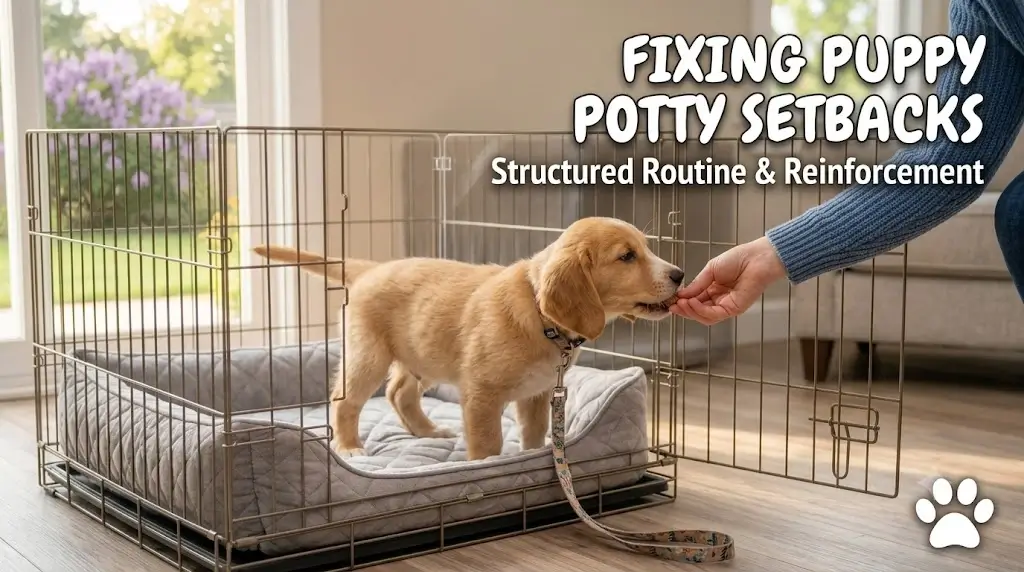
Puppy House Training Regression: Why It Happens & How to Fix It
Puppy house training regression is when a puppy that had been reliably using the correct bathroom location starts having accidents again. A regression does not necessarily mean the puppy has forgotten its training.
The usual approach is to identify what changed, temporarily return to a more structured potty routine, increase supervision, reinforce successful outdoor elimination, and rule out health problems when the change is sudden or unusual.
Puppy house training regression can follow changes in routine, increased freedom in the home, environmental stress, incomplete training, changes in feeding or bathroom timing, fear of going outside, or a medical problem. Treat a regression as new information rather than disobedience. Go back to the level of supervision and potty scheduling that previously worked, reward successful elimination, clean accident areas thoroughly, and contact your veterinarian if accidents are sudden, persistent, or accompanied by signs of illness.
What Is Puppy House Training Regression?
House training regression means a puppy begins having indoor elimination accidents after showing a period of improvement.
The regression can involve urine, stool, or both. Some puppies have occasional accidents after weeks of success, while others suddenly begin having accidents several times a day.
The pattern matters because different causes require different responses.
| Pattern | What It Can Suggest | First Step |
|---|---|---|
| One isolated accident | Timing, excitement, distraction, or an unusually long interval. | Review what happened immediately beforehand. |
| Several accidents after gaining more freedom | Too much independence too soon. | Reduce unsupervised access and rebuild gradually. |
| Accidents after a household change | Routine or environmental disruption. | Restore predictable potty opportunities. |
| Sudden frequent urination | Could be behavioral or medical. | Consider veterinary evaluation. |
| Sudden stool accidents with digestive changes | Dietary or gastrointestinal issue may be involved. | Monitor closely and contact a veterinarian if persistent or concerning. |
Why Is My Puppy Having Accidents Again?
A puppy’s previous success does not mean house training is permanently finished.
Reliability develops through repetition and depends on the puppy’s physical development, routine, environment, supervision, and ability to recognize and respond to bathroom signals.
Common causes of regression include:
- Too much freedom in the house too soon.
- A change in the family’s schedule.
- Longer periods between potty breaks.
- Changes in feeding or water routines.
- Moving to a new home.
- Travel or boarding.
- New people or animals in the household.
- Changes in the outdoor bathroom environment.
- Fear, stress, or environmental distractions.
- Incomplete generalization of the house-training behavior.
- Previous accident locations that were not thoroughly cleaned.
- A medical condition affecting urination or defecation.
Why Does a Puppy Regress After Being Potty Trained?
Puppies can appear fully house trained in one environment while still needing more practice in different circumstances.
For example, a puppy may reliably use the backyard but have accidents when visiting another home, staying in a hotel, or spending more time in unfamiliar rooms.
This happens because the puppy has learned a behavior in a particular context, not necessarily a fully generalized rule that applies everywhere.
House training is not only about knowing where to eliminate. The puppy also needs to learn when to eliminate, how to signal the need, how long it can reasonably wait, and how the routine works in different environments.
Why Is My Puppy Suddenly Peeing in the House Again?
Sudden indoor urination after a period of reliable outdoor potty training deserves attention.
First review recent changes: longer periods alone, a new schedule, increased water intake, changes in feeding, moving furniture, new pets, visitors, travel, or reduced access to the normal bathroom area.
If the increase in urination is substantial or unexplained, do not assume it is simply a training regression. Urinary problems can also cause a previously reliable puppy to start having accidents.
Why Is My Puppy Pooping in the House Again?
Stool accidents can result from timing problems, dietary changes, environmental stress, increased freedom, or an interruption in the normal bathroom routine. If your puppy understands that outdoors is the bathroom, yet frequently poops inside immediately after being outside, this is a distinct pattern that often relates more to incomplete evacuation than a true loss of training.
A puppy may also be more reluctant to poop outdoors because of rain, cold temperatures, unfamiliar surfaces, noise, other dogs, or a distracting environment.
If stool accidents begin alongside digestive changes, pay attention to stool consistency, frequency, appetite, and overall behavior.
Is Puppy Potty Training Regression Normal?
Occasional setbacks can happen during puppy development.
A setback becomes more important when it is frequent, sudden, progressively worsening, or associated with other changes in behavior or health.
The correct response is not to expect perfection. Instead, temporarily make the potty routine easier and more structured.
The Most Common Cause: Too Much Freedom Too Soon
One of the most common house-training mistakes is expanding a puppy’s access to the home as soon as accidents become less frequent. When this expansion of freedom happens, puppies can struggle to manage their new independence, leading to a resurgence of indoor accidents that are actually caused by insufficient indoor supervision, not behavioral defiance.
A puppy may be reliable in one room but not yet ready to roam throughout the house.
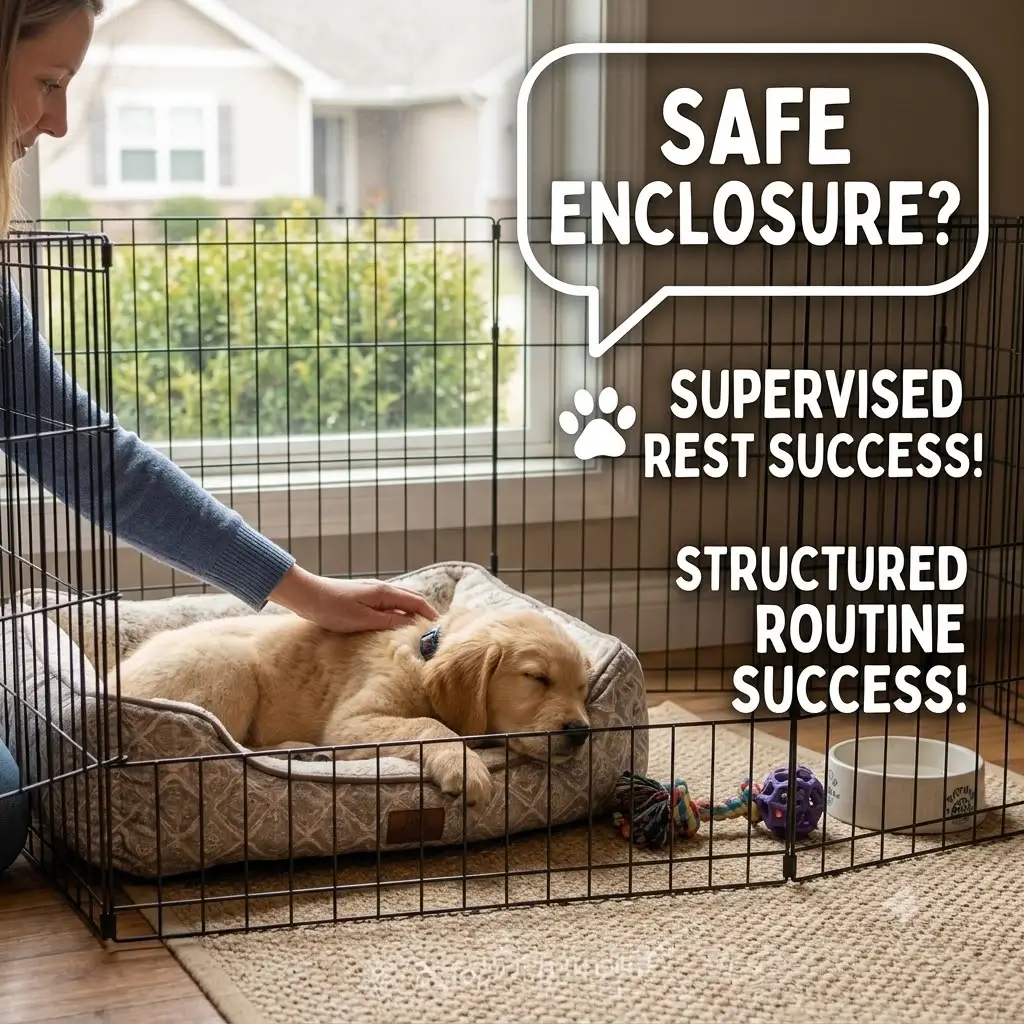
More freedom means more distance from the owner, more distractions, more hidden areas, and more opportunities to eliminate before anyone notices the warning signals.
If accidents increase after expanding access, temporarily reduce the puppy’s roaming area and rebuild freedom gradually.
How Much Freedom Should a Puppy Have After a Regression?
Give the puppy only as much freedom as it can currently handle successfully.
This does not mean permanently restricting the puppy. It means matching freedom to demonstrated reliability.
For example, a puppy that remains accident-free while supervised in two rooms may not yet be ready to roam the entire house unsupervised.
Increase freedom after repeated success, not simply because the puppy has reached a particular age.
How to Fix Puppy House Training Regression
A regression is usually best handled as a reset rather than starting from zero.
- Identify what changed.
- Return to a predictable potty schedule.
- Increase supervision.
- Reduce unnecessary indoor freedom.
- Use the same outdoor bathroom area.
- Reward successful outdoor elimination immediately.
- Clean accident areas thoroughly.
- Track accidents and successful potty trips.
- Gradually restore freedom after consistent success.
- Rule out medical problems when the pattern is sudden or unusual.
Step 1: Find What Changed
Start with the days immediately before the regression.
Ask:
- Did the puppy’s feeding schedule change?
- Did the puppy start staying alone longer?
- Did potty breaks become less frequent?
- Was the puppy given access to additional rooms?
- Did the family move or rearrange the home?
- Was there a new pet or visitor?
- Did the normal outdoor bathroom area change?
- Did weather become more difficult?
- Did the puppy experience a stressful event?
- Did appetite, water intake, stool, or urination change?
The answer may reveal that the puppy did not truly “forget” the training. The conditions simply changed beyond what the puppy could currently handle.
Step 2: Return to a Predictable Potty Schedule
During a regression, predictable bathroom opportunities reduce the amount of guesswork involved.
Useful potty triggers include waking up, eating, drinking more than usual, playing, exercising, and before periods of confinement or sleep.
The exact schedule should be based on the individual puppy rather than following a rigid universal timetable.
Step 3: Increase Supervision
Supervision is one of the most effective tools for rebuilding house-training reliability.
When the puppy is loose indoors, keep the puppy within your observation range whenever practical.
Watch for behaviors such as:
- Sudden sniffing.
- Circling.
- Restlessness.
- Walking toward a previous accident location.
- Moving behind furniture.
- Pausing play and wandering away.
- Looking toward the door.
- Whining or other individual signals.
Not every puppy gives an obvious signal, which is why scheduled potty opportunities remain important.
Step 4: Temporarily Reduce Indoor Freedom
If the puppy is having accidents in multiple rooms, reduce access to those rooms until reliability improves.
Use safe management methods that allow the puppy to remain comfortable and supervised.
The goal is to prevent repeated accidents while giving the puppy many opportunities to succeed.
Step 5: Reinforce Outdoor Potty Success
When the puppy eliminates outside, reward the behavior promptly.
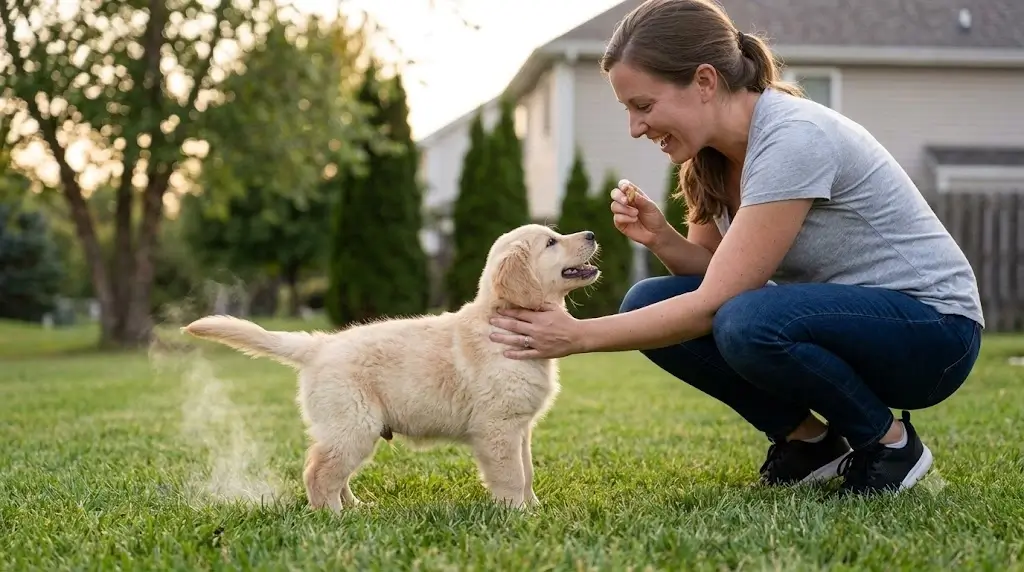
The reward can be food, praise, play, sniffing, or another appropriate activity the puppy values.
Timing matters. Reinforcement should follow the desired elimination closely so the puppy can make the connection.
Step 6: Clean Previous Accident Locations
Dogs can detect residual odor that people may not notice.
If a puppy repeatedly returns to the same indoor area, thoroughly clean the location using a cleaner appropriate for pet urine or fecal contamination.
Do not rely only on masking the smell with fragrances.
Step 7: Rebuild Freedom Gradually
Once the puppy is reliably eliminating in the correct location, expand access gradually.
If accidents return after adding a room, the puppy may have progressed too quickly.
Return temporarily to the previous successful level and try the expansion again after more consistent success.
Puppy House Training Regression After Moving
Moving to a new home can temporarily disrupt potty training.
The puppy now has unfamiliar rooms, new smells, new surfaces, and a different route to the outdoor bathroom area.
Treat the first days in the new home as a new training environment.
- Show the puppy the new bathroom location.
- Use a consistent route when possible.
- Increase supervision.
- Limit access to the entire home initially.
- Reward successful outdoor elimination.
- Expand access as reliability returns.
Puppy House Training Regression After a New Baby
A new baby can change feeding schedules, attention, sleep patterns, household noise, and the owner’s availability.
The puppy may receive fewer predictable potty trips even though nobody intended to change the routine.
During major household changes, maintaining a simple, predictable potty schedule can help prevent regression.
Puppy House Training Regression After Getting Another Dog
Adding another dog can change the puppy’s daily routine and increase excitement.
Outdoor trips may become more distracting, and owners may spend less one-on-one time observing the puppy’s bathroom signals.
Give the puppy individual potty opportunities when necessary rather than assuming the puppy will eliminate appropriately simply because another dog is present.
Puppy Regression After Boarding or Daycare
A puppy returning from boarding, daycare, travel, or another unfamiliar environment may temporarily show different bathroom habits.
The puppy may have experienced a different schedule, different surfaces, or different opportunities to eliminate.
Re-establish your normal home routine rather than punishing the puppy for accidents that occurred during the transition.
Puppy House Training Regression After Spay or Neuter
Changes around a veterinary procedure can temporarily alter a puppy’s routine.
Recovery may affect activity, appetite, bathroom timing, and access to normal outdoor areas.
Follow your veterinarian’s post-procedure instructions and use the opportunity to maintain predictable bathroom breaks.
If urinary or bowel changes are unexpected, persistent, or accompanied by pain or other symptoms, contact the veterinary practice that provided care.
Puppy House Training Regression After Vaccination
A vaccination appointment can temporarily disrupt a puppy’s normal schedule because of travel, handling, changes in activity, or post-vaccination effects.
If a puppy develops concerning symptoms after vaccination, contact the veterinarian rather than assuming the issue is behavioral.
Can Teething Cause Potty Training Regression?
Teething can coincide with changes in a puppy’s routine, sleep, chewing behavior, and general comfort, but it should not automatically be treated as the explanation for a new pattern of house-soiling.
If the puppy suddenly begins urinating or defecating indoors, evaluate the entire situation instead of attributing the regression to teething alone.
Can Stress Cause Puppy House Training Regression?
Changes in the environment can affect normal bathroom behavior.
Common disruptions include moving, visitors, loud construction, new pets, schedule changes, travel, and other changes to the household.
If stress appears to be contributing, make the potty routine as predictable and low-pressure as possible.
Why Is My Puppy Having Accidents Only When I’m Gone?
Accidents that occur primarily when the puppy is alone can have several explanations.
The puppy may simply be unable to wait for the entire absence, particularly if the interval is longer than its current capacity.
Other possibilities include changes in routine, anxiety, increased water intake, or a medical issue.
Do not assume that every alone-time accident is caused by separation anxiety.
Why Is My Puppy Peeing in the Crate Again?
Crate accidents deserve a closer look because they can reflect timing, crate size, routine, stress, or health problems. It is vital to determine whether accidents stem from insufficient access to the outside, an emotional crisis related to confinement, or a physiological failure to wait.
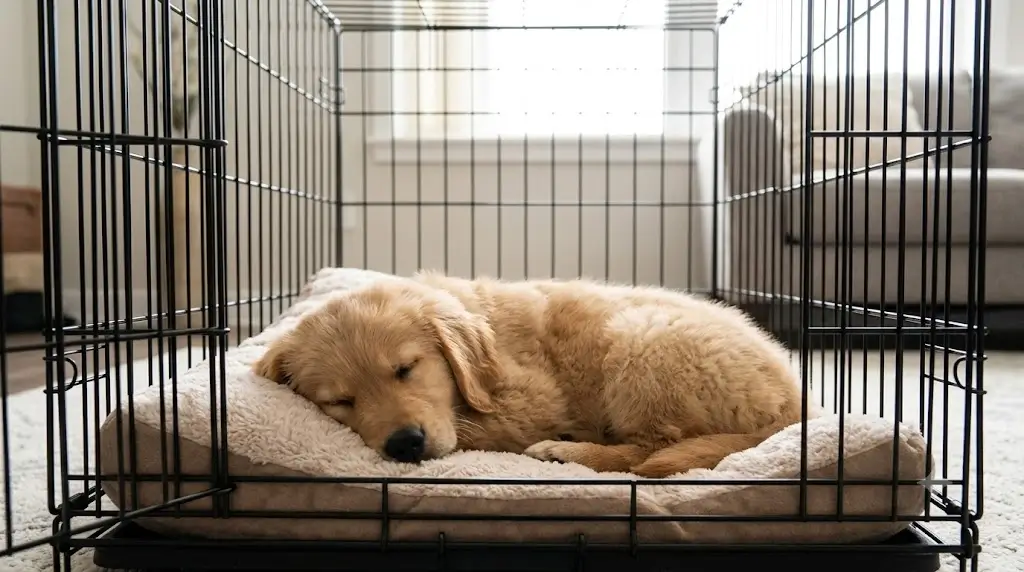
If a puppy that previously stayed clean in the crate suddenly starts urinating there, consider whether the puppy is being confined longer than it can comfortably wait.
Sudden or frequent crate urination should also prompt consideration of veterinary causes, especially when other urinary symptoms are present.
Why Is My Puppy Pooping in the Crate Again?
Stool accidents in a crate can occur when the puppy has been confined longer than it can comfortably wait, when the normal schedule changes, or when gastrointestinal problems affect bowel movements.
Puppies generally benefit from a crate routine that accounts for their actual bathroom needs rather than simply expecting them to hold elimination indefinitely.
Puppy House Training Regression At Night
Nighttime regression can happen when the puppy’s sleeping routine changes or when daytime freedom has expanded faster than nighttime reliability.
Review the puppy’s last evening potty opportunity, sleeping arrangement, water routine, and recent changes.
If nighttime urination suddenly becomes much more frequent, consider veterinary evaluation rather than assuming the puppy simply needs more training.
Puppy House Training Regression After Being Potty Trained for Months
A puppy that was reliable for months and suddenly begins having repeated accidents deserves a more careful assessment than a puppy that has always had occasional accidents.
Review environmental changes first, but do not ignore health-related possibilities.
The longer the puppy has been reliably house trained, the more useful a sudden change can be as a signal that something about the puppy’s environment, routine, or health has changed.
How Long Does Puppy House Training Regression Last?
There is no fixed recovery period.
A minor setback caused by a schedule change may improve quickly once the routine is restored.
A puppy with incomplete training, persistent environmental stress, or a medical problem may require a different approach.
Measure progress by fewer accidents and more successful outdoor eliminations rather than expecting an exact number of days.
How to Know If Your Puppy Is Actually Regressing
One accident does not necessarily represent regression.
Look for a meaningful change from the puppy’s previous pattern.
| Observation | Likely Interpretation |
|---|---|
| One accident after an unusually long interval | May be a timing problem rather than regression. |
| Accidents repeatedly occurring in the same room | May involve odor, access, or learned location preference. |
| Accidents begin after freedom is expanded | Management may have progressed too quickly. |
| Sudden frequent urination | Consider medical causes as well as training. |
| Regression after major household change | Routine or environmental disruption may be involved. |
House Training Regression vs. Incomplete House Training
These two situations can look similar.
A puppy may appear house trained because accidents are rare, while still lacking enough reliability to handle long absences or unrestricted access to the home.
True regression means the puppy’s performance has meaningfully worsened compared with its established pattern.
Incomplete training means the puppy was never fully reliable under the conditions now being expected.
How to Prevent Puppy House Training Regression
Prevention is mainly about maintaining a predictable routine while gradually increasing the puppy’s independence.
- Keep feeding and potty routines reasonably consistent.
- Continue rewarding successful outdoor elimination.
- Increase freedom gradually.
- Monitor the puppy during major household changes.
- Keep accident areas properly cleaned.
- Pay attention to individual bathroom signals.
- Maintain appropriate potty opportunities during travel.
- Do not expect a puppy to handle long absences simply because accidents have become less frequent.
A 7-Day Puppy House Training Regression Reset
Day 1: Audit the Pattern
Record every accident, successful potty trip, meal, major activity, and relevant environmental change.
Day 2: Reduce Freedom
Limit access to areas where accidents have occurred and increase direct supervision.
Day 3: Rebuild Timing
Schedule outdoor opportunities around waking, meals, play, naps, and the puppy’s observed bathroom pattern.
Day 4: Strengthen Outdoor Reinforcement
Reward every successful outdoor elimination promptly.
Day 5: Check Environmental Factors
Look for weather, noise, surface preferences, other animals, visitors, or stressful changes affecting outdoor elimination.
Day 6: Test Controlled Freedom
Give access to a slightly larger area only when the puppy has demonstrated reliable success under the current setup.
Day 7: Review
Compare accident frequency with the beginning of the reset. If the puppy is not improving or health concerns are present, reassess the cause rather than simply increasing punishment or confinement.
Puppy House Training Regression Checklist
- ☐ Did the puppy’s daily schedule recently change?
- ☐ Did the puppy receive more freedom than before?
- ☐ Are potty breaks less frequent?
- ☐ Has the puppy been left alone longer?
- ☐ Has the family moved or traveled?
- ☐ Are there new people or animals in the home?
- ☐ Has the outdoor bathroom area changed?
- ☐ Is weather making outdoor elimination harder?
- ☐ Does the puppy show a surface preference?
- ☐ Are previous accident areas thoroughly cleaned?
- ☐ Am I rewarding successful outdoor elimination?
- ☐ Am I supervising the puppy after unsuccessful potty trips?
- ☐ Has urination or stool frequency suddenly changed?
- ☐ Are there signs of pain, illness, or digestive problems?
When Puppy House Training Regression May Be a Medical Problem
A sudden change in elimination behavior should not automatically be labeled a training problem.
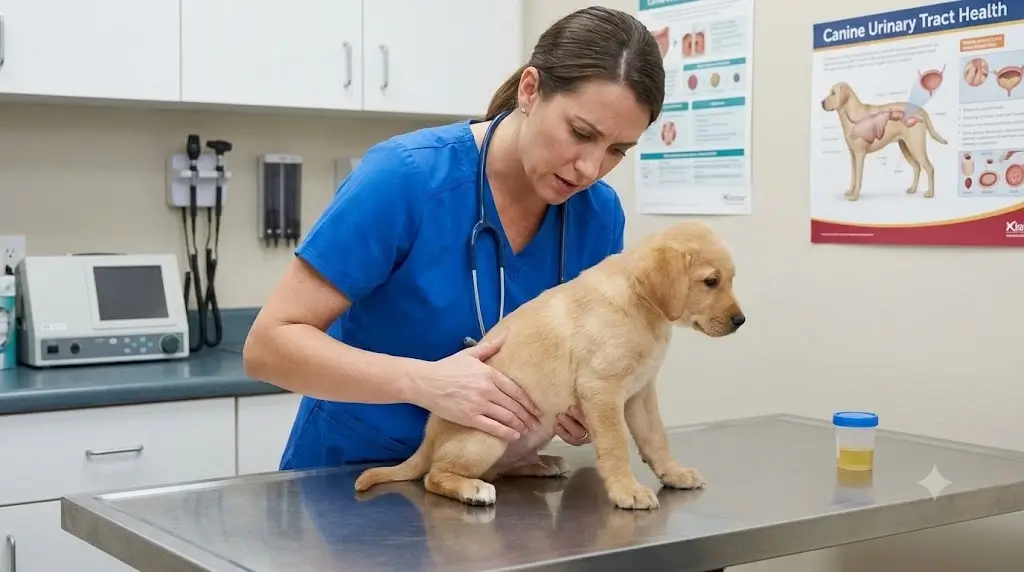
Medical problems can change urination or bowel habits, and puppies may not be able to communicate that something hurts or feels different.
Consider veterinary evaluation when accidents are sudden, unusually frequent, persistent, or accompanied by other changes.
Seek veterinary advice promptly if your puppy has:
- Repeated straining to urinate or defecate.
- Obvious pain during elimination.
- Blood in urine or stool.
- Repeated vomiting.
- Severe or persistent diarrhea.
- Marked lethargy.
- Loss of appetite.
- Unusual thirst or a major increase in urination.
- Abdominal swelling or significant discomfort.
- A sudden unexplained change in normal elimination.
If the puppy seems physically unable to urinate or defecate, treat that as a veterinary issue rather than a house-training exercise.
Should You Punish a Puppy for a Regression?
No.
Punishment does not teach the puppy where elimination should happen.
It can also make the puppy less comfortable eliminating around people, which may make bathroom training harder.
Instead, focus on management, prevention, supervision, timing, and reinforcement.
yelling, physical punishment, rubbing the puppy’s face in an accident, or punishing the puppy after discovering an old accident.
What To Do Immediately After an Indoor Accident
- Stay calm.
- If the puppy is still eliminating, interrupt gently and take the puppy outside when practical.
- Clean the area thoroughly.
- Record the time and circumstances.
- Review the puppy’s last successful potty trip.
- Increase supervision.
- Adjust the next potty opportunity.
The purpose of the accident is to provide information about what needs to change in the training system.
How to Clean Puppy Accident Areas
Thorough cleaning is important because residual odor can make a previously soiled location more attractive to a puppy.
Use a pet-safe cleaning product appropriate for the affected surface and follow its instructions.
Avoid relying only on strong fragrances to cover the odor.
What If the Puppy Regresses in One Room but Not Others?
Location-specific accidents can point toward a learned surface or location preference.
The room may also provide more freedom, less supervision, a previously soiled area, or easier access to a hidden corner.
Temporarily restrict access to that room and rebuild successful potty habits before reopening it.
What If My Puppy Is Suddenly Afraid to Go Outside?
A puppy that previously eliminated outside may begin avoiding the area after a frightening experience.
Possible triggers include loud noises, aggressive interactions with another dog, construction, storms, slippery surfaces, or another environmental event.
Identify and reduce the trigger when possible. Do not force the puppy into a frightening situation simply to complete the potty routine.
How to Tell Whether the Regression Is Behavioral or Medical
You cannot always determine the cause from the accident itself.
| Clue | More Consistent With Training/Environment | More Concerning for Health |
|---|---|---|
| Timing | Occurs after missed potty opportunities. | Occurs suddenly without an obvious routine change. |
| Location | Repeatedly occurs in a particular room or surface. | Occurs in unusual patterns alongside urinary or digestive changes. |
| Behavior | Puppy otherwise acts normally. | Pain, lethargy, appetite changes, vomiting, or unusual thirst. |
| Pattern | Improves when supervision and scheduling increase. | Persists or worsens despite appropriate management. |
These are clues, not a diagnosis. When in doubt, a veterinarian can help determine whether a medical problem needs to be ruled out.
Frequently Asked Questions
Why is my puppy suddenly having accidents again?
Common causes include changes in routine, too much freedom, longer intervals between potty breaks, environmental stress, incomplete training, or a medical problem. Start by reviewing what changed immediately before the regression.
Is puppy house training regression normal?
Occasional setbacks can happen during development and changes in routine. Frequent, sudden, or persistent accidents deserve a closer assessment and may warrant veterinary advice.
How do I fix puppy house training regression?
Return to a predictable potty routine, increase supervision, temporarily reduce indoor freedom, reward successful outdoor elimination, clean previous accident areas thoroughly, and gradually restore freedom after consistent success.
Why is my puppy peeing in the house again after being trained?
The puppy may have been given too much freedom, experienced a routine change, stayed alone longer, become stressed, or developed a urinary problem. Sudden frequent urination should not automatically be considered a training issue.
Why is my puppy pooping in the house again?
Stool accidents can result from missed potty opportunities, changes in feeding or routine, environmental stress, reluctance to poop outdoors, or gastrointestinal problems.
Can moving cause puppy house training regression?
Yes. A new home introduces unfamiliar rooms, surfaces, smells, and bathroom routes. Temporarily return to a more structured potty routine and gradually rebuild freedom.
Can stress cause a puppy to have accidents?
Household and environmental changes can disrupt normal bathroom behavior. However, persistent or unusual elimination changes should not automatically be attributed to stress.
Should I restart potty training from the beginning?
Usually you do not need to treat the puppy as if it has never learned anything. Instead, return to the last level of structure at which the puppy was successful and rebuild from there.
How long does puppy house training regression last?
There is no fixed duration. Minor setbacks can improve after the routine is restored, while persistent regressions may require a deeper behavioral or veterinary assessment.
Should I punish my puppy for an accident?
No. Punishment does not teach the desired bathroom location and can make elimination around people less comfortable. Use supervision, prevention, and positive reinforcement instead.
Why is my puppy having accidents only when I am away?
The puppy may be left longer than it can comfortably wait, or the change may involve routine, stress, or health. Do not automatically assume the accidents are caused by separation anxiety.
Why is my puppy suddenly peeing more often?
Increased urination can have behavioral explanations, but it can also occur with urinary or other medical problems. A sudden persistent increase should be discussed with a veterinarian.
Can a puppy forget house training?
A puppy can show a regression, but that does not necessarily mean it has forgotten the behavior. Environmental changes, incomplete generalization, routine disruption, and health problems can all produce similar symptoms.
When should I call a veterinarian for potty training regression?
Contact a veterinarian when the regression is sudden or persistent, when urination or bowel habits change substantially, or when the puppy shows pain, straining, blood, vomiting, lethargy, appetite changes, unusual thirst, abdominal discomfort, or other concerning symptoms.
Final Takeaway
Puppy house training regression is best treated as a signal to investigate rather than a reason to punish the puppy.
Start by identifying what changed. Then temporarily return to the structure that produced reliable results: predictable potty opportunities, closer supervision, limited freedom, consistent outdoor access, immediate reinforcement, and thorough cleaning of previous accident areas.
Once the puppy is consistently successful again, gradually increase freedom.
If the regression is sudden, unusually frequent, persistent despite appropriate management, or accompanied by changes in urination, stool, appetite, thirst, energy, or signs of pain, involve your veterinarian.
