
Why Is My Puppy Pooping in the House at Night?
If your puppy keeps pooping in the house, the problem is usually not that the puppy is being stubborn. Young puppies are still developing bowel control, learning where elimination belongs, and building predictable bathroom routines.
Indoor poop accidents can also happen because the puppy was not given enough opportunities to go outside, the puppy became distracted outdoors, the timing after meals or sleep was missed, previous training was inconsistent, or a digestive or medical problem changed the puppy’s normal bowel habits.
The most common reasons a puppy poops in the house are incomplete house training, missed potty timing, insufficient supervision, an outdoor environment that is too distracting or uncomfortable, inconsistent routines, or a sudden change in bowel habits. The fastest way forward is to increase predictable potty opportunities, supervise closely indoors, reward outdoor pooping immediately, clean accidents thoroughly, and investigate medical causes when the pattern is unusual or sudden.
Why Is My Puppy Pooping in the House?
Puppies need to learn both where to poop and when to recognize the need to go.
An indoor accident can happen when any part of that process breaks down.
Common causes include:
- The puppy has not finished learning the house-training routine.
- The puppy was taken outside too late.
- The puppy was distracted and did not poop outdoors.
- The puppy was allowed too much unsupervised freedom indoors.
- The puppy had a meal and did not receive an appropriate bathroom opportunity afterward.
- The puppy recently woke from a nap.
- The puppy was playing and missed its normal bathroom signals.
- The puppy is uncomfortable eliminating outdoors.
- The puppy has learned a preference for an indoor surface or location.
- The puppy’s routine has changed.
- Stress or environmental changes are affecting elimination.
- A digestive or other medical issue is increasing urgency or changing stool patterns.
The most useful clue is usually the pattern. Ask when the accident occurs, what happened immediately beforehand, where the puppy pooped, and whether the puppy had recently been outside.
Why Puppies Poop Inside Even When They Know They Should Go Outside
House training is not simply a matter of understanding a rule.
A puppy can begin learning that outdoor elimination is rewarded while still lacking the developmental control needed to wait consistently.
Puppies can also become distracted outside, forget the purpose of the trip, or return indoors before they have actually eliminated.
This is why successful house training depends on three things working together:
- Timing: the puppy gets an outdoor opportunity before the need becomes urgent.
- Supervision: indoor behavior is monitored closely enough to catch pre-potty signals.
- Reinforcement: the puppy receives useful feedback immediately after pooping in the desired location.
How Often Does a Puppy Need to Poop?
There is no single number that applies to every puppy. Bowel frequency varies with age, diet, meal schedule, activity, individual digestion, and health.
Instead of relying only on a fixed daily number, learn your puppy’s normal pattern.
A puppy that usually poops after meals, for example, can be managed more effectively when outdoor trips are scheduled around that predictable event.
Track your puppy’s normal poop times for several days. Then use that information to create outdoor opportunities before the puppy typically needs to eliminate.
Why Does My Puppy Poop in the House After Going Outside?
This is one of the most frustrating house-training patterns, but it usually has an identifiable explanation.
The puppy may have gone outside but not actually pooped. Sniffing, walking, playing, watching people, or exploring the environment can consume the entire potty trip. If outdoor sensory overload is a frequent challenge, exploring why won’t my puppy pee outside can help you identify why your puppy gets overwhelmed and fails to eliminate outdoors.
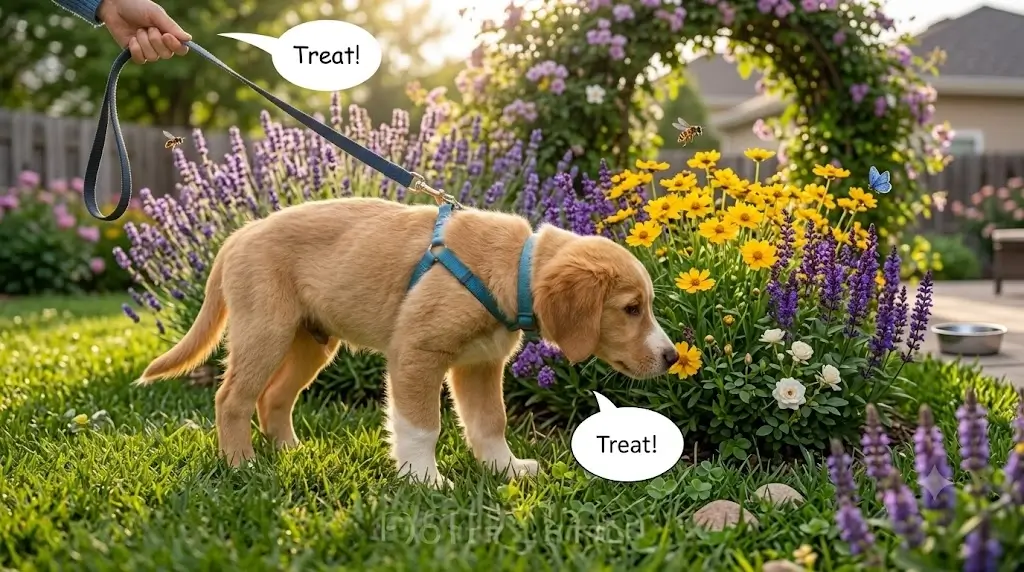
When the puppy returns inside and relaxes, the urge to poop may become obvious.
If this happens repeatedly, make the outdoor bathroom trip more purposeful. Give the puppy an appropriate opportunity to eliminate before turning the trip into play or exploration.
Why Does My Puppy Poop Right After Coming Inside?
If your puppy repeatedly poops shortly after coming back indoors, the most likely issue is that the outdoor trip ended before elimination actually happened. This is closely related to why does my puppy pee right after coming inside, where an incomplete bathroom visit leaves the puppy full upon crossing the threshold.
The puppy may have been distracted or simply needed more time.
A useful response is:
- Take the puppy to the same designated potty area.
- Keep the trip calm and focused.
- Give the puppy enough opportunity to eliminate.
- Reward immediately after successful outdoor pooping.
- Return indoors only after the bathroom portion of the trip is complete.
If the puppy does not poop, increase indoor supervision rather than assuming the puppy is finished.
Why Does My Puppy Poop in the House at Night?
Nighttime accidents can happen because young puppies have limited control and because their bowel schedule may not yet be synchronized with the household’s sleeping schedule.
Look at the puppy’s evening routine, dinner timing, last outdoor bathroom trip, and any signs of digestive upset.
A puppy that suddenly starts having nighttime stool accidents after previously sleeping cleanly deserves additional investigation.
Why Does My Puppy Poop in the House After Eating?
Meals can naturally trigger bowel activity in dogs. For many puppies, eating is therefore a predictable cue that another bathroom opportunity may soon be needed.
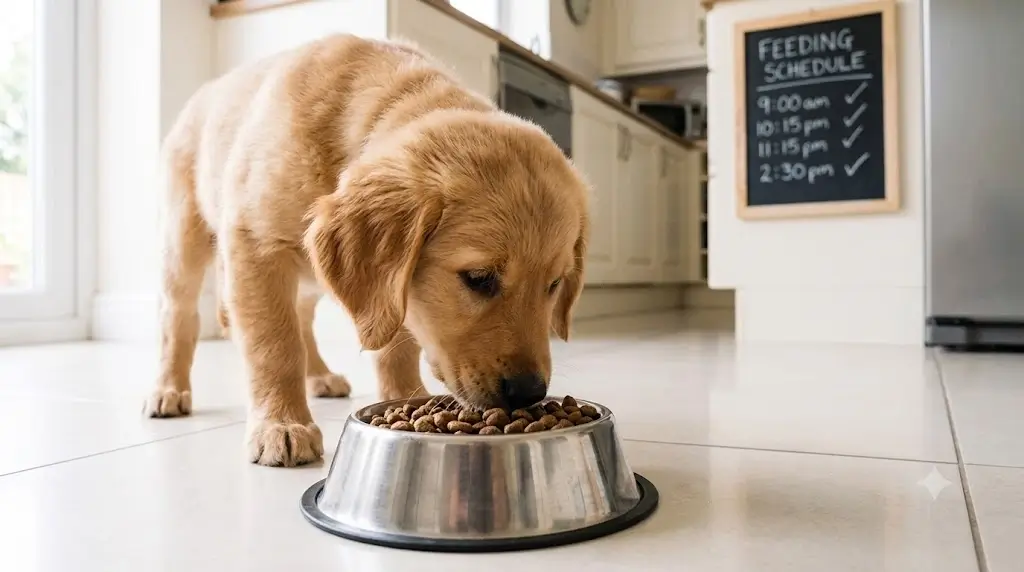
If accidents frequently occur after meals, adjust the routine rather than treating each accident as an isolated event.
A consistent meal schedule can also make bowel timing easier to predict than free-feeding throughout the day.
Predictable meals can make predictable potty opportunities easier to establish because you can observe how your individual puppy’s bowel routine responds.
Why Does My Puppy Poop in the House After a Nap?
Sleep can delay elimination because the puppy is inactive. Once awake and moving around, the need to poop may become much more apparent.
Treat waking from a nap as a strong potty-training trigger.
Take the puppy outside promptly rather than allowing a long period of indoor activity first.
Signs Your Puppy Needs to Poop
Learning your puppy’s pre-potty behavior is one of the most useful house-training skills.
Common signs include:
- Suddenly stopping play.
- Walking away from people.
- Sniffing the floor repeatedly.
- Circling.
- Walking toward a previous accident location.
- Restlessness.
- Searching for a quiet corner.
- Moving toward a door or exit.
- Squatting or beginning to posture.
Do not wait for the most obvious signal. The earlier you recognize the pattern, the easier it is to prevent an accident.
How to Stop a Puppy From Pooping in the House
The goal is to reduce opportunities for indoor accidents while increasing successful outdoor repetitions. Following core routines from our guide on how to stop puppy accidents will help you maintain tight management during daily transitions.
- Establish a predictable meal routine.
- Take the puppy outside after waking.
- Take the puppy outside after meals when appropriate.
- Take the puppy outside after active play.
- Use the puppy’s individual poop pattern to improve timing.
- Supervise closely when the puppy is indoors.
- Use a safe confinement or management area when direct supervision is impossible.
- Reward outdoor pooping immediately.
- Clean indoor accidents thoroughly.
- Gradually increase indoor freedom as reliability improves.
Use a Consistent Potty Spot
Taking the puppy to the same general outdoor bathroom area can make the purpose of the trip easier to understand.
The location should be safe, practical, and appropriate for your puppy’s vaccination and health circumstances.
Familiar smells can also help establish the area as a bathroom location.
Reward Your Puppy Immediately After Pooping Outside
Timing matters.
Reward the puppy shortly after the desired behavior occurs so the connection between pooping outside and receiving reinforcement is clear.
Do not wait until you have returned inside and several minutes have passed.
The reward can be food, praise, access to play, or another reward your puppy values and can safely receive.
What If My Puppy Will Not Poop Outside?
Some puppies are reluctant to poop outdoors because the environment is unfamiliar, noisy, cold, wet, busy, or distracting.
Others may simply have learned that the house is the familiar bathroom location.
Avoid turning the potty trip into a prolonged battle.
Instead:
- Use a quiet and familiar bathroom location.
- Keep the initial potty trip focused.
- Reduce distractions.
- Give the puppy an appropriate opportunity to eliminate.
- Reward immediately when successful.
- If the puppy does not go, supervise closely indoors and try again later.
Why Is My Puppy Afraid to Poop Outside?
Outdoor environments can be overwhelming for a young puppy.
Traffic, construction, unfamiliar dogs, people, weather, slippery surfaces, loud noises, or a new neighborhood can interfere with normal elimination.
If the puppy consistently avoids pooping in one environment but eliminates comfortably in a quieter location, environmental stress may be part of the problem.
Should You Punish a Puppy for Pooping in the House?
No.
Punishment after an accident does not teach the puppy the correct bathroom location. It can also make the puppy wary of eliminating in front of people.
If you catch the puppy beginning to poop indoors, calmly interrupt and take the puppy to the appropriate bathroom location.
If you discover an accident afterward, simply clean it and adjust your management plan.
The useful information is the location and timing of the accident, not punishment.
How Supervision Prevents Indoor Poop Accidents
House training is partly a management problem.
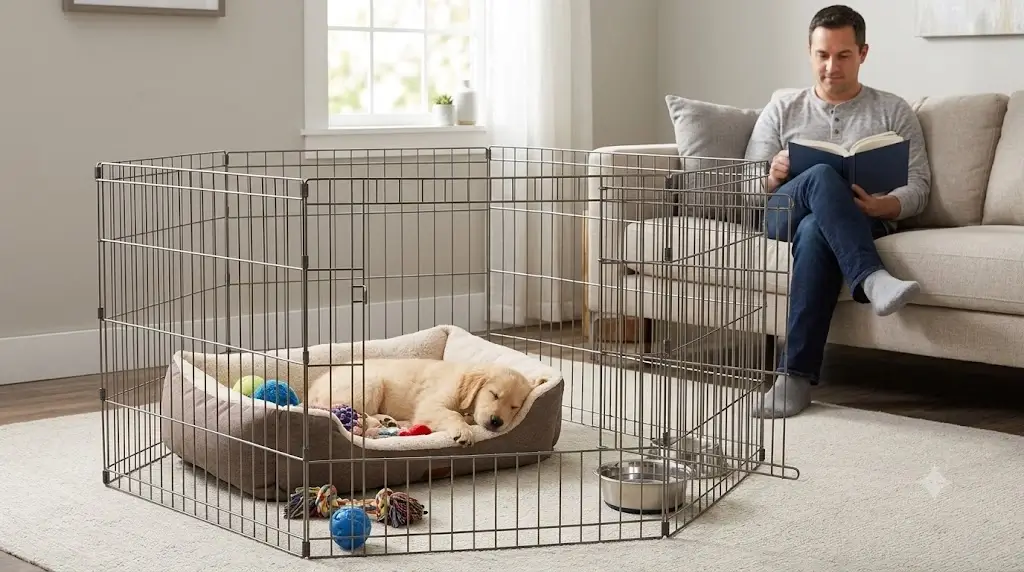
A puppy that has unrestricted access to the entire home can easily find a quiet corner before anyone notices the warning signs.
During the early stages, keep the puppy close enough to observe.
Useful management options include:
- Keeping the puppy in the same room as you.
- Using a puppy-safe gated area.
- Using appropriate crate rest when the puppy is comfortable with the crate.
- Taking frequent outdoor bathroom breaks.
- Gradually expanding access to the home after reliable success.
How to Handle an Indoor Poop Accident
Your response should be calm and practical.
- If the puppy is still eliminating, calmly redirect the puppy outdoors.
- Clean the contaminated area thoroughly.
- Record when the accident happened.
- Identify what happened immediately beforehand.
- Adjust the next potty opportunity accordingly.
The accident is useful data. If it happened 20 minutes after eating, for example, that may tell you more about the puppy’s schedule than a generic age-based rule.
Why Cleaning Indoor Poop Accidents Matters
Dogs have a much stronger sense of smell than humans, so a surface that appears clean to you may still contain odor cues.
Thorough cleaning reduces the chance that the same location becomes a repeated bathroom site.
Pay attention to:
- Carpet fibers.
- Rugs.
- Floor seams.
- Fabric furniture.
- Dog bedding.
- Areas underneath furniture.
Use a pet-appropriate cleaner suitable for the affected surface and follow the product directions.
Why Puppies Keep Pooping in the Same Spot
Repeated accidents in one location usually deserve attention because the puppy may have learned that the location is an acceptable bathroom area.
Odor, texture, privacy, and habit can all contribute.
Thorough cleaning plus temporary restriction of access can help break the pattern while the puppy learns the preferred outdoor location.
Can Crate Training Help With Pooping in the House?
A properly managed crate can be useful because it limits unsupervised access to the home and creates predictable transitions between rest and bathroom opportunities. However, if confinement issues arise, read our guide on why is my puppy peeing in the crate to ensure proper crate sizing and scheduling.
However, a crate does not replace house training.
A puppy should not be expected to remain confined longer than the puppy can comfortably manage.
Use the crate as one part of a broader routine that includes outdoor potty trips, supervision, reinforcement, and adequate rest.
Can Diet Cause a Puppy to Poop in the House?
Yes. Diet can affect stool frequency, consistency, and timing.
Sudden food changes can also alter bowel habits in some puppies.
If accidents began after a food change, new treats, increased treats, table food, or another dietary change, note the timing and discuss persistent concerns with your veterinarian.
Do not repeatedly change foods just to solve a training problem. Too many changes can make it harder to determine what is actually affecting the puppy’s digestion.
Can Stress Cause a Puppy to Poop in the House?
Stress can affect elimination behavior.
Moving to a new home, changes in household activity, unfamiliar visitors, travel, new animals, loud construction, or other environmental changes can disrupt a puppy’s routine.
If accidents began after a major change, restore predictable meals, rest, supervision, and bathroom opportunities.
Also watch for other signs of stress or illness rather than assuming every accident is purely behavioral.
Why Is My Puppy Pooping in the House After Being Outside?
The key question is whether the puppy actually pooped outside.
If the puppy only sniffed, walked, urinated, or played outdoors, the bathroom trip may not have been successful.
Another possibility is that the puppy had a bowel movement outdoors but still needed another one later, especially after eating or becoming active.
Track the puppy’s pattern rather than assuming one outdoor bowel movement means the puppy will remain accident-free for the rest of the day.
Why Does My Puppy Poop in the House When I Stop Watching?
Puppies quickly learn that some locations are more private than others.
If accidents happen whenever you stop supervising, the puppy probably has too much freedom for the current stage of house training.
Reduce the puppy’s unsupervised access and gradually expand freedom after consistent outdoor success.
House Training Freedom: Earned, Not Assumed
Giving a puppy full access to the home before the puppy is reliably house trained creates more opportunities for mistakes.
A better progression is:
- Small supervised area.
- Consistent outdoor success.
- Longer supervised periods indoors.
- Gradually larger areas.
- More freedom after reliability improves.
If accidents increase after expanding access, reduce the area again and rebuild reliability.
What If My Puppy Is Pooping in the House Every Day?
Daily accidents mean the current management system is not yet preventing enough mistakes.
Start with a simple log.
| Record | Why It Matters |
|---|---|
| Meal time | May help predict bowel activity. |
| Outdoor potty trip | Shows whether the puppy had an opportunity to eliminate. |
| Successful outdoor poop | Identifies the puppy’s actual bowel pattern. |
| Indoor accident | Shows where and when the current system fails. |
| Sleep and play | Helps identify predictable triggers. |
| Stool appearance | Can reveal changes that may warrant veterinary attention. |
What If My Puppy Suddenly Starts Pooping in the House?
A sudden change deserves more attention than a puppy that has never been fully house trained.
Review recent changes in:
- Food or treats.
- Meal schedule.
- Household routine.
- Travel.
- Visitors.
- New pets.
- Exercise.
- Medication or supplements.
- Access to the outdoors.
If there is no obvious training explanation, consider a veterinary assessment.
Medical Problems That Can Cause Indoor Pooping
Not every house-soiling problem is behavioral.
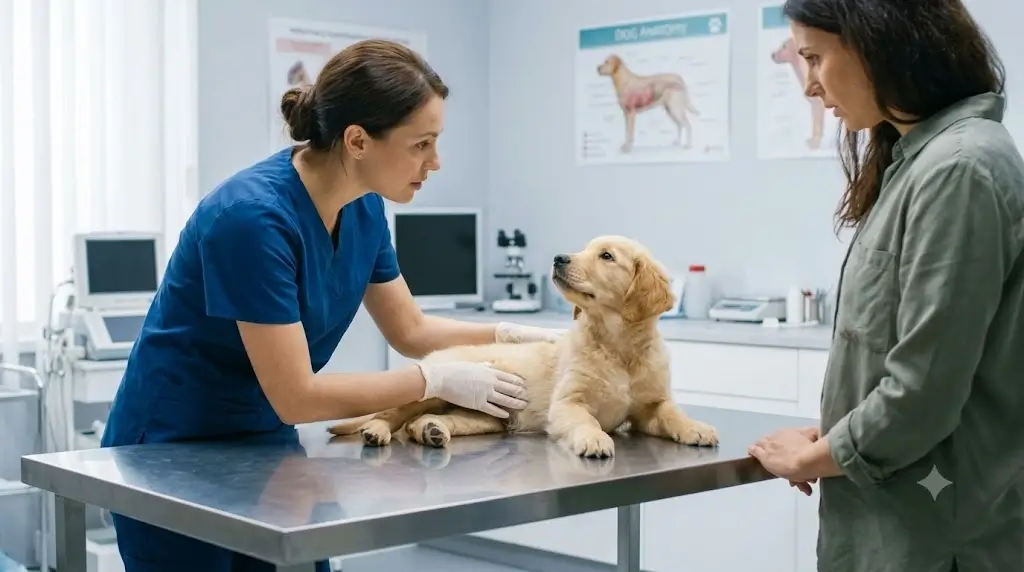
Digestive disorders, parasites, dietary intolerance, infection, medication effects, and other health problems can change bowel frequency or urgency.
Veterinary attention is particularly important when indoor accidents occur together with:
- Diarrhea.
- Repeated vomiting.
- Blood in the stool.
- Black or unusually abnormal stool.
- Marked mucus or persistent digestive changes.
- Straining to defecate.
- Significant abdominal discomfort.
- Loss of appetite.
- Lethargy.
- Dehydration concerns.
- A sudden and persistent change from normal bowel habits.
Puppies can become ill more quickly than healthy adult dogs. If your puppy has significant diarrhea, repeated vomiting, marked lethargy, blood in the stool, or other concerning symptoms, contact a veterinarian promptly.
How to House Train a Puppy With a Sensitive Stomach
If digestive issues are contributing to urgency, potty training alone may not solve the accidents.
Work with your veterinarian on the underlying digestive issue while keeping the bathroom routine predictable.
During periods of digestive upset, temporarily increase bathroom opportunities because the puppy may not follow its normal schedule.
How to House Train a Puppy in an Apartment
Apartment living adds a practical factor: the puppy may have to travel farther between the living area and the outdoor bathroom location.
That extra time can matter when the puppy suddenly needs to poop.
Make the route predictable and keep necessary items ready so the puppy can be taken outside promptly.
If your veterinarian has advised limiting outdoor exposure because of vaccination or disease-risk considerations, follow that guidance and use an appropriate temporary bathroom solution.
How Weather Can Affect Puppy Potty Training
Rain, snow, extreme heat, cold surfaces, wind, and loud storms can make some puppies reluctant to eliminate outside.
If accidents increase during bad weather, the puppy may be delaying elimination rather than forgetting the training.
Use a safe, sheltered bathroom area when possible and keep the trip focused.
How to Train a Puppy to Poop in One Outdoor Area
- Choose a safe and practical bathroom area.
- Take the puppy there consistently.
- Keep the initial trip low-distraction.
- Wait for the puppy to eliminate.
- Reward immediately after pooping.
- Allow additional play or exploration after the bathroom behavior when appropriate.
Separating “bathroom first” from “fun outside” can help prevent a puppy from learning that pooping ends the outdoor experience immediately.
Should You Walk a Puppy Before or After Potty?
For house training, it can be useful to give the puppy a focused bathroom opportunity first, then provide a walk or exploration period afterward.
This teaches the puppy that eliminating outside does not necessarily mean the fun ends immediately.
The exact routine can be adjusted according to the puppy’s energy level, age, and individual behavior.
How Long Does It Take to House Train a Puppy?
House training does not have one guaranteed completion date.
Some puppies become reliable relatively quickly, while others need months of consistent management, especially when they are very young, have a history of indoor elimination, live in challenging environments, or have digestive or behavioral factors affecting progress.
Reliability is more important than reaching a specific calendar deadline.
If accidents are becoming less frequent and the puppy is increasingly choosing the correct outdoor location, the training system is moving in the right direction.
A Simple 7-Day Reset for Indoor Poop Accidents
Day 1: Track the Pattern
Record meals, outdoor trips, successful poops, indoor accidents, naps, and active play.
Day 2: Tighten Supervision
Keep the puppy close enough to notice sniffing, circling, restlessness, and other pre-potty signals.
Day 3: Improve Timing
Add outdoor opportunities around the puppy’s actual bowel pattern, especially after predictable triggers.
Day 4: Improve the Outdoor Trip
Use a consistent bathroom location and reduce distractions during the initial potty period.
Day 5: Reinforce Success
Reward outdoor pooping immediately and consistently.
Day 6: Clean Accident Areas
Thoroughly clean previous indoor poop locations and temporarily restrict access when appropriate.
Day 7: Measure Progress
Compare the number and timing of accidents with the beginning of the week. If accidents remain frequent, reassess the schedule and consider whether a medical or environmental issue needs attention.
Indoor Puppy Poop Accident Checklist
- ☐ I know my puppy’s normal meal and poop pattern.
- ☐ I take my puppy outside after waking.
- ☐ I provide appropriate potty opportunities around meals.
- ☐ I take the puppy outside after active play when appropriate.
- ☐ I supervise the puppy closely indoors.
- ☐ I limit unsupervised access to the house.
- ☐ I use a consistent outdoor bathroom location.
- ☐ I reward successful outdoor pooping immediately.
- ☐ I clean previous accident areas thoroughly.
- ☐ I avoid punishment after accidents.
- ☐ I watch for changes in stool, appetite, energy, or digestion.
Frequently Asked Questions
Why is my puppy pooping in the house?
The puppy may still be learning, may not be taken outside at the right time, may become distracted outdoors, may have too much indoor freedom, or may have a digestive or medical issue affecting bowel habits.
How do I stop my puppy from pooping in the house?
Use predictable potty opportunities, close supervision, a consistent outdoor bathroom location, immediate rewards for successful outdoor pooping, thorough cleaning, and gradual increases in indoor freedom.
Why does my puppy poop inside after going outside?
The puppy may not have actually pooped outside. Distractions can interrupt the bathroom trip. Keep the trip focused and supervise the puppy closely after returning indoors if no bowel movement occurred.
Why does my puppy poop right after coming inside?
The puppy may have needed more time outside or may have been distracted. Return to the designated potty area and give the puppy another appropriate opportunity to eliminate.
Why does my puppy poop in the house after eating?
Eating can trigger bowel activity. If accidents repeatedly follow meals, use the puppy’s individual post-meal pattern to schedule outdoor bathroom opportunities.
Why does my puppy poop in the house after a nap?
Puppies may need to eliminate shortly after waking. Treat waking from naps as a predictable potty-training trigger and take the puppy outside promptly.
Should I punish my puppy for pooping inside?
No. Punishment does not teach the puppy where to poop and can create fear or confusion. Clean the accident and improve the timing and supervision plan.
Why does my puppy keep pooping in the same spot?
Remaining odor cues, surface preference, privacy, and learned habit can all contribute. Clean the area thoroughly and restrict access while reinforcing outdoor elimination.
Can crate training help stop a puppy from pooping inside?
Appropriate crate use can reduce unsupervised indoor access and create predictable transitions between rest and potty trips. It should be part of a broader house-training plan and should not be used for excessive confinement.
Can diet cause a puppy to poop in the house?
Diet can influence stool frequency, consistency, and timing. Sudden dietary changes can also affect bowel habits. Persistent digestive changes should be discussed with a veterinarian.
Can stress make a puppy poop in the house?
Yes. Changes in the home, unfamiliar environments, travel, visitors, loud noises, and other stressors can affect elimination routines. Restore predictability and monitor for additional signs of stress or illness.
Why did my puppy suddenly start pooping in the house?
Look for recent changes in food, routine, environment, exercise, access to the outdoors, or health. A sudden persistent change should not automatically be treated as a training problem.
When should I call a veterinarian about indoor poop accidents?
Contact a veterinarian when accidents are accompanied by significant diarrhea, repeated vomiting, blood in the stool, marked lethargy, appetite changes, straining, dehydration concerns, or another sudden and persistent change in bowel habits.
Final Answer: Why Your Puppy Is Pooping in the House
Most puppy poop accidents are best understood as a combination of development, timing, supervision, environment, and learning.
The first step is not punishment. It is identifying the pattern.
If the puppy poops after meals, build the outdoor trip around meals. If the puppy poops after naps, go outside immediately after waking. If the puppy refuses to poop outdoors but eliminates shortly after returning indoors, improve the focus and duration of the outdoor bathroom trip. If accidents happen whenever the puppy has unsupervised freedom, reduce access to the house.
Rewarding successful outdoor elimination and preventing repeated indoor practice gives the puppy a much clearer learning history.
If the puppy suddenly changes bowel habits or develops digestive symptoms, involve your veterinarian rather than assuming the problem is simply incomplete house training.
