
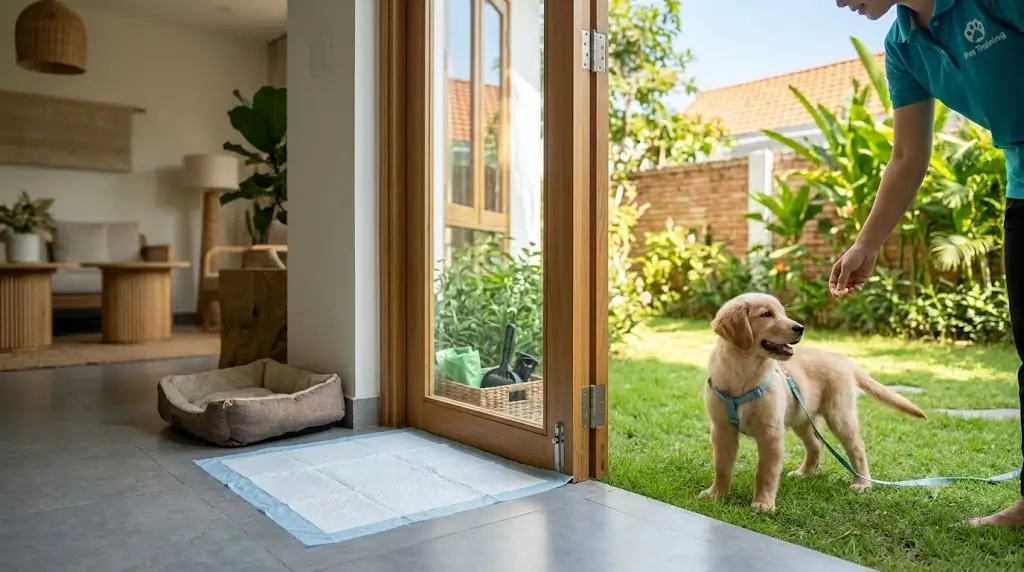
How to Transition From Pee Pads to Outside
If your puppy has learned to use pee pads but you now want outdoor
bathroom training, the goal is not to make the pad disappear overnight.
The smoother approach is to teach the outdoor location, reward outdoor
success, control the puppy’s timing and freedom, and gradually reduce
reliance on the indoor pad.
Quick Answer: How Do You Transition a Puppy From Pee Pads to Outside?
To transition a puppy from pee pads to outside, make outdoor elimination the behavior that consistently earns the best immediate reinforcement while gradually reducing dependence on the indoor pad.
Start with predictable outdoor trips around waking, eating, drinking, sleeping, and active play. Use the same outdoor bathroom spot consistently, keep trips calm and focused, and reward successful elimination immediately.
Keep the pee pad available as a backup during the initial phase. Once outdoor success becomes predictable, gradually phase out the pad rather than removing it abruptly before the puppy understands the new routine.
Why Transition From Pee Pads to Outside?
Pee pads are a valuable temporary tool, but outdoor-only training establishes a clear long-term household rule: bathroom behavior belongs outdoors.
The transition is especially common when a puppy outgrows early apartment restrictions, vaccination quarantine, or extreme weather conditions.
Is Your Puppy Ready to Make the Transition?
A puppy does not need 100% indoor perfection before starting outdoor training. Look for foundational habits:
- The puppy consistently targets the indoor pee pad.
- Indoor accidents are decreasing steadily.
- The puppy displays clear pre-elimination signals (sniffing, circling).
- You can predict bathroom needs based on daily biological triggers.
- You can commit to a frequent, structured outdoor schedule.
Choose Your Final Training Goal
Define your end objective before altering the daily setup:
| Goal | Recommended transition approach |
|---|---|
| Outdoor-only bathroom | Gradually phase out indoor pads completely and heavily reinforce outdoor elimination. |
| Outdoor primary + indoor backup | Make outdoor trips the default while keeping one designated, stationary indoor pad. |
| Apartment outdoor routine | Establish a rapid, seamless path from the apartment unit to the outdoor relief zone. |
| Seasonal / Temporary outdoor training | Prioritize structured outdoor timing while maintaining clear surface distinctions. |
Choose an Outdoor Bathroom Location
A designated outdoor spot provides strong scent markers and familiar environmental cues:
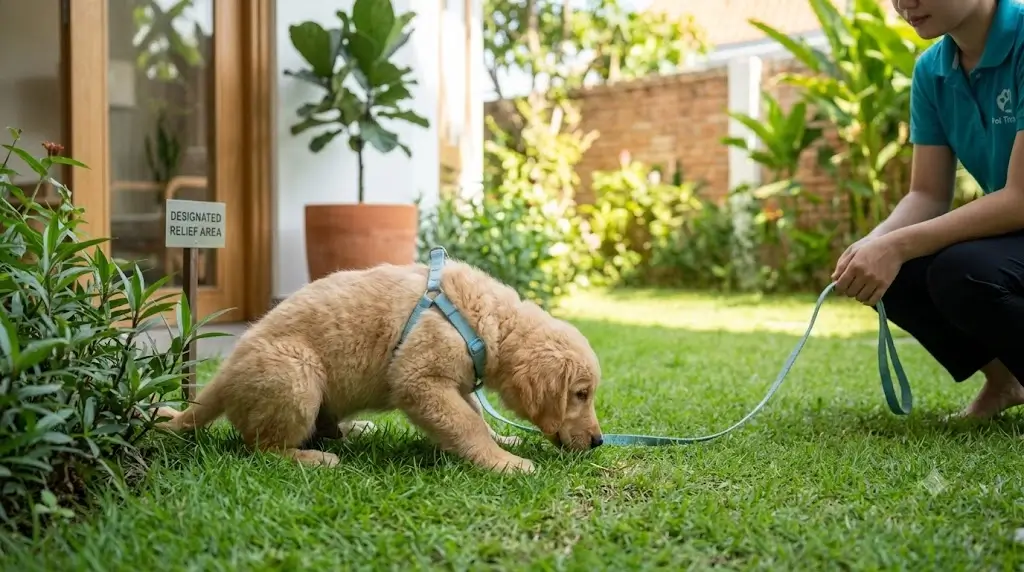
- Safe, clean, and permitted for pets.
- Located close to your home’s main exit route.
- Relatively quiet and free from heavy foot or dog traffic.
- Accessible in all weather conditions.
Prepare Before Reducing Pee Pad Access
Keep essential equipment organized by the door for immediate departures:
- A standard 4–6 foot leash and comfortable harness/collar.
- High-value training treats kept in a pocket or pouch.
- Waste pickup bags.
- Weather gear (rain jacket, towel, slip-on shoes).
- Pet-safe enzymatic cleaner for indoor slip-ups.
Step-by-Step: How to Transition From Pee Pads to Outside
- Select a dedicated outdoor spot: Use the exact same area for every bathroom break.
- Identify biological timing triggers: Target wake-up times, post-meal intervals, and post-nap moments.
- Take the puppy outside proactively: Head outside before the puppy seeks out the indoor pad.
- Keep the outdoor visit focused: Allow 3–5 minutes of quiet sniffing without interactive play.
- Reward outdoor elimination immediately: Praise and treat within 1–2 seconds of completion.
- Return indoors for supervised freedom: Conclude the bathroom trip and allow monitored indoor time.
- Gradually decrease indoor pad availability: Phase out indoor pads as outdoor success becomes the norm.
Build Predictable Outdoor Bathroom Times
Proactive timing converts random outdoor walks into reliable training wins:
| Trigger | Outdoor response |
|---|---|
| Immediately after waking | Move directly from bed/crate to the outdoor bathroom spot. |
| 15–20 minutes after meals | Schedule an outdoor opportunity following digestive stimulation. |
| Shortly after drinking water | Provide an outdoor break to empty a rapid-filling bladder. |
| After active indoor play | Pause play sessions and take the puppy outside immediately. |
| After daytime naps | Treat waking as an automatic cue for an outdoor trip. |
| Right before bedtime | Offer a final outdoor bathroom break for a restful night. |
| Sniffing, pacing, or circling | Respond to subtle physical cues by heading straight outside. |
For a complete daily framework, see the Puppy House Training Schedule.
Reward Outdoor Elimination Correctly
Immediate reinforcement solidifies the outdoor habit loop:
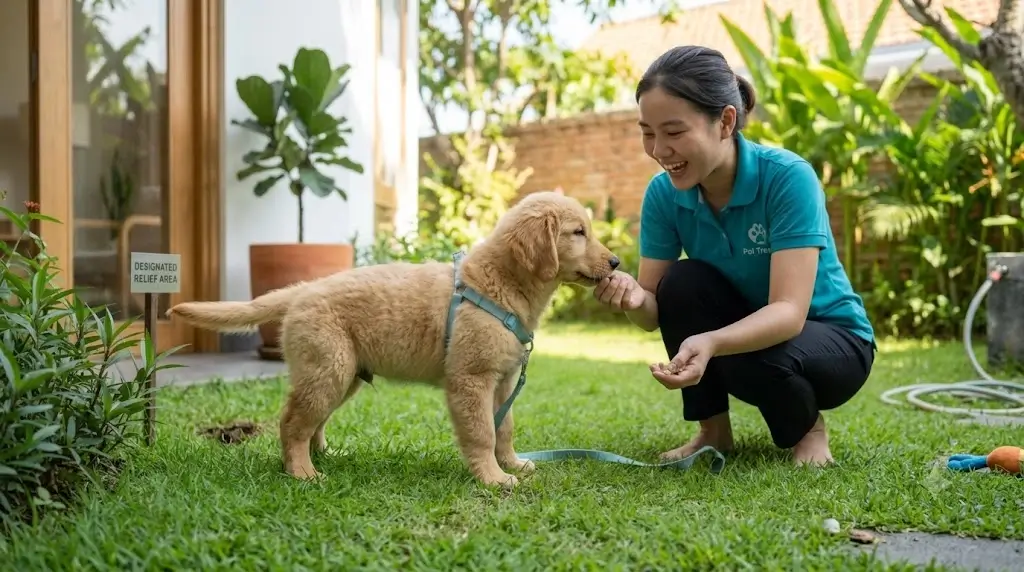
Outside Location → Successful Elimination → Immediate High-Value Reward
How to Gradually Reduce Pee Pad Use
Shift the balance of elimination opportunities without creating sudden confusion:
- Phase 1 (Dual Access): Keep the pad in place while establishing frequent, rewarded outdoor trips.
- Phase 2 (Move the Pad): Gradually move the indoor pad closer to the exterior exit door over several days.
- Phase 3 (Pad to Outdoors): Place a pad directly onto the outdoor grass to bridge the surface texture cue.
- Phase 4 (Pad Elimination): Remove the pad entirely once the puppy reliably seeks grass.
| Transition stage | Indoor pad status | Outdoor focus |
|---|---|---|
| Introduction | Fully available in standard spot | Frequent trips at key biological triggers |
| Building reliability | Moved near exit door as backup | Primary, rewarded bathroom destination |
| Outdoor preference | Small pad or pad placed outdoors | Default relief spot |
| Final stage | Removed completely | Established outdoor routine |
What to Do When Your Puppy Does Not Go Outside
Outdoor distractions often cause young puppies to forget their physical urgency. If your puppy does not eliminate after 5–10 minutes:
- Do not initiate play, running, or long walks.
- Bring the puppy back inside calmly.
- Keep the puppy under close eyes-on supervision or inside a safe crate.
- Take the puppy back outside 10–15 minutes later to try again.
What If Your Puppy Pees Inside Right After Going Outside?
This common setback occurs when outdoor distractions prevent complete bladder emptying:
- The puppy was distracted by outdoor sounds, sights, or weather.
- Indoor freedom was granted too quickly after returning inside.
- The outdoor trip was cut short before full elimination occurred.
Increase post-walk supervision indoors. If the puppy circles or sniffs near old pad spots, immediately leash up and head back outside.
How to Handle Accidents During the Transition
Accidents during a routine shift provide valuable feedback on your supervision and timing.
If caught in the act:
- Interrupt calmly without shouting or scaring the puppy.
- Gently escort or carry the puppy outside to the bathroom spot.
- Wait for the puppy to finish outside, then praise and reward warmly.
If discovered after the fact:
Clean the area thoroughly with an enzymatic cleaner. Never punish a puppy after the event; it damages trust and encourages hidden elimination behind furniture.
Post-accident checklist
- Was the interval between outdoor trips too long?
- Did the puppy have unmonitored indoor freedom?
- Was the indoor pad removed before outdoor reliability was formed?
- Were subtle pacing or sniffing signals missed?
Sample Pee Pad-to-Outside Transition Schedule
| Time / Event | Primary action | Training objective |
|---|---|---|
| Morning wake-up | Immediate outdoor bathroom trip | Build the day’s first successful outdoor repetition |
| Post-breakfast | Outdoor break 15–20 mins after eating | Pair gastrocolic reflex with the outdoor spot |
| Mid-morning nap wake-up | Direct trip outside | Reinforce waking-to-outside routine |
| Post-play session | Outdoor break before free downtime | Prevent predictable excitement accidents |
| Late afternoon | Scheduled outdoor visit | Maintain regular bladder intervals |
| Post-dinner | Outdoor break after evening meal | Empty bladder and bowels before evening rest |
| Before bedtime | Final calm outdoor trip | Prepare for a clean, restful night |
Transitioning From Pee Pads to Outside in an Apartment
Apartment living adds transit time (elevators, stairs, long hallways). Minimize this delay during early training:
- Keep shoes, leash, and treats directly by the front door.
- Carry young puppies through corridors and elevators to avoid hallway accidents.
- Stick to the exact same exit route and relief spot on every trip.
For detailed strategies, read our complete guide on House Training a Puppy in an Apartment.
What About Rain, Cold Weather, or Outdoor Resistance?
Inclement weather often makes puppies reluctant to leave familiar indoor surfaces. Keep trips structured and businesslike:
- Choose a sheltered outdoor spot under an awning or tree canopy when possible.
- Use a puppy raincoat or dry with a towel immediately upon returning.
- Increase reward value (use real chicken or cheese) on cold or rainy outings.
Using Crate Training During the Transition
A crate prevents indoor wandering between bathroom opportunities and leverages a dog’s natural instinct to keep its resting space clean.
Follow this reliable sequence when managing the transition:
Crate Rest → Immediate Leash-Up → Outside Trip → Reward Elimination → Supervised Indoor Freedom
Teach Your Puppy to Ask to Go Outside
Once outdoor trips become routine, reinforce clear communication signals:
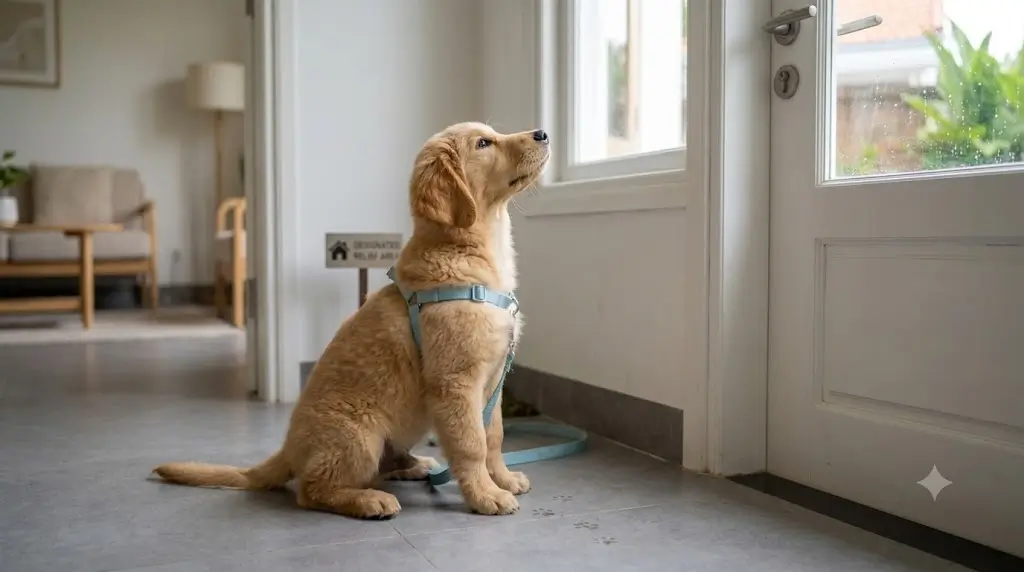
- Watch for natural behaviors like sitting by the door, making eye contact, or pacing near the exit.
- Introduce a consistent verbal cue or potty bell by the door.
- Respond immediately to early signals to reinforce the cause-and-effect relationship.
Explore the full tutorial on How to Teach a Puppy to Ask to Go Outside.
Common Pee Pad-to-Outside Transition Mistakes
- Abruptly removing all pads: Leads to immediate indoor accidents and setbacks.
- Waiting for the puppy to ask: Early transition requires proactive parental scheduling.
- Delayed treat delivery: Rewarding inside the kitchen ruins outdoor association.
- Turning bathroom breaks into play sessions: Distracts the puppy from eliminating.
- Expanding indoor freedom too early: Increases unmonitored accident opportunities.
- Punishing accidents: Breeds anxiety and leads to secretive indoor messes.
How Long Does It Take to Transition From Pee Pads to Outside?
Most puppies make a reliable transition to outdoor elimination within 2–4 weeks of consistent scheduling and management. Full household reliability typically solidifies as bladder control matures between 5 and 7 months of age.
| Progress indicator | What it means |
|---|---|
| Consistent outdoor eliminations | The puppy understands the outdoor location rule. |
| Decreasing indoor pad usage | Outdoor routine is actively replacing the indoor habit. |
| Faster elimination outdoors | The puppy recognizes the context immediately upon arrival. |
| Approaching the exit door | Intentional communication habits are forming. |
What If the Puppy Regresses?
Temporary setbacks often accompany developmental changes, routine shifts, or expanded freedom. If accidents increase:
- Reinstate strict supervision and restrict indoor free roaming.
- Shorten intervals between outdoor bathroom visits.
- Temporarily return a backup pad near the door if outdoor trips fail.
- Thoroughly clean accident spots with enzymatic spray.
- Consult a veterinarian if sudden, frequent urination or discomfort occurs.
The Simplest Transition Formula
Predict the Biological Need
↓
Head Outside to the Same Spot
↓
Successful Elimination
↓
Immediate High-Value Reward
↓
Supervised Indoor Freedom
↓
Gradually Phase Out Indoor Pads
Frequently Asked Questions
How do I transition my puppy from pee pads to outside?
Create predictable outdoor trips around waking, meals, and play. Heavily reward outdoor elimination, keep an indoor pad as a temporary backup, and gradually move the pad toward the door before phasing it out completely.
Should I remove the pee pad immediately?
No. Abruptly removing pads before the puppy grasps the outdoor routine leads to carpet accidents. A progressive reduction is much safer and more effective.
Why does my puppy hold it outside and pee on the pad inside?
Puppies often get distracted by outdoor stimuli or feel that the pad is their only “safe” elimination surface. Keep outdoor breaks calm and boring, stay out until success occurs, and supervise closely upon returning indoors.
How long does the transition take?
With consistent scheduling and supervision, most puppies adapt to outdoor elimination within 2–4 weeks.
Can I keep a pee pad as a permanent backup?
While possible, maintaining an indoor pad can slow down outdoor reliability. If your goal is 100% outdoor elimination, fully phasing out pads provides the clearest rule for the puppy.
