
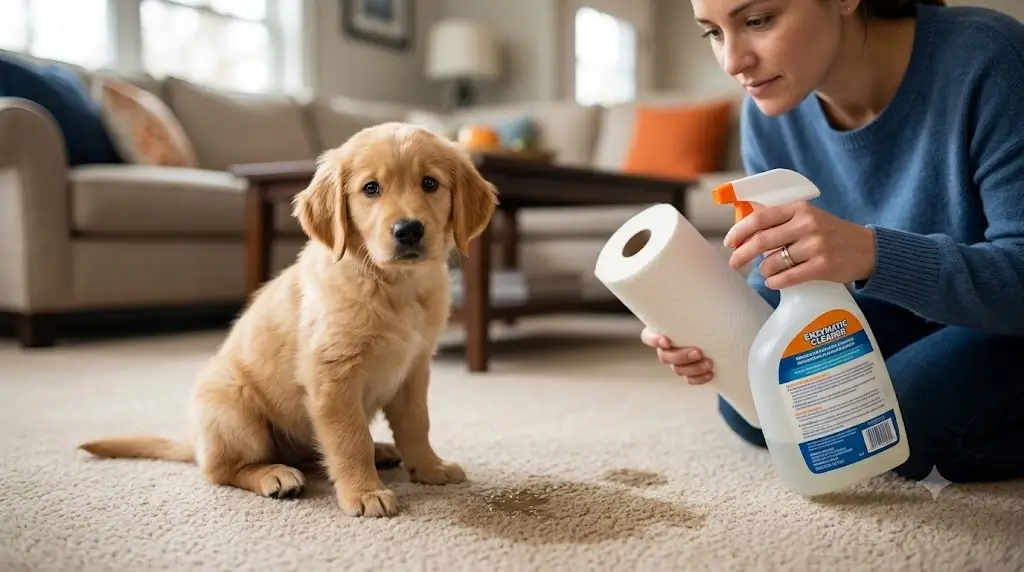
House Training Mistakes New Puppy Owners Make
New puppy owners often make predictable house-training mistakes: granting unearned freedom too soon, reacting to accidents rather than preventing them, running irregular schedules, or expecting adult bladder capacity from an immature canine. Here is how to fix them systematically.
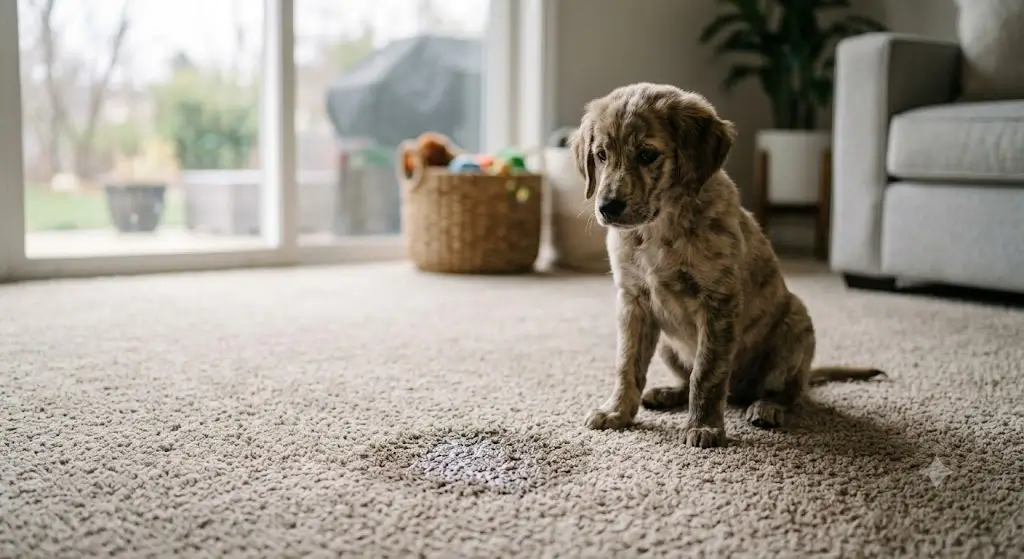
The Most Common House Training Mistakes
House training functions through environmental engineering: making the intended behavior exceptionally easy to perform and the incorrect behavior physically impossible to practice. New owners routinely analyze the accident itself; high-level housebreaking examines what environmental breakdown occurred 30 to 60 minutes prior.
| Systemic Mistake | Behavioral Consequence | Systemic Solution |
|---|---|---|
| Unearned Freedom | Unsupervised indoor eliminations | Expand room access in 14-day zero-accident increments |
| Irregular Schedules | Unpredictable bladder evacuation | Circadian baseline (waking, post-meal, play intervals) |
| Expecting Signals | Passive owner delay, indoor accidents | Proactive handling; teach intentional bell/door prompts |
| Aversive Punishment | Fearful avoidance, hidden eliminations | Neutral interruption, immediate outdoor transfer |
| Standard Detergents | Intact uric acid scent triggers | Sub-surface saturation with enzymatic bio-cleaners |
| Delayed Rewards | Weak behavioral association | High-value marker delivered within 2 seconds of completion |
Mistake #1: Giving a Puppy Too Much Freedom Too Soon
This represents the single most prevalent breakdown in household management. A young puppy that reliably eliminates outside for 72 hours is not qualified for unsupervised access across multiple rooms. Outdoor elimination proves the puppy understands where to go; it does not prove the puppy possesses the impulse control to navigate a large home environment unattended.
1 The Behavioral Problem
The puppy is permitted free roam into adjoining living rooms or hallways. Separated from active human eyes, the puppy wanders behind couches or onto absorbent area rugs and eliminates quietly without intervention.
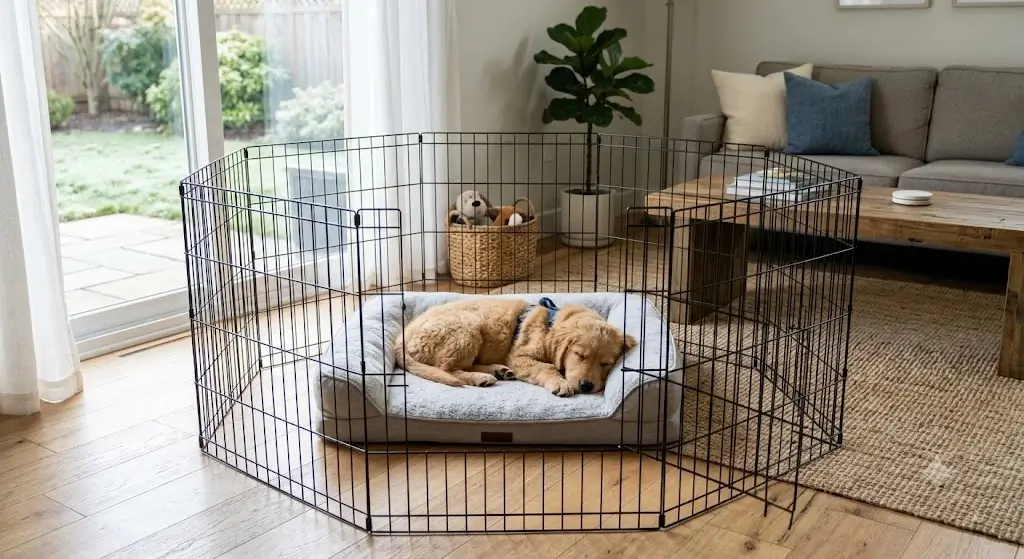
How to Determine Readiness for Increased Freedom
Never expand household access based on age or time spent in the home. Assess readiness strictly via quantifiable behavioral metrics:
- Eliminates exclusively on targeted outdoor surfaces for 14 consecutive days.
- Routinely holds bladder during predictable indoor resting blocks.
- Shows zero exploratory sniffing or pacing when transitioning across living zones.
- Demonstrates consistent relaxation when supervised in the active boundary zone.
Mistake #2: Using an Inconsistent Bathroom Schedule
Canine elimination patterns respond directly to circadian rhythms and metabolic gastrocolic reflexes. If outdoor bathroom excursions take place at erratic, fluctuating hours, the puppy cannot regulate internal muscle sphincters to align with owner routines.
A reliable schedule must proactively capture these key biological transition windows: immediate morning waking, 10–15 minutes post-ingestion, post-rigorous exercise, immediately upon waking from daytime naps, and right before overnight bedtime.
Mistake #3: Waiting for the Puppy to Ask to Go Outside
Many first-time handlers passively wait for their puppy to walk to the exit, whine, or scratch the door before initiating a trip. In young puppies under 16 weeks of age, the conscious neural connection between a full bladder and intentional communication has not yet matured.
Mistake #4: Assuming “He’s Quiet” Means “He’s Fine”
Puppies rarely vocalize before an indoor elimination. Silence often signals the exact moment a puppy has slipped into an unmonitored corner to empty their bladder.
Recognize real-time pre-elimination micro-signals:
- Abrupt cessation of play or chewing.
- Nose pinned to floorboards while pacing in tight circular motions.
- Targeting door frames or edges of vertical furniture.
- Sudden physical restlessness combined with glazed eye contact.
Mistake #5: Punishing the Puppy for a Completed Accident
An indoor accident is a breakdown of management, not deliberate disobedience. Punishing a completed accident through yelling, crate banishment, or rubbing the puppy’s nose in waste creates profound behavioral damage.
Mistake #6: Cleaning Accidents with Regular Household Detergents
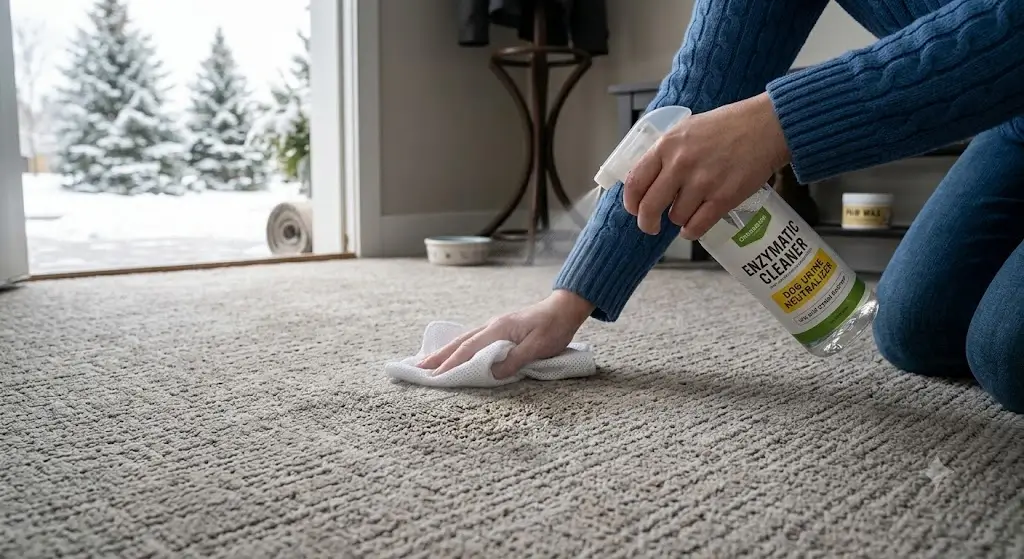
Wiping pet urine with bleach, vinegar, or ammonia-based soaps removes visible surface stains but leaves organic uric acid crystals completely intact. Ammonia actually mimics canine urine components, creating an olfactory magnet that drives the puppy back to re-mark the exact spot.
Eliminating these biochemical triggers requires complete enzymatic digestion. Read our technical walkthrough on how to clean up puppy accidents properly to permanently neutralize sub-surface carpet padding and hardwood floor seams.
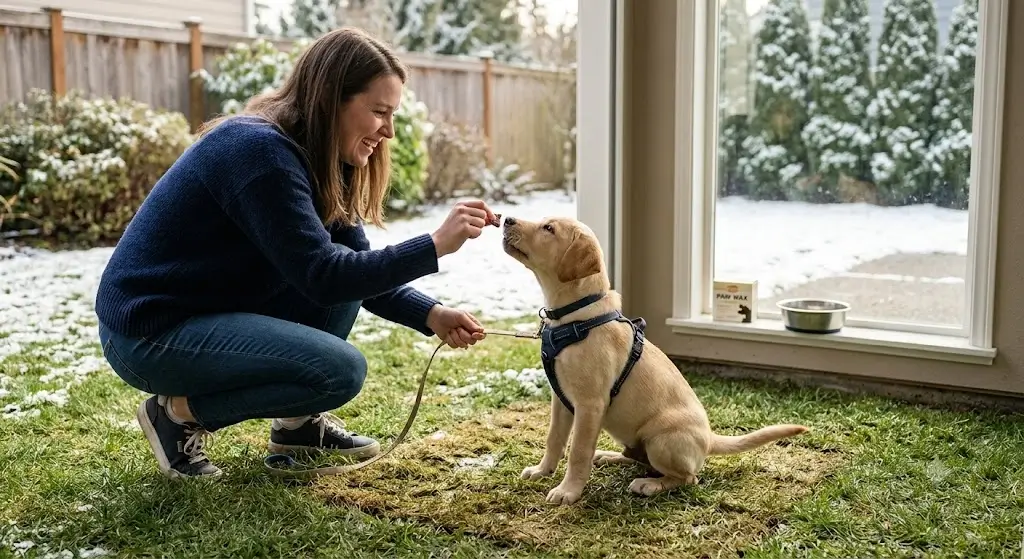
Mistake #7: Rewarding Too Late (The 2-Second Rule)
Operant conditioning requires precise timing. If a puppy urinates in the yard and receives their treat only after trotting back to the kitchen, the treat reinforces entering the kitchen—not eliminating on the grass.
Mistake #8: Using Pee Pads Without Understanding Substrate Confusion
Pee pads offer undeniable utility for high-rise apartment dwellers, but they introduce a significant neurological hazard known as substrate confusion. Synthetic pads mimic the tactile sensation of living room rugs, bathmats, and blankets.
If indoor pads are a permanent necessity for your living situation, implement a strict containment boundary as outlined in our guide on how to train a puppy to use pee pads to prevent your dog from generalizing bathroom behavior onto every soft textile in your house.
Mistake #9: Expecting Overnight Bladder Control Too Early
Urethral and sphincter musculature develops in parallel with physical skeletal maturity. An 8-week-old puppy physically lacks the bladder volume and concentrated anti-diuretic hormone levels required to hold urine for an 8-hour stretch.
Anticipate 1 to 2 midnight bathroom breaks until 12–14 weeks of age. Keep these nocturnal runs purely transactional: zero play, dim lighting, short leash, neutral tone, and immediate return to the sleeping area upon success.
The 5-Step Systemic House-Training Protocol
1 Predict
Preempt biological requirements by timing trips directly to the gastrocolic reflex (post-meals, post-sleep, and structured intervals).
2 Confine
Use crates, pens, or hands-free waist leashes whenever you are not actively observing the puppy with 100% focused attention.
3 Reinforce
Reward with high-protein food rewards outdoors at the exact site of elimination; never wait until you step back indoors.
4 Neutralize
Saturate every accident zone with bio-enzymatic formulas to chemically disintegrate uric acid crystals and organic pheromones.
5 Track
Maintain a 7-day log recording exact times of eating, urination, defecation, and indoor failures to expose underlying behavioral blind spots.
When Household Accidents Signal Medical Pathology
Clinical Safety Warning: Behavioral modifications cannot cure biological infections. Consult a licensed veterinarian immediately if you observe:
- Frequent, small-volume posturing with little or no urine produced.
- Hematuria (visible red, pink, or brownish discoloration in urine).
- Vocalization, whimpering, or arched back during elimination.
- Sudden, uncharacteristic involuntary urine leakage while sleeping or resting.
Need a Step-by-Step Crate-Free House-Training Plan?
Eliminate carpet accidents, master leash-tethering techniques, and establish bulletproof indoor routines using our comprehensive training manual.
Frequently Asked Questions
What is the biggest house training mistake new puppy owners make?
The single most damaging mistake is granting unearned household freedom too early. Free-roaming puppies find secluded spots behind furniture to/how-to-potty-train-a-puppy-without-a-crate eliminate unnoticed, establishing unwanted indoor habits.
How often should a young puppy go outside to prevent accidents?
As a baseline, take puppies outside immediately upon waking, 10–15 minutes post-meals, after active play sessions, and every 1 to 2 hours during active daytime hours.
Does punishing a puppy for an indoor accident work?
No. Punishment teaches puppies that eliminating in human presence is dangerous, leading them to hide accidents behind household furniture rather than eliminating outside.
Why do standard household cleaners fail on puppy urine?
Standard detergents mask odors for human noses but leave insoluble uric acid crystals intact. Puppies easily smell these remnants, which triggers repeat accidents on the same spot.
How do I know when my puppy is ready for more household freedom?
Expand indoor territory gradually only after your puppy achieves zero accidents for at least 14 consecutive days while actively communicating or settling reliably in their current boundary zone.
