
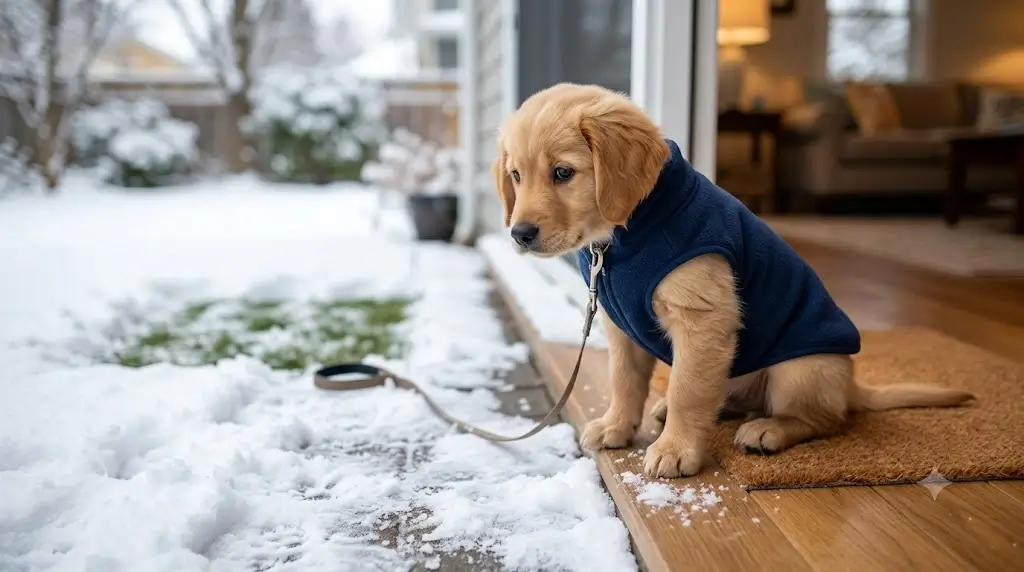
If your puppy won’t go outside in cold weather, don’t turn the bathroom trip into a long outdoor session. Use the same familiar bathroom location, reduce distractions, keep the trip focused, provide appropriate protection from cold conditions and reward outdoor elimination immediately. If the weather is unsafe or the puppy shows signs of being too cold, bring the puppy inside and adjust the plan.
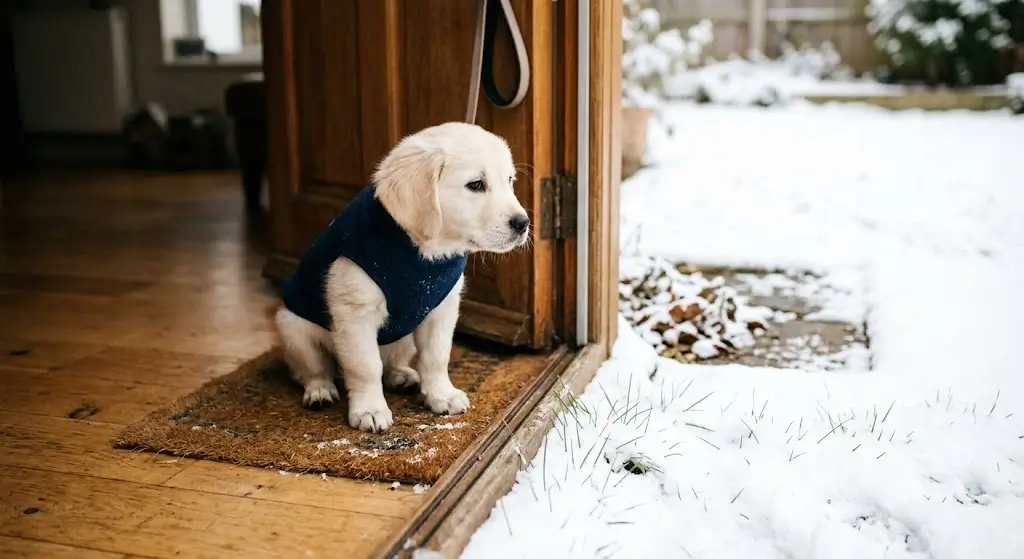
Why Won’t My Puppy Go Outside in Cold Weather?
A puppy that normally runs to the door may suddenly hesitate when temperatures drop. This does not automatically mean the puppy has forgotten house training.
Cold weather changes the physical environment in several ways at once.
| Cold-Weather Change | Why It Can Affect a Puppy |
|---|---|
| Cold ground | Paws may be uncomfortable on frozen pavement, snow or cold surfaces. |
| Wind | Wind can make the same temperature feel substantially less comfortable. |
| Snow | Snow changes the texture, smell and appearance of the normal bathroom area. |
| Ice | Slippery surfaces can make a puppy hesitant to move. |
| Shorter outdoor sessions | The puppy may have fewer opportunities to explore and find the preferred bathroom spot. |
| Winter clothing | New coats or boots can initially feel unfamiliar. |
Cold Weather Can Change the Bathroom Location
A puppy does not necessarily understand that a snow-covered patch of grass is the same bathroom location it used yesterday.
The visual and sensory information has changed.
If the normal grass is covered with snow, for example, the puppy may spend more time investigating instead of eliminating.
This is one reason a consistent, accessible bathroom area is valuable during winter.
How Cold Is Too Cold for a Puppy?
There is no single temperature that is safe or unsafe for every puppy.
Cold tolerance depends on several variables:
- Age.
- Body size.
- Coat type and thickness.
- Whether the coat is wet.
- Wind conditions.
- Snow and ice conditions.
- Health status.
- Whether the puppy is accustomed to cold weather.
A young puppy should not be treated like an acclimated adult dog simply because both animals are the same species.
Do not use a specific temperature number as a universal rule for every puppy. Very young, small, short-coated or medically vulnerable puppies may tolerate cold less well than larger, acclimated dogs.
The Goal Is a Bathroom Trip, Not Cold-Weather Endurance
Winter potty training becomes easier when you separate two activities:
- Bathroom relief
- Outdoor exercise and enrichment
When it is cold, the bathroom trip can be short.
There is no training benefit in keeping an uncomfortable puppy outside simply to make the puppy “get used to it.”
What to Do on the Next Cold-Weather Potty Trip
1 Prepare Before Opening the Door
Have the leash, reward and any appropriate weather equipment ready before taking the puppy outside.
This reduces the time spent standing around in the cold.
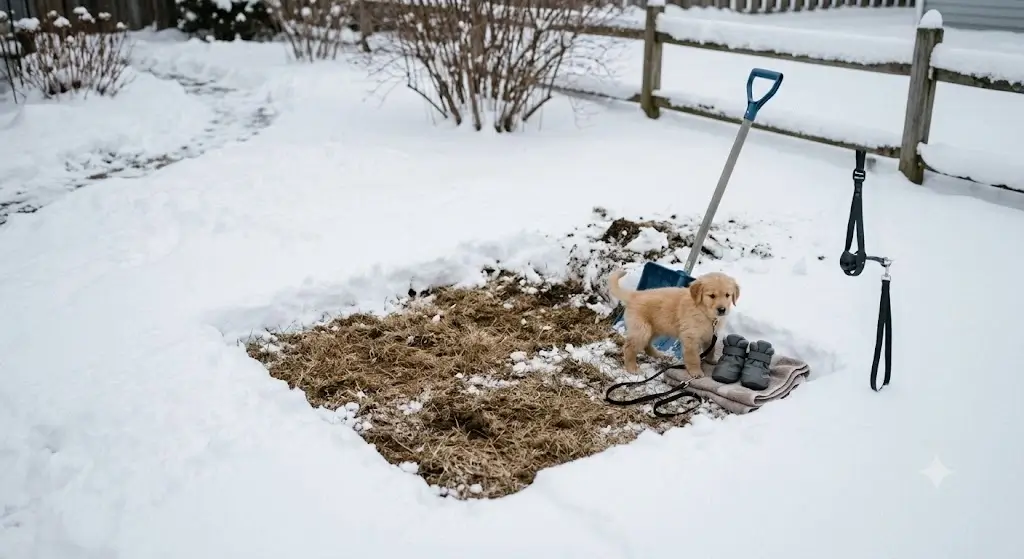
2 Use the Most Familiar Bathroom Area
Choose the normal bathroom location whenever it is safe and accessible.
If snow or ice has covered the area, clear a small safe section when practical.
3 Keep the Route Short
A young puppy does not need a long walk before eliminating.
Go directly to the bathroom area.
4 Use the Familiar Bathroom Cue
Use the same calm verbal cue used during normal-weather training.
Consistency helps the puppy understand that the task has not changed just because the weather has.
5 Reward Immediately After Success
As soon as the puppy finishes eliminating outside, provide the normal reward.
The puppy can then return indoors to warmth.
The Ideal Winter Potty Routine
| Stage | Winter Strategy |
|---|---|
| Prepare | Leash, reward and appropriate weather protection ready before going outside. |
| Exit | Take the shortest safe route to the bathroom area. |
| Location | Use the most familiar safe spot available. |
| Cue | Give the normal bathroom cue calmly. |
| Success | Reward immediately after elimination. |
| Return | Go indoors promptly after the bathroom task is complete. |
Why a Cleared Bathroom Spot Helps in Snow
If snow covers the normal grass area, clearing a small patch can give the puppy a familiar surface again.
This can be especially useful for puppies that hesitate to walk through deep snow.
The cleared area should be:
- Safe to walk on.
- Free from sharp ice.
- Free from visible hazards.
- Accessible without crossing unsafe surfaces.
Puppy Won’t Potty on Snow
Some puppies immediately investigate snow instead of eliminating.
Others dislike the texture under their paws.
Do not assume the puppy is being stubborn.
Snow has changed the bathroom environment.
Try making the bathroom location more familiar by clearing a small area and using the same cue and reinforcement pattern used during normal weather.
Puppy Won’t Walk on Ice
Do not force a puppy across slippery ice simply to reach the normal bathroom spot.
A closer safe area may be preferable.
If the puppy repeatedly encounters slippery surfaces, change the route rather than expecting the puppy to become comfortable through repeated forced exposure.
Does a Puppy Need a Winter Coat?
Some puppies benefit from appropriate cold-weather protection, particularly those with less insulation or lower cold tolerance.
The right choice depends on the individual puppy and conditions.
If you introduce a coat, do it before the coldest day.
Let the puppy become familiar with the garment indoors first.
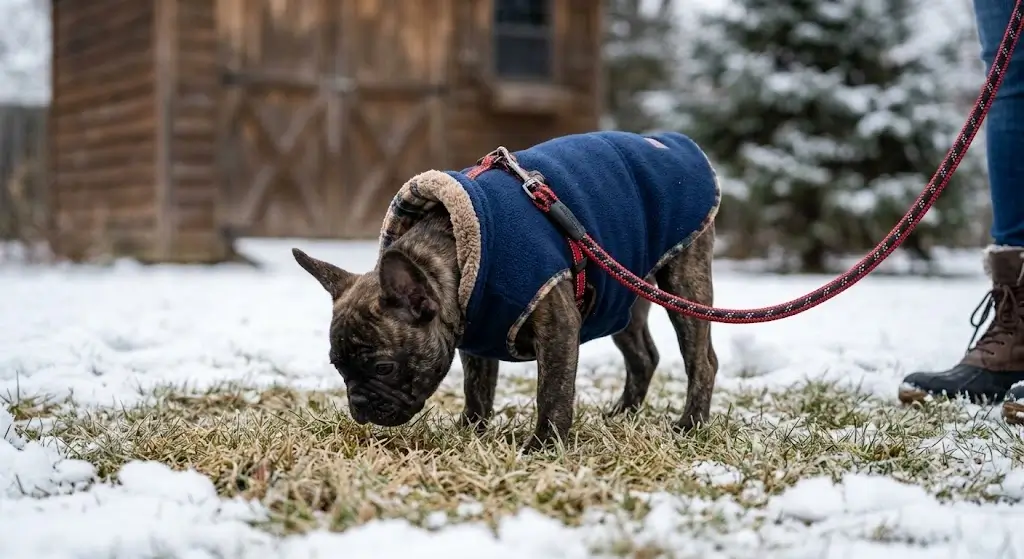
What About Puppy Boots?
Boots can protect paws in some winter environments, but many puppies initially find them strange.
If you plan to use them, introduce them gradually indoors before expecting the puppy to walk normally outside.
Do not make the first boot experience happen during an urgent nighttime potty trip.
What If My Puppy Holds Its Pee Until Coming Inside?
This is a common frustration when the puppy finds the cold uncomfortable.
The puppy may spend a short period outside, refuse to eliminate and then urinate shortly after returning indoors.
The answer is structured management rather than punishment.
1 Make the Outdoor Trip Purposeful
Go directly to the bathroom location instead of beginning with play or a long walk.
2 Give the Puppy an Opportunity to Eliminate
Use the familiar cue and remain calm.
3 Return Indoors if the Puppy Does Not Eliminate
If the conditions are becoming uncomfortable, do not keep the puppy outside indefinitely.
4 Increase Indoor Supervision
If you know the puppy still needs to go, do not immediately provide unlimited access to the house.
5 Try Again Soon
Repeat the bathroom opportunity after a short interval appropriate to the puppy’s age and normal schedule.
Why Punishment Makes Winter Accidents Harder to Solve
If a puppy comes inside from the cold and has an accident, the useful question is not “How do I punish this?”
Ask instead:
- Was the puppy actually given enough opportunity to eliminate?
- Was the bathroom location accessible?
- Was the puppy too uncomfortable in the cold?
- Was the interval between bathroom trips too long?
- Was the puppy supervised after returning indoors?
Those questions produce actionable changes to the routine.
How to Build Cold-Weather Tolerance
If your puppy strongly dislikes cold weather, build tolerance during manageable conditions instead of waiting for an extreme winter day.
Stage 1: Experience Cold Air Near the Door
Allow the puppy to experience cooler outdoor air from a comfortable starting point.
Stage 2: Brief Outdoor Exposure
Step outside briefly during appropriate conditions and return indoors before the puppy becomes uncomfortable.
Stage 3: Walk to the Bathroom Area
Gradually increase the distance to the normal bathroom spot.
Stage 4: Practice the Complete Bathroom Routine
Use the normal cue and reward successful elimination.
Stage 5: Maintain the Routine
Once the puppy is comfortable, continue using the same bathroom sequence through normal winter conditions.
Do Not Use Extreme Cold as a Training Exercise
The purpose of gradual exposure is to make ordinary environmental changes predictable.
It is not a reason to expose a puppy to unsafe temperatures, severe wind, dangerous ice or other hazardous conditions.
How to Know Your Puppy Is Becoming More Comfortable
Progress does not have to mean the puppy enjoys winter.
Useful signs include:
- Less hesitation at the door.
- Walking more readily toward the bathroom area.
- Less time spent investigating the cold surface.
- Faster outdoor elimination.
- Less resistance to returning outside for subsequent trips.
Cold-Weather Potty Training in an Apartment
Apartment puppies face a special winter problem: the bathroom area may be several minutes away.
That distance matters when the puppy is young and already needs to eliminate.
| Apartment Challenge | Practical Adjustment |
|---|---|
| Long hallway | Prepare everything before leaving the apartment. |
| Elevator wait | Keep the puppy’s bathroom schedule predictable and plan the shortest safe route. |
| Snow-covered sidewalk | Use a cleared, permitted bathroom area when available. |
| Cold pavement | Choose a safer surface when possible. |
| Indoor accident after refusal | Increase supervision immediately after returning indoors. |
What About Puppies Without a Yard?
A yard is convenient, but it is not required for successful house training.
The most important variables are:
- Reliable access to an appropriate bathroom location.
- A predictable schedule.
- Supervision.
- Consistent cues.
- Immediate reinforcement.
For apartment-specific training, see: House Training a Puppy in an Apartment.
How to Handle Cold Nighttime Potty Trips
Nighttime cold can make puppies especially reluctant to leave a warm sleeping area.
Make the sequence boring and predictable.
- Prepare the leash before waking the puppy.
- Use appropriate lighting.
- Choose the shortest safe route.
- Go directly to the bathroom location.
- Use the familiar bathroom cue.
- Reward after elimination.
- Return indoors.
Avoid turning a nighttime bathroom trip into a long outdoor activity.
Cold Weather and Crate Training
Crate training can help manage a puppy’s schedule between bathroom opportunities, but it does not replace taking the puppy outside.
If a puppy wakes and needs to eliminate, the bathroom routine still comes first.
After a successful bathroom trip, the puppy can return to the normal sleeping routine.
Related: How Crate Training Helps With House Training.
8 Winter Potty-Training Mistakes
1. Staying Outside Too Long
Long exposure is not necessary for a bathroom behavior.
2. Waiting Until the Puppy Is Desperate
A rushed puppy may have fewer opportunities to navigate cold conditions successfully.
3. Changing the Bathroom Location Every Time
Consistency helps reduce confusion.
4. Introducing a New Coat at the Door
New equipment should be introduced before it becomes necessary.
5. Allowing Free Indoor Access After a Failed Trip
The puppy may still need to eliminate.
6. Punishing Indoor Accidents
Punishment does not teach the desired outdoor behavior.
7. Treating Snow Like Normal Grass
Snow changes the surface, smell and appearance of the bathroom area.
8. Ignoring Unsafe Weather
House-training progress never justifies exposing a puppy to dangerous conditions.
A Practical Winter Bathroom Schedule
The exact schedule should reflect the puppy’s age, routine and individual needs. The important principle is to maintain predictable opportunities rather than waiting for an accident.
| Situation | Bathroom Opportunity |
|---|---|
| After waking | Offer an outdoor bathroom trip promptly. |
| After eating | Follow the puppy’s established routine. |
| After active play | Provide another opportunity if appropriate. |
| Before bedtime | Make the final bathroom trip focused and predictable. |
| After a failed winter trip | Supervise indoors and offer another opportunity soon. |
What If Your Puppy Suddenly Stops Going Outside?
A puppy that suddenly refuses to go outside in cold weather may simply be reacting to the temperature.
But if the refusal continues even when the weather improves, consider whether something else changed.
For example:
- A frightening outdoor experience.
- A new noise or object.
- Construction or changes near the home.
- Slippery surfaces.
- Physical discomfort.
- Illness.
Cold-Weather Puppy Safety
Be particularly cautious with:
- Very young puppies.
- Small puppies.
- Short-coated puppies.
- Puppies with health conditions.
- Wet conditions combined with cold temperatures.
- Strong wind.
- Snow or ice that creates slipping hazards.
Never use a rigid temperature rule as a substitute for observing the puppy and considering the actual conditions.
What About Road Salt and Winter Chemicals?
Winter sidewalks and roads can contain de-icing products that may irritate a puppy’s paws or become a problem if licked.
After walking through treated areas, follow your veterinarian’s or product manufacturer’s guidance for cleaning the paws safely.
Avoid allowing the puppy to lick unknown substances from sidewalks or driveways.
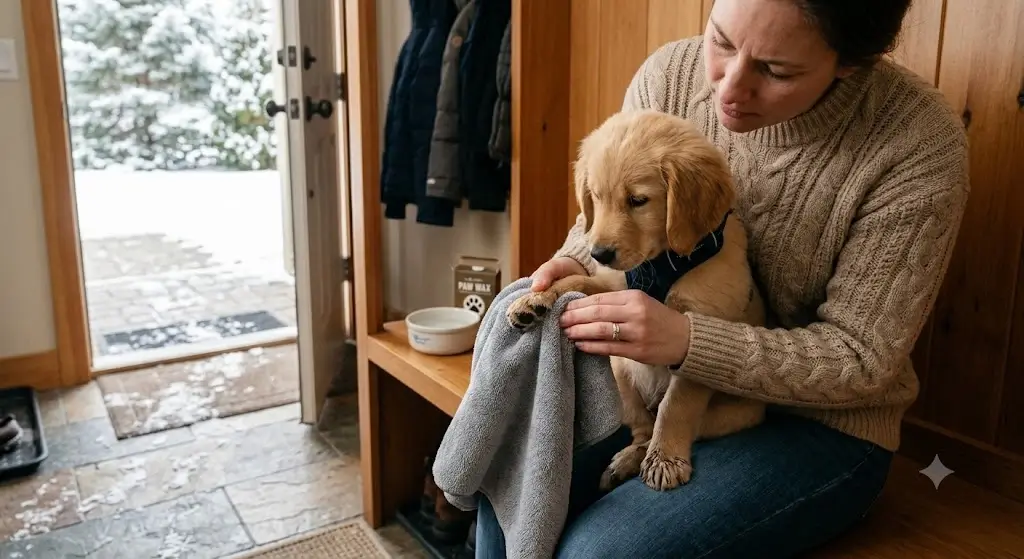
How to Clean Snow and Ice From a Puppy’s Paws
If snow accumulates around the paws or the puppy encounters treated surfaces, inspect the paws after returning indoors.
Look for:
- Visible ice buildup.
- Redness or irritation.
- Cracked skin.
- Persistent licking.
- Signs of discomfort while walking.
If you see persistent irritation or signs of pain, contact your veterinarian.
When to Contact a Veterinarian
Cold-weather reluctance can be behavioral, but a sudden bathroom change can also have a medical component.
Seek veterinary guidance if your puppy has:
- Repeated straining to urinate.
- Difficulty producing urine.
- Blood in the urine.
- Apparent pain when urinating.
- A sudden major increase in urination.
- Markedly increased thirst.
- Persistent lethargy or other illness signs.
- A sudden refusal to eliminate that is not explained by weather.
Cold-Weather Potty Training Checklist
- Prepare leash and rewards before going outside.
- Use the closest familiar safe bathroom area.
- Clear snow when practical.
- Avoid slippery surfaces.
- Keep bathroom trips focused.
- Use the normal verbal cue.
- Reward immediately after elimination.
- Supervise closely after a failed trip.
- Introduce winter clothing gradually.
- Return indoors when the bathroom task is complete.
- Prioritize safety over training during severe weather.
Need a Structured Puppy Training Program?
A predictable potty schedule, supervision strategy and positive-reinforcement system can make difficult winter training situations easier to manage.
Bottom Line
When a puppy won’t go outside in cold weather, the answer is usually to make the bathroom trip simpler, shorter and more predictable — not longer.
Use a familiar bathroom location, reduce the distance traveled, clear a safe area when snow is present, introduce winter gear gradually and reward successful outdoor elimination immediately.
At the same time, recognize that cold tolerance varies considerably between puppies. Very young, small or short-coated puppies may need greater protection than larger, acclimated dogs.
If the weather becomes unsafe, bring the puppy inside. And if bathroom difficulty appears suddenly, persists in normal weather or is accompanied by signs of pain or illness, veterinary evaluation is more appropriate than changing the training technique alone.
Frequently Asked Questions
Why won’t my puppy go outside in cold weather?
Cold temperatures can make outdoor surfaces uncomfortable. Snow, ice, wind and cold pavement can also create unfamiliar sensations that make a young puppy hesitant.
How do I get my puppy to potty outside when it is cold?
Use a familiar bathroom location, keep the trip focused and short, provide appropriate weather protection and reward outdoor elimination immediately.
Should I force my puppy to stay outside in the cold?
No. Avoid prolonged outdoor exposure when the puppy is uncomfortable or conditions are unsafe. The objective is a productive bathroom trip, not endurance training.
Why does my puppy hold its pee when it is cold outside?
The puppy may be uncomfortable on cold ground, distracted by snow or eager to return indoors. A familiar bathroom location and short focused trips can help make the task easier.
Can puppies potty train during winter?
Yes. Puppies can continue learning outdoor bathroom habits during winter when conditions are safe. Consistency, supervision and immediate reinforcement are important.
When is cold weather too cold for a puppy?
There is no single safe temperature for every puppy. Age, size, coat, moisture, wind, health and acclimation all affect cold tolerance.
