
Puppy Suddenly Started Having Accidents: What to Do
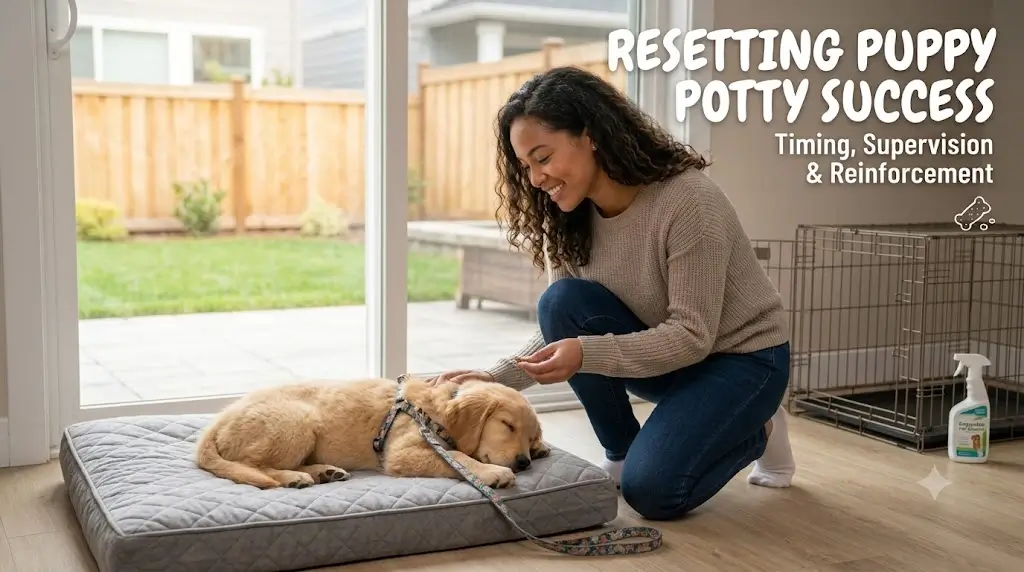
If your puppy was doing well and suddenly started peeing or pooping inside, do not assume the training has failed. First identify what changed, then temporarily return to a more structured routine while watching for signs that the problem may be medical rather than behavioral.
The key distinction: A puppy that has an occasional accident during training is different from a puppy that was reliably using the correct bathroom location and then suddenly changes behavior. A sudden change deserves a closer look at both routine and health.
When a puppy suddenly starts having accidents, check for a recent change in schedule, supervision, access to the outdoors, sleeping arrangements, food or water routine, environment, or stress level. If the puppy was previously consistent and the change is abrupt, persistent, or accompanied by other unusual symptoms, do not treat it as a simple training failure. A veterinarian can help determine whether an underlying medical issue needs attention. For a straightforward training regression, the practical response is usually a short reset: increase supervision, shorten the interval between potty trips, reward successful elimination, restrict unsupervised freedom, and expand freedom again as reliability returns.
Why Did My Puppy Suddenly Start Having Accidents?
Sudden accidents usually fall into one of two broad categories: something changed in the puppy’s environment or training routine, or something changed in the puppy’s physical condition.
The important clue is the word suddenly. A puppy that has never been consistently house trained may simply need more repetition and supervision. A puppy that was reliably eliminating outdoors and then begins having frequent indoor accidents presents a different problem.
Start by reconstructing the previous few days. Look for changes before deciding that the puppy has “forgotten” house training.
- Routine changed: A different wake-up time, feeding schedule, work schedule, bedtime, or weekend routine can change when your puppy needs to eliminate.
- Supervision decreased: A puppy may appear reliable while closely supervised but still be learning how to recognize and respond to the need to go.
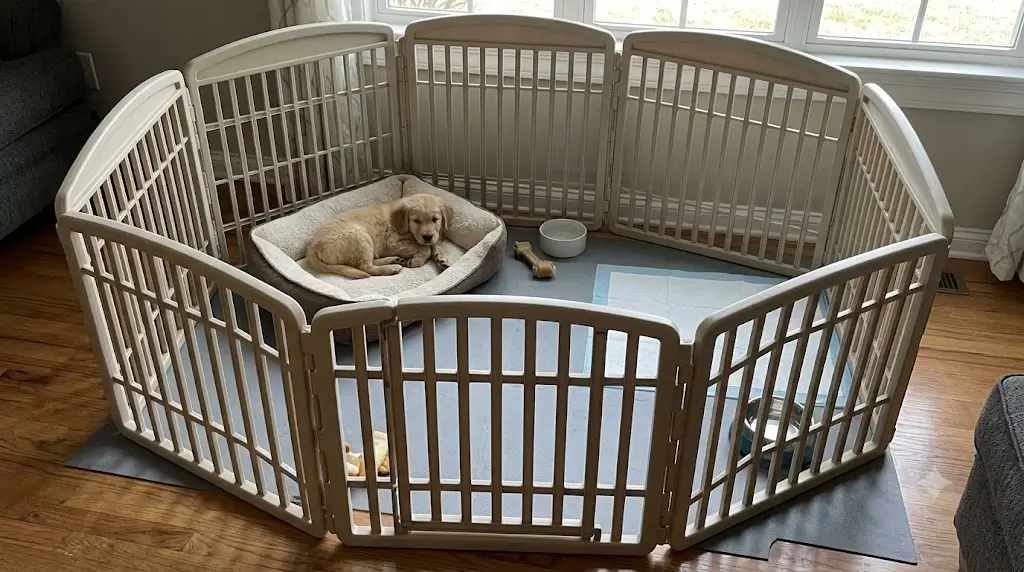
- More freedom was introduced: Moving from one puppy-proofed room to the entire house can expose gaps in house-training reliability.
- Environment changed: Visitors, travel, moving furniture, construction noise, a new home, or another household change can disrupt a puppy’s normal routine.
- Physical factors may be involved: A sudden change in urination or defecation can sometimes be associated with a health problem and should not automatically be labeled a behavioral issue.
Is This Normal Puppy House-Training Regression?
Some setbacks are normal during puppy development. House training is not a single skill that becomes permanent after a few successful days. Puppies are still learning bladder and bowel control, environmental cues, household routines, and the connection between an internal urge and the appropriate bathroom location.
When setbacks arise without an obvious physical cause, identifying the symptoms of a puppy house training regression helps you rebuild structure through tighter supervision rather than assuming the puppy has permanently lost its training.
For example, a puppy may have gone several days without an accident in a small supervised area. That does not necessarily mean the puppy is ready to spend an entire afternoon with unrestricted access to the house. In that situation, the problem may be less about forgetting and more about testing a skill in a harder environment.
A Useful Test
Temporarily return to the level of supervision that previously produced good results. If accidents decrease substantially, the problem may be related to management or premature freedom.
If accidents continue despite a careful routine, especially when the change is abrupt, broaden the investigation rather than repeatedly tightening training rules.
10 Common Changes That Can Trigger Accidents
1. A New Daily Schedule
Puppies learn patterns. If you normally take your puppy outside shortly after waking, after meals, after naps, and before bedtime, a major schedule change can create longer gaps than the puppy is prepared to handle. This is particularly common when school, work, travel, or household responsibilities change.
2. More Freedom Around the House
Increasing access to additional rooms is useful as training progresses, but freedom should follow reliability rather than replace supervision. If accidents appear after expanding the puppy’s territory, temporarily reduce access and rebuild gradually.
3. A Change in Feeding Times
Meals influence bathroom timing. If feeding moves from a consistent schedule to irregular times, the puppy’s elimination pattern may become less predictable. If sudden stool accidents appear inside after meal variations, understanding why is my puppy pooping in the house helps realign outdoor breaks with digestive timing.
4. A Change in Water Access or Drinking
Do not intentionally restrict normal access to water as a house-training shortcut. Instead, pay attention to whether your puppy is suddenly drinking substantially more or less than usual. A noticeable change in drinking combined with increased urination is a reason to discuss the situation with a veterinarian.
5. Visitors or Household Activity
Excitement can interfere with a puppy’s normal routine. Visitors may also cause owners to supervise the puppy less closely because attention is directed elsewhere. During busy gatherings, keep the puppy’s bathroom schedule predictable rather than relying on the puppy to remember the routine independently.
6. Moving or Traveling
A puppy that understands the bathroom routine at home may not automatically understand the same rules in a hotel, friend’s home, new apartment, or unfamiliar yard. Treat a new environment as a new training context. Show the puppy the appropriate bathroom location and reward successful elimination there.
7. Weather Changes
Rain, extreme heat, cold, wind, or unfamiliar outdoor conditions can make some puppies reluctant to stay outside long enough to eliminate. If your puppy returns indoors and has an accident shortly afterward, consider whether the outdoor trip was long enough and whether the environment was comfortable enough for the puppy to focus.
8. A New Pet or Major Household Change
Adding another animal, changing sleeping arrangements, or altering the household routine can affect a puppy’s behavior. Keep the potty routine especially predictable during periods of transition.
9. Training Was Advanced Too Quickly
Puppies often appear ready for more independence before they are actually reliable. When setbacks occur repeatedly across different rooms, diagnosing why is house training not working provides a systemic checklist to correct schedule gaps and premature independence.
10. A Possible Medical Problem
A sudden bathroom change can also have a physical cause. That is why sudden regression should not automatically be treated as disobedience. The more abrupt and unusual the change, the more important it is to consider whether veterinary guidance is appropriate.
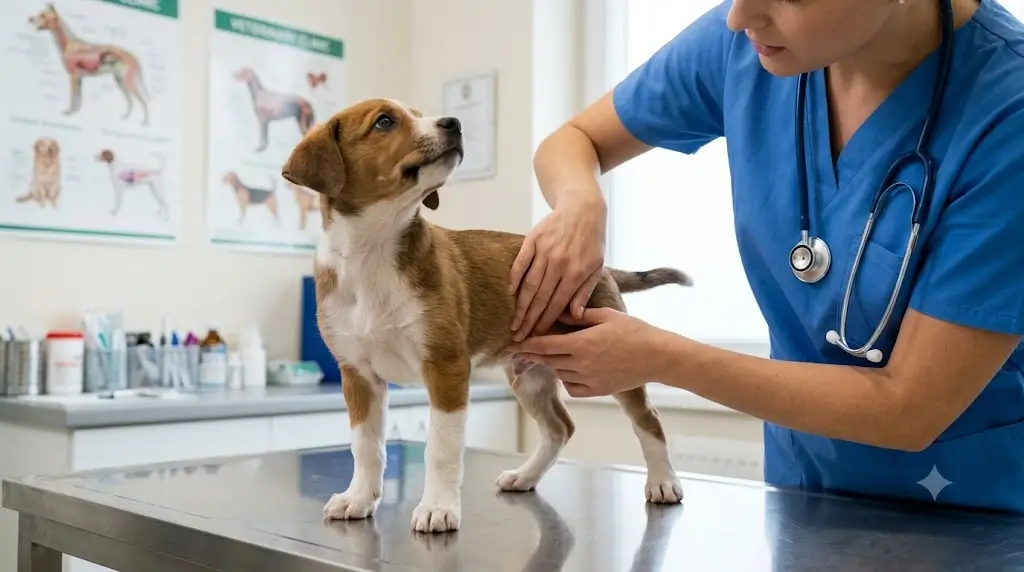
When health may be part of the picture: If your puppy suddenly starts urinating much more frequently, strains to urinate, appears uncomfortable, has blood in urine or stool, develops vomiting or diarrhea, becomes unusually tired, drinks noticeably more than normal, or shows another significant change in behavior, contact a veterinarian.
When Sudden Accidents Could Be a Health Problem
House-training articles should not treat every indoor accident as a behavior problem. Puppies can have accidents for ordinary training reasons, but a sudden change in elimination deserves attention when it does not fit the puppy’s previous pattern.
Pay attention to the pattern, not just the existence of one accident.
| What You Notice | What It May Mean | What to Do |
|---|---|---|
| One accident after an unusually long interval | May be a routine or management issue. | Review the schedule and increase supervision. |
| Accidents began after a major routine change | Training regression or environmental stress may be involved. | Restore the previous routine and monitor closely. |
| Frequent urination that is unusual for your puppy | May warrant medical evaluation. | Contact your veterinarian for guidance. |
| Straining, discomfort, or repeated attempts to urinate | Could indicate a urinary problem. | Seek veterinary advice promptly. |
| Accidents plus vomiting, diarrhea, lethargy, or other illness signs | May be more than a training issue. | Contact a veterinarian. |
This table is not a diagnostic tool. Its purpose is to help you decide whether repeatedly changing training techniques makes sense or whether the sudden change deserves professional veterinary evaluation.
How to Reset House Training After Accidents
If there are no concerning health signs and the pattern looks like ordinary training regression, a short reset can restore structure.
1. Reduce unsupervised freedom.
Keep your puppy close enough that you can notice pre-potty behavior. Use a puppy-safe area or appropriate confinement when direct supervision is not possible.
2. Return to predictable potty trips.
Take the puppy outside after waking, after naps, after meals, after active play, and before bedtime. Add additional trips based on your puppy’s age, routine, and individual needs.
3. Use the same bathroom location when practical.
A consistent location can make the desired behavior easier to recognize, particularly when a puppy is still learning.
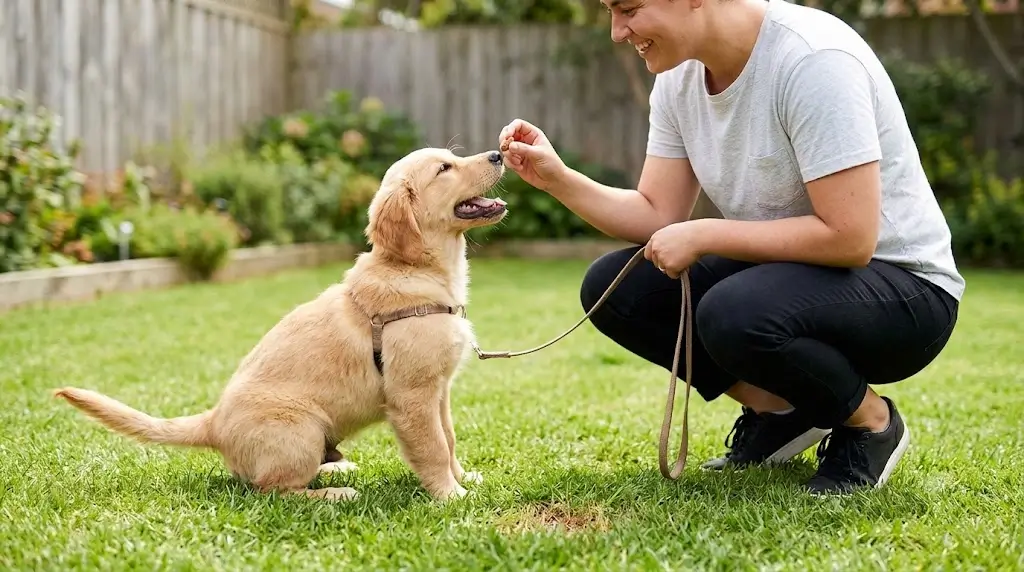
4. Reward successful elimination.
When your puppy finishes in the correct location, provide immediate positive feedback. The timing matters because the puppy needs to connect the reward with the behavior that just occurred.
5. Clean indoor accident areas thoroughly.
Use a pet-safe cleaner designed to address urine or fecal odors. Lingering odor can make previously soiled locations more interesting to a puppy.
6. Increase freedom gradually.
Once reliability improves, add access to additional areas progressively instead of returning immediately to unrestricted access.
Should You Punish a Puppy for an Accident?
No. Punishment after an accident does not teach the puppy where you want future elimination to occur.
If you discover an accident after the fact, clean it without making the puppy part of a confrontation. If you catch the puppy beginning to eliminate indoors, calmly interrupt and take the puppy to the appropriate bathroom location when practical.
The goal is to make the correct behavior easier to repeat, not to make accidents frightening.
Look at the Accident Pattern
The location, timing, and circumstances surrounding an accident can provide useful information.
| Pattern | Questions to Ask |
|---|---|
| Shortly after coming indoors | Did the puppy actually eliminate outside, or was the trip too distracting or brief? |
| Only when left alone | Was the puppy given more time or space alone than usual? |
| During energetic play | Was a potty trip skipped because play became the focus? |
| After meals | Did the feeding schedule change or was the normal post-meal trip missed? |
| In one specific room | Does the puppy have too much unsupervised access to that area? |
| At unpredictable times with other unusual symptoms | Could the sudden change warrant veterinary evaluation? |
What If the Accidents Are Happening at Night?
Nighttime accidents can have a different management pattern from daytime accidents. Puppies may sleep for different lengths of time depending on age, development, routine, and individual factors.
If nighttime accidents suddenly appear after your puppy had been sleeping reliably, first review what changed:
- Was bedtime moved?
- Was the puppy given more water than usual?
- Did the evening meal time change?
- Was the puppy more active than normal?
- Was the sleeping environment changed?
- Are there other changes in urination or behavior?
A sudden nighttime change that persists should not automatically be solved by simply expecting the puppy to hold it longer.
Can a Crate Help With a Sudden Regression?
A properly sized and appropriately introduced crate can be useful as part of a house-training management plan because it can reduce unsupervised opportunities for accidents.
A crate should not be used as punishment, and a puppy should not be expected to remain confined for excessive periods simply to avoid accidents.
If your puppy already has a positive crate routine, temporarily using that routine during a training reset may make supervision easier.
If crate training is new, introduce it separately and positively rather than suddenly relying on confinement as the solution to accidents.
Build a Short-Term Potty Schedule
During a regression, predictability is more useful than trying to find one universal number of hours that every puppy can wait.
Use natural transition points as reminders:
- Immediately after waking.
- After naps.
- After meals.
- After drinking normally.
- After energetic play.
- After exciting activity or visitors.
- Before being left alone.
- Immediately before bedtime.
Then adjust based on your puppy’s actual pattern. If accidents continue, shorten the interval and increase supervision rather than waiting for another accident to occur.
What If You Live in an Apartment?
Apartment living can make sudden accidents harder to manage because reaching the designated outdoor bathroom location takes longer.
During a regression, prepare the route before the puppy needs to go. Keep the leash, shoes, waste bags, and other essentials easy to access.
If your normal trip requires an elevator or long hallway, include that travel time in your management plan.
For owners who use indoor potty options, consistency matters. If the long-term goal is outdoor elimination, a transition plan may be needed rather than switching randomly between indoor and outdoor locations.
What If You Work Full Time?
A sudden increase in accidents can occur when a puppy’s schedule no longer matches the owner’s availability.
If you have recently returned to an office, changed shifts, increased working hours, or altered your lunch routine, compare the new schedule with the puppy’s previous successful routine.
A realistic plan may require another household member, a trusted caregiver, a dog walker, or another appropriate potty break arrangement depending on the puppy’s age and individual needs.
What Not to Do After a Regression
- Do not assume the puppy is being deliberately disobedient.
- Do not punish the puppy after discovering an old accident.
- Do not intentionally restrict normal water access to prevent accidents.
- Do not increase confinement dramatically without considering the puppy’s needs and existing crate training.
- Do not ignore a sudden change accompanied by signs of illness.
- Do not change five training variables at once if you are trying to identify what caused the regression.
A Simple 7-Day Regression Reset
A short reset can help you determine whether the problem responds to better management. The exact schedule should be adapted to the puppy rather than treated as a rigid medical or behavioral prescription.
| Days | Focus | Goal |
|---|---|---|
| Days 1–2 | Maximum practical supervision and predictable potty trips. | Prevent avoidable accidents and re-establish the routine. |
| Days 3–4 | Continue the successful schedule and reward outdoor elimination. | Build repeated correct behavior. |
| Days 5–6 | Test small increases in freedom when reliability is strong. | Determine whether the puppy can handle slightly more independence. |
| Day 7 | Review the accident log and identify the conditions associated with success or failure. | Choose whether to maintain, expand, or step back the routine. |
If accidents continue despite careful management, or if the puppy’s elimination pattern has changed in a way that concerns you, stop treating the issue as purely a training experiment and seek appropriate professional advice.
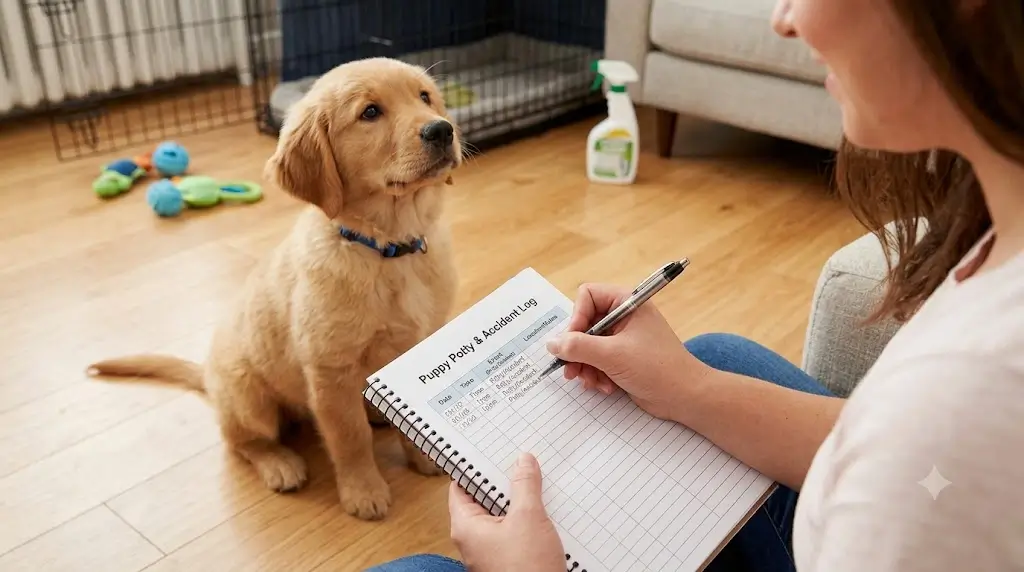
Keep an Accident Log
An accident log can turn a vague problem into a recognizable pattern. Record the time, location, what happened immediately beforehand, the last potty trip, meals, and any unusual behavior.
- Time: When did the accident occur?
- Location: Which room or surface was involved?
- Last potty trip: When and where did the puppy last eliminate?
- Activity: Was the puppy sleeping, eating, playing, greeting people, or left alone?
- Other observations: Was there anything unusual about urination, stool, drinking, appetite, energy, or behavior?
A short record can also be useful when speaking with a veterinarian or professional trainer because it provides actual timing rather than relying entirely on memory.
When Should You Call a Veterinarian?
There is no need to panic over every puppy accident. However, a sudden and persistent change in bathroom behavior deserves more attention when it does not match the puppy’s previous training pattern.
Contact your veterinarian if you notice concerning changes such as:
- Repeated attempts to urinate.
- Straining or apparent discomfort while urinating.
- Blood in urine or stool.
- Markedly increased drinking or urination.
- Vomiting or significant diarrhea.
- Unusual lethargy or weakness.
- A sudden major change in normal behavior.
- Persistent accidents that do not improve with reasonable routine management.
Puppies can develop health problems, and house-training status should not be used to rule those problems out. A veterinarian can assess the puppy’s overall condition and determine whether testing or treatment is appropriate.
The Bottom Line
If your puppy suddenly started having accidents, do not jump straight to punishment or assume the puppy has forgotten everything it learned.
First ask what changed. Review the schedule, freedom level, supervision, environment, meals, activity, and recent household events. If the pattern looks like ordinary regression, temporarily return to a more structured routine and rebuild reliability step by step.
At the same time, sudden bathroom changes should not automatically be labeled behavioral. If accidents are abrupt, persistent, unusually frequent, or accompanied by other concerning changes, veterinary advice is appropriate.
The most useful goal is not simply to eliminate today’s accident. It is to determine why the previous routine stopped working and then make the correct bathroom behavior predictable again.
Frequently Asked Questions
Why did my puppy suddenly start having accidents?
Common possibilities include a changed routine, reduced supervision, too much freedom, environmental changes, excitement, stress, or a physical problem. If the change is abrupt or persistent, consider both training and health rather than assuming one explanation.
Should I restart house training?
A temporary reset is often useful when the pattern appears to be training regression. Increase supervision, make potty trips predictable, reward successful elimination, and gradually restore freedom as reliability improves.
Can stress cause puppy accidents?
Changes in environment, routine, visitors, travel, or household activity can affect a puppy’s bathroom routine. However, stress should not automatically be blamed when the change is sudden or accompanied by other unusual signs.
Should I punish my puppy for accidents?
No. Punishment does not teach the puppy where elimination should happen. Focus on supervision, predictable potty trips, immediate reinforcement for the desired behavior, and thorough cleanup of accident areas.
When should I call a veterinarian?
Contact a veterinarian when the sudden change persists or is accompanied by signs such as discomfort, straining, repeated urination attempts, unusual thirst, blood, vomiting, diarrhea, lethargy, or another significant change in normal behavior.
