
Puppy Goes Outside but Still Has Accidents: Why It Happens & What to Do
Taking your puppy outside is only one part of house training. If your puppy regularly goes outdoors but still urinates or defecates indoors, the problem is usually a mismatch between timing, supervision, reinforcement, environmental distractions, or the puppy’s current physical ability to hold it.
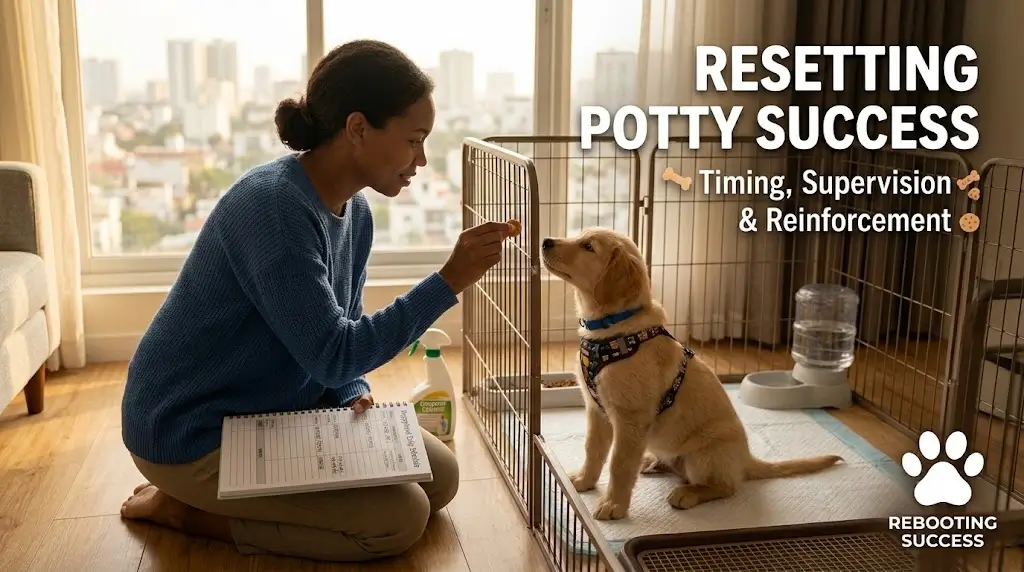
If your puppy goes outside but still has accidents indoors, don’t assume the puppy is being stubborn. The most common issue is that the outdoor trip did not result in a successful potty event, or the puppy was given more indoor freedom than its current training level supports. Reset the routine around predictable potty opportunities, quiet outdoor trips, immediate rewards, and close supervision between trips.
Why Does My Puppy Go Outside but Still Have Accidents?
A puppy can understand that going outside is important and still have accidents indoors. House training is not simply a matter of showing the puppy where the door is. The puppy has to develop a predictable pattern: recognize the need to eliminate, remain comfortable long enough to reach the correct location, eliminate there, and learn that the behavior produces a desirable result.
That process takes repetition. A puppy may go outside, sniff around, become distracted, return indoors, and then eliminate shortly afterward. From the owner’s perspective, the puppy “just went outside.” From the puppy’s perspective, the outdoor trip may not have been a successful bathroom trip at all.
If indoor elimination begins suddenly after a period of consistency, checking why your puppy suddenly started having accidents helps determine if schedule changes or underlying physical triggers are at play.
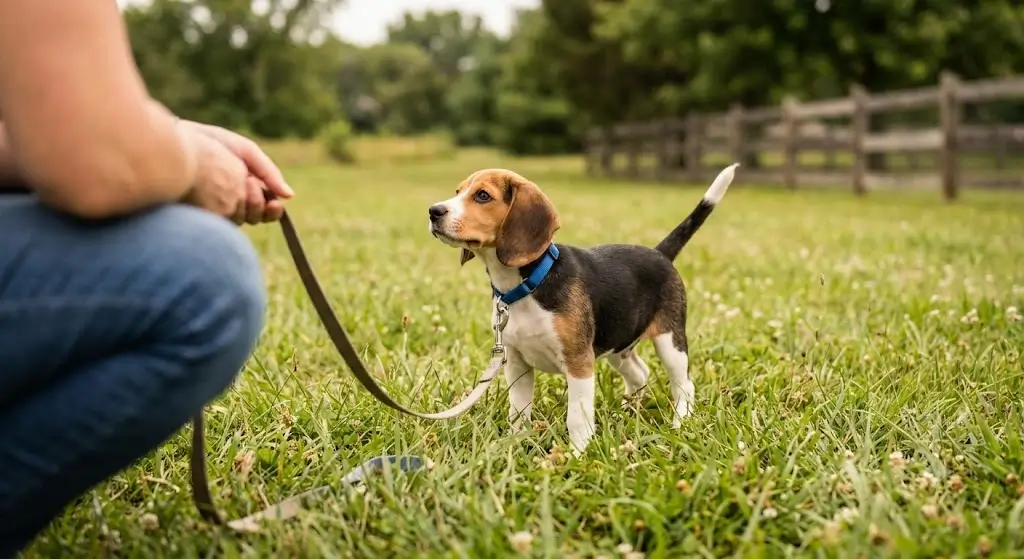
Key distinction: “Went outside” and “went potty outside” are two different events. House-training decisions should be based primarily on the second one.
8 Common Reasons a Puppy Still Has Accidents
1. The Puppy Did Not Actually Potty Outside
This is the most common practical explanation. A puppy may spend several minutes outdoors without eliminating because it is distracted, excited, uncomfortable with the environment, or simply does not need to go at that exact moment. If the puppy comes indoors and immediately gets unrestricted access to the house, an accident can happen before the next potty opportunity.
2. Outdoor Trips Are Too Distracting
Puppies are easily influenced by movement, smells, people, other dogs, vehicles, noises, leaves, and new surfaces. A backyard can become a play area instead of a bathroom area. During the training phase, use a consistent potty location and keep the first part of the trip boring and predictable. Play can happen after the puppy has successfully eliminated.
3. The Puppy Is Being Taken Outside Too Late
Waiting for a puppy to clearly signal the need to go can be unreliable, particularly with young puppies. Signals can be subtle, inconsistent, or easy for a busy household to miss. Scheduled potty opportunities are therefore useful. Take the puppy outside around predictable events such as waking, eating, drinking, playing, and waking from a nap.
4. The Puppy Has Too Much Freedom Indoors
House-training progress can appear better than it actually is when a puppy is confined to a small supervised area. Problems often return when the puppy suddenly gains access to multiple rooms. When setbacks occur in previously reliable dogs, reviewing what to do when your puppy has accidents after being house trained provides actionable management steps to regain control.
5. The Puppy Has Learned to Hold It Temporarily
Some puppies learn to delay elimination while outside but have not yet developed a reliable habit of using the outdoor location. Simply staying outside longer is not always the solution. A predictable bathroom location, reduced distractions, and immediate reinforcement after successful elimination can make the desired behavior clearer.
6. The Reward Comes Too Late
Timing matters in puppy training. If the reward happens several minutes after returning indoors, the connection between outdoor elimination and the reward becomes weaker. Have the reward ready before the puppy finishes. Reinforce the desired behavior immediately after the puppy completes the potty behavior outdoors.
7. Previous Accidents Have Not Been Cleaned Adequately
Dogs can be influenced by residual odor. A location that still carries detectable urine or fecal odor can become more likely to be revisited. Use an enzymatic cleaner designed for pet accidents and follow the product’s directions. Regular household cleaners may remove the visible stain without adequately addressing odor residues.
8. A Physical or Medical Issue May Be Involved
Not every house-training problem is behavioral. If you have tightened management and find yourself wondering why is house training not working, it is critical to evaluate whether urinary frequency, digestive upsets, or schedule mismatches are preventing progress.
Important: If a puppy that was previously doing well suddenly begins having frequent accidents, don’t assume the problem is simply training. A veterinarian can help determine whether a medical issue needs to be considered.
How to Reset a Puppy That Goes Outside but Still Has Accidents
The fastest way to improve consistency is usually not to add more complicated commands. Instead, temporarily make the routine more predictable.
1. Reduce indoor freedom.
Keep the puppy close enough that you can observe its behavior. Use a safe, appropriately managed puppy area when direct supervision is not possible. Watch for behaviors such as suddenly leaving the room, sniffing intensely, circling, pacing, stopping play, or moving toward a previously used accident location.
2. Create predictable potty opportunities.
Take the puppy outside after predictable events instead of relying exclusively on spontaneous signaling:
- Immediately after waking
- After a nap
- After eating
- After drinking more than usual
- After energetic play
- After extended chewing or excitement
- Before bedtime
3. Use the same bathroom area.
A consistent outdoor location can reduce distractions and make the routine easier for the puppy to recognize. Keep the initial trip focused on elimination rather than turning it immediately into a walk or play session.
4. Reward immediately after success.
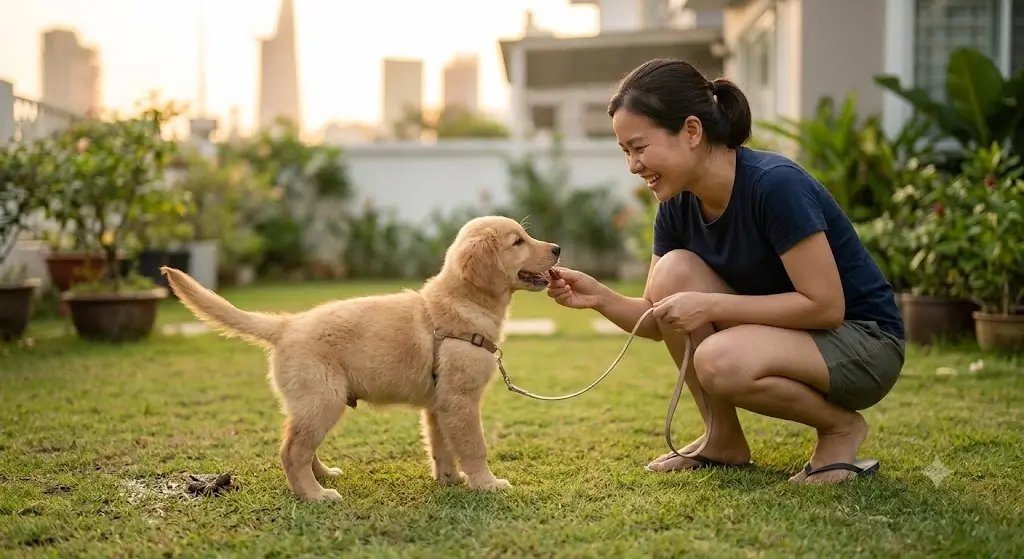
Once the puppy finishes eliminating outdoors, reinforce the behavior promptly. The reward can be food, praise, a short game, or another reward the puppy values.
5. Repeat if the puppy does not go.
If the puppy does not eliminate, do not interpret the trip as a successful potty break. Return indoors under close supervision and provide another opportunity soon.
When Should You Take a Puppy Outside?
There is no single schedule that works identically for every puppy. Age, size, individual development, food and water intake, activity, sleep, and health can all affect bathroom needs.
During developmental milestones or hormonal shifts, referring to strategies for managing puppy house training regression will help you adjust intervals before accidents become a routine pattern.
| Situation | Why a Potty Trip Makes Sense |
|---|---|
| Waking up | The bladder may have filled during sleep. |
| After eating | Meals can stimulate normal gastrointestinal activity. |
| After active play | Excitement and movement can increase the likelihood of needing a bathroom break. |
| After a nap | Sleep often creates a predictable transition point. |
| Before bedtime | Provides an opportunity to eliminate before the longest sleep period. |
The useful metric is not simply “how many times did I take the puppy outside?” Track successful outdoor potty events. If accidents continue, shorten the interval between opportunities temporarily and increase supervision.
How to Make Outdoor Potty Trips More Effective
Keep the first part of the trip boring
If every trip outside immediately becomes a walk, game, or social event, the puppy may become more interested in the environment than in eliminating. Choose a consistent location. Stand calmly. Give the puppy time to sniff and settle. Once the puppy successfully eliminates, reward immediately and then allow additional outdoor activity if appropriate.
Use a consistent verbal cue
A short phrase such as “go potty” can eventually become a useful cue. Introduce the cue while the puppy is naturally beginning the behavior rather than repeatedly saying it while the puppy is distracted.
Don’t rush back inside after success
Some puppies learn that eliminating immediately ends outdoor time. If the puppy loves being outside, this can create an unintended incentive to delay elimination. After successful elimination, occasionally provide a little extra outdoor time. This helps prevent the bathroom behavior from becoming a signal that all enjoyable outdoor activity is immediately over.
What Should You Do Between Potty Trips?
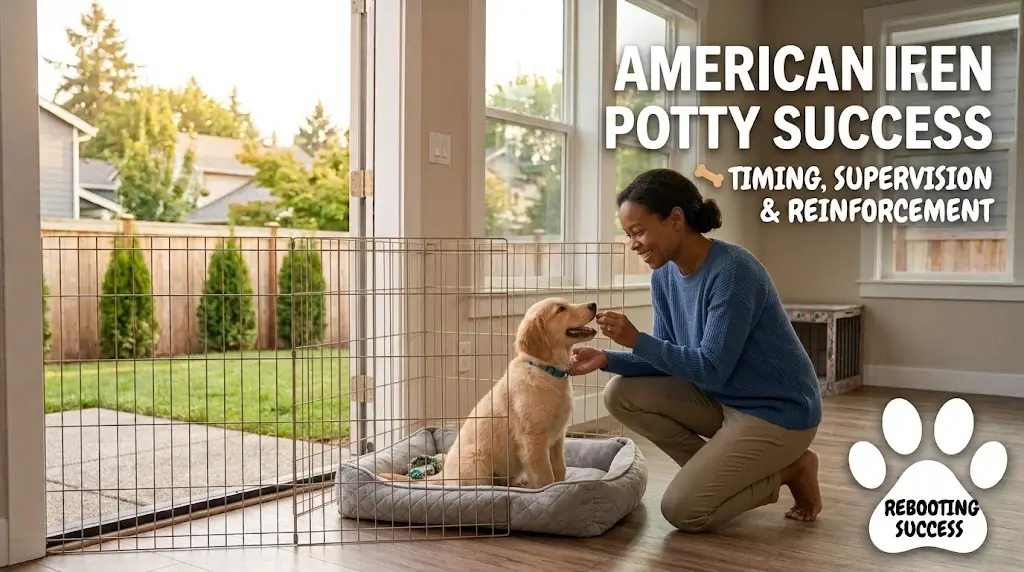
The period between outdoor trips is where many house-training plans break down. If the puppy has not successfully eliminated outside, assume that the puppy may still need to go. Increase supervision rather than increasing freedom.
| Situation | Better Approach | Avoid |
|---|---|---|
| Puppy did not potty outside | Close supervision and another opportunity soon | Free access to the whole house |
| Puppy pottied outside | Immediate reinforcement | Waiting several minutes to reward |
| Puppy starts sniffing indoors | Promptly redirect to the bathroom routine | Ignoring repeated signals |
| Accident happens | Clean thoroughly and review timing | Yelling or punishment |
What to Do When Your Puppy Has an Accident
Your response should depend on whether you notice the accident happening or discover it afterward.
If you catch the puppy in the act
Calmly interrupt without frightening the puppy and guide the puppy to the appropriate bathroom location when practical. If the puppy finishes outdoors, reward the outdoor behavior.
If you discover the accident afterward
There is little training value in bringing the puppy back to an old accident and scolding it. Instead, clean the area thoroughly and ask why the accident was possible.
Useful questions include:
- How long had it been since the last successful potty trip?
- Did the puppy actually eliminate outside?
- Was the puppy unsupervised?
- Had the puppy just eaten, drunk, played, or awakened?
- Was the puppy given more freedom than usual?
- Was the accident location previously soiled?
Think like a trainer: Every accident is useful information. Instead of asking only “Why did my puppy do that?”, ask “What happened during the 30–60 minutes before the accident?”
A Simple 3-Part Reset
For many puppies, a reset can be organized around three variables: timing, supervision, and reinforcement.
- Timing: Provide potty opportunities before the puppy reaches the point of having an accident.
- Supervision: Do not give the puppy more freedom than its current reliability supports.
- Reinforcement: Make successful outdoor elimination immediately worth repeating.
If accidents continue, adjust one of these variables rather than simply repeating the same routine.
Why Punishment Usually Doesn’t Solve Indoor Accidents
House training works by building a reliable association between elimination in the correct location and reinforcement. Punishment does not teach the puppy where to eliminate.
Harsh reactions can also make some puppies uncomfortable eliminating in front of people. That can make the owner believe the puppy is “hiding” accidents when the underlying issue is that the training environment has become confusing or stressful.
A better approach is to prevent opportunities for mistakes, reward the desired behavior, and use accidents as information for adjusting the schedule.
When Puppy Accidents May Need a Veterinarian
Training should not be used to explain every bathroom problem. Puppies can have accidents for ordinary training reasons, but changes in elimination can also occur with health problems.
Contact your veterinarian if you notice a significant or persistent change in your puppy’s normal bathroom behavior, especially if accidents occur together with:
- Unusually frequent urination
- Straining or apparent difficulty urinating
- Blood or unusual changes in urine
- Diarrhea or persistent stool changes
- Vomiting
- Marked changes in thirst
- Loss of appetite
- Low energy or unusual behavior
- Signs of discomfort
- A sudden regression after previously consistent training
Health note: This article is for general puppy-training education and is not a diagnosis or substitute for veterinary care. If you are concerned about your puppy’s health, contact a veterinarian.
The Biggest Mistake: Counting Outdoor Trips Instead of Successes
Consider two puppies.
Puppy A is taken outside ten times but successfully eliminates outdoors only four times.
Puppy B is taken outside eight times and successfully eliminates outdoors seven times.
The number of outdoor trips alone does not tell you which training system is working better. Successful outdoor elimination is the more useful measurement.
For a few days, keep a simple record:
- Time of waking
- Meal time
- Outdoor potty attempt
- Successful pee
- Successful poop
- Indoor accident
- Play or high excitement
- Bedtime
Patterns often become obvious once the day is written down.
How to Know If the Training Routine Is Improving
Look for trends rather than expecting perfection after one good day. Useful signs of progress include longer periods without accidents, more successful outdoor elimination, fewer repeated accidents in the same circumstances, and more predictable bathroom timing.
If accidents increase after giving the puppy additional freedom, temporarily reduce the area available and rebuild reliability before expanding access again.
The Bottom Line
If your puppy goes outside but still has accidents indoors, the answer is usually not to simply take the puppy outside more often without changing anything else.
First determine whether the puppy is actually eliminating outside. Then tighten the schedule around predictable events, reduce distractions during potty trips, supervise closely after unsuccessful trips, reward outdoor elimination immediately, and clean previous accident areas thoroughly.
Most importantly, remember that a puppy’s current level of reliability determines how much freedom it should receive. House training becomes easier when the environment is designed so the correct behavior is easy to repeat.
Frequently Asked Questions
Why does my puppy go outside but still have accidents inside?
The puppy may not actually be eliminating outside, may be distracted, may be taken outside too late, or may have more indoor freedom than its current training level supports.
Should I take my puppy outside again if it doesn’t potty?
Yes. If the puppy does not eliminate, treat the trip as an unsuccessful bathroom opportunity. Return indoors under close supervision and provide another opportunity soon.
How long should I wait outside for my puppy to potty?
Give the puppy enough quiet time to focus on elimination. If nothing happens, avoid turning the trip into unlimited play. Return indoors under supervision and try again later.
Can distractions outside cause indoor accidents?
Yes. Sounds, smells, people, other animals, and exciting environments can interrupt a puppy’s focus. A consistent, relatively quiet potty location can help.
Should I punish my puppy after an accident?
No. Focus on prevention, supervision, immediate reinforcement for successful outdoor elimination, and thorough cleaning of accident areas.
Why does my puppy pee outside and then pee again inside?
The puppy may not have fully emptied its bladder, may have been distracted outside, or may have been brought indoors before it was ready. Repeat the outdoor opportunity and supervise closely afterward.
When should I contact a veterinarian?
Contact a veterinarian when accidents are sudden, unusually frequent, persistent, or accompanied by changes in urination, stool, thirst, appetite, energy, comfort, or other signs of illness.
