
EPA & VETERINARY HYGIENE STANDARDS 2026
How to Disinfect After Puppy Accidents: Safe Step-by-Step Guide
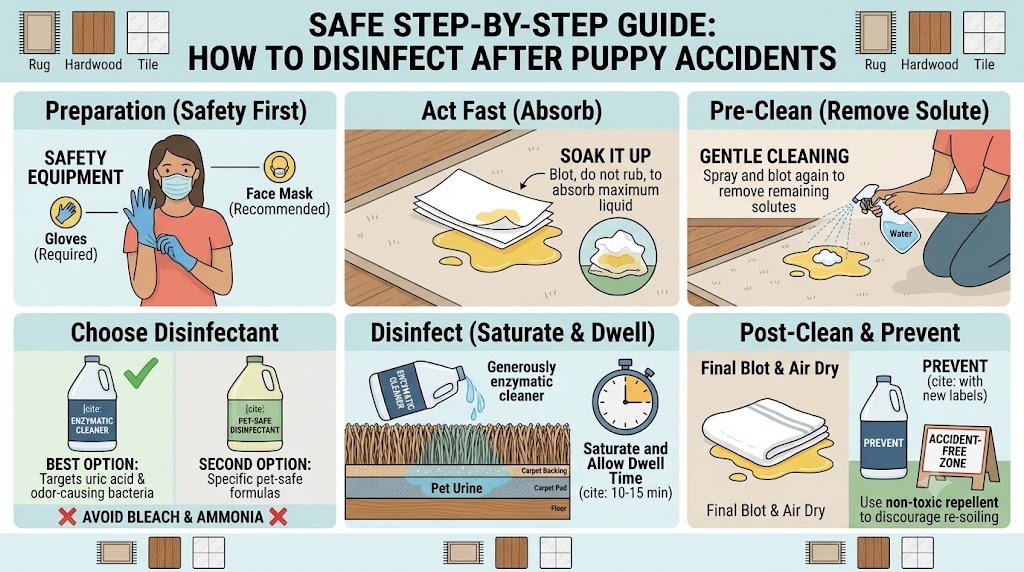
To disinfect after a puppy accident, clean up the urine or feces first, then disinfect only when the surface and product instructions allow it. Disinfectants work best after visible organic material has been removed. Using a stronger chemical or soaking every surface is not automatically safer or more effective. Mastering how to disinfect after puppy accidents requires distinguishing mechanical bio-soil removal from antimicrobial pathogen neutralization across porous and nonporous substrates.
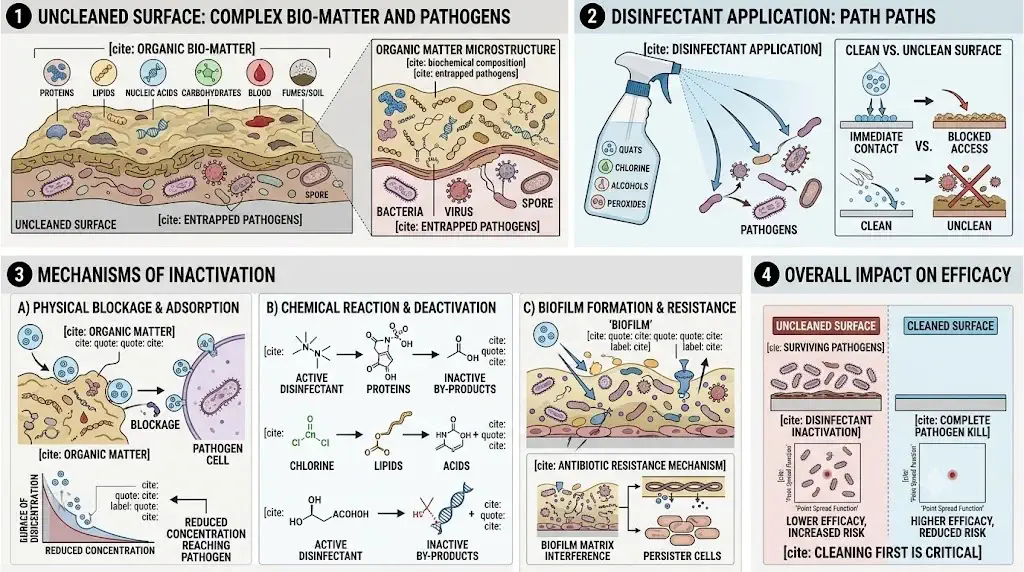
For most household puppy accidents, the process is simple: remove the mess, clean the contaminated area, apply an appropriate disinfectant when warranted, follow the required contact time, and allow the surface to dry before your puppy has access to it. Organic bio-matter (proteins, bile, and fatty acids) chemically shields microorganisms from chemical sanitizers. Attempting to apply chemical disinfectants directly over raw puddles or feces deactivates active antimicrobial ingredients, creating toxic chemical vapours while leaving bacteria viable underneath.
Different surfaces require fundamentally different approaches. A hard, washable floor is not treated the same way as carpet, hardwood, upholstery, bedding, or a puppy crate. Veterinary infection control guidelines and the Environmental Protection Agency (EPA) emphasize that disinfection must always be preceded by thorough physical cleaning. Following strict label contact dwell times ensures pathogen elimination without leaving toxic residues that puppies can ingest through grooming paws.
Quick Reference Specification: Puppy Accident Sanitation Matrix
This calibrated technical matrix benchmarks contaminated substrates, biological target pathogens, appropriate chemical agents, required contact dwell windows, and standard validation benchmarks in 2026.
| Accident Substrate | Primary Target | Optimal Chemistry | Required Dwell Window | Regulatory Standard & Protocol |
|---|---|---|---|---|
| Nonporous Tile / Vinyl | Bacterial enteric pathogens (E. coli, Salmonella) | Accelerated hydrogen peroxide (AHP) or Quat | 5–10 mins visibly wet | EPA List H Disinfectant Standard |
| Plastic Crate / Tray | Canine parvovirus & Giardia cysts | Potassium peroxymonosulfate or dilute bleach (1:32) | 10 mins wet dwell + water rinse | Veterinary Shelter Sanitation Standard |
| Finished Hardwood | Surface urine bacteria & urea | pH-neutral oxygenated wood sanitizer mist | 2–3 mins max; wipe completely dry | NWFA Finish Protection Benchmark |
| Synthetic Carpet Pile | Uric acid crystals & odor bacteria | Active Bacillus bio-enzymatic digester | 15 mins damp contact (no disinfectant) | CRI Seal of Approval / Spot Cleaning |
| Washable Fabric Bedding | Fecal microbes & parasitic eggs | Hot thermal laundry wash (140°F / 60°C) | Complete wash cycle + high-heat dry | CDC Laundry Hygiene Standard |
Quick Answer: How to Disinfect After a Puppy Accident
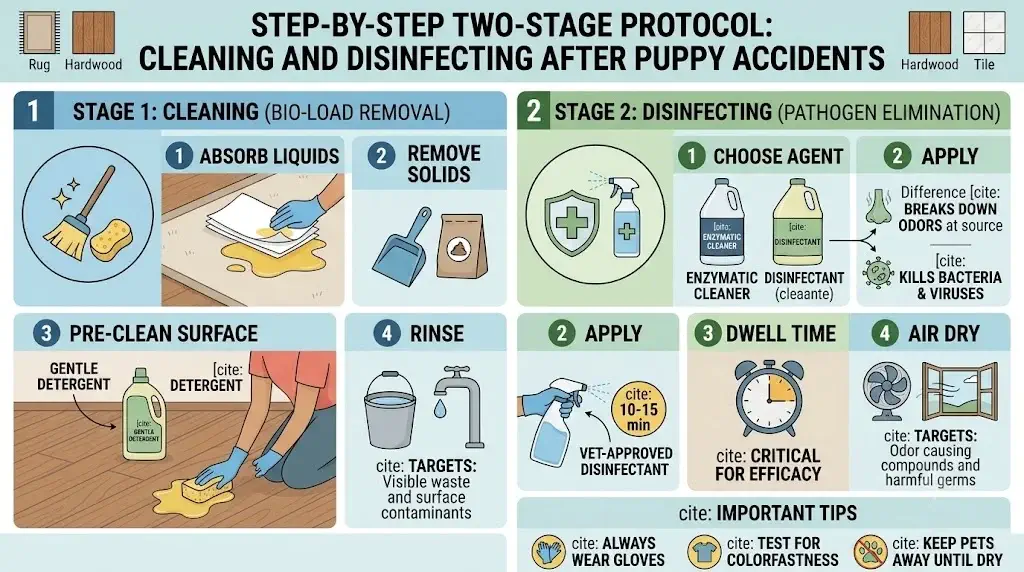
Two-stage decontamination separating physical bio-matter removal from chemical germicidal application provides the only reliable sanitization after puppy accidents. When determining how to disinfect after a puppy accident safely and effectively without creating toxic environmental hazards, follow this eight-step operational protocol:
- Keep your puppy away from the accident: Secure the young dog in an adjacent room or crate to prevent chemical contact or paw contamination.
- Remove urine, feces, or other organic material: Absorb bulk urine using downward paper towel pressure or lift solid fecal matter cleanly with disposable gloves.
- Clean the surface thoroughly: Wash the footprint with warm soapy water or a surface-compatible surfactant to strip residual biofilm and organic proteins.
- Choose a disinfectant appropriate for that specific surface: Select an EPA-registered disinfectant formulated specifically for your flooring or crate material.
- Follow the product label for dilution and contact time: Maintain a visibly wet surface for the full specified dwell period (typically 5 to 10 minutes).
- Rinse when the label requires it: Wipe the surface thoroughly with clean water if treating puppy crates, food zones, or high-contact areas.
- Allow the surface to dry completely: Ventilate the room using electric fans until all moisture and chemical vapours have completely dispersed.
- Keep the puppy away until the surface is safe for re-entry: Allow the puppy back into the area only after the substrate is 100% bone dry and odour-free.
Cleaning and disinfecting are not the same thing. Cleaning removes dirt, urine, feces, and other material. Disinfection is a separate chemical process intended to reduce or kill pathogenic microorganisms on an appropriate surface.
Do You Need to Disinfect Every Puppy Accident?
Routine puppy urine accidents on residential surfaces require thorough physical cleaning rather than aggressive chemical disinfection. While young puppies frequently eliminate indoors during initial housebreaking, healthy canine urine from an animal without a urinary tract infection (UTI) contains minimal infectious bacterial loads.
For many routine accidents, prompt and thorough cleaning is the most important step. Disinfection may be appropriate when a surface is hard, washable, and reasonably suited to the disinfectant being used.
Examples where chemical disinfection is clinically warranted include:
- Hard, washable glazed tile, luxury vinyl plank (LVP), and sealed linoleum floors
- Plastic potty training trays and artificial turf containment bases
- Wire and plastic puppy crate pans, playpens, and exercise pens
- Washable baby gates, pet barriers, and hard plastic transport carriers
- Fecal accidents, diarrhea, or vomit where enteric pathogens (such as Giardia or Parvovirus) may be present
Carpet, unfinished wood, upholstered furniture, and other absorbent materials should not automatically be treated with household disinfectants because chemical solutions become trapped in porous backing without achieving required microbial kill rates.
Cleaning vs. Disinfecting After Puppy Accidents
Mechanical cleaning removes physical soils and organic matter, whereas chemical disinfection neutralizes specific microscopic pathogens on clean surfaces. These steps represent distinct phases within a complete hygiene protocol:
| Sanitation Task | Primary Operational Purpose | Target Contaminant |
|---|---|---|
| Cleaning | Removes bulk urine, feces, dirt, and organic soil | Proteins, fats, bile, and visible waste matter |
| Odor treatment | Hydrolyzes uric acid crystals and volatile amines | Uric salts, urea, and territorial pheromones |
| Disinfection | Destroys or inactivates pathogenic microorganisms | Viruses, bacteria, protozoa, and fungal spores |
These steps can overlap, but they should never be treated as interchangeable. A disinfectant is not necessarily an effective urine-odor remover, and an enzymatic urine cleaner is not automatically a disinfectant. Review our in-depth comparison on Enzyme Cleaner vs Regular Pet Cleaner to understand how enzymatic biological digestion functions independently of germicidal disinfectants.
Step 1: Keep Your Puppy Away From the Area
Physical isolation prevents puppies from ingesting hazardous chemicals and tracking biological waste across living spaces. Before initiating cleanup, secure the puppy calmly in an uncontaminated zone:
For a minor urine puddle, placing your puppy in an adjacent room behind a closed door or pet gate for ten minutes provides sufficient separation. For extensive cleanups involving diarrhea, vomiting, or strong disinfectants, utilize an exercise pen, secure crate, or leashed handler outdoors. Never allow a puppy onto a surface that remains wet with cleaning or disinfecting chemicals. Puppies explore their environment orally and absorb chemical residues through paw pads, increasing the risk of chemical burns, oral ulcerations, and acute gastrointestinal poisoning.
Step 2: Remove the Accident
Physical waste removal eliminates the organic soil shield that neutralizes active chemical disinfectants. You must eliminate raw biological matter before applying any antimicrobial product:
For Puppy Urine
Stack four to six layers of absorbent white paper towels directly over the puddle. Apply firm downward pressure using your hands or shoes to draw fluid upward into the paper. Continue replacing wet towels until dry paper lifts with zero moisture transfer. For carpets, avoid aggressive scrubbing because friction spreads urine into adjacent tufts and forces moisture deep into underlayment foam.
For Puppy Feces
Wear disposable nitrile gloves and utilize thick paper towels or a plastic waste scoop to lift solid stool cleanly without smearing it into the floor grain. Place the waste inside a heavy sealable plastic bag and dispose of it in an outdoor trash receptacle. Wipe remaining soft residues with a damp paper towel. Never apply disinfectant directly over a pile of feces. Disinfecting agents cannot penetrate solid fecal matter, resulting in failed sanitization and false security.
Step 3: Clean the Surface Thoroughly
Surfactant washing strips residual biological biofilms from flooring substrates prior to chemical germicidal treatment. After gross waste removal, wash the footprint with warm water and a neutral detergent or surface-appropriate cleaner.
For urine accidents, a specialized pet urine cleaner containing bio-enzymes is more appropriate than an industrial disinfectant because the two products perform completely different functions. An enzymatic cleaner metabolizes organic urea, uric acid crystals, and pheromones, while a disinfectant targets viral and bacterial cell walls. Using an enzyme cleaner first resolves lingering territorial scent markers that trigger instinctual re-marking.
Step 4: Choose the Right Disinfectant
Substrate-compatible disinfectants eliminate target microbial pathogens without corroding flooring sealants or off-gassing toxic fumes. When chemical disinfection is warranted, select an EPA-registered disinfectant and review its master label specifications:
- Surface Material Compatibility: Verify that the product is certified safe for your specific substrate (e.g., nonporous tile, crate plastics, or sealed hardwood).
- Accurate Dilution Ratios: Follow manufacturer dilution tables strictly using measuring cups rather than guessing unmetered amounts.
- Target Pathogen Spectrum: Ensure the product carries verified efficacy claims against canine pathogens (e.g., Canine Parvovirus, Coronavirus, Bordetella, or Giardia).
- Required Wet Dwell Window: Identify the exact minutes the surface must remain visibly wet to achieve labeled germicidal kill rates.
- Mandatory Rinsing Instructions: Note whether clean-water wiping is required before pets or children re-enter the area.
- Adequate Ventilation Needs: Ensure room windows are open and fresh airflow is maintained during chemical handling.
Never assume that a disinfectant suitable for a bathroom tile floor is safe for hardwood, carpets, or puppy chew toys. Inappropriate chemical selection causes permanent flooring discoloration and severe pet chemical burns.
Step 5: Follow the Disinfectant’s Contact Time
Antimicrobial destruction requires sustained chemical contact across the exact wet dwell period specified on the EPA master label. One of the most prevalent sanitization errors is wiping away a disinfectant spray within thirty seconds of application.
Chemical disinfectants function by lysing bacterial membranes, denaturing viral capsid proteins, and disrupting fungal metabolic pathways. These chemical reactions require time. If a product label requires a 10-minute contact time, the surface must remain visibly glistening wet for the full ten minutes. If ambient room heat causes premature evaporation, apply an additional light mist to maintain wet contact. Never guess or abbreviate contact times; premature wiping leaves surviving pathogen populations intact.
Step 6: Rinse When Required
Clean water rinsing removes active chemical salts that can cause severe oral toxicity or dermatological irritation in puppies. While certain gentle formulas are classified as “no-rinse” on environmental walls, pet areas demand extra caution.
Rinsing is critical for surfaces that come into direct contact with a puppy’s mouth, paws, food, or water bowls. After the required germicidal dwell time has elapsed, wipe the treated zone thoroughly with a clean microfiber cloth saturated with fresh tap water. This removes surfactant residues, active quaternary ammonium compounds (QACs), and alkaline salts before puppies can lick the surface.
Step 7: Let the Surface Dry Completely
Active air evaporation eliminates lingering chemical aerosols and prevents puppies from transferring wet disinfectants onto their fur. Keep your dog quarantined in a safe location until the entire treated surface is completely dry to the touch.
Position an oscillating floor fan or open windows to promote vigorous cross-ventilation. Inspect the area under direct lighting to ensure no sticky, slick puddles remain. Do not permit your puppy to walk across, lie down upon, or lick a freshly disinfected floor, crate, or potty tray until drying is 100% complete.
How to Disinfect Hardwood Floors After Puppy Pee
Hardwood flooring requires strict moisture discipline and pH-neutral sanitizers to prevent polyurethane delamination and plank warping. Wood timber expands when exposed to standing water, allowing fluids to penetrate unsealed tongue-and-groove joints:
- Blot the fresh urine puddle immediately using firm downward pressure with paper towels.
- Remove all visible moisture from the board faces and micro-bevel seams.
- Use a finish-compatible cleaner specifically approved for polyurethane clearcoats.
- Apply a very light mist of an NWFA-approved oxygenated wood sanitizer only when manufacturer instructions allow it.
- Never allow disinfectant solutions to pool or remain standing for more than 2 to 3 minutes.
- Buff the floor completely dry with a fresh microfiber mop pad and ventilate with an electric fan.
Never apply chlorine bleach solutions, ammonia, or harsh quat disinfectants to finished hardwood; they strip urethane sealants, cause cloudy finish hazing, and trigger permanent black tannin burns within wood grain. For comprehensive floorboard restoration protocols, review our dedicated Guide to Cleaning Puppy Pee From Hardwood Floors.
How to Disinfect Tile or Other Hard Floors
Nonporous ceramic tile, porcelain, and luxury vinyl tolerate broad-spectrum EPA-registered disinfectants following pre-cleaning bio-soil removal. Hard flooring systems are simple to decontaminate, but porous cementitious grout lines require targeted attention:
- Remove all bulk urine, diarrhea, or solid waste using disposable paper towels.
- Clean visible surface residue with a warm water and neutral detergent mop pass.
- Apply an EPA-registered veterinary disinfectant (such as accelerated hydrogen peroxide or a dual-chain quaternary ammonium formula).
- Maintain the label-specified wet contact dwell time (typically 5 to 10 minutes).
- Rinse the floor with fresh clean water if using products with strong surfactants or chemical odors.
- Allow the floor to air dry completely before returning the puppy to the space.
Pay close attention to textured slate, stone, and porous tile grout lines. If urine penetrates unsealed grout, scrub the lines with a soft nylon brush and an oxygenated cleaner to lift embedded uric salts before disinfecting.
How to Disinfect a Puppy Crate After an Accident
Plastic and metal crate components require thorough surfactant washing and non-corrosive disinfection followed by mandatory clean-water rinsing. A puppy’s crate is an enclosed, high-contact environment requiring non-toxic sanitation:
- Remove all soiled fabric bedding, plush crate mats, and chew toys immediately.
- Blot liquid urine or scoop solid feces using disposable towels.
- Wash the plastic tray and metal wire bars with warm water and pet-safe dish soap to strip greasy biofilms.
- Apply a veterinary-approved disinfectant (such as accelerated hydrogen peroxide or potassium peroxymonosulfate).
- Observe the full labeled contact dwell period (5 to 10 minutes wet contact).
- Rinse the entire tray and wire cage thoroughly with clean water to remove all chemical residues.
- Towel dry the crate and allow it to air out completely under open windows.
- Return clean, fresh bedding to the crate only after the plastic tray is completely dry and odorless.
Always inspect underneath the removable plastic pan; liquid urine frequently runs over the tray edges and pools on the floor beneath the wire frame. For complete crate setup standards, explore our Puppy Crate Essentials Guide.
How to Disinfect a Puppy Potty Tray
Indoor potty trays and artificial turf systems require disassembly and deep-basin washing to prevent bacterial biofilm accumulation. Washable plastic potty trays provide an ideal nonporous substrate for routine chemical sanitization:
- Dispose of used puppy pee pads or solid feces deposited on top of the surface grate.
- Rinse the tray and plastic grid with warm running water in a utility sink or outdoor garden hose station.
- Scrub the surface with a pet-safe detergent and nylon bristle brush to dismantle stubborn urea scale.
- Spray an EPA-registered pet disinfectant across the upper grate and lower catchment basin.
- Maintain the full labeled wet contact dwell time (typically 5 to 10 minutes).
- Rinse the tray thoroughly with fresh running water to purge chemical residues.
- Dry the tray completely with clean towels before inserting fresh absorbent pads or synthetic turf.
If your indoor potty system includes a perforated plastic grid, always lift and scrub the underside of the grate. Urine droplets cling to plastic grid ribs, creating hidden ammonia reservoirs that continue off-gassing into your home.
How to Disinfect Carpet After a Puppy Accident
Porous carpet textiles cannot be legally disinfected with standard household chemical hard-surface sanitizers. Carpet is a fibrous, multi-layered substrate consisting of face yarns, primary backing, and open-cell foam padding:
EPA-registered household disinfectants are legally labeled and tested exclusively for nonporous hard surfaces. Pouring chemical disinfectants onto carpet fibers fails to achieve required germicidal contact times, bleaches synthetic dyes, dissolves latex adhesive backings, and leaves toxic chemical residues trapped inside foam cushions where puppies sleep.
For puppy urine accidents on carpet, prioritize this proven sequence:
- Rapid downward absorption using dry paper towel blot stacks
- Motorized cool-water extraction to evacuate sub-surface fluid reservoirs
- Application of CRI-certified bio-enzymatic urine digesters to destroy uric acid crystals
- Complete air-mover evaporation to prevent mold or bacterial spore proliferation
If contamination is severe, persistent, or involves infectious viral pathogens, professional truck-mounted extraction or cushion replacement is required. For detailed remediation protocols, see our Guide to Getting Puppy Pee Smell Out of Carpet.
How to Handle Puppy Accidents on Bedding
Thermal laundry washing combined with pet-safe laundry sanitizers eradicates pathogens and urine salts from washable bedding fabrics. Fabric bedding should never be sprayed with household hard-surface aerosol disinfectants and left to dry:
- Remove all solid fecal residue or scrape bulk vomit into a waste receptacle using paper towels.
- Rinse the affected fabric section under cold running tap water to flush unbonded urine and proteins.
- Pre-treat the spot with an enzymatic pet stain spray for 15 minutes to digest crystallized urea.
- Machine-wash the bedding using the warmest water temperature permitted by the fabric care label (ideally 140°F / 60°C).
- Add a certified pet-safe laundry sanitizer (such as an activated hydrogen peroxide or phenolic laundry additive) to the rinse cycle.
- Tumble-dry on high heat until the interior stuffing and fabric covers are completely dry.
- Inspect the bedding with an olfactory sniff check before returning it to the puppy crate.
If an orthopedic foam dog bed has soaked urine into non-washable memory foam cores, chemical surface spraying cannot reach the contamination. Replacing the internal foam cushion is more sanitary than attempting surface disinfection.
What About Puppy Toys?
Contaminated puppy chew toys demand material-specific sanitization protocols to eliminate choking and toxic ingestion risks. Because puppies chew and ingest saliva from toys, cleaning protocols must avoid lingering chemical poisons:
Hard Plastic and Rubber Toys
Wash durable rubber toys (such as KONGs) in warm water with antibacterial dish soap, or place them on the top rack of a dishwasher running a sanitizing heat cycle. If using a chemical disinfectant, select a food-contact-safe sanitizer (such as dilute accelerated hydrogen peroxide), allow the labeled contact time, and rinse thoroughly under running tap water for two minutes.
Fabric and Plush Rope Toys
Launder fabric toys in a washing machine using hot water and fragrance-free detergent, followed by thorough high-heat dryer cycling. Never spray chemical hard-surface disinfectants or bleach onto plush toys; porous stuffing traps toxic chemicals that puppies will ingest during chewing.
Damaged or Heavily Soiled Toys
If a chew toy has experienced deep fecal saturation, has cracked crevices where bacteria thrive, or has been chewed into fraying fragments, discard it immediately. The replacement cost of a toy is negligible compared to emergency veterinary surgery for intestinal blockages or severe bacterial enteritis.
Should You Use Bleach After a Puppy Accident?
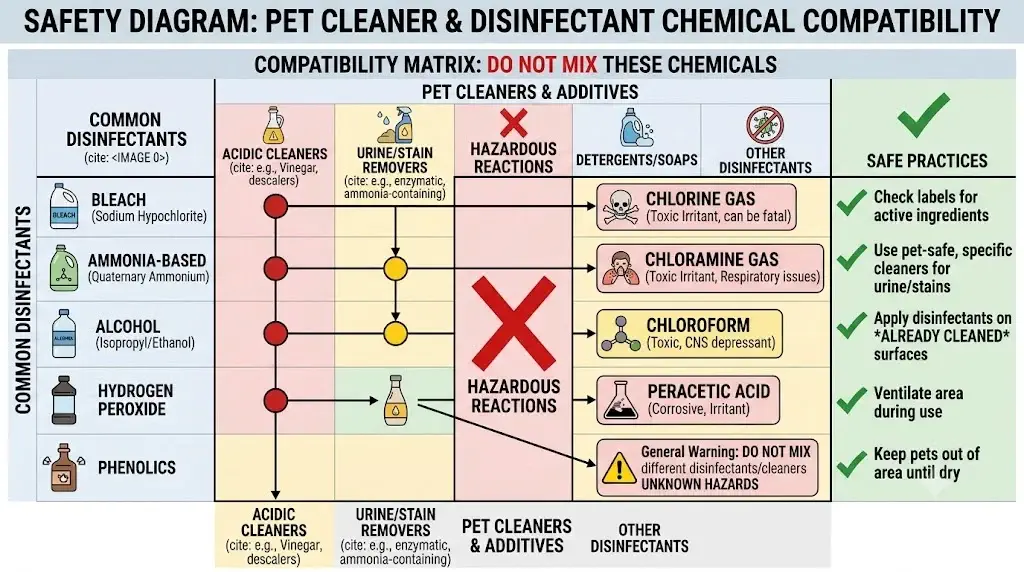
Sodium hypochlorite bleach creates hazardous toxic gases when mixed with puppy urine and causes severe chemical burns on living tissues. Bleach is not a universal household pet cleaner and presents immense operational risks:
- Toxic Chloramine Gas: Mixing chlorine bleach directly with the ammonia in puppy urine triggers an immediate exothermic chemical reaction, releasing toxic chloramine vapours that damage human and canine respiratory tracts.
- Substrate Destruction: Bleach dissolves carpet backing latex, bleaches upholstery fabrics, pits glazed floor tiles, and permanently strips wood clearcoats.
- No Detergent Cleaning Action: Bleach is a pure disinfectant, not a surfactant; it cannot lift greasy dirt, urine bile, or dried stool residues.
Never mix household bleach with ammonia, vinegar, acids, or commercial enzymatic cleaners. If bleach is utilized for specialized infectious disease containment (such as Canine Parvovirus on hard concrete), always clean the organic waste away completely first, dilute accurately (1 part bleach to 32 parts cool water), maintain 10 minutes of wet contact, rinse thoroughly, and ventilate aggressively.
Can You Mix Disinfectant With Enzyme Cleaner?
Chemical disinfectants instantly kill the living bacterial spores that produce active odor-digesting enzymes. Never blend cleaning chemicals together unless the manufacturer explicitly specifies that the exact mixture is tested and approved.
Enzymatic urine cleaners rely on beneficial living Bacillus bacterial spores that germinate, feed upon organic uric acid crystals, and multiply. Applying a chemical disinfectant (such as bleach, alcohol, or quaternary ammonium) over an enzyme treatment immediately destroys the living bacteria, halting the biological digestion cycle. Furthermore, combining uncalibrated cleaning formulas can trigger unpredictable chemical degradation, ruining floor finishes and emitting noxious volatile fumes. Always complete the enzymatic odor treatment first, allow the floor to dry, and only then evaluate whether hard-surface disinfection is needed.
Does Disinfectant Remove Puppy Urine Smell?
Disinfectants reduce bacterial populations but lack the enzymatic catalysts required to hydrolyze insoluble uric acid crystals. Disinfection and odor removal represent completely different biochemical targets.
A disinfectant can kill active surface bacteria, momentarily decreasing the ammonia produced by metabolic decomposition. However, the underlying organic soil—specifically crystallized uric acid salts and fatty bile pigments—remains bonded to the flooring substrate. As soon as ambient indoor humidity rises above 50%, atmospheric moisture reactivates these un-hydrolyzed crystals, causing the pungent ammonia stench to return. For comprehensive malodor elimination, consult our tested Best Puppy Odor Eliminators review.
What If Puppy Pee Smell Remains After Disinfecting?
Persistent post-disinfection malodors indicate un-neutralized uric acid reservoirs trapped beneath surface floor coverings. When a freshly disinfected room continues to smell of pet urine, the problem is un-addressed biological contamination rather than inadequate disinfection:
- Urine soaked through carpet face pile and resides inside open-cell polyurethane padding
- Fluid seeped between hardwood tongue-and-groove joints onto plywood subfloors
- Urine wicked behind wall baseboards, drywall bases, or heating floor registers
- A secondary, unlocated urine accident occurred several feet away under furniture
- A chemical disinfectant masked volatile airborne gases without destroying the crystalline core
Do not simply spray additional coats of disinfectant over the floor. Disinfectant saturation damages floorboards and creates chemical buildup without touching deep sub-surface salts. Instead, utilize an ultraviolet blacklight to locate the exact boundaries of the accident and apply targeted bio-enzymatic extraction.
How to Disinfect After Puppy Diarrhea or Vomiting
Gastrointestinal accidents contain dense bacterial and viral pathogen loads requiring strict barrier protection and high-level veterinary sanitizers. Puppy diarrhea and vomit present substantial biological risks due to potential shedding of Parvovirus, Giardia, Campylobacter, and Salmonella:
- Quarantine the puppy immediately in a comfortable, easily washable bathroom or crate.
- Don disposable nitrile gloves, eye protection, and shoe covers if dealing with severe infectious illness.
- Scrape the bulk vomit or diarrhea using thick disposable cardboard, plastic putty knives, or paper towels into a sealable biohazard bag.
- Wash the footprint with warm water and detergent to strip all organic mucus and digestive enzymes.
- Apply an EPA-registered veterinary disinfectant carrying proven virucidal claims against non-enveloped viruses (e.g., accelerated hydrogen peroxide or potassium peroxymonosulfate).
- Enforce the full 10-minute wet contact dwell window without allowing early drying.
- Rinse thoroughly with clean water, dry the substrate with clean paper towels, and wash your hands vigorously with soap for 30 seconds.
If your puppy displays recurring diarrhea, projectile vomiting, blood in stool, severe lethargy, or loss of appetite, environmental disinfection is secondary. Seek immediate emergency veterinary evaluation to test for Canine Parvovirus or intestinal parasites.
How to Clean Up a Puppy Accident Without Spreading Contamination
Methodical perimeter-inward cleaning techniques prevent accidental dispersal of biological pathogens across clean household zones. Strict procedural discipline prevents cross-contamination throughout your living environment:
- Work systematically from the clean outer perimeter inward toward the center to avoid enlarging the mess.
- Use single-use disposable paper towels for gross bio-matter collection rather than reusable kitchen sponges.
- Change disposable gloves immediately if they touch wet fecal matter or concentrated chemical solutions.
- Never use the same cleaning mop, bucket, or microfiber cloth across food preparation areas and pet accident spots.
- Launder reusable cleaning textiles separately in hot water with disinfectant bleach additives.
- Wash hands thoroughly with soap and warm water immediately after removing protective gloves.
- Store pet accident cleaning caddies securely away from dog food storage and children’s reach.
Common Disinfecting Mistakes After Puppy Accidents
Improper sanitization practices neutralize germicidal efficacy and create severe respiratory hazards for domestic pets. Avoid these eight operational errors during pet cleanup:
- Disinfecting Before Cleaning: Spraying chemical disinfectants over raw urine or stool deactivates active antimicrobial agents.
- Using Excessive Chemical Volumes: Flooding floors creates chemical pooling, prolonged drying times, and slip hazards.
- Ignoring Contact Dwell Times: Wiping away wet disinfectant within 30 seconds allows viral and bacterial pathogens to survive.
- Applying Hard-Floor Disinfectants to Carpet: Hard-surface chemicals leave toxic residues in porous carpet backing and destroy carpet dyes.
- Mixing Chemical Formulas: Blending bleach, vinegar, ammonia, or commercial detergents generates lethal chlorine gases.
- Permitting Puppy Access to Wet Floors: Allowing puppies to walk across wet chemical residues causes paw irritation and oral poisoning.
- Treating Malodors Solely With Disinfectants: Chemical sanitizers cannot hydrolyze insoluble uric acid crystals trapped in floors.
- Neglecting Sub-Surface Baseboards: Failing to clean underneath crate pans, rugs, and furniture leaves active contamination reservoirs.
When Should You Disinfect After a Puppy Accident?
Substrate porosity and accident pathology determine whether physical surfactant cleaning or chemical disinfection is required. Match your cleanup protocol to the specific domestic surface:
| Surface Substrate | Primary Cleanup Phase | Chemical Disinfection Phase |
|---|---|---|
| Glazed Tile / Vinyl / LVP | Wash with neutral surfactant; lift soils | Highly appropriate using EPA-registered floor disinfectant |
| Plastic Crate Tray | Wash in utility tub with dish detergent | Mandatory for gastrointestinal accidents; rinse thoroughly |
| Plastic Potty Tray | Wash grate and catchment basin | Appropriate weekly or after soft stool accidents |
| Finished Hardwood | Blot dry; apply finish-safe cleaner | Only if product is explicitly certified for hardwood; no pooling |
| Carpet Pile & Cushion | Blot, extract, apply bio-enzymes | Do not use hard-surface household chemical disinfectants |
| Fabric Bedding / Blankets | Cold water pre-flush; enzyme soak | Execute via thermal washing machine sanitizing cycles |
When You Should Call a Professional Cleaner
Extensive biological saturation into subflooring or virulent pathogen outbreaks necessitate certified structural remediation. Contact a professional restoration contractor when:
- Canine Parvovirus or Giardia has contaminated large carpeted or porous household environments
- Urine saturation has penetrated through open-cell carpet padding into structural concrete or plywood
- Valuable antique hardwood flooring displays deep black tannin burns or buckling boards
- An entire multi-room residence has experienced chronic, unmanaged housebreaking accidents
- Delicate silk, oriental wool, or custom area rugs require immersion decontamination washing
- Repeated DIY cleanings fail to eradicate persistent ammonia odors and microbial colonies
Certified IICRC restoration professionals deploy hospital-grade thermal extraction units, commercial ozone or hydroxyl generators, and antimicrobial subfloor primers that safely sanitize structural framing.
After Cleanup: Prevent the Next Puppy Accident
Structured outdoor elimination schedules and close indoor umbilical supervision break the domestic accident cycle. Sanitizing the physical floor cleans the immediate mess, but consistent housebreaking training prevents the next one:
- Escort your puppy outside immediately upon waking in the morning and from daytime naps.
- Take the puppy to their outdoor potty spot within 15 to 20 minutes following every meal.
- Offer outdoor elimination opportunities immediately after vigorous play or training sessions.
- Supervise the puppy closely indoors using playpens, baby gates, or lightweight umbilical leashes.
- Reward successful outdoor elimination immediately with high-value treats within 3 seconds.
- Restrict unsupervised access to previously soiled carpeted rooms or hidden hallways.
- Eradicate residual scent markers completely using bio-enzymes to prevent instinctual re-marking.
Frequently Asked Questions (FAQ)
Do I need to disinfect after every puppy pee accident?
Should I disinfect before cleaning puppy urine?
Can I use bleach after puppy accidents?
Can I mix bleach with vinegar?
Can I mix an enzyme cleaner with disinfectant?
Does disinfectant remove puppy urine odor?
How do I disinfect a puppy crate after an accident?
How do I disinfect a puppy potty tray?
Can I disinfect carpet after puppy pee?
Can I disinfect hardwood after puppy pee?
How long should disinfectant stay wet on a surface?
Should I rinse disinfectant after cleaning a pet accident?
How long should my puppy stay away after disinfecting?
What should I do if puppy urine smell remains after disinfecting?
What if my puppy keeps having accidents in the same area?
Bottom Line: Clean the Bio-Soil First, Disinfect Second
Safe and effective post-accident decontamination begins with physical soil removal, not chemical disinfecting. Remove raw urine or feces completely, wash the surface with a compatible surfactant, and apply an EPA-registered disinfectant only when the surface and pathogen risk warrant it.
Nonporous washable surfaces (such as plastic crate trays and sealed tile) are suitable candidates for germicidal disinfection, whereas fibrous carpets, hardwood, and fabric bedding require substrate-specific care. Most importantly, never blend chemical cleaning agents, never assume a higher chemical concentration is safer, and never permit a puppy to contact wet disinfecting chemicals. Remove the mess → clean the surface → disinfect appropriately → enforce contact dwell times → rinse when required → dry completely → return the puppy. This disciplined protocol maintains a sanitary domestic environment while safeguarding your puppy’s health.
