
AKC & CRI INDOOR ODOR MANAGEMENT 2026
How to Prevent Puppy Urine Odor: 11 Practical Tips
The best way to prevent puppy urine odor is to stop urine from sitting on absorbent surfaces, clean accidents completely, and reduce repeat accidents. Fresh urine is much easier to manage than urine that has dried in carpet, padding, rugs, bedding, or other porous materials. Mastering how to prevent puppy urine odor proactively combines behavioral timing with rigorous moisture control, ensuring uric acid salts never establish permanent biochemical reservoirs inside domestic flooring substrates.
Odor prevention is therefore a combination of potty-training management and effective cleanup. Cleaning the visible spot matters, but so does removing the scent that may remain after the surface looks clean. When canine urine pools on indoor materials, environmental bacteria rapidly convert urea into alkaline ammonia gases. As water evaporates, insoluble uric acid crystals bond to synthetic carpet yarns or seep between hardwood tongue-and-groove joints, off-gassing volatile organic compounds (VOCs) whenever relative humidity rises.
If your home already smells like puppy urine, first locate and treat the existing odor source. Prevention becomes much easier once old contamination is under control. The American Kennel Club (AKC) emphasizes thorough accident cleanup because lingering urine scent triggers instinctual canine re-marking. Independent 2026 evaluations confirm that pairing timed elimination schedules with CRI-certified bio-enzymatic extraction prevents sub-surface odor wicking permanently.
Quick Reference Specification: Puppy Urine Odor Prevention Matrix
This calibrated mechanical and behavioral matrix benchmarks prevention layers, primary mechanisms, chemical agents, operational timing, and standard validation benchmarks across domestic environments in 2026.
| Prevention Layer | Primary Mechanism | Optimal Chemical / Physical Agent | Intervention Timing | Industry Standard Benchmark |
|---|---|---|---|---|
| Behavioral Scheduling | Proactive outdoor bladder voiding | High-value reward reinforcement | Every 60–120 mins + post-wake/meal | AKC Housebreaking Criteria |
| Fresh Carpet Accidents | Vertical capillary blot extraction | Heavy paper towels + dry microfiber | <3 mins from puddle occurrence | CRI Spot Cleaning Protocol |
| Carpet Underlayment / Pad | Catalytic uric acid hydrolysis | Active Bacillus bio-enzymatic mist | 15 mins wet dwell (or covered damp) | IICRC S300 Carpet Standard |
| Hardwood Floor Seams | Moisture discipline & finish safety | pH-neutral wood enzyme mist | 2–3 mins max dwell; wipe dry | NWFA Maintenance Guidelines |
| Indoor Potty Pad Zones | Sub-floor perimeter containment | Raised-lip silicone containment tray | Immediate pad change upon soiling | EPA Indoor Hygiene Standard |
Quick Answer: How to Prevent Puppy Urine Odor
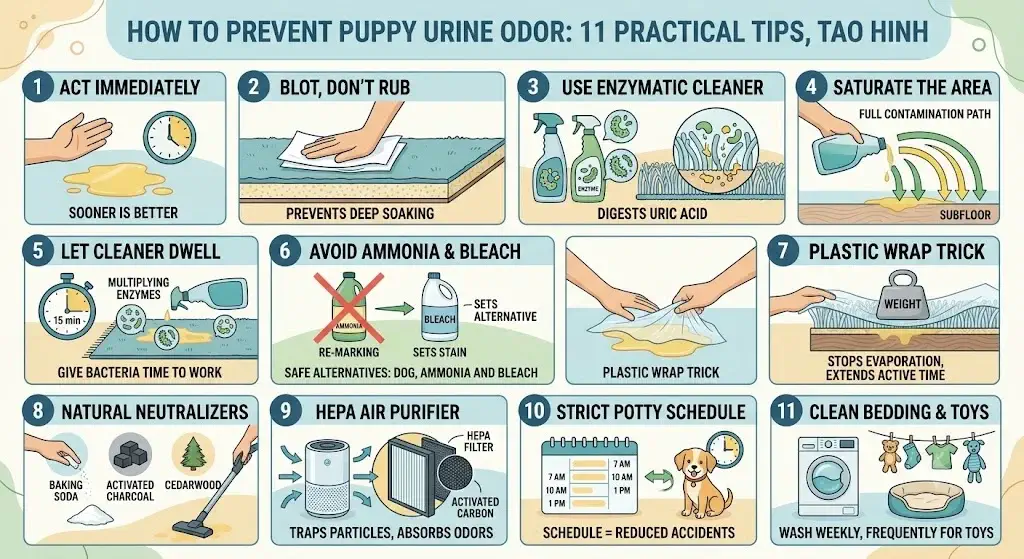
Proactive housebreaking schedules combined with rapid source decontamination eliminate canine urine odors before liquid reaches sub-surface underlayments. When establishing how to prevent puppy urine odor across your home permanently, implement these eleven core operational rules:
- Take your puppy out frequently enough for their age and routine: Provide outdoor elimination opportunities every 1 to 2 hours during daytime housebreaking.
- Take them outside after waking, eating, playing, and naps: Capitalize on gastrocolic reflexes and natural elimination triggers before accidents occur.
- Supervise closely during indoor freedom: Utilize indoor umbilical leashes, exercise pens, and baby gates to stop unmonitored wandering.
- Clean accidents immediately: Extract fresh puddles within seconds of discovery using vertical downward paper towel pressure.
- Remove urine from carpet fibers, not just the visible surface: Apply bio-enzymes to reach dense primary backing grids where uric acid concentrates.
- Pay attention to carpet padding after large or repeated accidents: Deploy motorized vacuum claws to evacuate fluid trapped in open-cell foam padding.
- Clean crate bedding and trays regularly: Wash plastic crate pans with neutral detergents and replace damp towels promptly.
- Remove rugs your puppy repeatedly targets: Roll up absorbent area rugs temporarily to remove porous indoor elimination cues.
- Use a surface-compatible pet urine cleaner: Deploy CRI-certified bio-enzymatic sprays on carpets and pH-neutral formulas on hardwood.
- Do not rely on fragrance to cover urine odor: Eliminate the biochemical source completely rather than masking airborne VOCs with perfume sprays.
- Investigate recurring accidents instead of repeatedly masking them: Use a 395nm UV blacklight to locate hidden dried salt rings along room baseboards.
In short: prevent the accident, remove the urine quickly, eliminate residual scent, and prevent the puppy from returning to the same location.
Why Puppy Urine Odor Develops
Bacterial decomposition of organic urea produces alkaline ammonium carbonate, releasing pungent volatile organic compounds into domestic air. Puppy urine odor escalates into a chronic household problem when liquid remains in porous materials long enough to evaporate and crystallize.
Common residential odor reservoirs include:
- Synthetic carpet face yarns (nylon, polyester, triexta)
- Latex-bonded primary and secondary carpet backings
- Open-cell polyurethane foam carpet padding
- Woven area rugs and absorbent cotton bath mats
- Upholstered sofa cushions and underlying batting
- Orthopedic foam dog beds and crate cushions
- Fleece and cotton crate bedding liners
- Hardwood tongue-and-groove seams and micro-bevel joints
- Unsealed cementitious tile grout lines and porous concrete subflooring
A surface can look clean while still containing detectable urine residue. The AKC emphasizes thorough accident cleanup because lingering urine scent can encourage puppies to return to the same location. If your home has established malodors, consult our master guide on How to Remove Puppy Urine Smell to neutralize active uric crystals first.
1. Build a Consistent Puppy Potty Routine
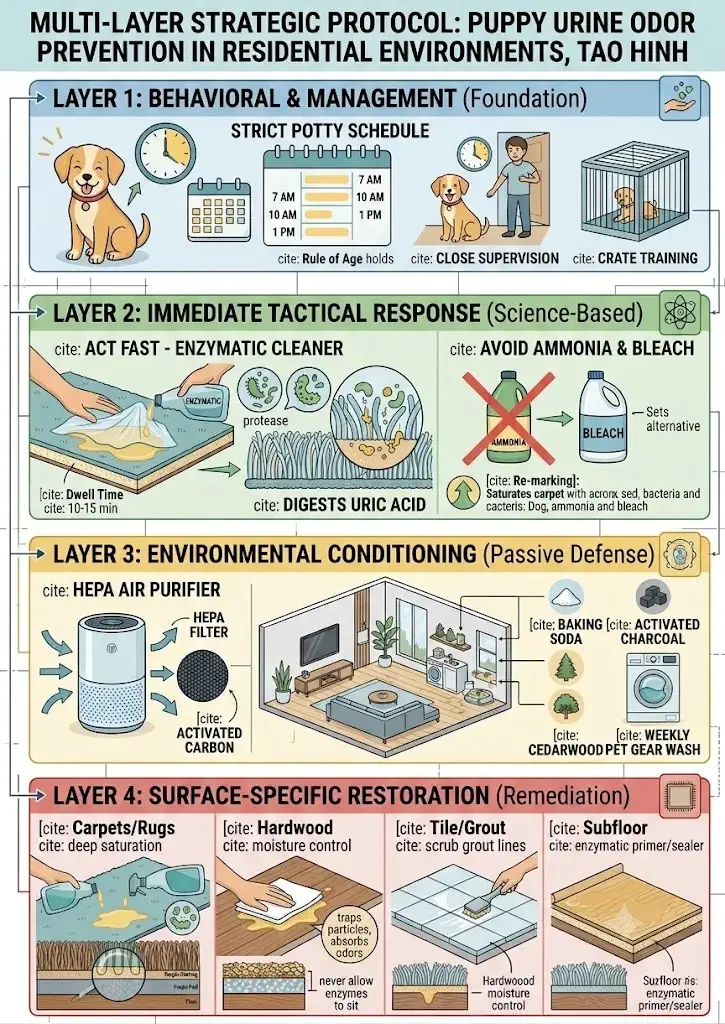
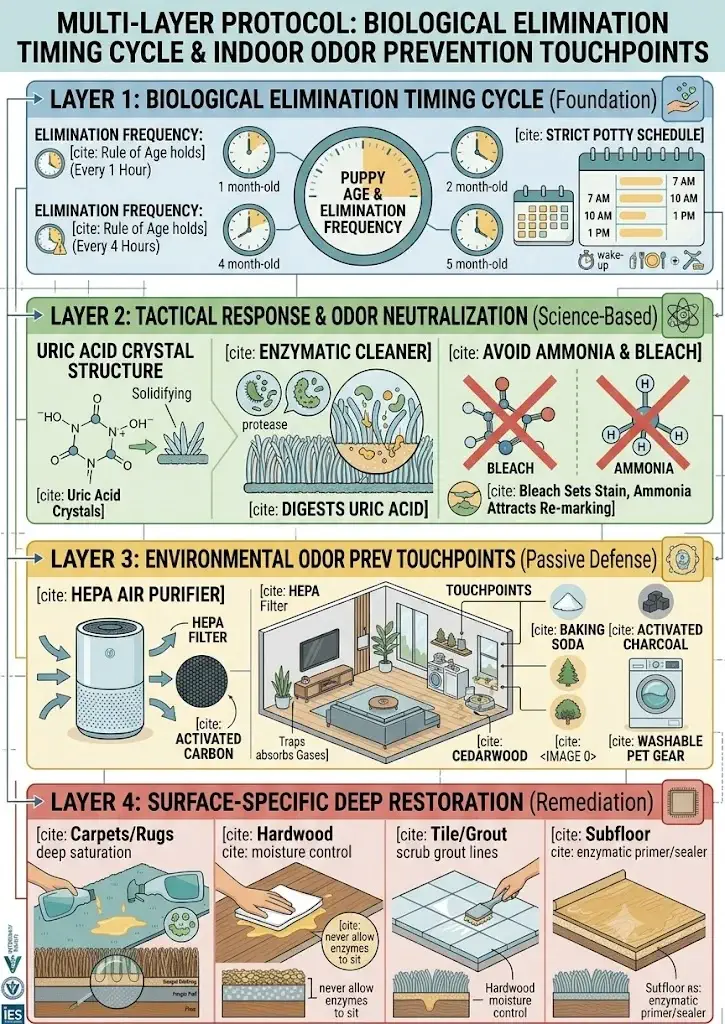
Predictable outdoor elimination intervals empty the puppy’s bladder before physiological capacity thresholds trigger indoor accidents. Preventing accidents is your absolute first line of defense against domestic urine odor.
Young puppies have underdeveloped sphincter muscles and limited bladder capacity (typically holding urine for only one hour per month of age). Build structured, predictable potty trips around physiological events that consistently stimulate the gastrocolic and urinary reflexes:
- Immediately upon waking in the morning
- Within 10 to 20 minutes following every meal
- Directly after the puppy drinks large volumes of water
- Immediately following vigorous indoor play or training
- Promptly when releasing the puppy from a daytime nap
- Directly before retiring for nighttime sleep
- Immediately upon removing the puppy from their crate
Adjust your schedule to your puppy’s physical age, breed size, and activity level rather than relying on a rigid, generic timetable.
2. Clean Puppy Pee Immediately
Immediate vertical blotting extracts fresh urine volume before gravitational flow draws liquid into porous floor underlayments. Remediation speed directly dictates whether an accident remains a minor surface clean or develops into a permanent odor reservoir.
When you discover fresh urine:
- Keep the puppy safely away from the wet area.
- Blot the puddle immediately using stacked absorbent white paper towels.
- Apply firm downward vertical pressure with your hands or shoes.
- Replace saturated towels continuously until paper lifts completely dry.
- Apply a CRI-certified bio-enzymatic pet cleaner to digest residual urea.
- Allow the treated area to dry completely under active air circulation.
Do not aggressively scrub the accident. Scrubbing frays synthetic carpet tufts and drives liquid laterally into uncontaminated yarn and deep into backing cushions. For larger spills, use a motorized spot vacuum to extract moisture mechanically.
3. Remove Urine Odor at the Source
Bio-enzymatic catalysts destroy organic uric acid crystals permanently, whereas synthetic perfumes merely mask airborne volatile gases. Odor prevention requires eradicating the chemical compounds producing the smell.
A scented air freshener or carpet powder temporarily changes what human noses perceive, but leaves underlying uric acid salts intact. Because canine olfaction is thousands of times more sensitive than human scent detection, un-neutralized pheromone traces signal to the puppy that the spot is a sanctioned toilet area. Choose cleaners engineered specifically for pet urine that carry independent third-party laboratory verification. Review our tested recommendations in the Best Puppy Accident Cleaners guide.
4. Protect Carpet and Carpet Padding
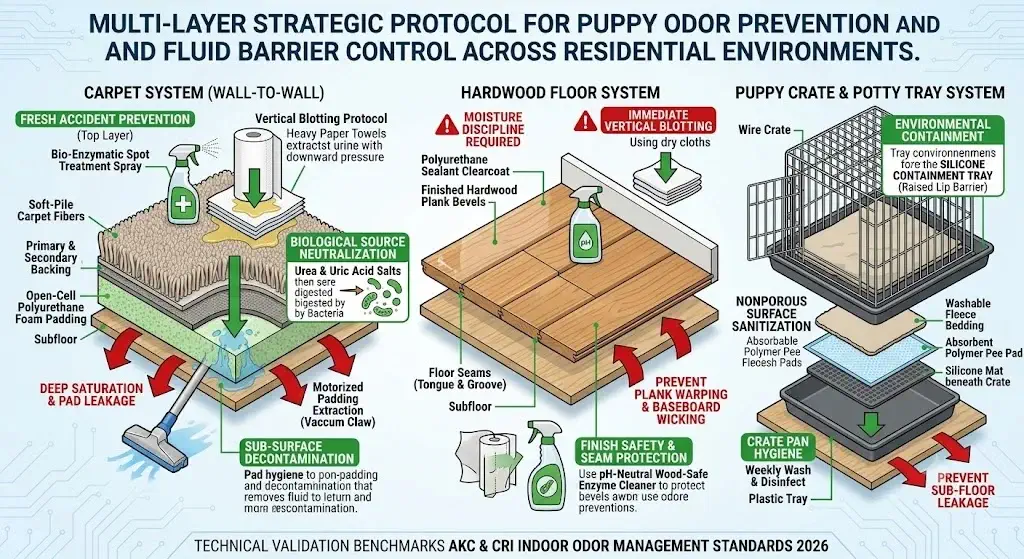
Open-cell polyurethane padding absorbs liquid urine like a sponge, creating sub-surface contamination reservoirs up to three times wider than the surface puddle. Managing carpet installations requires understanding how fluids move vertically through textile layers:
A fresh, minor accident discovered immediately remains predominantly within the upper face pile. However, larger or repeated accidents penetrate through primary polypropylene backings into porous foam cushions. Once urine enters the pad, surface wiping cannot eliminate the smell.
Watch for these classic diagnostic indicators:
- The room smells clean while wet, but strong ammonia returns once the carpet dries.
- The same square foot of flooring repeatedly emits sharp urine odors.
- The puppy consistently returns to sniff or scratch a visually clean spot.
- The smell intensifies dramatically on humid summer afternoons.
- Firm foot pressure produces a damp sensation or visible moisture wicking upward.
For recurring pad malodors, standard sprays fail; deploy sub-surface vacuum extraction claws or consult our dedicated guide on Puppy Urine Smell in Carpet.
5. Remove Rugs During Potty Training
Soft, absorbent area rug textures mimic outdoor natural substrates, stimulating instinctual elimination reflexes in developing puppies. If your puppy targets a specific rug, roll it up and store it away during the active housebreaking phase.
Temporarily removing rugs achieves two critical objectives:
- It eliminates an attractive indoor toilet target from the puppy’s environment.
- It prevents repeated urine fluid saturation into expensive textiles, rug backings, and underlying wood floors.
The AKC notes that puppies readily develop surface preferences for soft, absorbent textures like wool and cotton rugs. Do not return prized rugs to your living spaces until your puppy has demonstrated 30 consecutive days of zero indoor accidents and the rug has been thoroughly sanitized.
6. Keep the Puppy Crate Clean and Dry
Regular crate pan sanitization preserves canine den instincts and prevents puppies from becoming comfortable sleeping near urine contamination. A puppy crate becomes an ongoing odor source if urine reaches bedding, the removable tray, or the floor beneath:
- Remove soiled bedding immediately upon discovering an accident.
- Wash the plastic tray with warm soapy water to strip organic biofilms.
- Inspect underneath the crate to ensure urine has not run off the tray onto room flooring.
- Disinfect the plastic pan using veterinary-approved sanitizers when dealing with soft stool.
- Dry the tray and wire frame completely before returning clean bedding.
Never place fresh fleece blankets on top of a damp, contaminated crate tray. Maintaining a pristine sleeping environment reinforces the puppy’s natural instinct to avoid soiling their immediate bed.
7. Wash Puppy Bedding Regularly
Thermal laundry washing at 140°F (60°C) degrades volatile urine fatty acids and sterilizes organic enteric microbes. Fabric dog beds and crate cushions absorb minor dribbles and body oils that accumulate noticeable odors over time:
- Strip washable fabric covers immediately after an accident occurs.
- Pre-treat visible yellow spots with an enzymatic laundry spray for 15 minutes.
- Machine wash using warm or hot water with a fragrance-free, pet-safe laundry detergent.
- Add an activated oxygen or laundry sanitizer additive to the final rinse cycle.
- Tumble dry on high heat until the core stuffing is completely dry.
- Audit the bedding with an olfactory sniff check before returning it to use.
If an orthopedic foam mattress lacks a waterproof internal liner and has soaked urine into dense memory foam, laundering the cover will not solve the issue. Replace contaminated foam cores promptly to eliminate persistent odors.
8. Pay Attention to Hardwood and Floor Seams
Strict low-moisture cleaning protocols protect hardwood clearcoats while preventing acidic urine from penetrating plank bevels. Hardwood flooring requires delicate chemical management compared to synthetic flooring:
- Blot fresh urine puddles immediately using downward paper towel pressure.
- Minimize liquid volume to prevent fluid from seeping between plank joints.
- Use a pH-neutral cleaner certified safe for polyurethane finishes.
- Wipe the surface completely dry within 2 to 3 minutes of application.
- Never use steam mops, chlorine bleach, or vinegar on finished wood floors.
Excessive cleaner saturation forces liquid between boards onto plywood subfloors, triggering irreversible edge cupping and dark black tannin oxidation burns. For complete hardwood protection protocols, review our specialized Guide to Cleaning Puppy Pee From Hardwood Floors.
9. Don’t Mask Puppy Urine Odor With Fragrance
Aerosol fragrances blend with airborne ammonia to create noxious hybrid odors while leaving underlying uric crystals intact. Adding synthetic scents does not clean or sanitize contaminated flooring.
Heavily perfumed room sprays, scented plug-ins, and deodorizing powders merely numb human olfactory receptors temporarily. The underlying organic soil—specifically crystallized uric acid salts and fatty bile pigments—remains bonded to flooring fibers, off-gassing ammonia whenever room humidity fluctuates. When a room smells of urine, identify the exact physical contamination source and neutralize it biochemically rather than applying masking agents.
10. Clean the Entire Accident Area
Capillary fluid dynamics spread liquid urine horizontally through carpet backings far beyond the visible surface perimeter. Never assume the damp surface mark represents the entire accident zone:
- Inspect a 12-to-18-inch perimeter surrounding the visible puddle.
- Check lower fabric skirts and legs of adjacent upholstered furniture.
- Inspect nearby baseboards, door moldings, and wall drywall bases.
- Check the underside of adjacent throw rugs and non-slip pads.
- Inspect floor registers and heating vents where fluids can drain into ductwork.
Deploying a 395nm UV blacklight in complete darkness causes dried uric acid salts to fluoresce bright yellow-green, allowing you to map out invisible splatters and historical accidents with precision.
11. Prevent Repeat Accidents
Proactive indoor environmental management eliminates opportunities for puppies to practice unmonitored indoor elimination habits. Every prevented accident represents one less contamination source to remediate:
- Maintain 100% active supervision using umbilical leashes or indoor exercise pens.
- Restrict unsupervised access to carpeted bedrooms using sturdy baby gates.
- Learn to recognize pre-elimination signals: sudden sniffing, circling, abrupt wandering, or pacing.
- Escort the puppy outdoors immediately upon detecting behavioral elimination cues.
- Reward outdoor elimination enthusiastically with high-value treats within 3 seconds.
- Avoid retroactive physical punishment or scolding, which induces fear-based covert urination.
- Eradicate residual scent markers completely using certified bio-enzymatic digesters.
How to Prevent Puppy Urine Odor in Carpet
Strict moisture control and deep bio-enzymatic penetration protect multi-layer carpet installations from permanent odor saturation. Carpet requires structured maintenance to ensure fluids do not reach foundational framing:
- Maintain a strict outdoor elimination schedule to minimize indoor accident frequency.
- Roll up decorative throw rugs throughout the active potty training phase.
- Blot fresh accidents immediately using stacked white paper towels under firm pressure.
- Apply a CRI-certified bio-enzymatic cleaner to saturate down to the primary backing.
- Extract dissolved residues using a motorized cold-water spot cleaning machine.
- Force dry the area completely using high-velocity electric floor fans.
- Recheck the area with an olfactory sniff check and UV blacklight audit after 24 hours.
- Investigate the padding with sub-surface claws if odors return during warm weather.
How to Prevent Puppy Urine Odor in a Small Home or Apartment
Enclosed square footage concentrates airborne volatile organic compounds, requiring rapid cleanup and dedicated indoor air ventilation. In an apartment, urine malodors disperse rapidly between living areas:
- Enforce a rigid potty schedule, factoring in elevator travel and stairwell transit times.
- Confine the puppy to uncarpeted zones (kitchen, entryway) using freestanding playpens.
- Remove high-pile decorative rugs during initial housebreaking months.
- Position a dedicated pet accident cleanup caddy in an easily accessible hallway.
- Utilize washable waterproof mattress and sofa covers across soft furnishings.
- Deploy true HEPA air purifiers equipped with activated carbon pellets to absorb VOCs.
- Clean nonporous floors promptly with neutral surfactants to stop tracking.
How to Prevent Puppy Urine Odor When Using Pee Pads
Raised-lip silicone pad trays prevent urine from running off pad borders onto surrounding flooring substrates. While pee pads provide convenience, unmanaged pad stations frequently generate severe odors:
- Select premium 5-layer polymer pads that convert liquid urine into gel rapidly.
- Place pads inside locked plastic or silicone holders to stop puppies from bunching or dragging them.
- Discard single-use disposable pads immediately after two eliminations to prevent saturation run-off.
- Wash reusable fabric potty pads daily using hot water cycles and laundry sanitizers.
- Wash the flooring directly beneath the pad tray weekly to eliminate condensation and leaks.
- Scrub plastic pad frames with neutral detergents to strip sticky urine films.
- Never leave saturated pads sitting in open indoor trash cans; use sealed step cans.
How to Prevent Puppy Urine Odor in a Crate
Correct crate sizing prevents puppies from establishing separate sleeping and soiling zones within their enclosure. Crate odors indicate management or sizing issues rather than cleaning shortcomings:
- Escort the puppy outside to eliminate immediately before entering the crate.
- Size the crate correctly: the puppy should only have enough room to stand, turn, and lie down.
- Avoid leaving young puppies crated beyond their physical holding limit (maximum 2 to 4 hours).
- Remove the puppy immediately upon morning waking or whining after resting.
- Wash the plastic tray immediately if an accident occurs; never mask it with fresh towels.
- Use easily washable, waterproof crate pads rather than thick, loose quilts.
How Often Should You Clean Puppy Accident Areas?
Immediate decontamination within minutes of accident discovery represents the only effective standard for preventing permanent odor bonding. There is no effective “once-daily” schedule for puppy accidents; timing must be immediate.
Clean routine equipment on a structured schedule:
- Plastic Crate Pans: Wash and sanitize weekly, or immediately following any accident.
- Indoor Potty Trays: Rinse and scrub every 2 to 3 days to stop bacterial scale buildup.
- Reusable Potty Pads: Launder every 24 to 48 hours in hot sanitizing water cycles.
- Fabric Bedding and Crate Liners: Machine wash weekly or immediately if damp.
- Waterproof Floor Mats: Wipe down every 2 to 3 days with neutral disinfectant wipes.
What to Keep in a Puppy Accident Cleanup Kit
A dedicated, fully assembled sanitation caddy ensures rapid chemical and mechanical intervention before accidents dry. Keep these essential tools organized in an accessible bucket:
- Heavy-duty absorbent white paper towel rolls (undyed to prevent color transfer)
- Clean, lint-free white microfiber cloths for downward blotting and drying
- Disposable nitrile gloves for sanitary waste handling
- A CRI-certified bio-enzymatic carpet cleaner spray
- An NWFA-approved pH-neutral hardwood floor spray
- Heavy sealable plastic waste bags for rapid bio-waste containment
- A high-output 395nm UV blacklight inspection flashlight
- A portable motorized spot carpet extractor for homes with wall-to-wall carpeting
What If Puppy Urine Odor Keeps Coming Back?
Persistent post-cleaning odor indicates un-hydrolyzed uric acid crystals trapped inside subflooring, padding, or structural trim. If odors return after cleaning, investigate these sub-surface reservoirs:
- Urine saturated through primary carpet backing into open-cell foam padding
- Liquid seeped beneath wood baseboards and wicked into porous drywall gypsum cores
- Urine drained into central floor heating registers or air return ductwork
- Multiple unlocated accidents occurred underneath low-clearance beds or sofas
- Unsealed hardwood tongue-and-groove joints allowed fluid to reach plywood subflooring
Treat identified deep spots with extended bio-enzymatic saturation under damp towels for 8 to 12 hours. If structural framing or dense subfloor plywood is saturated, professional truck-mounted restoration or subfloor priming is required.
When Puppy Urine Odor Could Indicate a Health Problem
Sudden urinary incontinence accompanied by strong, abnormal odors can signal underlying clinical urological disease. Not all domestic urine accidents stem from behavioral or training shortcomings.
Consult your veterinarian immediately if housebreaking regressions accompany any of these symptoms:
- Frequent, painful straining with only small dribbles produced (dysuria)
- Noticeably cloudy urine or pinkish/red discoloration indicating blood (hematuria)
- Unusually pungent, fishy, or sweet chemical urine odors
- Drastic, sudden increases in daily water consumption (polydipsia)
- Lethargy, loss of appetite, fever, or vocalizing while eliminating
- Sudden loss of previously reliable bladder control while resting or sleeping
Urinary tract infections (UTIs), bladder crystals, congenital ectopic ureters, or systemic endocrine disorders require prompt medical treatment rather than cleaning adjustments.
Fresh Accident vs. Recurring Odor
Fresh accidents require rapid liquid extraction, whereas recurring odors demand deep sub-surface chemical digestion and structural audits. Match your operational approach to contamination maturity:
| Contamination Scenario | Primary Operational Focus |
|---|---|
| Fresh urine puddle (<10 mins) | Downward blotting; extract raw moisture before capillary migration |
| Small dried deposit (>12 hrs) | Rehydrate with lukewarm water, extract, apply bio-enzymes, air dry |
| Repeated carpet accidents | Deploy motorized sub-surface extraction claw into open-cell foam padding |
| General room-wide odor | Conduct dark-room 395nm UV blacklight sweep along baseboards and rugs |
| Persistent crate malodor | Wash plastic tray, check underneath pan, and machine wash bedding in hot water |
| Odor returns after complete drying | Audit carpet cushion and subflooring; apply deep covered enzyme soak |
Common Mistakes That Cause Puppy Urine Odor
Improper cleaning techniques and loose indoor management exacerbate urine penetration and reinforce repeat elimination habits. Avoid these eight critical operational errors:
- Waiting Until the Accident Dries: Allowing liquid urine to sit permits gravity to pull fluid past backings into padding.
- Cleaning Only Visible Surface Spots: Failing to address expanded sub-surface pooling leaves 70% of the urine mass untouched.
- Using Fragrance Sprays Instead of Enzymes: Aerosol perfumes temporarily mask airborne gases without destroying uric acid crystals.
- Ignoring Saturated Carpet Padding: Leaving contaminated foam padding intact guarantees recurring ammonia off-gassing during humid weather.
- Leaving Wet Bedding Inside the Crate: Allowing puppies to sleep near damp bedding degrades their natural den cleanliness instincts.
- Returning Area Rugs Too Early: Introducing soft, absorbent textiles before housebreaking is established triggers instinctual re-marking.
- Granting Unsupervised Indoor Freedom: Permitting young puppies to roam unmonitored guarantees covert accidents in hidden corners.
- Punishing Accidents Retroactively: Scolding creates elimination anxiety, driving puppies to eliminate secretly behind furniture.
Puppy Urine Odor Prevention Checklist
Standardized operational routines establish domestic cleanliness and prevent chronic odor accumulation. Follow this complete procedural checklist:
- ☐ Maintain a predictable, structured outdoor potty schedule
- ☐ Take the puppy outside immediately upon morning waking and after naps
- ☐ Escort the puppy out within 15 to 20 minutes following meals and active play
- ☐ Supervise indoor freedom actively using baby gates or umbilical leashes
- ☐ Assemble a dedicated pet accident cleanup caddy in an accessible location
- ☐ Blot fresh liquid puddles immediately using downward vertical paper towel pressure
- ☐ Apply a surface-compatible, CRI-certified bio-enzymatic urine digester
- ☐ Allow treated flooring sections to dry completely under electric fan ventilation
- ☐ Roll up and store absorbent decorative area rugs during early housebreaking
- ☐ Wash crate pans and bedding regularly in hot, sanitizing water cycles
- ☐ Clean indoor potty pad frames and catchment basins weekly
- ☐ Inspect carpet padding with sub-surface claws if odors return after drying
- ☐ Conduct monthly dark-room 395nm UV blacklight audits to catch hidden spots
- ☐ Reward outdoor elimination immediately with high-value treats within 3 seconds
Frequently Asked Questions (FAQ)
How do I prevent puppy urine odor in my house?
Why does my house still smell like puppy urine?
Does cleaning puppy pee immediately prevent odor?
How do I prevent puppy urine smell in carpet?
How do I prevent puppy urine odor in carpet padding?
Can air freshener prevent puppy urine smell?
Do enzyme cleaners prevent puppy urine odor?
How often should I wash puppy bedding?
Should I remove rugs while potty training a puppy?
How do I prevent puppy urine odor in a crate?
Why does puppy pee smell return after cleaning?
Can puppy urine odor indicate a health problem?
What is the most important way to prevent puppy urine odor?
Bottom Line: Prevent the Accident, Neutralize the Source
The most reliable strategy to prevent puppy urine odor is to eliminate repeat accidents through structured potty timing and extract fresh moisture before it breaches sub-surface cushions. Keep your puppy on a predictable schedule, supervise indoor freedom with umbilical leashes or exercise pens, and escort them outside immediately upon waking, feeding, and vigorous play.
When an accident happens, blot it immediately with firm downward vertical pressure and deploy a CRI-certified bio-enzymatic cleaner to digest uric acid crystals. If odors return after drying, look below the surface to carpet padding, hardwood seams, or concealed baseboards rather than layering aerosol fragrances. Prevent the accident → blot immediately → digest the source → dry completely → halt repeat marking. This disciplined operational approach protects your home investments while setting a hygienic foundation for lifelong housebreaking success.
