
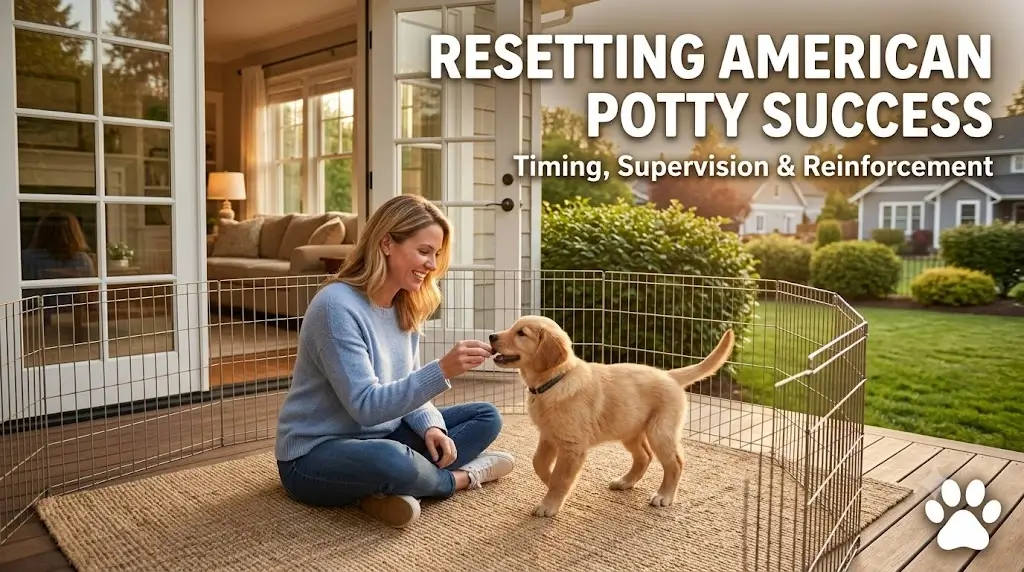
Why Is House Training Not Working? 11 Common Problems & How to Fix Them
When house training is not working, the problem is usually not that a puppy is being stubborn or deliberately disobedient. More often, the training system is asking the puppy to succeed under conditions it cannot yet handle consistently.
The most useful way to troubleshoot house training is to examine timing, supervision, freedom, reinforcement, environment, accident cleanup, and the puppy’s physical ability to wait.
If house training is not working, first identify the exact failure pattern. Check whether potty trips are frequent enough, whether the puppy is supervised between trips, whether freedom has expanded too quickly, whether outdoor conditions are distracting or frightening, and whether successful outdoor elimination is reinforced. If a previously reliable puppy suddenly starts having frequent accidents, also consider a medical problem and contact a veterinarian when appropriate.
Why Is House Training Not Working?
House training fails when the puppy repeatedly gets opportunities to eliminate indoors before the desired bathroom habit is strong enough to compete with those opportunities.
The solution is not simply taking the puppy outside more often. You need to determine why the puppy is still having accidents.
The most common causes are:
- Potty trips are too infrequent.
- The puppy is given too much freedom too soon.
- Supervision is inconsistent.
- The owner misses the puppy’s individual bathroom signals.
- The puppy is distracted or uncomfortable outside.
- Outdoor potty trips are too exciting or poorly timed.
- Successful elimination is not reinforced clearly.
- Previous accident areas still contain detectable odor.
- The puppy has not generalized the behavior to different situations.
- The training routine changes from day to day.
- A medical problem is contributing to the accidents.
House Training Troubleshooting at a Glance
| What You See | Most Likely Training Issue | What to Change |
|---|---|---|
| Accidents shortly after coming inside | Puppy did not finish outside or was distracted. | Stay outside longer and supervise closely afterward. |
| Accidents when roaming freely | Freedom expanded too quickly. | Reduce access and rebuild gradually. |
| Accidents when left alone | Absence may exceed current bathroom capacity. | Adjust the routine and arrange appropriate potty opportunities. |
| Puppy refuses to potty outside | Distraction, fear, weather, surface preference, or incomplete outdoor training. | Make the bathroom area predictable and low-distraction. |
| Repeated accidents in one location | Residual odor or learned location preference. | Clean thoroughly and restrict access temporarily. |
| Sudden regression after weeks of success | Routine change, environmental change, or possible health problem. | Review recent changes and consider veterinary evaluation. |
1. Your Puppy May Not Be Getting Enough Potty Opportunities
One of the simplest explanations for repeated accidents is that the puppy is being asked to wait longer than it can reliably manage.
Bathroom needs vary with age, size, activity, food and water intake, sleep, excitement, and individual development. A rigid schedule that works for one puppy may not work for another.
Instead of relying on a single rule about how long a puppy “should” hold it, monitor the puppy’s actual pattern.
Important potty triggers include:
- Immediately after waking.
- After meals.
- After substantial drinking.
- After active play.
- After exercise.
- After naps.
- Before longer periods of confinement.
- Before bedtime.
Use both scheduled potty trips and observation. The schedule provides structure; the puppy’s behavior tells you when the schedule needs adjustment.
2. You May Be Giving Your Puppy Too Much Freedom
A puppy can understand where it should eliminate and still be unable to manage unrestricted access to an entire house.
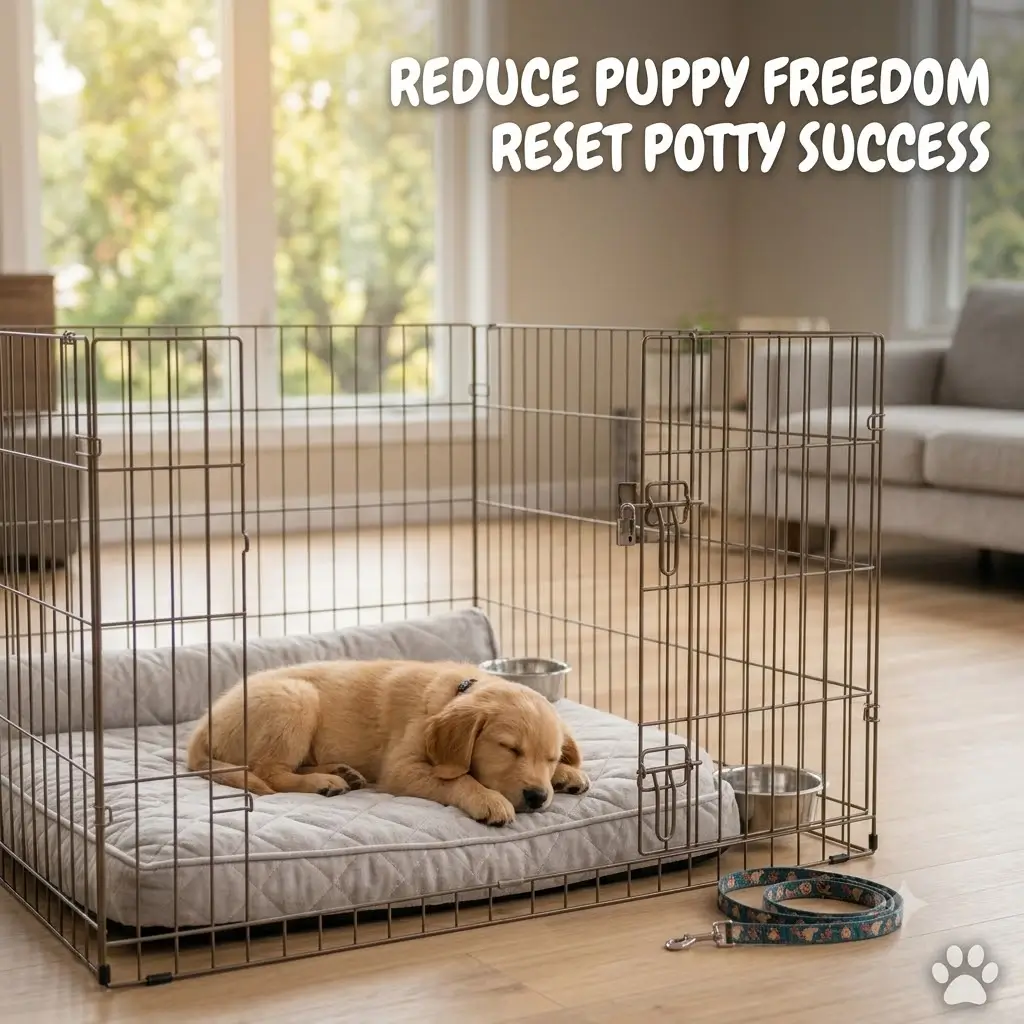
More freedom creates more distance from the owner, more distractions, more hidden areas, and more opportunities for an accident to happen unnoticed.
If accidents increase after allowing the puppy into additional rooms, that is useful information.
Reduce access temporarily and return to the last level of freedom that produced reliable success.
Once the puppy is consistently successful again, expand access gradually.
3. Your Puppy May Not Be Supervised Closely Enough
House training depends heavily on preventing mistakes before they happen.
If the puppy is wandering around the house while nobody is watching, the owner may not see the warning signs until after the accident.
During active house training, supervision should make it easier to notice:
- Sudden sniffing.
- Circling.
- Restlessness.
- Walking away from play.
- Searching for a quiet corner.
- Moving toward a previous accident location.
- Looking toward the door.
- Whining or another individual signal.
Not every puppy provides an obvious signal, so supervision should not replace scheduled potty trips.
4. Your Puppy May Not Understand the Potty Signal Yet
Many owners expect a puppy to communicate the need to go outside before teaching a reliable signal.
A puppy may eventually learn to stand by the door, look at the owner, whine, or use another behavior, but that communication has to become meaningful through repetition.
Early in training, take the puppy outside based on timing and predictable triggers rather than waiting for a clear signal.
5. Your Puppy Is Too Distracted Outside
Some puppies go outside and become fascinated by birds, leaves, people, smells, traffic, other dogs, or sounds.
The puppy may spend several minutes exploring without eliminating and then urinate shortly after returning indoors.
This creates one of the most frustrating house-training patterns, often explained by understanding why does my puppy pee right after coming inside when outdoor sensory overload interrupts natural elimination.
Make the initial bathroom trip boring and predictable. Go to the designated area, give the puppy time to investigate, and keep distractions limited until elimination occurs.
6. Your Puppy Is Coming Back Inside Too Quickly
If the puppy does not eliminate outside, returning indoors should not automatically mean unrestricted playtime.
A practical training pattern is:
- Take the puppy to the bathroom area.
- Give the puppy an appropriate opportunity to eliminate.
- Reward successful elimination immediately.
- If the puppy does not eliminate, return indoors under close supervision.
- Try again after a short period based on the puppy’s needs.
The objective is to avoid teaching the accidental sequence of “hold it outside, then eliminate during indoor freedom.”
7. You May Not Be Rewarding Outdoor Potty Success Clearly Enough
Puppies learn through consequences. If eliminating outside consistently produces something valuable, the behavior becomes easier to repeat.
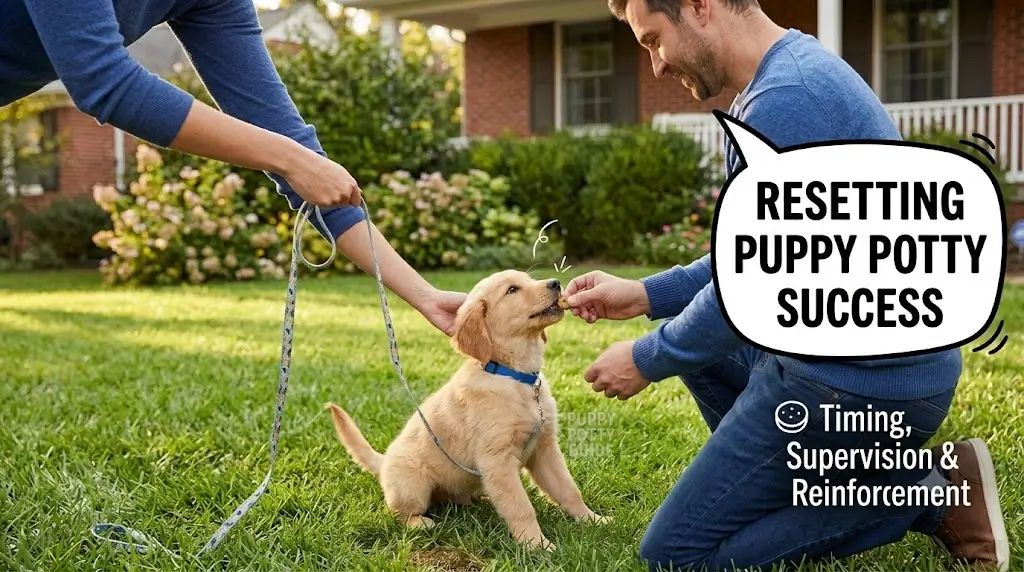
The reward should occur soon after the desired behavior.
Appropriate rewards can include:
- A small food reward.
- Verbal praise.
- Brief play.
- Access to sniffing or exploring.
- Another activity the individual puppy values.
The exact reward matters less than making the consequence clear and consistent.
8. Previous Accident Areas May Still Smell Like a Bathroom
A location that looks clean to a person may still contain odor cues that are detectable to a dog.
If the puppy repeatedly returns to the same area, clean it thoroughly with a product designed for pet urine or fecal contamination and appropriate for the surface.
Avoid simply covering the smell with fragrance.
If possible, temporarily prevent access to heavily soiled areas while the puppy’s bathroom habits are being rebuilt.
9. Your Puppy Has Not Generalized House Training Yet
A puppy may be reliable in one environment without being equally reliable everywhere.
For example, a puppy may know that the backyard is the bathroom area but become confused at a friend’s house, on vacation, or in a new home.
This is not necessarily a failure of training. It can mean the behavior has not yet been generalized across locations and situations.
When introducing a new environment, temporarily increase supervision and provide more frequent bathroom opportunities.
10. Your Puppy May Be Afraid or Uncomfortable Outside
Outdoor elimination is harder when the puppy feels unsafe.
Possible problems include:
- Heavy rain.
- Extreme heat or cold.
- Loud traffic.
- Construction noise.
- Other dogs.
- Slippery surfaces.
- Unfamiliar textures.
- A previous frightening experience.
If the puppy consistently avoids one outdoor area but eliminates elsewhere, examine the environment rather than assuming the puppy is refusing to cooperate.
11. The Routine May Be Too Inconsistent
House training becomes harder when the puppy’s daily schedule changes dramatically from one day to the next.
Feeding, sleeping, play, outdoor trips, and periods alone do not have to occur at exactly the same minute every day, but predictable patterns make bathroom timing easier to manage.
Consistency is especially useful when multiple people care for the puppy.
Everyone who handles the puppy should understand where the puppy should eliminate, which outdoor area to use, when to provide potty opportunities, and how to respond to successful elimination.
What If House Training Works Sometimes but Not Always?
Inconsistent success is useful diagnostic information.
Instead of asking whether the puppy “knows” house training, identify the conditions under which the puppy succeeds and fails.
| Success Condition | Failure Condition | What It Suggests |
|---|---|---|
| Supervised indoors | Unsupervised indoors | Management and freedom issue. |
| Backyard | Public area | Generalization or environmental distraction. |
| After waking | After extended play | Potty timing needs adjustment. |
| Owner present | Owner away | Absence duration, routine, or stress may matter. |
| Normal weather | Rain or cold | Outdoor environment may be affecting elimination. |
Why Does My Puppy Pee Right After Coming Inside?
This usually means the puppy did not fully eliminate outside, became distracted, was brought inside too soon, or was not given enough time to settle and finish.
Return to closer supervision after unsuccessful outdoor trips.
If the puppy repeatedly urinates immediately after coming indoors despite appropriate opportunities outside, consider whether the puppy is experiencing a medical problem or whether the outdoor environment is preventing normal elimination.
Why Won’t My Puppy Pee Outside?
Puppies may avoid urinating outdoors because they are distracted, frightened, uncomfortable with the surface, unfamiliar with the location, or simply have not yet learned that the outdoor area is the preferred bathroom.
Use one consistent bathroom area when practical, reduce distractions, give the puppy enough time, and reward outdoor elimination.
Why Won’t My Puppy Poop Outside?
Some puppies need more time to settle before defecating. While urination can happen quickly, resolving stool accidents often requires learning why is my puppy pooping in the house to align potty breaks with post-meal digestive timing.
Movement, sniffing, routine, and privacy can affect the behavior.
If your puppy regularly waits until returning indoors, extend the structured outdoor opportunity and avoid immediately switching to unrestricted indoor activity after an unsuccessful trip.
Changes in stool consistency, frequency, appetite, or signs of discomfort should be evaluated separately from training.
How to Reset House Training When Nothing Seems to Work
If several weeks of inconsistent training have produced little progress, simplify the system.
Step 1: Reduce the Puppy’s Territory
Limit access to areas where accidents are difficult to observe.
Step 2: Increase Potty Opportunities
Temporarily provide more frequent outdoor opportunities and track what happens.
Step 3: Supervise Between Trips
Do not allow the puppy to disappear into another room immediately after returning inside.
Step 4: Reward Outdoor Elimination
Make successful elimination produce a predictable positive consequence.
Step 5: Clean Previous Accident Areas
Remove residual odor and restrict access where necessary.
Step 6: Expand Freedom Slowly
Increase access only after the current level is reliable.
Step 7: Reassess If There Is No Improvement
If appropriate management does not improve the pattern, investigate environmental, behavioral, and veterinary explanations.
A Practical 7-Day House Training Reset
Day 1 — Find the Pattern
Write down meals, water, naps, play, potty trips, successful eliminations, and accidents.
Day 2 — Tighten Supervision
Keep the puppy close enough to observe likely bathroom signals.
Day 3 — Improve Potty Timing
Add potty opportunities around waking, eating, playing, sleeping, and other predictable triggers.
Day 4 — Improve Outdoor Focus
Use a consistent bathroom area and reduce distractions during the initial potty trip.
Day 5 — Reinforce Success
Reward successful elimination promptly and consistently.
Day 6 — Test Controlled Freedom
Give access to a slightly larger area if the puppy has been successful under the current setup.
Day 7 — Review the Data
Compare accident frequency and successful outdoor trips with the beginning of the reset. If there is no meaningful improvement, reassess the cause.
House Training Schedule: What Should You Track?
A simple log can reveal patterns that are difficult to see from memory.
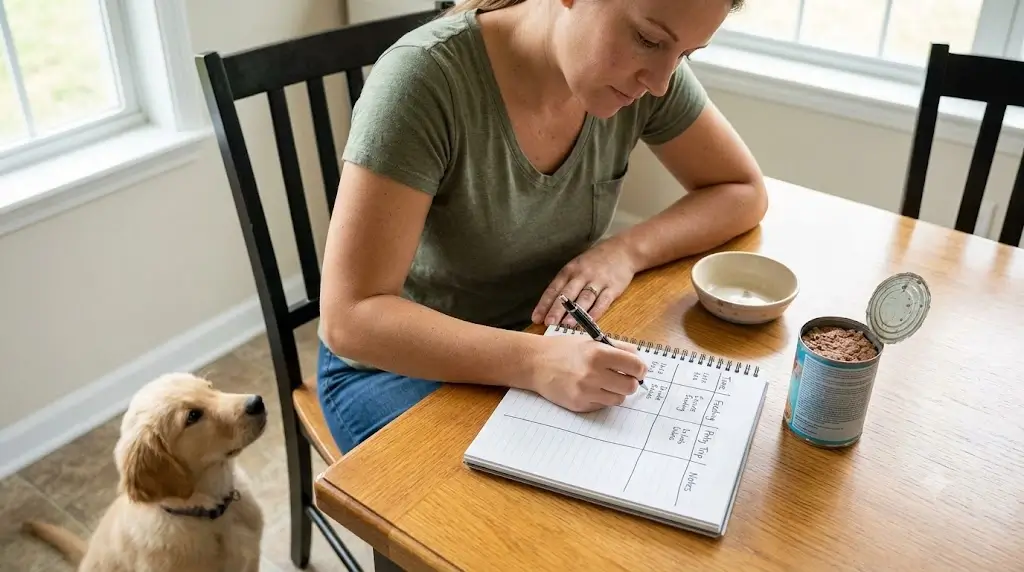
| Record | Why It Matters |
|---|---|
| Meal time | Helps identify predictable bowel movement patterns. |
| Water intake pattern | Can affect urination timing. |
| Wake-up time | Many puppies need a bathroom opportunity after sleeping. |
| Play/exercise | Activity can change bathroom timing. |
| Outdoor potty trip | Shows whether opportunities are frequent enough. |
| Successful elimination | Helps identify the puppy’s natural timing. |
| Accident time and location | Reveals patterns involving rooms, surfaces, or timing. |
House Training Problems That Look Like Stubbornness
Puppies are often described as stubborn when the actual problem is a mismatch between the training plan and the puppy’s current ability.
Examples include:
- Expecting the puppy to wait too long.
- Allowing unsupervised freedom.
- Changing the bathroom location frequently.
- Expecting a signal that has not been taught.
- Using an outdoor area the puppy finds frightening.
- Rewarding inconsistently.
- Expecting the puppy to understand a new environment immediately.
Before changing the puppy’s behavior, change the conditions that make success difficult.
Should You Use Puppy Pads If House Training Is Not Working?
Puppy pads can be useful in some households, particularly when outdoor access is limited, but they can also introduce a second bathroom location that needs to be clearly taught.
If your long-term goal is outdoor-only elimination, consistency is important. Switching repeatedly between indoor and outdoor bathroom rules can make the desired location less clear.
If you use pads, establish a predictable location and a clear transition plan if you later want the puppy to eliminate outdoors.
Can Crate Training Help With House Training?
Appropriate crate management can help with house training because it can reduce unsupervised opportunities for accidents.
However, a crate is not a substitute for an appropriate potty schedule. If confinement fails and your dog soils its bed, check why is my puppy peeing in the crate to assess whether excessive duration, poor sizing, or anxiety are the root causes.
Puppies should not be expected to remain confined for longer than they can reasonably handle simply because a crate is being used.
If a puppy repeatedly soils the crate, investigate timing, crate setup, routine, stress, and possible medical causes.
Should You Punish a Puppy for House Training Accidents?
No.
Punishment after an accident does not teach the puppy where elimination should happen.
It can also make the puppy uncomfortable eliminating around people, which can interfere with reliable training.
yelling, hitting, frightening the puppy, rubbing its face in an accident, or punishing the puppy after discovering an old accident.
Instead, focus on prevention, supervision, timing, cleaning, and reinforcement.
What to Do When You Catch Your Puppy Having an Accident
- Stay calm.
- Interrupt gently if appropriate.
- Take the puppy to the designated bathroom area.
- Reward the puppy if it finishes outside.
- Clean the indoor area thoroughly.
- Review why the accident happened.
- Adjust supervision or potty timing.
The goal is not to make the puppy afraid of accidents. The goal is to make successful outdoor elimination easier to repeat.
What If My Puppy Was House Trained and Then Regressed?
A previously reliable puppy that suddenly starts having accidents deserves a different troubleshooting process. In many cases, addressing a puppy house training regression requires stepping back to a tighter schedule rather than assuming your puppy has permanently lost its training.
Review recent changes first:
- Moving.
- New pets.
- New people.
- Changes in work or school schedules.
- Longer periods alone.
- Travel or boarding.
- Changes in feeding or water routines.
- Changes in the outdoor bathroom area.
- Recent veterinary treatment or illness.
A regression does not necessarily mean the puppy has forgotten the behavior. It may indicate that the current environment or routine has changed beyond what the puppy can reliably manage.
When House Training Problems May Be Medical
Not every house-training problem is behavioral.
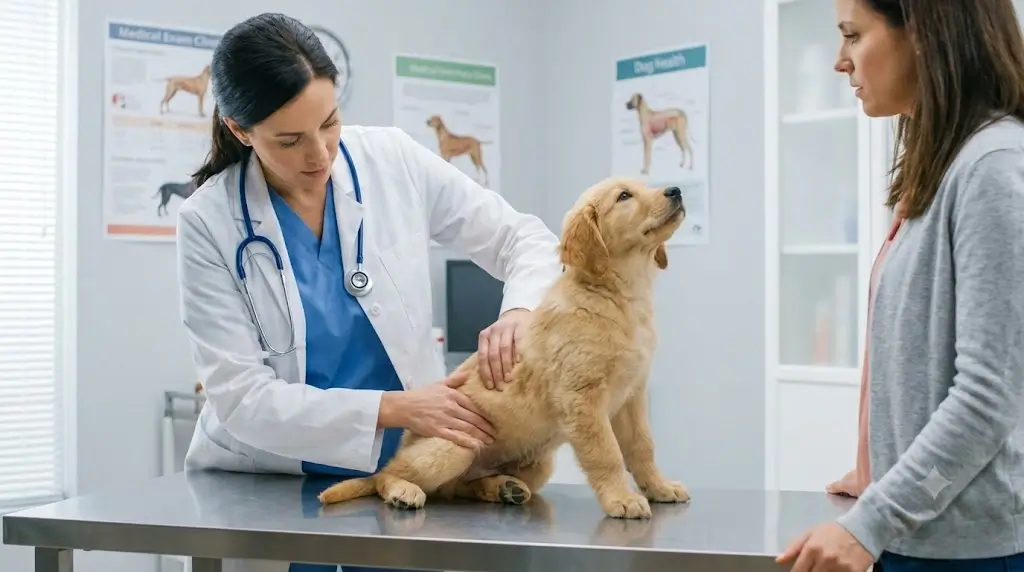
A medical problem can alter urination, bowel movements, urgency, frequency, or the puppy’s ability to wait.
Veterinary advice is particularly important when a previously reliable puppy develops a sudden unexplained change.
Contact a veterinarian if your puppy has concerning signs such as:
- Suddenly frequent urination.
- Repeated attempts to urinate.
- Straining or obvious discomfort.
- Blood in urine or stool.
- Repeated vomiting.
- Persistent diarrhea.
- Marked lethargy.
- Loss of appetite.
- Unusual thirst.
- Major changes in normal elimination.
If the puppy appears unable to urinate or defecate normally, treat that as a veterinary concern rather than a training failure.
How Long Should House Training Take?
There is no single timetable that applies to every puppy.
Reliability depends on age, physical development, previous experience, routine, supervision, environment, and how consistently the household manages potty opportunities.
A better measure of progress is the trend:
- Are accidents becoming less frequent?
- Is the puppy eliminating outside more consistently?
- Can the puppy handle gradually longer intervals?
- Can the puppy remain clean with slightly more freedom?
- Does the puppy recognize the bathroom routine?
These measures provide more useful information than expecting house training to be completed by a specific age.
How to Know House Training Is Improving
- ☐ Indoor accidents are decreasing.
- ☐ Outdoor elimination is becoming more predictable.
- ☐ The puppy stays clean for appropriate intervals.
- ☐ The puppy eliminates more quickly in the designated area.
- ☐ The puppy can handle slightly more supervised freedom.
- ☐ Accident locations are becoming less frequent or disappearing.
- ☐ The household follows a consistent routine.
- ☐ Outdoor potty success is reinforced.
House Training Decision Tree
Is the puppy having accidents?
↓
Did the accidents start suddenly after reliable training?
→ Yes: review recent changes and consider a veterinary assessment if the change is unexplained or accompanied by health symptoms.
→ No: continue troubleshooting the training system.
↓
Does the puppy succeed when closely supervised?
→ Yes: freedom may be expanding too quickly.
→ No: examine potty timing, outdoor environment, reinforcement, and medical possibilities.
↓
Does the puppy eliminate outside but have accidents indoors?
→ Increase supervision, clean previous accident areas, and reduce indoor freedom temporarily.
House Training Checklist for the Next 48 Hours
- ☐ Identify every recent accident location.
- ☐ Record the timing of each accident.
- ☐ Record meals, naps, play, and outdoor trips.
- ☐ Clean all accident areas thoroughly.
- ☐ Reduce unsupervised access to the home.
- ☐ Provide predictable potty opportunities.
- ☐ Use a consistent outdoor bathroom area when practical.
- ☐ Reduce distractions during the initial outdoor potty trip.
- ☐ Reward successful elimination promptly.
- ☐ Do not punish accidents.
- ☐ Watch for sudden changes in urination, stool, appetite, thirst, or behavior.
Frequently Asked Questions
Why is house training not working?
The most common reasons are insufficient potty opportunities, too much freedom, inconsistent supervision, poor timing, outdoor distractions, unclear reinforcement, residual odor, incomplete generalization, or a medical problem.
Why is my puppy still having accidents after potty training?
The puppy may not yet be reliable under the current level of freedom or may be dealing with a schedule or environmental change. Review timing, supervision, freedom, and outdoor conditions before assuming the puppy has forgotten training.
Why does my puppy pee inside after going outside?
The puppy may not have fully eliminated outside, may have been distracted, or may have been brought inside too quickly. Use closer supervision after an unsuccessful potty trip and provide another opportunity when appropriate.
Why won’t my puppy go potty outside?
Distraction, fear, weather, unfamiliar surfaces, or incomplete outdoor training can make elimination difficult. Use a predictable bathroom area and reduce distractions.
Should I punish my puppy for peeing inside?
No. Punishment does not teach the correct bathroom location and may make the puppy less comfortable eliminating around people. Focus on supervision, prevention, and reinforcement.
How do I restart house training?
Reduce indoor freedom, increase supervision, provide more predictable potty opportunities, reward outdoor elimination, clean previous accident areas, and gradually restore freedom after consistent success.
Can a puppy be too distracted to potty outside?
Yes. Environmental stimulation can interfere with elimination. A quieter, consistent bathroom area can make the behavior easier.
Why is my puppy only having accidents when I am away?
The puppy may be left longer than it can comfortably wait, or the change may involve routine, stress, or health. The pattern should be assessed rather than automatically labeled separation anxiety.
Can moving cause house training problems?
Yes. A new home introduces different rooms, surfaces, smells, routes, and routines. Temporarily increase structure and supervision while the puppy learns the new environment.
Can stress cause potty training regression?
Household or environmental changes can disrupt bathroom habits. Persistent or sudden changes should still be evaluated for other causes.
Should I use puppy pads if house training is failing?
Pads can be useful in some situations, but they introduce an indoor bathroom location. If outdoor-only elimination is the goal, use a clear and consistent transition plan.
When should I call a veterinarian?
Contact a veterinarian when a previously reliable puppy suddenly changes elimination habits, when accidents are unusually frequent or persistent, or when there are signs such as pain, straining, blood, vomiting, diarrhea, lethargy, appetite changes, unusual thirst, or other concerning symptoms.
Final Takeaway: Fix the System, Not Just the Accident
When house training is not working, the most productive question is not “Why is my puppy being stubborn?”
Ask: What condition is allowing the accident to happen?
If the puppy is failing because potty trips are too infrequent, improve the schedule. If accidents happen when the puppy has unrestricted freedom, reduce access. If the puppy refuses to eliminate outside, investigate distractions, fear, weather, and surface preferences. If the puppy suddenly regresses after reliable training, review environmental changes and consider medical causes.
Good house training is built through repetition, appropriate management, clear reinforcement, and gradual increases in independence.
