
How to House Train an Adult Dog: A Step-by-Step Guide
House training an adult dog is usually a matter of establishing a predictable bathroom routine, preventing indoor mistakes, identifying the dog’s individual signals, and rewarding the correct behavior at the right time. An adult dog may already have some house-training skills, but moving into a new home, changing routines, previous living conditions, or inconsistent bathroom habits can create gaps that need to be retrained.
The most effective approach is not to assume that an adult dog should already know the rules. Start with management and frequent opportunities to eliminate outside, then gradually give the dog more freedom as reliability improves.
To house train an adult dog, establish a consistent potty schedule, take the dog outside at predictable times, supervise closely indoors, reward outdoor elimination immediately, clean accidents thoroughly, and gradually increase freedom as the dog becomes reliable.
Can You House Train an Adult Dog?
Yes. Adult dogs can learn new bathroom habits. Being older does not prevent a dog from learning where you want them to eliminate.
The important distinction is between learning capacity and existing habits. An adult dog may have years of experience eliminating in a particular environment or on a particular surface. If that history differs from your household routine, the dog may need to learn a new pattern.
Some adult dogs are already house trained but need to adapt to a new home. Others have incomplete training, inconsistent routines, or no reliable history of outdoor elimination.
For that reason, the safest starting point is to temporarily manage an adult dog as though they are learning the household bathroom routine from the beginning.
Why House Training an Adult Dog Can Be Different From Training a Puppy
Adult dogs and puppies have different training histories and physical capabilities, so the same house-training strategy does not always produce the same results.
| Factor | Adult Dog | Puppy |
|---|---|---|
| Training history | May already have established habits | Usually has less bathroom history |
| Previous environment | May have learned a specific routine or surface | Still developing household routines |
| Physical control | Often has greater bladder and bowel control | Needs more frequent opportunities |
| Behavioral patterns | Existing habits may need to be changed | New habits are being established |
This is why an adult dog that has accidents should not automatically be described as “stubborn.” The behavior may reflect history, management, environment, communication, or a medical issue.
How Long Does It Take to House Train an Adult Dog?
There is no reliable universal number of days required to house train an adult dog. Some dogs adapt quickly to a structured routine, while others need several weeks of consistent management.
Instead of using a fixed deadline, measure progress by observable behavior:
- Indoor accidents become less frequent.
- Outdoor elimination becomes more consistent.
- The dog begins showing recognizable potty signals.
- The dog eliminates more quickly after going outside.
- The dog remains clean during longer supervised periods.
- The dog can gradually access more areas without accidents.
If progress stops or suddenly reverses, investigate the schedule, environment, training history, and possible medical causes rather than simply increasing punishment or restriction.
The First Step: Find Out What the Adult Dog Already Knows
Before changing everything, determine whether the dog already has useful house-training skills.
If the dog came from a previous owner, shelter, rescue organization, or foster home, ask about:
- Previous potty schedule.
- Preferred bathroom surface.
- Whether the dog normally eliminates outdoors.
- Whether the dog used pee pads.
- How the dog signals the need to go outside.
- Typical timing after meals.
- Overnight bathroom habits.
- Known accident patterns.
This information can prevent you from accidentally replacing a successful behavior with a less familiar routine.
Step 1: Choose the Adult Dog’s Bathroom Location
Choose a safe, appropriate outdoor location that is easy for the household to access consistently.
During the early training period, using the same general area can make the routine easier to understand because fewer environmental variables change between potty trips.
If the dog already has a strong preference for grass, dirt, gravel, or another appropriate substrate, beginning with that familiar surface may make the transition easier.
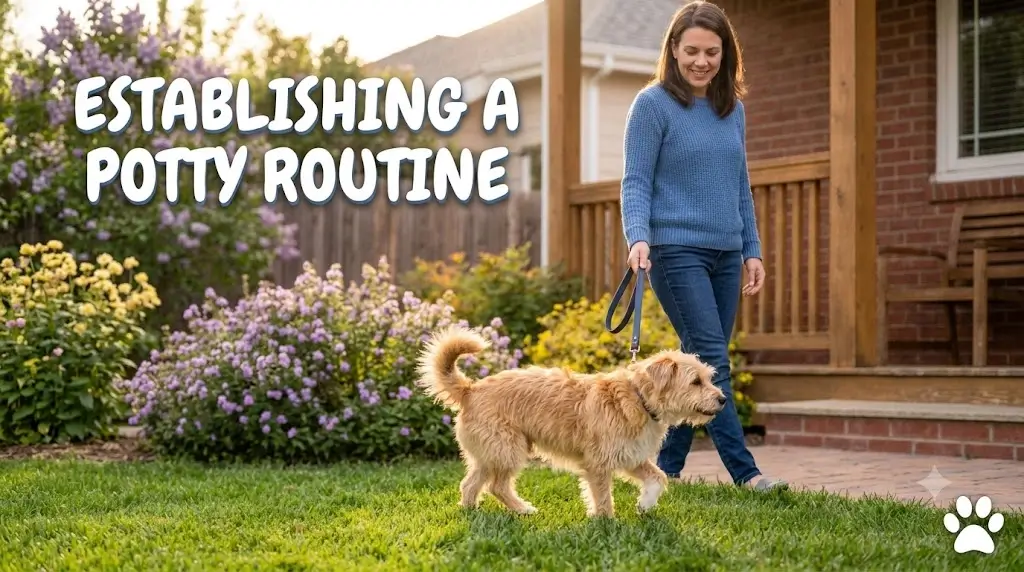
Step 2: Create a Consistent Potty Schedule
A predictable schedule helps prevent accidents because you are providing bathroom opportunities before the dog becomes desperate.
Useful times to take an adult dog outside include:
- Immediately after waking.
- After eating.
- After a nap.
- After active play.
- After periods of excitement.
- After a substantial change in drinking.
- Before bedtime.
- Before and after longer periods of confinement.
- Whenever the dog shows an individual potty signal.
The exact schedule should be adjusted to the individual dog rather than copied from a generic timetable.
Adult Dog Potty Training Schedule Example
This example is a starting framework, not a required schedule for every adult dog.
| Time or Event | Action | Purpose |
|---|---|---|
| Wake-up | Go outside | Establish the morning routine |
| After breakfast | Offer another potty opportunity | Meals can precede elimination |
| After nap | Go outside after waking | Prevent post-rest accidents |
| After active play | Go outside | Activity can increase elimination needs |
| Evening | Scheduled outdoor trip | Maintain consistency |
| Before bed | Final potty opportunity | Prepare for overnight rest |
Step 3: Supervise the Adult Dog Indoors
Supervision is one of the most effective ways to prevent accidents because it allows you to respond before the dog eliminates indoors.
During the early stages, keep the dog close enough that you can observe their behavior.
Common signs can include:
- Sniffing the floor.
- Circling.
- Pacing.
- Suddenly leaving the room.
- Walking toward an exit.
- Restlessness.
- Stopping an activity and wandering.
- Repeatedly investigating a previously soiled area.
These signals vary between individual dogs. The goal is to identify your dog’s pattern rather than rely on a single universal sign.
Step 4: Limit Indoor Freedom at First
An adult dog does not need immediate access to every room in the house.
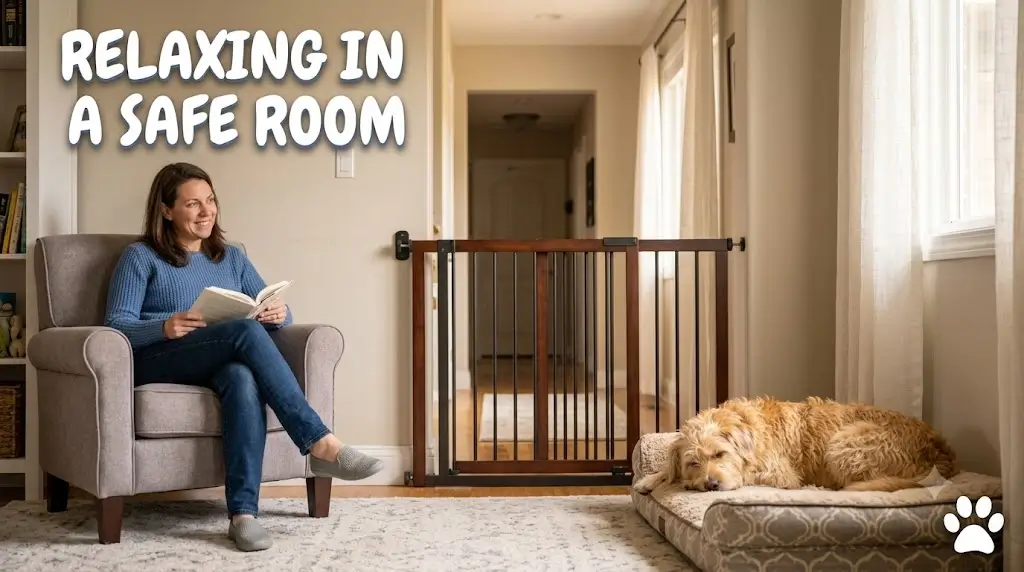
Start with a manageable area where you can supervise effectively. If outdoor access is restricted or you are managing house training inside apartments, you may explore setups for indoor house training for puppies and adult dogs using gates and dedicated indoor zones.
As the dog becomes reliable, gradually expand access.
Give the dog as much freedom as they can currently handle successfully, then expand that freedom gradually.
Step 5: Teach an Outdoor Potty Cue
A verbal bathroom cue can become useful when it is consistently associated with elimination.
Choose one short phrase such as “go potty.” During early training, say the cue calmly when the dog begins to eliminate. Let the dog finish and then reward the behavior.
After enough repetitions, the cue can gradually be used earlier in the bathroom routine.
Avoid repeating the cue over and over while the dog is distracted. The word becomes meaningful through its association with the actual behavior, not through repetition alone.
Step 6: Reward Outdoor Elimination Immediately
Timing is critical. The dog should receive the consequence close to the behavior you want to reinforce.
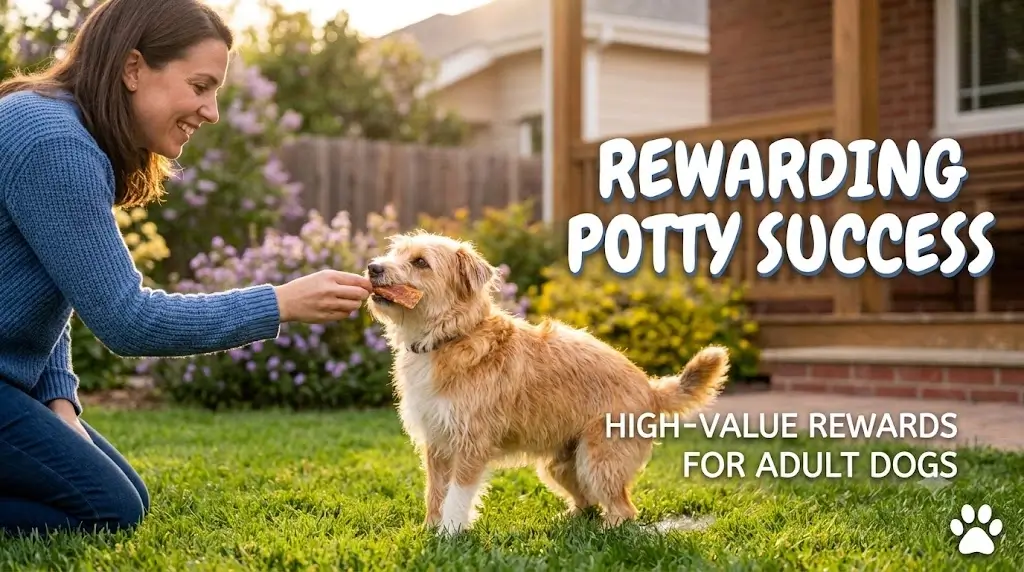
When the dog finishes eliminating outside, provide praise and a reward immediately.
Depending on the dog, reinforcement can include:
- A small food reward.
- Verbal praise.
- A short sniffing opportunity.
- Access to a preferred outdoor activity.
- Another appropriate reward the dog values.
Food is often useful during the initial learning phase because it can be delivered quickly and consistently.
Why Immediate Rewards Work Better Than Delayed Rewards
Dogs learn from consequences, but the timing of the consequence affects how clearly the dog can associate it with the behavior.
If the dog urinates outside and receives a reward several minutes later after returning indoors, the connection is less precise.
If the reward follows successful outdoor elimination immediately, the training signal is clearer.
Step 7: What to Do When an Adult Dog Has an Accident
If you catch the dog beginning to eliminate indoors, calmly interrupt when practical and take the dog outside.
If the dog finishes outside, reward that behavior.
If you discover an accident after it has already happened, do not punish the dog. Clean the area thoroughly and determine what happened before the accident.
Useful questions include:
- When was the previous potty trip?
- Had the dog recently eaten?
- Had the dog just woken from sleep?
- Had the dog been playing?
- Was the dog unsupervised?
- Did the dog show a signal you missed?
- Was the dog given too much freedom too soon?
Should You Punish an Adult Dog for Peeing Inside?
No. Punishing an adult dog after an accident does not clearly teach the correct bathroom location.
The dog may instead associate the owner’s reaction with eliminating in the owner’s presence. This can make communication and future training more difficult.
A more useful sequence is:
Step 8: Clean Indoor Accidents Thoroughly
Cleaning is part of house training because lingering odor can encourage repeated use of the same area.
Use an appropriate pet-urine cleaner for the specific surface and follow the product instructions.
Pay special attention to carpets, rugs, upholstery, corners, seams, and absorbent materials where odor can remain below the visible surface.
Simply covering the smell with fragrance does not necessarily remove the underlying odor.
How to House Train an Adult Dog That Was Never Trained
If an adult dog has little or no reliable house-training history, start with the same basic structure used for teaching a new routine.
- Choose a consistent bathroom area.
- Create a predictable schedule.
- Supervise the dog indoors.
- Limit access to unsupervised areas.
- Take the dog outside before predictable accident periods.
- Use a consistent bathroom cue.
- Reward outdoor elimination immediately.
- Record patterns.
- Increase freedom gradually.
The absence of previous training does not require punishment or harsh correction. It simply means the desired behavior needs to be established through repetition and reinforcement.
How to House Train an Adult Dog That Used Pee Pads
A dog that learned to use pee pads may understand that a particular indoor location is an acceptable bathroom area. If you initially conditioned pad use by learning how to train a puppy to use pee pads, transitioning an adult dog to outdoor grass requires shifting the bathroom target gradually.
Follow a structured method on how to transition from pee pads to outside by moving the pads closer to the door and ultimately outdoors while rewarding successful grass elimination.
Avoid making the transition so abrupt that the dog loses the familiar bathroom target without understanding the new one.
How to House Train an Adult Dog That Only Uses Grass
Surface preference is a real training variable. A dog may have learned that grass is the appropriate substrate for elimination.
If grass is available and appropriate, start there. Once outdoor elimination is reliable, you can gradually generalize the behavior to other acceptable surfaces if needed.
This is usually more productive than treating substrate preference as disobedience.
How to House Train an Adult Dog in an Apartment
Apartment house training requires additional attention to travel time between the living area and the outdoor bathroom location.
Keep the leash and other essentials ready near the exit. Watch closely for early signals so you can start the trip before the dog reaches an urgent point.
During early training, limit access to rooms where supervision is difficult.
If the building has a long hallway, elevator, or stairs, account for that travel time when planning the potty schedule.
How to House Train an Adult Dog Without a Yard
A private yard is convenient but not required.
The important factors are reliable access to an appropriate outdoor bathroom location, a predictable routine, supervision, and reinforcement.
Dogs living in apartments or homes without private yards can still develop reliable outdoor bathroom habits when the routine is consistent.
How to House Train an Adult Dog at Night
Establish a consistent final potty trip before bedtime.
Keep the nighttime environment predictable and provide an appropriate sleeping area.
If nighttime accidents continue, review the timing of the final potty trip and whether the dog is being expected to remain without a bathroom opportunity for longer than they can comfortably manage.
New or persistent nighttime accidents in a previously reliable adult dog should also raise the question of a possible medical issue.
How to House Train an Older Adult Dog
Older dogs can learn bathroom routines, but physical changes associated with aging may affect how frequently they need opportunities.
If an older dog suddenly begins having accidents after previously being reliable, do not assume the cause is behavioral.
Veterinary evaluation may be appropriate, especially when accidents are accompanied by other changes in drinking, urination, digestion, mobility, energy, or comfort.
How to House Train an Adult Rescue Dog
A rescue dog may have a house-training history that is incomplete or simply different from your household routine.
Ask the rescue or foster caregiver about:
- Previous bathroom location.
- Preferred surface.
- Typical meal times.
- Typical potty frequency.
- Warning signals.
- Overnight habits.
- Previous use of pee pads.
Start with a structured routine and gradually adapt it to your home.
Adult Dog House Training After Moving to a New Home
A dog can be house trained and still have accidents after moving.
The dog now has to learn a different:
- Door or exit.
- Outdoor bathroom location.
- Household schedule.
- Feeding routine.
- Daily activity pattern.
- Owner communication signals.
During the transition, temporarily return to a structured schedule instead of assuming previous reliability will transfer automatically.
How to Tell When an Adult Dog Needs to Go Outside
There is no single potty signal shared by all dogs.
Some dogs go to the door, while others become restless, sniff intensely, pace, circle, stare at the owner, or suddenly leave the room.
During the first weeks, observe the behavior that occurs immediately before successful elimination.
That pattern can become your dog’s personal bathroom signal.
Keep a House-Training Log
A simple log can make patterns easier to identify than relying on memory.
| Time | Event | Result | Notes |
|---|---|---|---|
| Morning | Outside | Success / No success | Signal observed? |
| After meal | Outside | Urinated / Defecated / Neither | Reward? |
| Afternoon | Outside | Success / No success | Activity before trip |
| Evening | Outside | Success / No success | Distractions? |
| Bedtime | Final potty | Success / No success | Overnight result |
The Three-Stage Adult Dog House Training Plan
Stage 1: Management
Provide frequent bathroom opportunities, supervise indoors, restrict unsupervised access, and reward every successful outdoor elimination. Following structured frameworks like a 7-day puppy house training plan can help re-establish consistency during this early phase.
Stage 2: Reliability
Once accidents decrease, gradually extend supervised indoor periods and give the dog modestly more freedom.
Stage 3: Generalization
Continue the bathroom routine across normal household situations while gradually reducing management.
Do not increase freedom simply because a certain number of days has passed. Increase freedom when the dog’s behavior shows that the current level is reliable.
How to Know When an Adult Dog Is Ready for More Freedom
An adult dog is ready for additional freedom when they consistently eliminate in the appropriate location and remain reliable during the current level of access.
Expand the dog’s territory gradually rather than opening every room at once.
If accidents return after expanding access, temporarily return to the previous successful level.
Common Adult Dog House Training Mistakes
1. Assuming an Adult Dog Should Already Be Trained
Previous training may not exist or may not transfer to a new environment.
2. Giving Too Much Freedom Too Early
Large amounts of unsupervised space make prevention more difficult.
3. Using Punishment
Punishment does not teach the desired bathroom location and can interfere with communication.
4. Rewarding Too Late
Delayed reinforcement creates a weaker connection between the outdoor elimination and the reward.
5. Changing the Schedule Constantly
A predictable routine makes it easier for both the dog and owner to recognize bathroom patterns.
6. Ignoring Surface Preference
Dogs may have learned to eliminate on specific substrates.
7. Missing Early Potty Signals
Some dogs communicate subtly, especially when they have never been taught a formal signal.
8. Assuming Every Accident Is Behavioral
Medical problems can cause changes in elimination and should be considered when accidents are sudden, persistent, or accompanied by other symptoms.
What If an Adult Dog Suddenly Starts Having Accidents?
A sudden change in a previously reliable adult dog deserves more attention than a dog that has never been house trained.
First review environmental changes such as:
- Moving house.
- Changes in schedule.
- Changes in feeding time.
- Longer periods alone.
- Changes in access to the yard or outside area.
- Changes in household members.
If the change cannot be explained by routine or environment, veterinary evaluation may be appropriate.
When House-Training Accidents May Be a Medical Problem
House-soiling is not always a training issue.
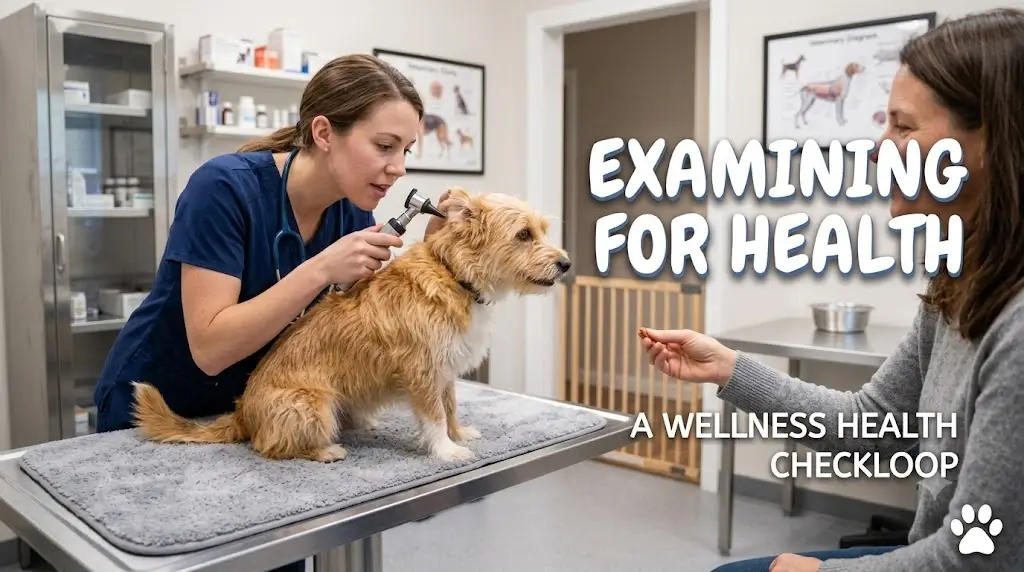
Contact a veterinarian when an adult dog develops sudden or persistent changes in elimination, particularly when accompanied by:
- Straining to urinate or defecate.
- Signs of discomfort.
- Blood in urine or stool.
- Unusual urinary urgency.
- Major changes in urine volume.
- Markedly increased thirst.
- Vomiting or diarrhea.
- Constipation.
- Lethargy.
- Other significant changes in normal behavior.
A previously house-trained adult dog that suddenly begins having accidents should not automatically be treated as a training failure.
Should You Use a Crate for Adult Dog House Training?
A properly introduced crate can be one management option, but it should not be used as punishment or as a substitute for appropriate bathroom opportunities.
Some dogs are comfortable resting in a crate while others require a different management setup. A gated area or supervised room may be more appropriate depending on the individual dog.
Any confinement method should allow the dog to remain comfortable and meet their normal welfare needs.
Crate vs. Baby Gate for Adult Dog House Training
| Option | Best Use | Consideration |
|---|---|---|
| Baby gate | Restricting access to rooms | Provides a larger supervised area |
| Crate | Short-term management for dogs comfortable with crates | Requires appropriate introduction and bathroom breaks |
How to House Train an Adult Dog With a Busy Work Schedule
Consistency is still possible in a busy household, but the routine needs to be realistic.
Coordinate potty opportunities with predictable events such as waking, meals, leaving home, returning home, and bedtime.
If the dog cannot reasonably receive appropriate bathroom opportunities during a particular period, arrange suitable care rather than expecting the dog to manage an unrealistic interval.
The most important variable is not whether the schedule is identical every day down to the minute. It is whether the dog receives enough predictable opportunities and the household responds consistently to successful behavior.
How to House Train an Adult Dog When You Work From Home
Working from home provides more opportunities for supervision, but it can also create inconsistent attention if the owner becomes absorbed in work.
Use predictable breaks for bathroom trips rather than relying entirely on noticing the dog at the last moment.
Keep the dog nearby during the early stages so subtle signals are easier to notice.
How to House Train an Adult Dog With Multiple People in the Home
Everyone should follow the same basic bathroom rules.
- Use the same bathroom location.
- Use the same potty cue.
- Follow the same general schedule.
- Reward successful outdoor elimination consistently.
- Respond to accidents calmly.
- Record important patterns.
Inconsistent responses can make it harder for the dog to learn what behavior produces the desired outcome.
Adult Dog House Training Checklist
- ☐ Determine the dog’s previous bathroom habits.
- ☐ Choose an appropriate outdoor bathroom location.
- ☐ Establish a predictable schedule.
- ☐ Take the dog outside after waking.
- ☐ Take the dog outside after meals when appropriate.
- ☐ Take the dog outside after naps and active play.
- ☐ Watch for individual potty signals.
- ☐ Supervise the dog indoors.
- ☐ Restrict unsupervised access.
- ☐ Use one consistent bathroom cue.
- ☐ Reward outdoor elimination immediately.
- ☐ Clean accidents thoroughly.
- ☐ Never punish accidents.
- ☐ Track successful trips and accidents.
- ☐ Increase freedom gradually.
- ☐ Reduce freedom if accidents return.
- ☐ Consider medical causes for sudden or persistent changes.
Frequently Asked Questions
Can you house train an adult dog?
Yes. Adult dogs can learn new bathroom routines. Use a predictable schedule, supervision, appropriate outdoor opportunities, immediate reinforcement, and gradual increases in freedom.
How long does it take to house train an adult dog?
There is no universal timeline. Some dogs adapt quickly while others require several weeks of consistent management. Measure progress through reliability rather than a fixed number of days.
Is it harder to house train an adult dog than a puppy?
Not necessarily. An adult dog may have more physical control but can also have established habits from previous environments. The training strategy should account for that history.
How often should I take an adult dog outside for potty training?
Provide opportunities after waking, eating, sleeping, active play, before bedtime, and whenever the dog shows an individual sign that they need to eliminate. Adjust frequency to the individual dog’s needs.
How do I house train an adult dog that keeps peeing inside?
Increase supervision, temporarily reduce indoor freedom, provide more predictable outdoor opportunities, reward outdoor elimination immediately, and thoroughly clean previous accident areas. If the problem is sudden or persistent, consider veterinary evaluation.
Should I punish my adult dog for accidents?
No. Punishment does not teach the desired bathroom location and can interfere with communication. Focus on prevention, redirection when possible, and reinforcement of successful outdoor elimination.
Can an adult dog learn to ask to go outside?
Yes. First identify the dog’s natural pre-potty signal, then consistently respond to it. A formal signal can also be taught by associating it with going outside and reinforcing appropriate communication.
Why does my adult dog only pee on grass?
The dog may have developed a learned surface preference. If grass is an appropriate option, use it initially and gradually generalize the behavior to other suitable surfaces if needed.
Can I house train an adult dog that uses pee pads?
Yes. Gradually transition the bathroom location toward the exit and outdoors while reinforcing successful outdoor elimination.
How do I house train an adult dog in an apartment?
Plan for travel time to the outdoor bathroom location, keep the leash ready, supervise closely, restrict unsupervised access, and provide predictable potty opportunities before accidents become likely.
How do I house train an adult rescue dog?
Start by learning the dog’s previous bathroom habits, then establish a predictable routine, supervise indoors, use an appropriate outdoor location, reward successful elimination, and gradually increase freedom.
What if my adult dog was already house trained but now has accidents?
Consider changes in routine, environment, access, stress, and schedule. If the change is sudden or persistent, veterinary evaluation may be appropriate because medical issues can cause new house-soiling.
Should I use a crate to house train an adult dog?
A properly introduced crate can be one management option for dogs that are comfortable with crates, but it should not be used as punishment or as a replacement for regular bathroom opportunities.
How do I know when my adult dog is house trained?
Look for sustained reliability: consistent outdoor elimination, no accidents during normal supervised periods, recognizable pre-potty signals, and successful behavior as indoor freedom gradually increases.
When should I call a veterinarian about house-training problems?
Seek veterinary advice for sudden or persistent changes in elimination, particularly when accompanied by straining, discomfort, blood, unusual urgency, excessive thirst, major changes in urine volume, digestive symptoms, lethargy, or other concerning signs.
Final Takeaway
House training an adult dog is a management-and-learning problem, not an age problem.
Start by determining what the dog already knows. Establish a predictable bathroom routine, supervise closely, use a consistent outdoor location and cue, and reward successful elimination immediately.
When accidents happen, use them as information. Review what happened before the accident, improve supervision or scheduling, and clean the area thoroughly. Avoid punishment.
Once the dog becomes reliable, gradually increase freedom. If reliability decreases, temporarily return to the previous successful level.
