
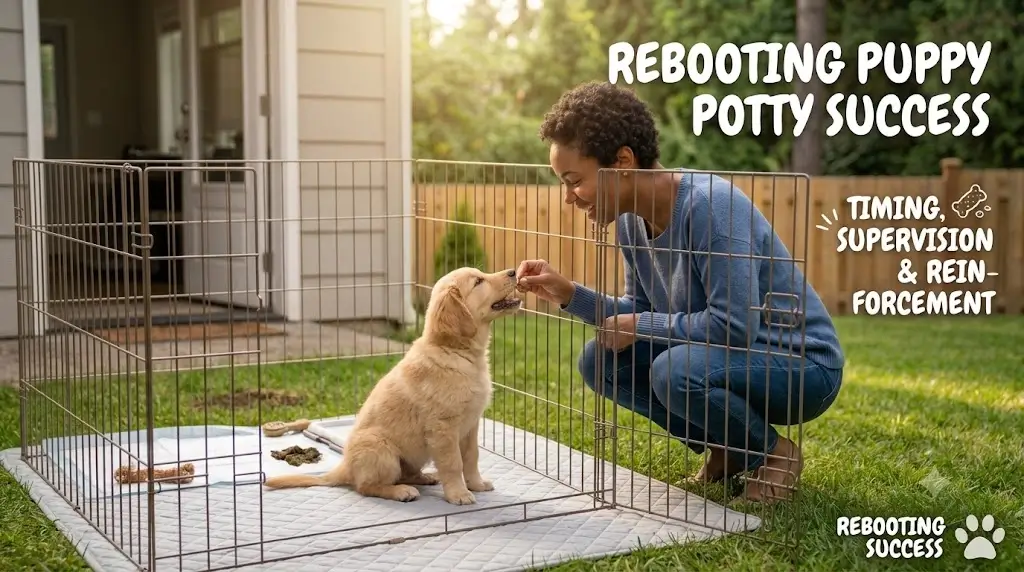
Puppy Has Too Many Accidents: Causes, Fixes & House Training Reset
If your puppy is having accidents over and over, the answer is usually not simply “take the puppy outside more.” Learn how to identify the pattern, adjust potty timing, control indoor freedom, improve reinforcement, and recognize when frequent accidents may need veterinary attention.
What Counts as Too Many Puppy Accidents?
There is no universal number of accidents that automatically means a puppy is being house trained incorrectly. Puppies develop at different rates, and bathroom needs can change with age, sleep, food, water intake, activity, and routine.
The more useful question is whether the puppy’s accident pattern makes sense for its current training stage. For example, a very young puppy that has occasional accidents despite a consistent schedule is different from a puppy that is having repeated accidents every day despite frequent outdoor opportunities, close supervision, and successful potty trips.
If indoor elimination seems to happen primarily after they’ve already been out, you may need specific strategies for a puppy who goes outside but still has accidents inside.
Better metric than a raw accident count: Track the relationship between successful outdoor potty trips, indoor accidents, and the events that happened immediately before each one.
Why Does My Puppy Have So Many Accidents?
1. The Potty Schedule Is Too Loose
Young puppies cannot always wait for a convenient moment chosen by the household. If outdoor opportunities are too far apart for the puppy’s current needs, accidents become more likely. A practical schedule should be built around predictable events, not just the clock. Waking, eating, playing, drinking, and naps can all create useful potty opportunities.
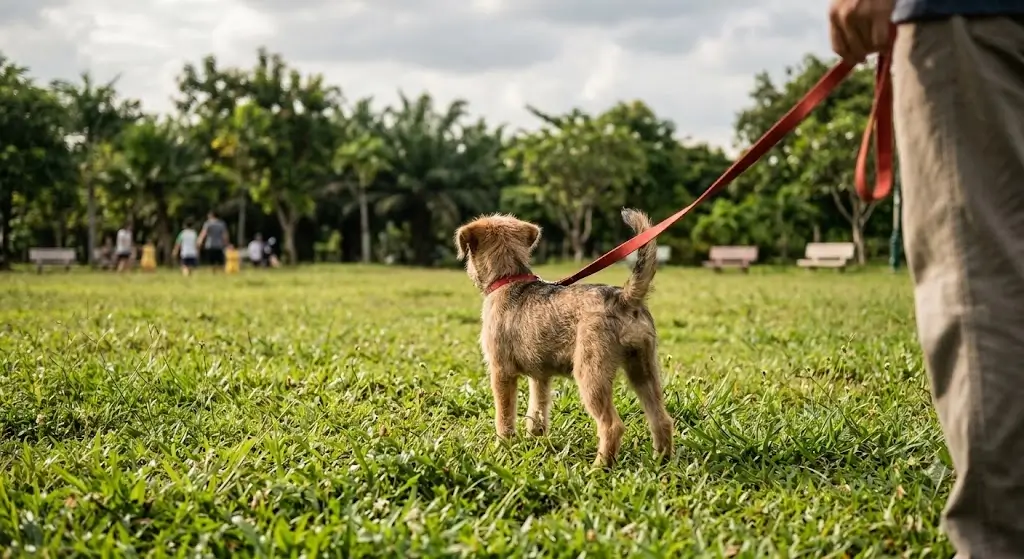
2. The Puppy Is Taken Outside but Does Not Actually Eliminate
This is an important distinction. An owner may say, “I took my puppy outside ten minutes ago.” But if the puppy spent that time sniffing, playing, or watching the environment without urinating or defecating, the bathroom need may still be present.
Always separate outdoor trip from successful outdoor potty when evaluating the training routine. A common pitfall is giving too much freedom before they are reliable, so understanding why house-trained puppies have accidents after being house trained can prevent major setbacks.
3. Too Much Freedom Too Soon
A puppy that can stay clean in one room may not be ready for unrestricted access to an entire house. More space means more opportunities to wander away, find a quiet corner, and eliminate before the owner notices the warning signs. Freedom should increase as reliability increases.
4. Potty Signals Are Being Missed
Some puppies circle, sniff, pace, or suddenly leave a play session. Others show much less obvious behavior. Waiting for a dramatic signal such as barking at the door can create a gap between the puppy’s need and the owner’s response.
5. The Puppy Becomes Distracted Outside
Outdoor environments contain far more stimulation than a bathroom area inside the home. Grass, smells, birds, traffic, neighbors, people, and other dogs can compete for the puppy’s attention. During the learning stage, a consistent potty location and a calm initial outdoor routine can make the desired behavior easier to repeat.
6. Rewards Are Inconsistent or Delayed
Reinforcement works best when the puppy can clearly connect the reward with the behavior that produced it. If the puppy eliminates outside but receives the reward several minutes later after walking back inside, the connection is less clear than an immediate reward following the successful behavior.
7. Previous Accident Areas Still Smell Like a Bathroom
An accident spot can become a repeated location if odor remains. Thorough cleaning matters because visible cleanliness does not necessarily mean odor has been removed. Use an enzymatic pet-accident cleaner according to its label directions and give particular attention to carpet, rugs, upholstery, and other absorbent materials.
8. The Household Routine Is Inconsistent
House training becomes harder when one person allows free roaming, another uses a strict schedule, and another responds differently after accidents. Everyone involved should understand the same basic routine: when the puppy goes out, what counts as success, how success is rewarded, and what happens after an unsuccessful trip.
9. The Puppy’s Current Physical Ability Is Being Overestimated
Puppies develop bladder and bowel control over time. A schedule that works for an older puppy may be unrealistic for a younger one. Avoid treating a rough age-based rule as a guarantee. The individual puppy’s behavior and accident pattern provide better information about whether the current schedule is appropriate.
10. A Health Problem May Be Contributing
Frequent accidents are not always a training failure. Changes in urination or stool can have medical causes. This is particularly important when the accident frequency changes suddenly or when other symptoms appear. If management fixes aren’t working, you may need to investigate why is house training not working to see if a vet visit is the true next step.
Important: If frequent accidents are accompanied by unusual thirst, changes in urination, straining, discomfort, diarrhea, vomiting, low energy, appetite changes, or other concerning symptoms, contact a veterinarian rather than treating the issue as a simple training problem.
How to Find Out Why Your Puppy Is Having So Many Accidents
Before changing everything at once, look at what happens before each accident. This turns a vague problem into a measurable pattern.
| Question | What It Can Tell You |
|---|---|
| When was the last successful outdoor potty? | Helps determine whether the interval between successful bathroom trips is too long. |
| Did the puppy actually potty outside? | Separates a successful bathroom trip from simply going outdoors. |
| What happened immediately before the accident? | May reveal predictable triggers such as waking, eating, drinking, or playing. |
| Was the puppy supervised? | Shows whether the puppy had opportunities to practice unwanted indoor elimination. |
| Was the puppy given more freedom? | Helps identify whether increased access happened before reliability was established. |
| Is the pattern sudden? | A sudden change deserves more attention than a stable early-training pattern. |
How to Reset a Puppy That Has Too Many Accidents
A reset does not mean starting from zero. It means temporarily making the environment and schedule easier for the puppy to succeed.
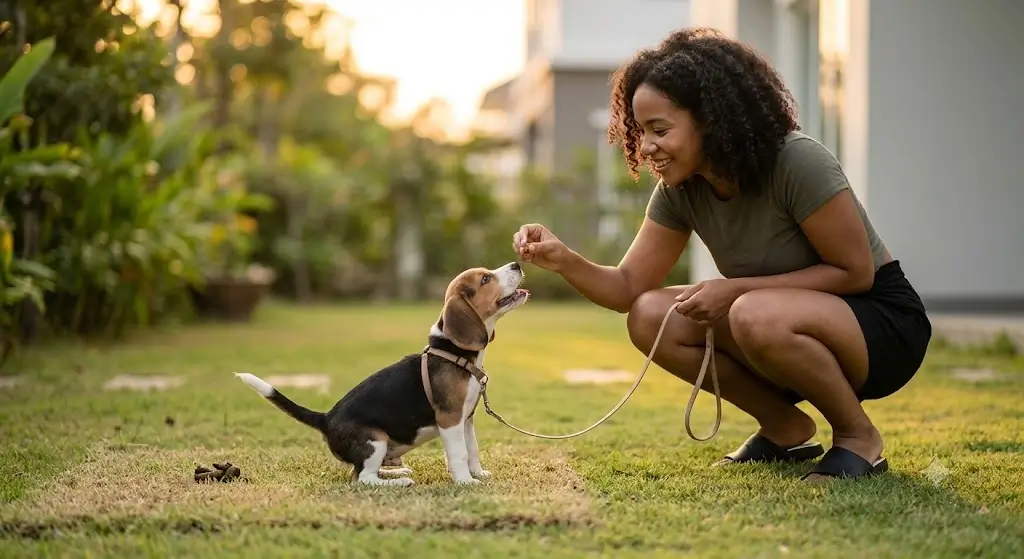
1. Reduce indoor freedom.
Keep the puppy in an area where you can see what it is doing. Use appropriate puppy-management tools when direct supervision is not possible. The goal is not punishment or isolation; the goal is preventing repeated opportunities to rehearse indoor accidents.
2. Increase predictable potty opportunities.
Temporarily tighten the schedule. Give the puppy more chances to succeed before an accident becomes likely. Particularly useful transition points include waking, eating, drinking, naps, active play, and bedtime.
3. Use one consistent outdoor bathroom area.
A consistent location reduces unnecessary variation during the training phase and makes the routine easier to recognize.
4. Reward successful outdoor elimination immediately.
Keep the reward available before you need it. When the puppy successfully eliminates outdoors, reinforce the behavior promptly.
5. Supervise after unsuccessful outdoor trips.
If the puppy goes outside but does not eliminate, do not assume the bathroom need has disappeared. Return indoors under close supervision and provide another opportunity after a suitable interval.
6. Expand freedom gradually.
Once accidents decrease, increase access to additional areas gradually. If accidents return, reduce freedom again and rebuild reliability.
Build the Potty Schedule Around Events
Clock-based schedules are useful, but event-based scheduling is often easier for a household to follow.
| Event | Potty Opportunity |
|---|---|
| Wake-up | Take the puppy outside promptly. |
| After eating | Provide a predictable bathroom opportunity. |
| After a nap | Go outside after waking. |
| After energetic play | Offer another opportunity before returning to free indoor activity. |
| After significant drinking | Monitor more closely and adjust timing if accidents follow. |
| Before bedtime | Provide a final calm bathroom opportunity. |
The schedule should be adjusted according to the individual puppy. If accidents repeatedly happen before the next planned trip, the interval needs to become shorter temporarily.
The 3 Variables That Control Most House-Training Problems
| Variable | What You Control | Common Mistake |
|---|---|---|
| Timing | When the puppy gets bathroom opportunities. | Waiting for an obvious signal every time. |
| Supervision | How much access the puppy has between trips. | Giving full-house freedom too early. |
| Reinforcement | What happens immediately after successful outdoor elimination. | Rewarding too late or inconsistently. |
What to Do After You Discover an Accident
If you find an accident after it has already happened, focus on cleaning and prevention rather than punishment. The puppy cannot reliably connect a delayed punishment with an earlier elimination event. Bringing the puppy back to an old mess does not teach the correct bathroom location.
Sudden regressions or persistent, unusual frequency may indicate a medical trigger. If the pattern changes completely without an obvious training error, determine whether your puppy suddenly started having accidents due to environmental shifts, illness, or incomplete generalization.
Instead, review the preceding events.
- How long since the last successful potty?
- Did the puppy sleep, eat, drink, or play?
- Was the puppy unsupervised?
- Was there a change in routine?
- Was the puppy given additional freedom?
One accident is an event. A repeated pattern is a training clue.
Think like a trainer: If accidents return after giving full freedom, the problem isn’t “untrained,” it’s generalized reliability mismatches. Learn how to address a puppy house training regression by tightening management temporarily.
Frequently Asked Questions
Why does my puppy have so many accidents?
Common causes include a schedule that is too loose, too much indoor freedom, missed signals, distractions outside, unsuccessful outdoor potty trips, inconsistent reinforcement, or a possible health problem.
How many accidents are too many for a puppy?
There is no universal number. Consider the puppy’s age, development, routine, and health. A sudden increase or persistent accidents despite an appropriate routine deserve closer attention.
Should I take my puppy outside more often?
Increasing potty opportunities temporarily can help when the current intervals are too long. Focus especially on predictable events such as waking, eating, playing, and naps.
Why does my puppy have accidents after going outside?
Going outside does not necessarily mean the puppy eliminated. Distractions, excitement, or an incomplete potty trip can leave the puppy needing to go after returning indoors.
Should I punish my puppy for accidents?
No. Focus on prevention, supervision, appropriate timing, immediate reinforcement for successful outdoor elimination, and thorough cleaning.
How can I reduce puppy accidents quickly?
Reduce indoor freedom, increase predictable potty opportunities, supervise closely, use a consistent bathroom location, and reward successful outdoor elimination immediately.
When should I call a veterinarian?
Contact a veterinarian if accidents suddenly increase, remain unusually frequent despite appropriate training, or occur with changes in urination, stool, thirst, appetite, energy, or signs of discomfort.
