
Puppy Has Accidents After Being House Trained: What to Do
If your puppy was reliably using the right bathroom location and has started having accidents again, the solution is not simply to punish or start over blindly. Find the change, tighten management, and determine whether the regression is behavioral or could have a medical cause.
The important clue is the regression: If a puppy had been consistently eliminating in the correct place and then begins having accidents again, investigate what changed instead of assuming the puppy suddenly became “untrained.”
Quick Answer: Why Is My House-Trained Puppy Having Accidents Again?
A puppy can have accidents after appearing house-trained because the training has not yet generalized to every situation, the puppy was given more freedom than it could handle, the household routine changed, supervision decreased, the environment became stressful, or a physical problem affected normal elimination.
Start with the simplest question: What changed immediately before the accidents returned? If there was a clear management change, temporarily return to the previous successful routine. If the accidents are sudden, frequent, persistent, or accompanied by other unusual symptoms, veterinary evaluation is more appropriate than repeatedly changing the training routine.
House-Training Regression vs. Never Being Fully Trained
One of the easiest mistakes is treating every indoor accident as the same problem. A puppy that has always had occasional accidents may still be learning the complete house-training routine. A puppy that went for a meaningful period with reliable bathroom behavior and then changed presents a regression problem.
If the accidents started completely out of the blue after weeks of clean behavior, check our guide on what to do when your puppy suddenly started having accidents to pinpoint recent household or scheduling disruptions.
That distinction changes what you should investigate.
| Pattern | More Likely Explanation | First Response |
|---|---|---|
| Accidents have always occurred occasionally | House training may still be developing. | Improve supervision, timing, and reinforcement. |
| Accidents began after more freedom | Freedom may have increased faster than reliability. | Return temporarily to the previous successful management level. |
| Accidents started after a major routine change | Schedule or environmental disruption. | Re-establish predictable potty opportunities. |
| Sudden accidents with unusual urination or illness signs | A health issue may need consideration. | Contact a veterinarian. |
Why Do House-Trained Puppies Start Having Accidents Again?
House training is a learned behavior, but it is also heavily dependent on routine, supervision, environment, development, and the puppy’s physical ability to wait.
If you have checked the basic routine and still see repeated failures, read our breakdown on why is house training not working to eliminate common management blind spots.
1. Too Much Freedom Too Soon
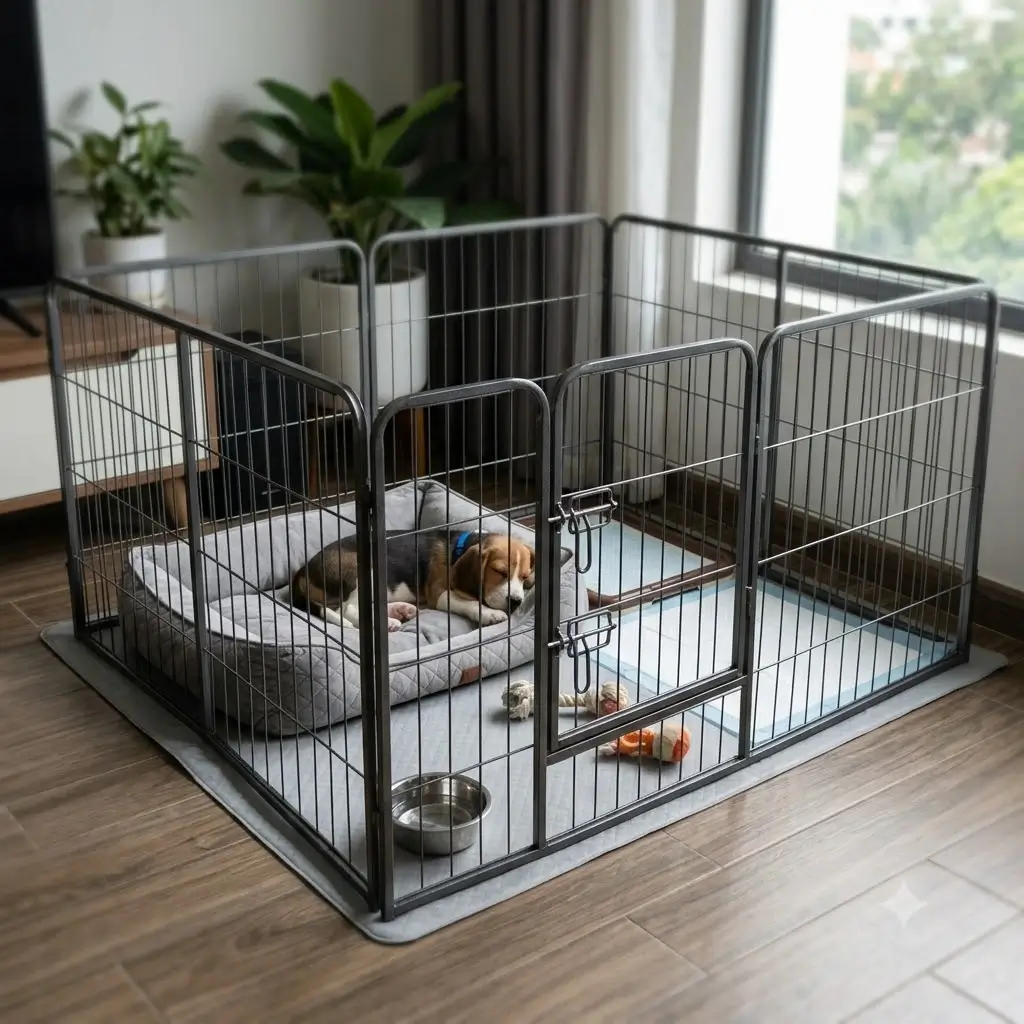
This is one of the most common management problems. A puppy may be reliable in a small supervised area but not yet understand that the same bathroom rule applies throughout an entire house. If accidents began after opening additional rooms, removing barriers, or allowing longer periods without supervision, reduce freedom temporarily.
2. The Potty Schedule Became Less Consistent
Many owners naturally relax the schedule after several successful weeks. That is reasonable when reliability is strong, but a puppy may still benefit from predictable bathroom opportunities around waking, meals, naps, play, and bedtime. A schedule change can expose a skill that was not as established as it appeared.
3. The Puppy Is Still Generalizing the Rule
Dogs do not necessarily generalize a learned behavior across every environment automatically. A puppy that understands the bathroom routine in one home may need additional guidance in a friend’s house, a hotel, a new apartment, or another unfamiliar location. This is why a puppy can appear perfectly trained in one environment and still have an accident somewhere new.
4. A Change in Household Routine
Returning to work, changing school schedules, moving bedtime, changing meal times, traveling, or having frequent visitors can all alter the timing of bathroom opportunities. Compare the puppy’s current routine with the routine that produced reliable results.
5. Excitement or High Activity
Puppies may become so focused on play, visitors, or an exciting environment that the normal bathroom sequence gets interrupted. During high-energy periods, proactively schedule a potty trip rather than waiting for the puppy to remember the routine.
6. Stress or Environmental Change
Moving homes, construction noise, unfamiliar visitors, changes in sleeping arrangements, or the addition of another pet can alter normal behavior. Stress can be one factor, but it should not automatically be used to explain a sudden elimination change when other symptoms are present.
7. The Puppy Was Never as Reliable as It Appeared
Several accident-free days do not necessarily establish dependable house training. Reliability should be demonstrated across different times of day, rooms, activity levels, and normal household situations before assuming the puppy can manage without much supervision.
8. A Physical Problem
Sudden changes in urination or bowel habits can sometimes have a medical explanation. If the puppy’s elimination behavior changes significantly without an obvious training explanation, consider veterinary guidance.
First: Find Out What Changed
Before changing the entire training system, review the previous seven days.
If your puppy is entering adolescence between 6 to 12 months, understanding common developmental phases outlined in our guide on puppy house training regression will help you navigate temporary behavioral relapses effectively.
Schedule
Did wake-up, meal, nap, bedtime, or work times change?
Freedom
Did your puppy gain access to additional rooms?
Supervision
Is someone watching the puppy less closely than before?
Environment
Did you move, travel, receive visitors, or change living space?
Activity
Has the puppy’s exercise or play schedule changed?
Physical Signs
Is there unusual drinking, urination, stool, or lethargy?
This process matters because the fastest fix is often to reverse the specific change that created the problem rather than rebuilding every aspect of house training.
How to Retrain a Puppy That Was Already House Trained
If the regression appears behavioral, use a short structured reset. Think of it as returning to the last point where the puppy was reliably successful.
1. Reduce unsupervised freedom.
Keep the puppy close enough to notice changes in behavior. Use a puppy-safe area or appropriate confinement when direct supervision is unavailable.
2. Re-establish predictable potty trips.
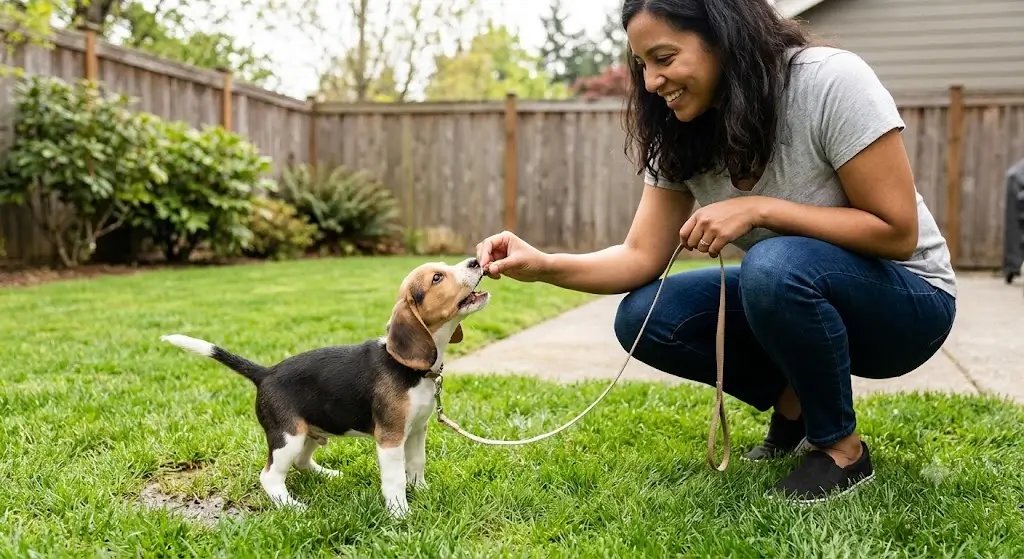
Use natural transition points such as waking, meals, naps, active play, and bedtime. Adjust frequency to the individual puppy rather than following one universal interval.
3. Return to the same bathroom location.
When practical, use a consistent outdoor bathroom area so the puppy receives a clear environmental cue.
4. Reinforce successful elimination.
Reward the puppy soon after it finishes in the correct location. Immediate timing makes the connection between behavior and consequence clearer.
5. Clean previous accident areas.
Use a pet-safe cleaner designed for urine or fecal contamination. The objective is to remove residual odor rather than merely cover it.
6. Increase freedom gradually.
Once the puppy demonstrates consistent success again, restore additional freedom one area at a time.
A useful rule: Do not measure progress only by “days without an accident.” Also ask whether the puppy can succeed under normal household conditions: different rooms, visitors, play, meals, naps, and periods of reduced attention.
How to Rebuild the Potty Routine
The goal of a reset is not to create an unnecessarily rigid schedule. It is to make bathroom opportunities predictable enough that the puppy has frequent chances to succeed.
| Situation | Why It Matters | Practical Response |
|---|---|---|
| After waking | The puppy may need to eliminate soon after sleep. | Make a potty trip part of the wake-up routine. |
| After meals | Eating can influence bowel timing. | Keep meal and potty routines predictable. |
| After naps | Sleep creates another natural transition point. | Take the puppy out promptly after waking. |
| After energetic play | Activity can change the timing of bathroom needs. | Add a potty opportunity after active sessions. |
| Before bedtime | A final bathroom opportunity reduces avoidable nighttime problems. | Keep the final trip consistent. |
Your Puppy May Need Less Freedom Again
One of the most important concepts in regression is the relationship between freedom and reliability. If a puppy can go several days without an accident in a supervised kitchen, that does not automatically mean it can roam a two-story house for several hours.
Increase freedom in stages:
- Establish reliable behavior in the current supervised area.
- Add one additional area.
- Continue supervision during the transition.
- Watch whether accidents increase.
- If reliability drops, reduce freedom temporarily.
Do Not Punish the Puppy for Regression
A regression can be frustrating, especially when you believed the house-training phase was finished. Punishment, however, does not solve the underlying problem.
If you find an old accident after it happened, the useful action is cleanup and management. If you see the puppy beginning to eliminate indoors, calmly interrupt when practical and take the puppy to the appropriate bathroom location. Reinforce successful elimination there.
The training objective is to make the desired behavior predictable, not to make accidents frightening.
What If the Puppy Starts Having Accidents at Night?
A nighttime regression deserves the same initial investigation: determine what changed.
- Was bedtime changed?
- Did the puppy’s evening routine change?
- Was the sleeping location moved?
- Has the puppy started drinking noticeably more?
- Are nighttime accidents accompanied by unusual daytime urination?
Do not respond to every nighttime accident by simply expecting the puppy to wait longer. If the change is sudden and persistent, investigate the cause.
What If You Live in an Apartment?
Apartment living introduces a practical variable that houses with yards do not: the distance between the puppy and the bathroom location. An elevator ride, hallway, stairs, or locked building entrance can add several minutes between recognizing the need to go and reaching the appropriate location.
During a regression, keep your leash, shoes, waste bags, and other essentials ready. The objective is to shorten the time between deciding to go outside and actually getting there.
What If the Accidents Started After You Returned to Work?
A return to full-time work is a common lifestyle change that can expose weaknesses in an established potty routine.
Compare your current schedule with the schedule that worked previously. If the puppy is now alone during a period when someone previously provided a bathroom break, the training problem may actually be a scheduling problem.
Depending on the puppy’s needs, an appropriate solution may involve a household member, trusted caregiver, dog walker, or another planned bathroom break.
What If the Puppy Is Suddenly Peeing More Often?
Frequency matters. A single accident after an unusually long interval is different from a puppy that suddenly needs to urinate repeatedly throughout the day.
If your puppy’s normal urination pattern changes significantly, monitor the change rather than assuming it is simply stubbornness or regression.
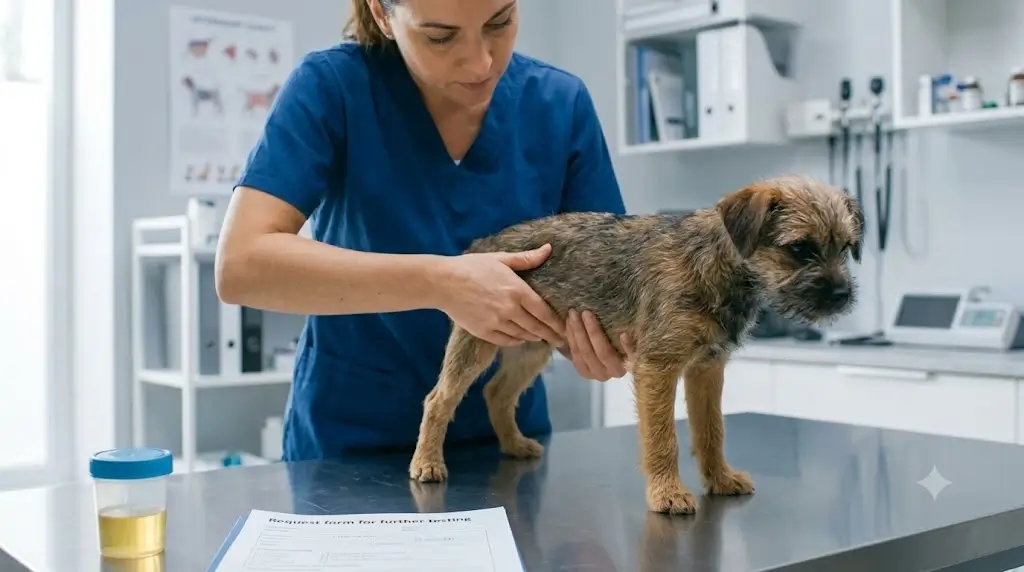
Veterinary red flags: Seek veterinary guidance if accidents occur alongside repeated attempts to urinate, straining, apparent discomfort, blood, markedly increased thirst, vomiting, diarrhea, unusual lethargy, or another significant change in normal behavior.
What If the Accidents Are Poop Instead of Urine?
Bowel accidents can also be influenced by schedule, meals, excitement, changes in diet, environmental changes, or gastrointestinal problems.
Look at whether the timing changed after meals and whether the stool itself looks different from normal. If there is persistent diarrhea, blood, vomiting, marked lethargy, or another concerning change, contact a veterinarian.
Can a Crate Help With House-Training Regression?
A crate can be useful for management when the puppy has already been introduced to it positively and appropriately. Its purpose during a regression is primarily to prevent unsupervised wandering when you cannot directly supervise the puppy.
A crate should not be used as punishment and should not replace reasonable bathroom opportunities. If crate training is not already established, introduce the crate separately rather than suddenly using it as the sole solution to accidents.
Keep a Three-Day Accident Log
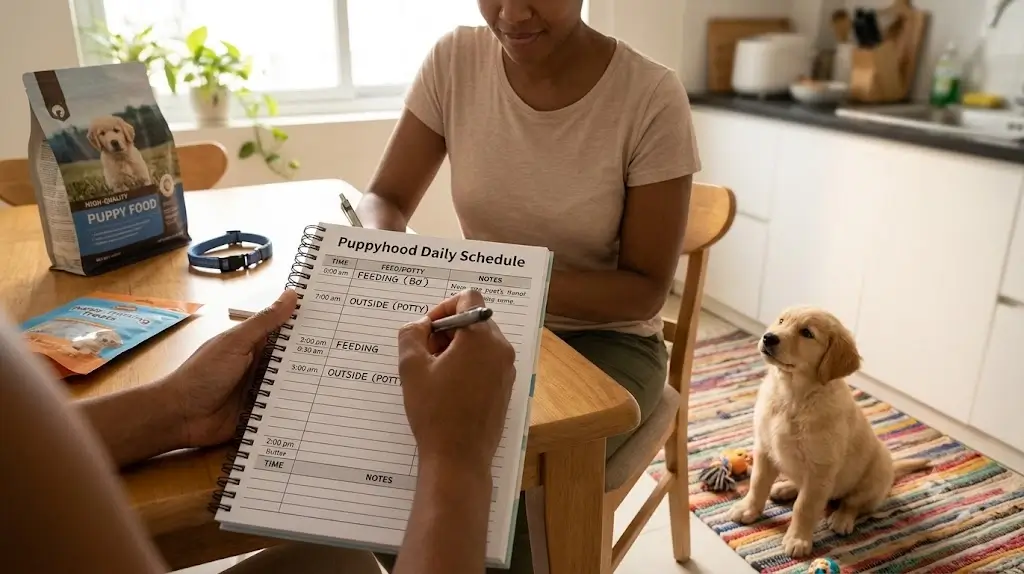
When the cause is unclear, a simple log can reveal patterns that are difficult to remember.
| Record | Example |
|---|---|
| Time | 10:15 AM |
| Location | Living room |
| Last potty trip | 8:45 AM |
| Activity beforehand | Playing with another dog |
| Meal | Breakfast at 7:30 AM |
| Other observations | Normal energy and appetite |
Three days of simple observations can be more useful than repeatedly changing training techniques without knowing which variable is causing the problem.
A 7-Day House-Training Regression Reset
The following framework is designed to restore structure without assuming every puppy needs exactly the same schedule.
| Day | Focus | What to Watch |
|---|---|---|
| Day 1 | Maximum practical supervision. | Identify when accidents are most likely. |
| Day 2 | Repeat predictable potty transitions. | Whether accident frequency decreases. |
| Day 3 | Continue reinforcement and cleanup. | Which situations produce reliable success. |
| Day 4 | Test limited additional freedom if appropriate. | Whether reliability holds outside the original area. |
| Day 5 | Maintain the successful routine. | Whether accidents remain isolated or disappear. |
| Day 6 | Gradually return normal household activities. | Performance during play, visitors, and distractions. |
| Day 7 | Review the accident log. | Whether the regression has a clear management explanation. |
If the puppy is improving, continue the successful structure and expand freedom gradually. If the puppy is not improving or the elimination change seems unusual, reconsider whether this is really a training problem.
When Accidents After House Training Need a Veterinarian
A regression does not automatically mean something is medically wrong. However, a sudden change in elimination behavior should be considered differently when it occurs with other changes in health or behavior.
Contact your veterinarian if you notice:
- Repeated attempts to urinate.
- Straining or apparent discomfort while urinating.
- Blood in urine or stool.
- A noticeable increase in drinking.
- A marked increase in urination frequency.
- Vomiting or significant diarrhea.
- Unusual lethargy or weakness.
- A significant change in appetite.
- Persistent accidents despite a carefully managed routine.
This article cannot determine the cause of a medical problem. The appropriate response to concerning symptoms is veterinary assessment, not increasingly strict house-training rules.
Common Mistakes Owners Make During Regression
Mistake 1: Assuming the Puppy Is Being Stubborn
Indoor elimination does not prove that a puppy understands the behavior but is refusing to follow it. The puppy may have missed the opportunity, been distracted, had too much freedom, or experienced a physical change.
Mistake 2: Giving More Freedom to “See What Happens”
If accidents have returned, giving even more freedom usually provides more opportunities to repeat the unwanted behavior. Reduce difficulty first. Increase freedom after reliability improves.
Mistake 3: Changing the Entire Routine
If one simple change caused the regression, changing everything at once makes the cause harder to identify. Start with the smallest useful intervention: supervision, predictable potty trips, reinforcement, and controlled freedom.
Mistake 4: Ignoring the Accident Pattern
Location and timing matter. An accident immediately after a missed potty trip tells you something different from repeated unexplained urination throughout the day.
Mistake 5: Waiting Too Long When the Change Looks Medical
House-training knowledge should not replace veterinary care. When elimination behavior changes significantly or illness signs appear, professional assessment becomes more important.
The Bottom Line
A puppy having accidents after being house trained does not necessarily mean the training has failed.
The most useful first step is to identify what changed. More freedom, less supervision, a different schedule, travel, visitors, excitement, environmental stress, or incomplete generalization can all create setbacks.
When the pattern looks behavioral, return temporarily to the last routine that worked. Increase supervision, provide predictable bathroom opportunities, reward successful elimination, clean accident areas properly, and restore freedom gradually.
But sudden or persistent changes should not automatically be labeled regression. If the puppy is urinating unusually often, appears uncomfortable, drinks substantially more, has blood, vomiting, diarrhea, lethargy, or another significant change, contact a veterinarian.
The objective is not simply to get through another accident-free day. It is to understand why reliability changed and rebuild a routine that works under normal household conditions.
Frequently Asked Questions
Why is my puppy having accidents after being house trained?
Common causes include increased freedom, reduced supervision, changes in routine, environmental changes, excitement, incomplete generalization of the behavior, or a possible health problem. Reviewing what changed immediately before the accidents is a useful starting point.
Is house-training regression normal?
Some setbacks can occur while a puppy is still developing reliable habits. Regression after increasing freedom or changing the routine can often improve when the owner temporarily returns to a more structured system.
How do I retrain a puppy that was already house trained?
Increase supervision, restore predictable potty trips, reduce unsupervised freedom, reward successful elimination, clean accident areas thoroughly, and gradually increase freedom as reliability returns.
Should I punish my puppy for having accidents?
No. Punishment does not teach the puppy where elimination should occur. Management, supervision, appropriate potty trips, positive reinforcement, and consistent cleanup are more useful approaches.
Can stress cause a previously house-trained puppy to have accidents?
Changes in environment, routine, visitors, travel, or household activity can affect a puppy’s behavior. Stress should not, however, automatically be assumed to be the cause of a sudden change when other unusual symptoms are present.
When should I call a veterinarian about puppy accidents?
Contact a veterinarian if accidents are sudden and persistent or occur with repeated urination attempts, straining, apparent discomfort, unusual thirst, blood, vomiting, diarrhea, lethargy, or another significant change in normal behavior.
