
AKC & VCA GASTROCOLIC PROTOCOLS 2026
Puppy Bathroom Schedule After Meals: When to Take Your Puppy Out
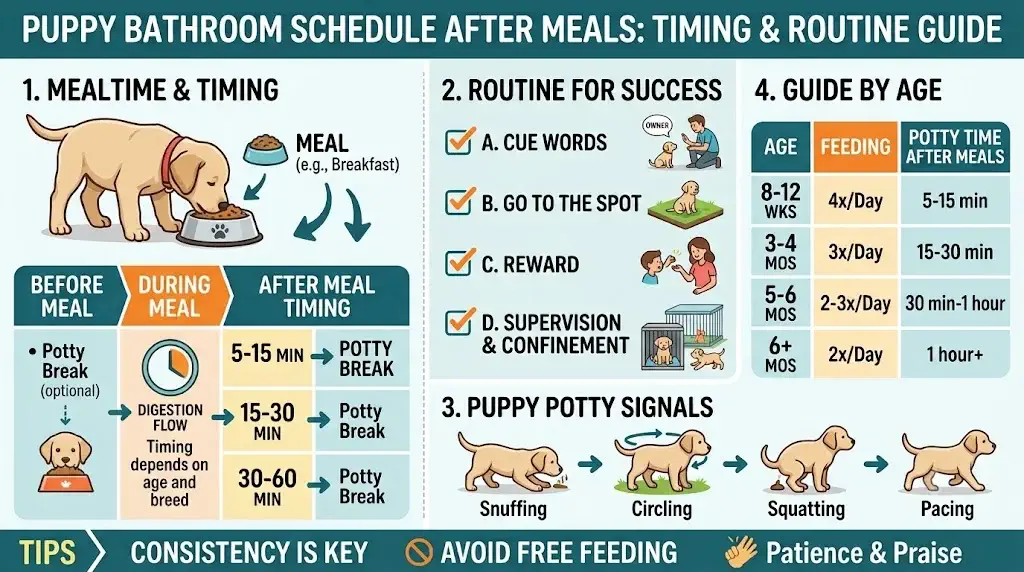
A calibrated puppy bathroom schedule after meals synchronizes pediatric canine food ingestion with the involuntary gastrocolic reflex to prevent indoor accidents. Food entering the stomach triggers neuro-hormonal colon contractions that rapidly push digested waste into the lower bowel. Correctly executing a puppy bathroom schedule after meals requires taking young puppies outside 15 to 25 minutes post-bowl, verifying completed defecation on outdoor turf, and maintaining close indoor tethering to eliminate carpet accidents across breakfast, lunch, and dinner.
Quick answer: when should a puppy go outside after eating?
A puppy requires an outdoor bathroom opportunity 15 to 25 minutes after finishing every meal, with very young puppies (under 10 weeks) often needing to eliminate within 10 to 15 minutes. Eating activates the gastrocolic reflex, which stimulates lower intestinal motility and compresses the bladder simultaneously.
Rather than waiting for emergency pacing or floor sniffing, leash your puppy immediately after their post-bowl rest, walk directly to your designated outdoor grass spot, verify completed bowel evacuation, and reward with ground-level praise within three seconds.
Quick Reference Specification: Post-Prandial Elimination Matrix
This calibrated physiological matrix benchmarks mealtime feeding events, digestive gastrointestinal mechanisms, tactical outdoor interventions, peak elimination urgency dwells, and veterinary safety standards in 2026.
| Meal Event / Phase | Gastrointestinal Mechanism | Tactical Outdoor Intervention | Peak Urgency Dwell | Safety Benchmark |
|---|---|---|---|---|
| Breakfast (6:30–7:00 AM) | Strongest morning gastrocolic surge & bladder filling | Double break: post-wake trip + 20-min post-meal trip | 15–25 minutes post-bowl | AKC Pediatric Digestive Standard |
| Lunch (12:00–1:00 PM) | Active metabolic turnover; secondary peristalsis wave | Outdoor walk & verified voiding prior to midday nap | 20–30 minutes post-bowl | VCA Juvenile Care Guideline |
| Dinner (5:30–6:00 PM) | Final major digestive bulk transit before night rest | Escort outside at 20 mins; pause evening play at 40 mins | 20–35 minutes post-bowl | AAHA Canine Life Stage Standard |
| Post-Meal Water Intake | Rapid gastric fluid clearance & renal filtration | Supervised indoor tether; outdoor trip 20 mins later | 20 minutes post-drinking | AVMA Pediatric Urology Protocol |
Why Do Puppies Often Need to Go Outside After Eating?
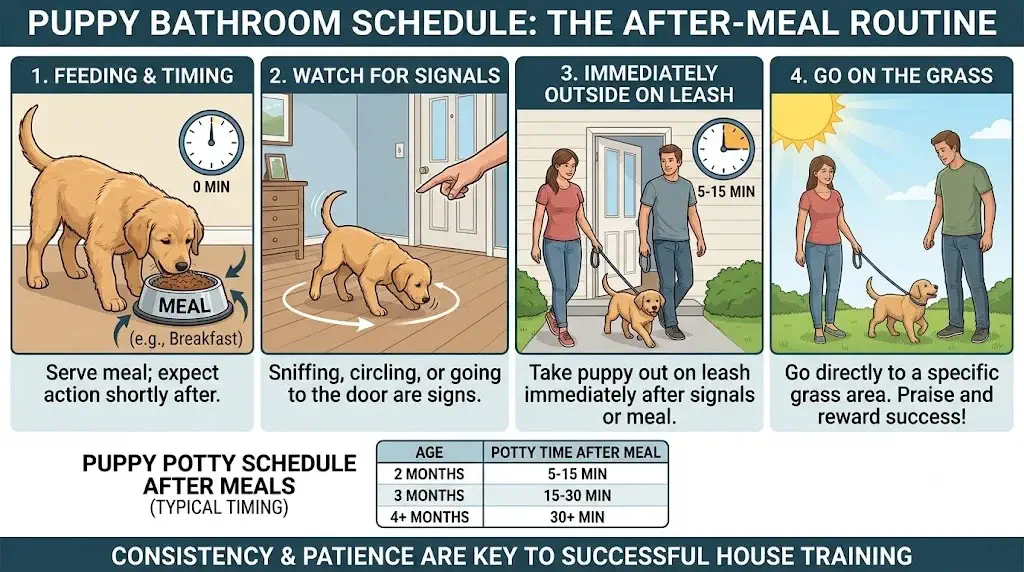
Gastric distension triggers the physiological gastrocolic reflex, which stimulates involuntary colonic peristalsis within fifteen minutes of eating. When food stretches the stomach lining, the autonomic nervous system signals the lower intestines to contract, clearing previous fecal waste to accommodate incoming digestion.
Young puppies also possess underdeveloped internal urethral sphincter tone and small bladder capacities. That means the biological combination of ingested food + visceral abdominal compression + limited voluntary control creates an immediate, highly predictable elimination window.
The American Kennel Club recommends taking puppies outside after meals as part of a consistent house-training routine. VCA Animal Hospitals likewise recommends frequent potty opportunities after eating, drinking, sleeping, and playing. Understanding that meals trigger biological reflexes rather than intentional misbehavior enables owners to intercept accidents before they occur.
The practical rule:
Every meal creates a non-negotiable elimination trigger. Do not wait for your puppy to pace or whine before treating feeding time as an immediate bathroom countdown.
For complete 24-hour routine frameworks, consult our comprehensive Puppy House Training Schedule.
How Soon Should You Take a Puppy Outside After Eating?
Pediatric canine digestive physiology requires an outdoor elimination opportunity between fifteen and twenty-five minutes post-feeding. While adult dogs retain waste for several hours post-meal, juvenile canines process food mass and fluid volume rapidly.
Some puppies urinate quickly due to fluid intake, while others sniff, walk around, or settle briefly before passing stool. Tracking your puppy’s individual elimination latency over three consecutive days establishes their exact biological window.
Use the meal as the starting point
Instead of guessing an abstract number of minutes, record what happens immediately after your puppy leaves the bowl. If your puppy consistently eliminates at the 18-minute mark, leash them at minute 15 and stand calmly on the outdoor grass.
Proactive Management Approach
- Feed at exact scheduled timestamps daily.
- Maintain umbilical leash tethering post-meal.
- Escort puppy to turf at the 15-minute mark.
- Verify both urination and defecation.
- Reward immediately at grass level within 3 seconds.
Reactive Risky Approach
- Leave food out for free-feeding all day.
- Allow unmonitored indoor room roaming.
- Wait for obvious doorway whining or pacing.
- Assume all puppies hold waste for hours.
- React only after discovering a rug accident.
For age-based frequency comparisons, examine our guide on How Often Should You Take a Puppy Outside?
Puppy Bathroom Schedule After Meals by Age
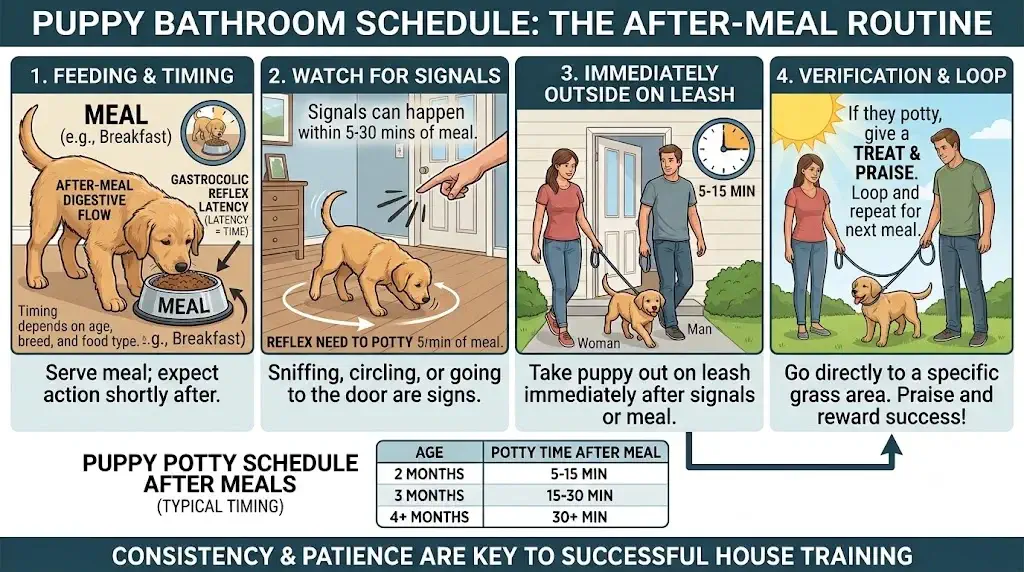
Chronological age dictates intestinal transit velocity, sphincter endurance, and post-meal holding capacity. While very young puppies require immediate intervention, older juveniles exhibit longer latency before elimination urges peak:
| Puppy Age | After-Meal Potty Timing | Diagnostic Behavioral Signals | Training Priority |
|---|---|---|---|
| 8–10 weeks | 10 to 15 minutes post-bowl | Intense carpet sniffing, tight circling, sudden disengagement. | Prevent accidents with immediate leash escorts. |
| 10–12 weeks | 15 to 20 minutes post-bowl | Restless pacing along walls, moving toward doorways. | Build predictable post-meal routine anchors. |
| 3–4 months | 20 to 30 minutes post-bowl | Vocalizing softly near exits, purposeful pacing. | Reinforce outdoor substrate preferences firmly. |
| 4–6 months | 30 to 45 minutes post-bowl | Clear pre-potty door signaling and eye contact. | Transition management toward independent signaling. |
| 6+ months | 45 to 60 minutes post-bowl | Mature canine elimination habits and patience. | Maintain consistent adult feeding schedules. |
Age is a planning framework, not a stopwatch
Two puppies of identical age can process kibble at varying speeds depending on breed size, hydration, and activity level. Use these age benchmarks as starting guides, then calibrate timing based on your puppy’s physical patterns.
Complete Puppy Bathroom Schedule After Breakfast, Lunch, and Dinner
A coordinated three-meal daily schedule synchronizes metabolic digestion with household morning, afternoon, and evening routines. Integrating meals directly into your housebreaking workflow creates automatic elimination checkpoints throughout the day:
6:30 AM — Morning Wake-Up Potty first
Walk the puppy outside immediately upon waking. Empty the overnight bladder before breakfast is served.
6:45 AM — Breakfast
Serve measured breakfast kibble; allow 15 minutes to eat, then lift the bowl. Keep the puppy supervised on leash.
7:05 AM — Post-Breakfast Potty Critical Trip
Escort the puppy outside on leash 20 minutes post-bowl. Verify morning bowel evacuation stimulated by the gastrocolic reflex.
12:00 PM — Lunch
Serve midday meal for growing puppies on a three-meal feeding plan. Provide fresh water and observe consumption.
12:20 PM — Post-Lunch Potty Potty trip
Take the puppy outside on turf; reward confirmed voiding at ground level before returning indoors for rest.
5:30 PM — Dinner
Serve evening meal at a consistent hour. Avoid delayed evening feeding to ensure digestion completes before sleep.
5:50 PM — Post-Dinner Potty Critical Trip
Escort puppy to relief area; confirm evening bowel movement. Provide a calm break after evening family play.
10:30 PM — Final Pre-Bed Potty Final potty
Conduct a final calm on-leash break on grass; praise quietly at ground level; latch bedroom crate door.
Puppy Bathroom Schedule After Breakfast
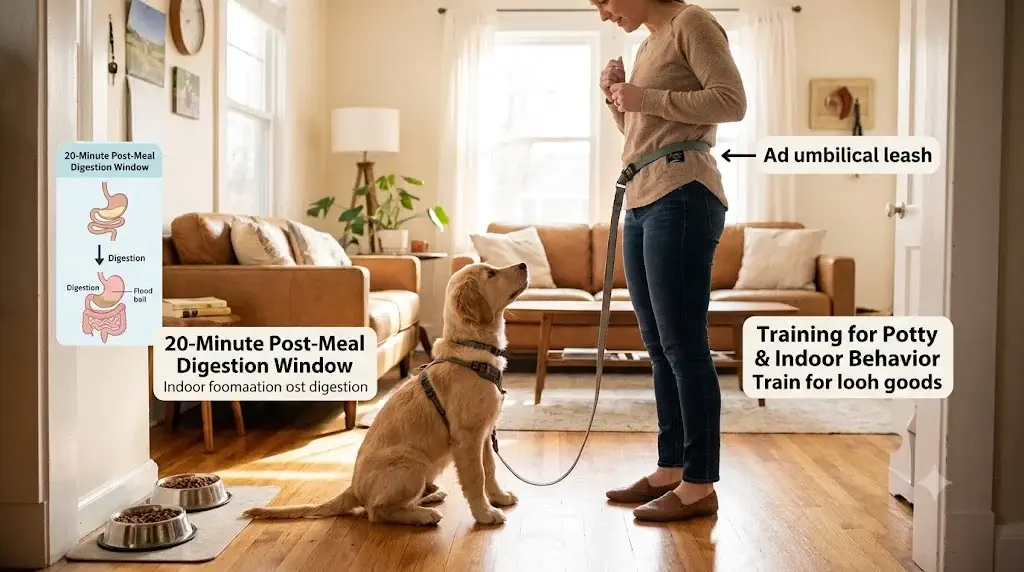
The morning breakfast routine requires two distinct outdoor trips to separate overnight bladder relief from post-prandial bowel evacuation. Confusing these two events is a primary cause of morning carpet accidents in young puppies.
Follow this standardized five-step morning procedure:
- Wake up and exit immediately. Carry or walk the puppy directly from the crate to the outdoor grass spot within 60 seconds of waking to empty overnight urine.
- Return inside for breakfast. Serve measured kibble at a consistent time; allow 15 minutes to eat, then lift the bowl.
- Enforce close umbilical supervision. Keep the puppy tethered to your belt or inside an exercise pen for 15 to 20 minutes; prohibit unmonitored roaming.
- Escort outside for post-breakfast elimination. Take the puppy to the turf at the 20-minute mark; verify bowel evacuation stimulated by eating.
- Reward and transition to morning rest. Praise at ground level within three seconds of voiding; return indoors for supervised morning activity or crate rest.
Why breakfast requires two distinct checkpoints
The first trip empties urine accumulated during overnight sleep. The second trip handles digestive waste propelled by breakfast. Treating these as two separate tasks eliminates morning rug accidents.
Puppy Bathroom Schedule After Lunch
Midday meals require scheduled post-prandial elimination trips to support young puppies eating three meals daily. While adult dogs thrive on two feedings, infant puppies require multiple smaller meals to maintain stable blood glucose levels.
Managing lunch for working owners
Lunch is often the most challenging meal for working households because it coincides with professional work shifts. If you work outside the home, arrange a professional pet sitter, neighbor, or family member to feed lunch and provide an outdoor relief break 20 minutes later.
Never eliminate lunch solely to avoid potty trips
Feeding frequency must follow pediatric veterinary guidelines, not human calendar convenience. If daytime coverage is impossible, utilize an exercise pen featuring an open crate and a real-grass turf box.
Puppy Bathroom Schedule After Dinner
Evening dinner feeding initiates the final major digestive transit cycle before overnight crating. Because puppies often experience high-energy play, social interactions, and water drinking following dinner, evening routines demand multiple outdoor checkpoints:
1. Post-Dinner Trip (20 mins post-bowl)
Escort the puppy outside on leash to capture the primary gastrocolic bowel movement stimulated by dinner kibble.
2. Post-Play Pause (7:30 PM)
Interrupt evening play sessions for an outdoor break; physical exercise compresses newly filtered urine volume.
3. Water Bowl Lift (8:30 PM)
Remove the bulk water bowl two hours prior to bedtime while ensuring normal daytime hydration has been met.
4. Final Bedtime Trip (10:30 PM)
Conduct a final verified outdoor trip immediately before latching the bedroom crate door for the night.
For complete overnight protocols, review our master guide on the Puppy Bathroom Schedule at Night.
Should a Puppy Go Outside Before or After Eating?
Pediatric canine housebreaking protocols recommend providing outdoor bathroom opportunities both before and after meals. Taking a puppy out before eating relieves bladder fullness, preventing feeding restlessness, while the post-meal trip captures digestive elimination urges.
Before the Meal (Pre-Feeding)
- Empties accumulated bladder urine before eating.
- Reduces motor urgency and excitement at the bowl.
- Establishes calm mealtime focus.
After the Meal (Post-Feeding)
- Captures the gastrocolic colonic reflex.
- Prevents post-prandial carpet accidents.
- Reinforces outdoor turf elimination habits.
What If Your Puppy Does Not Poop After Eating?
Normal canine bowel transit varies, meaning not every meal produces an immediate bowel movement. Most puppies defecate two to four times daily, but individual digestion, food moisture, and activity levels alter defecation timing.
The objective of the post-meal trip is to provide an opportunity, not to force an elimination. If your puppy urinates but does not defecate within five minutes outside, do not remain outdoors for 30 minutes hoping for results.
Managing the un-voided post-meal break
- Escort the puppy indoors on leash after five minutes of neutral waiting.
- Place the puppy in their crate or tether them via umbilical leash for 15 minutes.
- Prevent free indoor roaming or carpet access while waste remains un-voided.
- Escort the puppy straight back outside for a focused three-minute retry.
- Repeat this confinement reset loop until defecation occurs on grass.
Do not turn potty trips into endurance romps
Remaining outside indefinitely turns potty breaks into playtime, distracting the puppy from eliminating. Short, structured outdoor trips paired with close indoor supervision are far more effective.
What If My Puppy Poops Immediately After Eating?
Hyper-responsive gastrocolic reflexes cause rapid colonic emptying within five to ten minutes of food ingestion in some puppies. This accelerated timing is entirely normal and reflects sensitive autonomic gastrointestinal signaling.
If your puppy consistently poops immediately after eating, adjust your schedule to match their biological speed. Rather than waiting 20 minutes indoors, carry the puppy directly from the food bowl to the outdoor grass spot. An individual puppy’s observed pattern always takes precedence over generic advice.
How to Prevent Puppy Accidents After Meals
Systematic post-prandial environmental management eliminates indoor accidents during peak digestive windows. Follow this complete six-step prevention strategy:
- Feed on strict predictable schedules. Measure food accurately and offer meals at the exact same hours every day to regulate digestive transit.
- Restrict post-meal roaming completely. Tether the puppy to your waist via an umbilical leash or place them inside an exercise pen for 15 minutes post-bowl.
- Watch for pre-elimination motor cues. Respond immediately if the puppy begins displacement sniffing, tight circling, or pacing toward room edges.
- Escort outside on a fixed 6-foot lead. Stand stationary in your designated relief area; keep interactions neutral and focused on elimination.
- Deliver immediate ground-level praise. Provide a pea-sized high-value treat at grass level within three seconds of completed voiding.
- Decontaminate accident areas with enzymatic cleaner. Eradicate residual uric acid crystals using a bio-enzymatic cleaner to eliminate recurring scent attractants.
For proven behavioral protocols to break recurring accident cycles, review How to Prevent Repeat Puppy Accidents.
How Long Should You Stay Outside After a Puppy Eats?
A focused outdoor elimination window of three to five minutes prevents puppies from confusing potty trips with playtime. Standing stationary on a short leash encourages your puppy to attend to internal bodily cues rather than external environmental distractions.
If your puppy eliminates successfully, deliver quiet praise, offer a small treat, and transition to brief outdoor play or indoor freedom. If no elimination occurs within five minutes, escort the puppy back inside on leash, confine them to their crate for 10 to 15 minutes, and return outside for a quick retry.
An unproductive trip does not grant free roaming
Infant puppies transition from unproductive outdoor trips to indoor rug accidents within seconds. Keep the puppy tethered or crated until elimination occurs successfully on outdoor turf.
Frequently Asked Questions
How soon should I take my puppy outside after eating?
Take young puppies outside 15 to 25 minutes after eating, as meals stimulate the gastrocolic reflex. Very young pups (under 10 weeks) may need to go within 10 to 15 minutes post-bowl.
Should a puppy go outside before or after eating?
Ideally, take your puppy outside both before and after meals. A pre-meal break empties the bladder and reduces mealtime restlessness, while the post-meal break captures digestive elimination urges.
How long after breakfast should a puppy go outside?
Most puppies need an outdoor break 15 to 20 minutes after finishing breakfast. This is separate from the immediate wake-up potty break that empties the overnight bladder.
Does a puppy need to poop after every meal?
Not necessarily. While puppies frequently defecate after meals, they typically have 2 to 4 bowel movements daily. Track your puppy’s individual pattern rather than expecting stool after every feeding.
Why does my puppy have accidents right after eating?
Eating triggers involuntary colonic contractions via the gastrocolic reflex. If accidents occur indoors shortly after meals, advance your outdoor trip timing by 10 minutes and maintain close umbilical supervision.
Should I take my puppy outside after drinking water?
Yes. Water clears the stomach and filters into the bladder within 20 minutes. Provide unrestricted daytime water access and schedule a break shortly after significant drinking.
The Bottom Line on Post-Meal Potty Schedules
A consistent puppy bathroom schedule after meals leverages natural digestive reflexes to reinforce dependable housebreaking habits.
Feed measured meals at consistent hours, supervise digestion closely on leash for 15 to 20 minutes, and escort your puppy directly to their designated grass area. Verify completed voiding, reward immediately at ground level, and utilize structured crate resets whenever trips are unproductive. By working with your puppy’s biological rhythms rather than fighting them, mealtime becomes your most reliable housebreaking asset.
Editorial references
- American Kennel Club guidance on puppy potty-training routines and meal timing.
- VCA Animal Hospitals clinical guidance on puppy house training and gastrocolic elimination triggers.
- American Veterinary Medical Association (AVMA) pediatric canine urology and digestion principles.
This article provides general educational information and does not replace individualized veterinary advice.
