

Puppy Wakes Up to Pee at Night: Why It Happens & What to Do
Does your puppy wake up during the night because it needs to pee? Learn why nighttime urination is common in young puppies, how to handle overnight potty trips, when to adjust the bedtime routine, and when repeated nighttime urination may need veterinary attention.
A young puppy may wake up to pee at night because nighttime bladder control is still developing. If your puppy genuinely needs to go, take it outside calmly, keep the trip brief, and return to bed. A consistent bedtime routine, final potty opportunity, and gradual adjustment of overnight intervals can help as the puppy matures.
Why Does My Puppy Wake Up to Pee at Night?
Young puppies have different bathroom needs from adult dogs. Their ability to remain dry through a long sleep period develops with age, experience, and consistent house training.
Nighttime waking can also be influenced by the puppy’s daytime routine, activity level, food and water schedule, sleeping environment, and whether the puppy actually emptied its bladder before bedtime.
The first question should therefore be: Is the puppy waking because it genuinely needs to eliminate, or has nighttime waking become a learned routine?
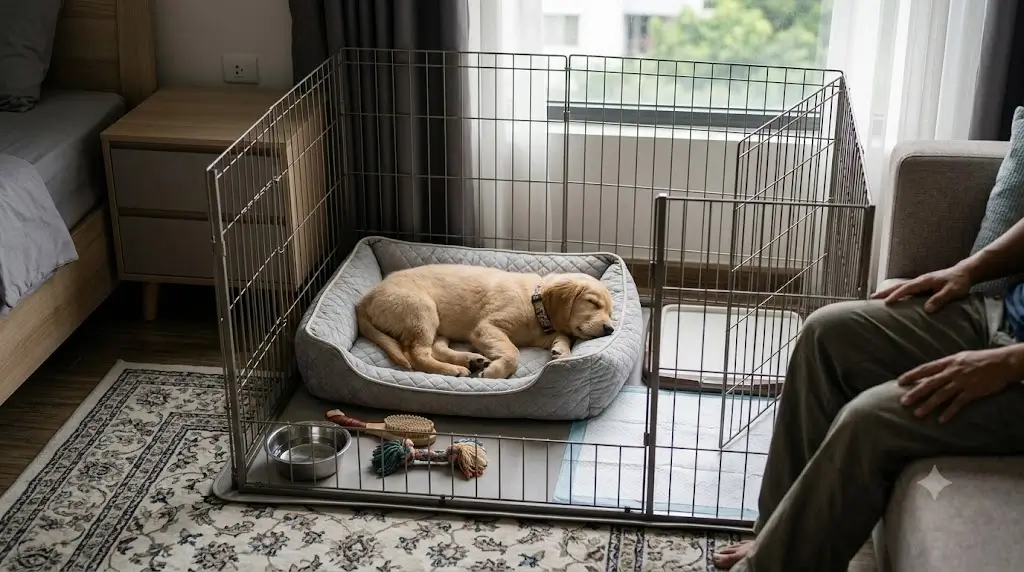
Young bladder control is still developing
A puppy may sleep for several hours but still be unable to remain comfortable and dry through the entire night. The appropriate expectation depends on the individual puppy rather than a single universal age formula.
The final potty trip may be too early
If the puppy’s last bathroom opportunity happens well before bedtime, the overnight interval may be longer than the puppy can comfortably manage. Moving the final potty opportunity closer to actual sleep can be useful.
The puppy did not fully eliminate before bed
Some puppies go outside, become distracted, and return indoors without actually urinating. That means “went outside before bed” is not necessarily equivalent to “emptied the bladder before bed.” When outdoor breaks fail to produce results, understanding why your puppy goes outside but still has accidents helps ensure they finish eliminating before returning indoors.
Nighttime waking can become a routine
Not every nighttime wake-up means the puppy needs to pee. If waking consistently produces play, food, attention, or a long interaction, the puppy can begin to associate waking with an interesting nighttime event. Genuine potty needs should be handled, but unnecessary stimulation should be minimized.
Changes in routine can affect nighttime behavior
Travel, a new sleeping location, changes in household schedules, unusual evening activity, or disruptions to normal sleep can alter nighttime behavior. If setbacks begin without an obvious trigger, exploring why your puppy suddenly started having accidents can pinpoint recent environmental or routine disruptions.
Is It Normal for a Puppy to Wake Up to Pee at Night?
It can be normal, especially during the early stages of development. The important issue is whether the pattern is gradually becoming more manageable as the puppy develops reliable nighttime habits.
A puppy that wakes once, eliminates, and quickly settles back down is different from a puppy that repeatedly wakes throughout the night to urinate.
| Pattern | What to Consider |
|---|---|
| Young puppy wakes once to pee | May be part of normal nighttime house-training development. |
| Puppy wakes but does not eliminate | Review whether the waking is behavioral, environmental, or related to sleep disruption. |
| Nighttime trips gradually decrease | Generally consistent with improving nighttime control. |
| Sudden increase in nighttime urination | Review routine changes and consider veterinary advice. |
| Multiple frequent urination episodes | Especially important to discuss with a veterinarian if the pattern persists or other symptoms occur. |
How to Build a Better Puppy Bedtime Routine
A predictable bedtime sequence helps separate nighttime from daytime activity.
1. Reduce high-energy activity before bed.
A puppy that is highly stimulated immediately before bedtime may have a harder time settling. Give the puppy a predictable transition toward sleep.
2. Keep the final routine consistent.
Try to keep the order of evening events reasonably predictable: calm activity, final bathroom opportunity, and sleep.
3. Make the final potty trip purposeful.
Give the puppy enough opportunity to eliminate rather than treating the outdoor trip as a play session.
4. Reward successful elimination.
Reinforce the correct bathroom behavior promptly, then transition back toward bedtime.
5. Keep the sleeping environment predictable.
A consistent sleep location and routine can make nighttime behavior easier to interpret.
What Should You Do When Your Puppy Wakes Up to Pee?
If your puppy wakes and appears to genuinely need to eliminate, respond without turning the event into a nighttime activity session.
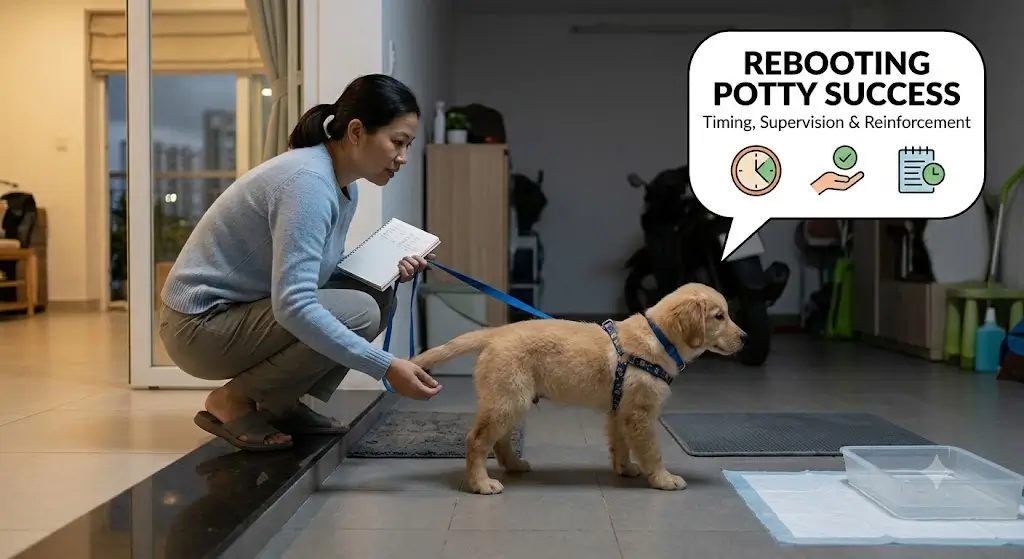
- Wake calmly and avoid excited interaction.
- Take the puppy directly to the designated bathroom area.
- Give the puppy an opportunity to eliminate.
- Reward successful elimination appropriately.
- Return indoors and resume the normal sleep routine.
Think “business trip,” not “midnight play session”: The purpose of a nighttime potty trip is to meet the puppy’s bathroom need while keeping the rest of the environment boring and predictable.
What If the Puppy Wakes Up but Does Not Pee?
Do not automatically assume every wake-up is a bathroom emergency. First consider whether the puppy actually eliminates when taken outside. If repeated nighttime trips produce little or no elimination, the pattern may require a different approach.
Check for environmental triggers such as noise, temperature, discomfort, separation from the household, or an inconsistent sleep routine.
Should You Wake a Puppy Up to Pee at Night?
Scheduled nighttime potty trips can be useful for some very young puppies, particularly when the owner is trying to prevent repeated overnight accidents. However, there is no single wake-up schedule that fits every puppy. The appropriate approach depends on the puppy’s age, previous nighttime history, sleeping pattern, and ability to remain dry.
If a puppy is consistently sleeping comfortably and staying dry, unnecessary scheduled wake-ups may not provide a benefit.
How to Gradually Reduce Nighttime Potty Trips
The goal is not to force a puppy to hold urine beyond its current ability. The goal is to allow longer nighttime sleep as the puppy becomes developmentally ready.
1. Establish a consistent baseline.
Record when the puppy goes to sleep, when it wakes, and whether each nighttime trip actually produces urine.
2. Look for several dry nights.
Consistency is more useful than one unusually successful night. Look for a pattern showing that the puppy can sleep longer without accidents.
3. Adjust gradually.
If the puppy is consistently dry and appears comfortable, gradually allow longer sleep periods rather than making a large overnight change.
4. Respond to setbacks with data.
If accidents return, review the timing and temporarily return to the last routine that produced reliable results. If nighttime accidents begin alongside daytime messes, troubleshooting a puppy having too many accidents helps stabilize overall management.
A Practical Nighttime Puppy Schedule
The exact clock times should be adapted to the household and the puppy. The structure matters more than copying a fixed schedule.
| Time | Example Routine |
|---|---|
| 7:00 PM | Normal evening activity. |
| 8:30 PM | Calmer activity and routine transition. |
| 9:30 PM | Final meal or evening routine as appropriate. |
| 10:30 PM | Final focused outdoor bathroom opportunity. |
| 10:45 PM | Sleep. |
| Overnight | Respond to genuine bathroom needs according to the puppy’s current ability. |
| Morning | Take the puppy out promptly after waking. |
This is an example framework, not a universal veterinary or training prescription. Your puppy’s actual needs should determine the timing.
Nighttime Potty Trips Should Be Boring
One of the easiest mistakes to make is turning the overnight potty trip into a reward in itself. If every wake-up produces lights, conversation, toys, food, or an extended outdoor adventure, the puppy may have more reason to wake again.
Keep the sequence predictable: Wake → Go to bathroom area → Eliminate → Quiet reinforcement → Return to sleep.
What If Your Puppy Wakes at the Same Time Every Night?
A repeated wake-up at the same time can have several explanations. It may correspond to the puppy’s current bathroom needs, but it can also become a learned routine. Keep a short log for several nights noting bedtime, wake-up time, whether urination occurred, and settling speed.
Common Mistakes That Make Nighttime Potty Training Harder
- Mistake 1: Waiting for an obvious emergency. A puppy may not always provide a clear signal before it needs to eliminate. During early training, predictable opportunities are important.
- Mistake 2: Making nighttime trips exciting. Excessive interaction can teach the puppy that waking up produces attention.
- Mistake 3: Assuming every outdoor trip was successful. A puppy can spend several minutes outside without urinating. Always distinguish an outdoor trip from actual elimination.
- Mistake 4: Making the overnight interval too long too quickly. Progress should follow the puppy’s development. A large increase in the expected overnight interval can result in accidents. If previously reliable dogs regress overnight, review what to do when your puppy has accidents after being house trained.
- Mistake 5: Punishing nighttime accidents. Punishment does not teach a puppy the correct bathroom location. Prevention, supervision, and reinforcement are far more effective.
What About Water Before Bed?
Water is important for a puppy’s normal health, so nighttime house-training should not be approached by simply restricting water without considering the puppy’s overall needs. If nighttime urination seems unusually frequent, discuss the pattern with your veterinarian rather than using aggressive water restriction as a training shortcut.
Do not use dehydration as a house-training strategy: Puppies need appropriate access to water. If you are concerned about drinking or urination patterns, veterinary guidance is the safer way to determine what is appropriate.
How to Track Nighttime Progress
A simple tracking table can show whether the puppy is genuinely improving.

| Night | Bedtime | Wake-Up | Peed? | Accident? |
|---|---|---|---|---|
| Monday | 10:30 PM | 2:30 AM | Yes | No |
| Tuesday | 10:30 PM | 3:15 AM | Yes | No |
| Wednesday | 10:30 PM | 4:00 AM | Yes | No |
| Thursday | 10:30 PM | Morning | Yes | No |
The important signal is the trend. Longer successful sleep periods without accidents indicate progress even if the puppy is not yet sleeping through the entire night.
When Nighttime Peeing May Be a Medical Issue
Not every nighttime urination problem is a training problem. Contact a veterinarian if nighttime urination is sudden, unusually frequent, persistent, or accompanied by other changes in your puppy’s health or behavior.
Pay particular attention to:
- Sudden changes in urination frequency
- Repeated attempts to urinate
- Straining or apparent discomfort
- Blood or unusual urine changes
- Unusual thirst
- Changes in appetite
- Vomiting or diarrhea
- Unusual tiredness
- Other signs that the puppy does not feel well
Health note: Puppy Potty Guide provides general educational information about house training and does not diagnose medical conditions. A veterinarian should evaluate concerning or unexplained changes in urination.
The Difference Between Nighttime Training and Nighttime Management
During early stages, nighttime potty trips are about management—preventing accidents while bladder control develops. As maturity improves, the management burden decreases.
| Early Stage | Later Stage |
|---|---|
| More frequent bathroom opportunities | Longer sleep periods |
| Closer supervision | Greater independence |
| More management | More reliable routine |
| Frequent reinforcement | Maintenance of learned behavior |
Bottom Line: Puppy Wakes Up to Pee at Night
A puppy waking up to pee at night is not automatically a sign that house training is failing. Young puppies may need nighttime bathroom opportunities while their bladder control and routine are developing.
Handle genuine nighttime potty needs calmly. Keep trips short and predictable, provide a purposeful final bathroom opportunity before bed, and gradually allow longer sleep periods as the puppy demonstrates reliable nighttime control.
If the puppy suddenly begins urinating much more often, repeatedly wakes to urinate, or shows other health changes, treat that as a potential veterinary issue rather than simply changing the training schedule.
Frequently Asked Questions
Why does my puppy wake up to pee at night?
Young puppies may wake because nighttime bladder control is still developing. Bedtime timing, routine changes, incomplete potty trips, and health issues can also influence nighttime urination.
Should I take my puppy outside when it wakes up to pee?
If the puppy genuinely needs to eliminate, a calm and brief potty trip is appropriate. Keep the trip focused on bathroom needs rather than play.
How can I stop my puppy from waking up to pee?
Establish a consistent bedtime routine, provide a final potty opportunity before sleep, keep nighttime trips boring, and gradually extend overnight intervals as the puppy becomes reliably dry.
Should I wake my puppy up to pee at night?
Some very young puppies may benefit from planned nighttime potty opportunities. The appropriate schedule depends on the puppy’s individual development and nighttime history.
Why does my puppy wake multiple times to pee?
Developmental bladder control and routine can contribute, but unusually frequent urination can also have medical causes. Persistent or sudden changes should be discussed with a veterinarian.
When should frequent nighttime peeing be checked by a vet?
Seek veterinary advice when nighttime urination is sudden, unusually frequent, persistent despite an appropriate routine, or accompanied by changes in thirst, urination, appetite, energy, stool, or signs of discomfort.
