
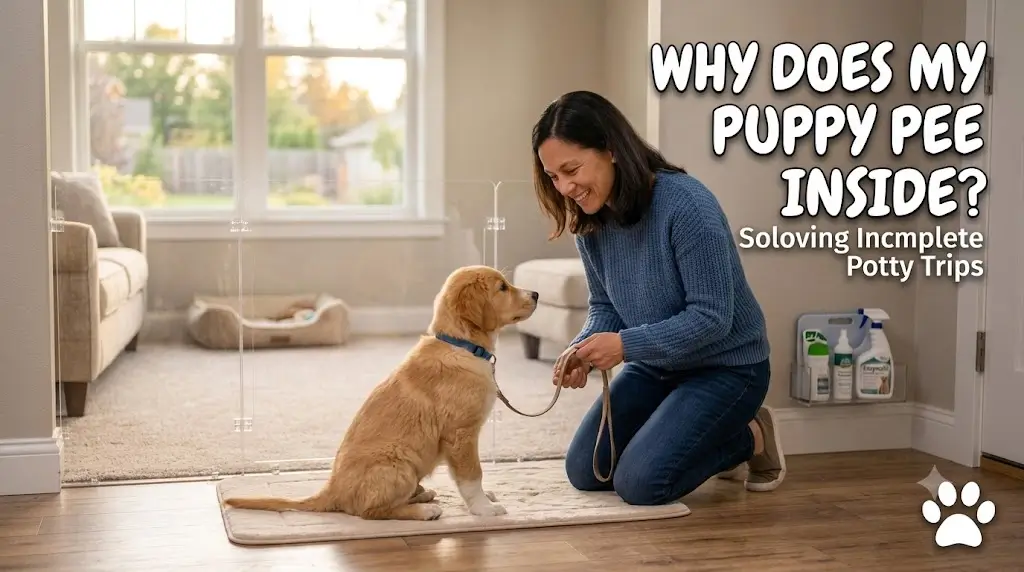
Why Does My Puppy Pee Right After Coming Inside?
If your puppy pees shortly after coming inside from a potty trip, the most common explanation is that the puppy did not fully eliminate outside. The puppy may have been distracted, excited, uncomfortable, unsure of the bathroom location, or simply unable to finish before returning indoors.
This behavior does not necessarily mean your puppy is being stubborn or deliberately ignoring house training. In many cases, the solution is to make outdoor potty trips more focused, give the puppy enough time, and prevent immediate unsupervised access to the house after an unsuccessful trip.
If your puppy pees right after coming inside, treat the outdoor trip as incomplete. Return outside calmly, give the puppy another focused opportunity to eliminate, reward success immediately, and keep the puppy supervised indoors until you know the bladder has been emptied.
Why Does My Puppy Pee Right After Coming Inside?
Puppies can appear to have finished a potty trip when they have only urinated partially or have not eliminated at all.
Common reasons include:
- The puppy was distracted by smells, sounds, people, or other animals.
- The puppy wanted to explore or play instead of focusing on elimination.
- The outdoor bathroom area is unfamiliar or uncomfortable.
- The puppy was outside for too short a period.
- The puppy became excited when returning indoors.
- The puppy has learned that going outside means the end of outdoor activity.
- The puppy has not yet developed reliable bladder control.
- The puppy did not understand what behavior was being reinforced.
- The timing of the potty trip was not appropriate for the puppy’s current needs.
- A urinary problem may be contributing if the pattern is sudden or accompanied by other symptoms.
The important distinction is between “the puppy went outside” and “the puppy successfully emptied the bladder outside.” Those are not always the same event.
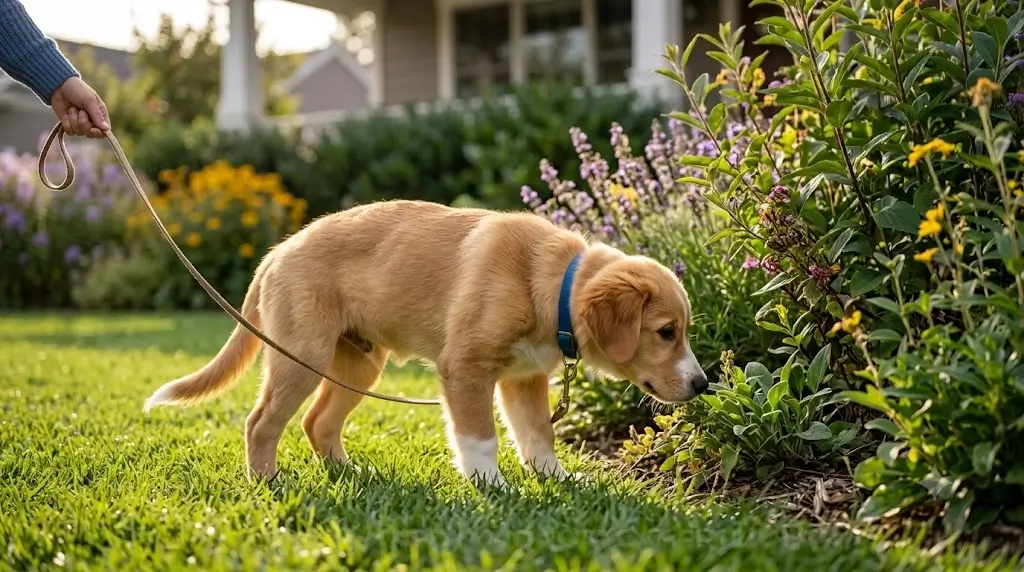
The Most Common Reason: Your Puppy Didn’t Finish Outside
A puppy can urinate a small amount outside and still need to urinate again soon afterward. If you frequently encounter outdoor hesitation, exploring why won’t my puppy pee outside can help you identify sensory distractions and weather challenges that prevent a full pee.
This is especially common when the puppy is distracted. The puppy may sniff, watch people, investigate the environment, or become interested in another dog instead of completing the bathroom routine.
Do not end the potty trip simply because the puppy has been outside. End it after the puppy has actually eliminated and had a brief opportunity to settle afterward.
The goal is not to keep the puppy outdoors indefinitely. The goal is to distinguish between a successful bathroom trip and an unsuccessful outdoor visit.
Why Puppies Get Distracted Outside
The outdoor environment contains far more sensory information than a quiet indoor room.
A puppy may encounter:
- New smells.
- Birds and wildlife.
- Traffic noise.
- Neighbors.
- Other dogs.
- People walking nearby.
- Leaves, grass, dirt, and other textures.
- Weather changes.
- Interesting objects.
Exploration can override the immediate bathroom task. A puppy that is physically ready to urinate may still delay elimination because the environment is more interesting.
What Should You Do If Your Puppy Pees Immediately After Coming Inside?
If your puppy urinates shortly after returning indoors, do not punish the puppy.
Instead, change the routine for the next potty trip.
- Clean the accident thoroughly.
- Review how long the puppy had been outside.
- Identify whether the puppy actually urinated outside.
- Make the next outdoor trip more focused.
- Stay with the puppy until successful elimination occurs.
- Reward immediately after the puppy finishes.
- Keep the puppy supervised after returning indoors.
If you know the puppy still needs to eliminate and the puppy is healthy enough for another trip, calmly return outside rather than allowing unrestricted indoor roaming.
The Two-Stage Potty Trip That Prevents Indoor Peeing
A useful technique for puppies that repeatedly pee after coming inside is a two-stage potty routine.
Stage 1: Bathroom Opportunity
Take the puppy directly to the designated bathroom area. Keep the environment calm and give the puppy time to investigate the immediate area.
Stage 2: Confirm Success
After the puppy urinates, wait briefly rather than immediately rushing back indoors. Some puppies eliminate more than once during a single outing.
Then Reward
Give the reward immediately after successful elimination. The reward should follow the desired behavior closely enough for the puppy to associate the two events.
Bathroom area → wait → successful elimination → immediate reward → brief calm activity → supervised return indoors.
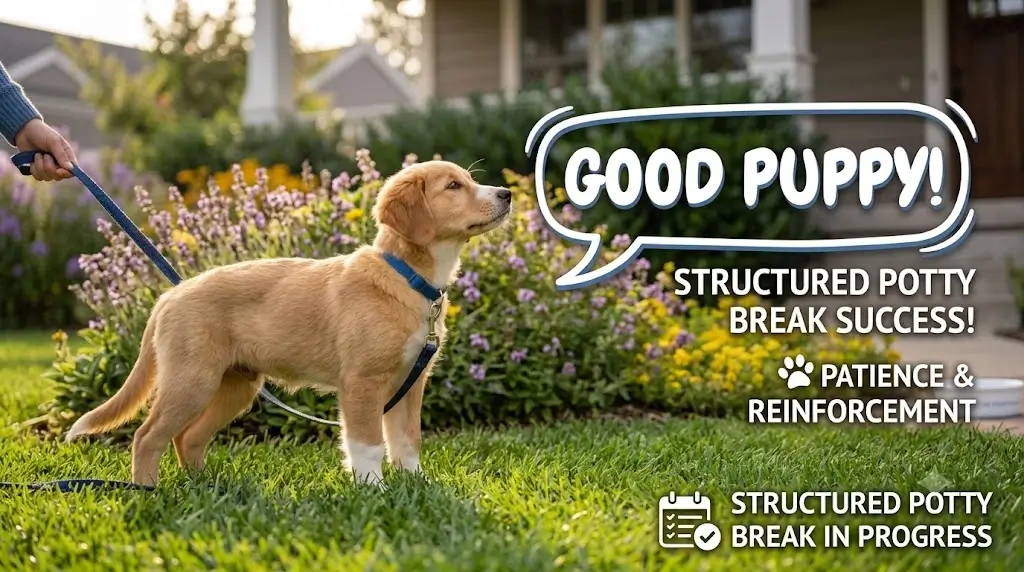
Why Does My Puppy Pee Inside After Going Outside?
The timing of the accident provides useful information.
| Pattern | What It May Suggest | Training Adjustment |
|---|---|---|
| Pees within a few minutes of coming inside | Incomplete elimination or distraction outside | Use a more focused outdoor trip and confirm success. |
| Pees after playing indoors | Activity may have increased urgency. | Provide a potty opportunity after play. |
| Pees after drinking | Increased fluid intake may change timing. | Monitor and adjust potty opportunities. |
| Pees only in one room | Residual odor or location preference | Clean thoroughly and restrict access. |
| Sudden frequent urination | Possible health or routine change | Review circumstances and seek veterinary advice if concerning. |
How Long Should a Puppy Stay Outside to Pee?
There is no universal number of minutes that guarantees success.
A better approach is to watch what the puppy actually does. A puppy that spends the entire outdoor trip sniffing, playing, or watching the environment has not necessarily completed the bathroom task.
If the puppy does not eliminate, return indoors only with appropriate supervision. If the puppy is at high risk of having an accident, use a short, controlled indoor period and provide another potty opportunity rather than giving unrestricted freedom.
This creates a simple feedback loop: no elimination means more management; successful elimination earns freedom and reinforcement.
Why Does My Puppy Hold It Outside Then Pee Inside?
Holding urine outside can happen for several reasons.
Outdoor Distractions
The puppy may be too interested in the environment to concentrate on elimination.
Unfamiliar Bathroom Surface
Some puppies develop preferences for grass, concrete, gravel, pee pads, or other surfaces. A puppy accustomed to one texture may initially hesitate on another.
Fear or Discomfort
Loud traffic, rain, unfamiliar people, other dogs, or a stressful environment can interfere with normal elimination.
Excitement
Excitement can change a puppy’s behavior and make it harder to settle long enough to eliminate.
Incomplete Routine
The puppy may simply need more time or another opportunity.
Make the Potty Area Boring on Purpose
For puppies that become distracted outside, the bathroom area should be functional rather than entertaining.
Keep the initial potty portion of the trip relatively calm. Avoid turning every outdoor potty trip into a long play session before elimination.
Once the puppy successfully eliminates, you can use additional outdoor activity as a separate reward if appropriate.
If outdoor elimination is followed by enjoyable activity, the puppy can learn that eliminating outside does not immediately end the fun.
Use Outdoor Play as a Reward
Some puppies become reluctant to pee because they have learned that elimination ends outdoor time.
You can reverse that pattern by separating the bathroom task from the rest of the outdoor experience.
A simple routine is:
- Go to the bathroom area.
- Wait calmly.
- Allow elimination.
- Reward immediately.
- Then provide a short period of appropriate exploration or play.
This can make outdoor elimination less likely to feel like a signal that the enjoyable part of the outing is over.
Why Immediate Rewards Matter
Timing matters in reinforcement training.
If you wait several minutes, walk back inside, remove the leash, and only then give a reward, the puppy may not clearly connect the reward with eliminating outside.
Deliver the reward as close as practical to the successful elimination.
The behavior you want to reinforce is not simply going outdoors. It is eliminating in the designated outdoor location.
Should You Stay Outside Until Your Puppy Pees?
If the puppy is clearly due for a bathroom break, staying focused on the task can be more useful than immediately returning indoors after a few distracted minutes.
However, do not turn the process into an exhausting or stressful standoff.
If the puppy does not eliminate, use management indoors and try again later based on the puppy’s needs.
“Didn’t pee yet” does not mean “let the puppy roam freely indoors.” Use supervision between attempts.
What to Do When Your Puppy Doesn’t Pee Outside
Use a predictable sequence.
- Take the puppy to the designated bathroom location.
- Minimize distractions.
- Give the puppy a reasonable opportunity to eliminate.
- If successful, reward immediately.
- If unsuccessful, return indoors under close supervision.
- Try again when the puppy is likely to need another bathroom opportunity.
The mistake is allowing an unsuccessful potty trip to be followed by unrestricted indoor freedom.
How to Prevent the Immediate Indoor Accident
The highest-risk period is often the first few minutes after an unsuccessful outdoor trip. Implementing structured protocols from our master guide on how to stop puppy accidents will help you maintain tight indoor management during these vulnerable transition moments.
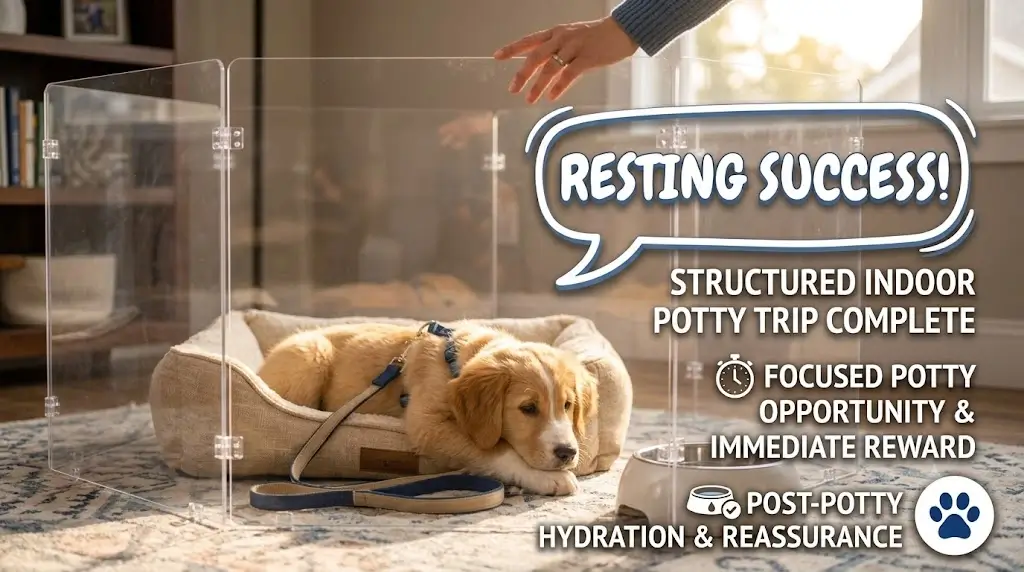
During that period, keep the puppy:
- Near you.
- Under direct supervision.
- In a controlled area.
- Away from previous accident locations.
- Away from unrestricted access to carpeted rooms.
If the puppy starts sniffing, circling, wandering away, or showing other pre-potty behavior, take the puppy back outside.
How Crate or Pen Management Can Help
A properly managed crate or puppy pen can help prevent an unsuccessful outdoor trip from becoming an indoor accident.
The purpose is management, not punishment.
After an unsuccessful potty trip, a puppy can be kept in an appropriately managed resting area for a short period while you prepare for another potty opportunity.
Confinement duration should always be appropriate for the puppy’s age, health, and individual bathroom needs.
Why Puppies Sometimes Pee on the Floor Immediately After Entering the House
The transition from outside to inside can change the puppy’s behavior.
The puppy may become excited by seeing family members, smelling food, starting play, or moving quickly through the house.
If the bladder is not empty, that sudden activity can be followed by an accident.
For a puppy with this pattern, make the first few minutes indoors calm and supervised rather than immediately starting energetic play.
How to Handle Puppies That Pee on the Way Back Inside
If the puppy begins urinating while walking back toward the house, calmly redirect to the appropriate bathroom location if possible.
Once successful elimination is completed, reward it.
Avoid sudden punishment or loud reactions, which can make the puppy anxious about eliminating around people.
Does Your Puppy Need to Pee Again After Peeing Outside?
Sometimes, yes.
A puppy may urinate more than once during an outing. The first urination does not necessarily mean the puppy has no remaining need to eliminate.
This is one reason a brief confirmation period after the first successful pee can be useful for puppies with a history of immediate indoor accidents.
Do not try to force the puppy to produce urine. Simply allow a calm opportunity and observe.
How Feeding and Drinking Affect the Pattern
Bathroom timing is affected by the puppy’s daily routine.
Pay particular attention to:
- When meals occur.
- When the puppy drinks.
- How much activity follows meals.
- When naps occur.
- When the puppy wakes.
- When accidents most commonly happen.
A simple log can reveal that what appears to be a mysterious indoor accident actually occurs at a predictable interval after a meal, drink, nap, or play session.
Keep a Potty Log for Three to Seven Days
A potty log turns the problem into something measurable.
| Time | Event | Outside? | Eliminated? | Indoor Accident? |
|---|---|---|---|---|
| 7:00 AM | Woke up | Yes | Yes | No |
| 8:00 AM | Breakfast | Yes | No | Yes |
| 8:10 AM | Returned outside | Yes | Yes | No |
This example shows how an apparently random accident can reveal a predictable training gap: the puppy was taken outside but did not actually eliminate before being allowed to return indoors.
What If Your Puppy Only Pees Inside After Going Outside?
If this happens consistently, focus on the difference between an outdoor visit and an outdoor bathroom success.
Ask yourself:
- ☐ Did the puppy actually urinate outside?
- ☐ Was the puppy distracted?
- ☐ Did the puppy have enough time?
- ☐ Did you immediately return indoors after a partial pee?
- ☐ Did the puppy become excited inside?
- ☐ Was the puppy allowed to roam immediately?
- ☐ Was the puppy recently drinking or eating?
- ☐ Does the accident happen at a predictable time?
- ☐ Is there a recurring location?
- ☐ Has the puppy’s urination pattern suddenly changed?
Why Punishing the Indoor Pee Makes the Problem Worse
Punishing a puppy after an accident does not teach the puppy where the bathroom behavior should occur.
It can also make the puppy wary of eliminating around people, which can complicate training.
Instead, focus on preventing the next accident and reinforcing the behavior you want.
Clean the accident → identify the missed trigger → adjust the next potty trip → reward successful outdoor elimination.
How to Stop the Pattern Long Term
The goal is to make successful outdoor elimination more predictable than indoor elimination. Similar principles apply when retraining older pets through our tutorial on how to house train an adult dog, where establishing consistent routines is key to resetting learned habits.
- Learn the puppy’s bathroom timing.
- Use predictable potty triggers.
- Keep outdoor trips focused.
- Confirm that elimination actually occurred.
- Reward immediately.
- Keep post-potty indoor activity supervised.
- Clean previous accidents thoroughly.
- Gradually increase freedom as reliability improves.
Once the puppy consistently eliminates outside, the amount of supervision can gradually decrease.
When Weather or the Outdoor Environment Is the Problem
Some puppies hesitate to eliminate outside when conditions are uncomfortable. This hesitation is also frequently seen when working through how to house train a rescue dog who may have underlying environmental trauma or sound sensitivity.
Rain, heat, cold, loud construction, traffic, unfamiliar surroundings, or nearby animals can change behavior.
If the puppy consistently refuses to eliminate under a particular condition, look for ways to make the bathroom location calmer and more predictable while maintaining appropriate safety.
The goal is not to force the puppy into a frightening environment. A puppy that is genuinely fearful may need gradual acclimation rather than repeated exposure to overwhelming conditions.
What If My Puppy Pees Inside Only After Rainy Potty Trips?
Rain can cause some puppies to avoid grass or other outdoor surfaces. Wet ground, noise, wind, and changes in smell can all alter the experience.
If rainy conditions consistently predict indoor accidents, increase supervision and provide a more protected, familiar bathroom location when practical.
Could Frequent Peeing Be a Medical Problem?
A puppy that repeatedly urinates shortly after going outside may simply be incompletely house trained, but a sudden or unusual change should not automatically be treated as a behavioral problem.
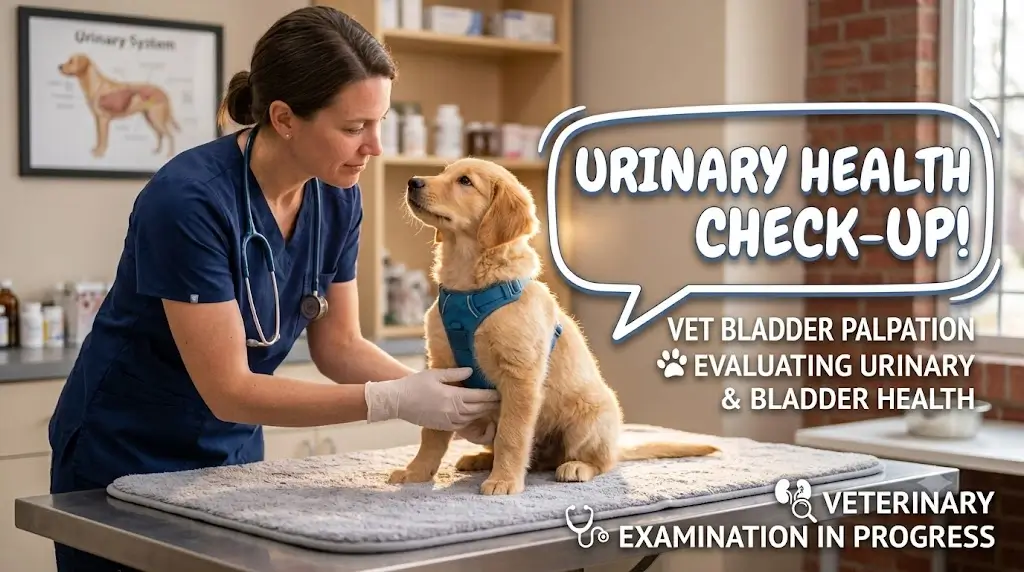
Watch for:
- Very frequent attempts to urinate.
- Straining.
- Apparent pain.
- Blood in the urine.
- Marked changes in thirst.
- Sudden major changes in urinary frequency.
- Lethargy or other unusual illness signs.
If your puppy has difficulty urinating, repeatedly strains, produces little or no urine, has blood in the urine, or develops a sudden significant change in urination, contact a veterinarian promptly.
Why This Problem Is Different From a Puppy Who Refuses to Pee Outside
These two problems sound similar but have different training priorities.
| Problem | Primary Question | Main Strategy |
|---|---|---|
| Puppy refuses to pee outside | Why is the puppy not comfortable eliminating outdoors? | Address distractions, fear, surface preference, routine, and outdoor conditions. |
| Puppy pees immediately after coming inside | Why did the puppy not fully eliminate before returning indoors? | Confirm outdoor success, supervise the transition, and repeat the potty opportunity when needed. |
| Puppy has random indoor accidents | When and where are accidents occurring? | Use a log and improve timing, supervision, and access management. |
7-Day Reset for a Puppy That Pees Right After Coming Inside
Day 1: Track Everything
Record waking, meals, drinking, outdoor trips, successful elimination, and accidents.
Day 2: Reduce Distractions
Make the bathroom portion of the outdoor trip calmer and more predictable.
Day 3: Confirm Elimination
Do not treat simply being outside as a completed potty trip. Observe whether the puppy actually eliminates.
Day 4: Control the Transition Indoors
Keep the puppy supervised after coming inside, especially after unsuccessful outdoor trips.
Day 5: Improve Reinforcement
Reward immediately after successful outdoor elimination.
Day 6: Clean Previous Accident Locations
Remove residual odor and temporarily restrict access to recurring accident areas.
Day 7: Review the Pattern
Determine whether the interval between outdoor elimination and indoor accidents has increased. If it has, continue the same system while gradually expanding freedom.
The goal is not simply “more time outside.” The useful metric is more successful outdoor elimination followed by fewer indoor accidents.
Quick Troubleshooting Checklist
- ☐ My puppy actually peed outside before coming indoors.
- ☐ The potty area is relatively calm.
- ☐ I give my puppy enough opportunity to eliminate.
- ☐ I reward immediately after outdoor elimination.
- ☐ I supervise my puppy after coming inside.
- ☐ I do not allow immediate unrestricted roaming after an unsuccessful trip.
- ☐ I clean previous accidents thoroughly.
- ☐ I track meals, drinks, naps, play, and accidents.
- ☐ I adjust potty timing based on actual patterns.
- ☐ I watch for sudden urinary changes or illness signs.
Frequently Asked Questions
Why does my puppy pee right after coming inside?
The most common reason is that the puppy did not fully eliminate outside. Distractions, excitement, unfamiliar surfaces, weather, insufficient time, or immature bladder control can contribute.
Why does my puppy hold it outside and pee inside?
Your puppy may be distracted, uncomfortable outdoors, unfamiliar with the bathroom surface, excited, or not yet able to consistently understand the outdoor potty routine.
What should I do when my puppy pees immediately after coming inside?
Clean the accident, review whether the puppy actually eliminated outside, and make the next potty trip more focused. If the puppy did not eliminate outside, use close indoor supervision and provide another appropriate opportunity.
Should I take my puppy back outside after an indoor accident?
If the puppy is still likely to need to eliminate, calmly provide another outdoor opportunity. Avoid punishment and focus on reinforcing the correct location.
How long should I wait outside for my puppy to pee?
There is no universal number of minutes. Give the puppy a reasonable, calm opportunity without turning the trip into a stressful contest. If the puppy does not eliminate, use close supervision indoors and try again based on the puppy’s needs.
Why does my puppy pee as soon as we get home?
The puppy may not have emptied the bladder outside. The transition indoors can also create excitement and activity that makes an already-full bladder more likely to empty.
Should I reward my puppy for peeing outside?
Yes. Immediate positive reinforcement can help the puppy associate outdoor elimination with a desirable outcome.
What if my puppy gets distracted outside?
Make the bathroom portion of the trip calmer and more focused. Use a consistent location and postpone extended play until after successful elimination.
Why does my puppy pee inside after peeing outside?
The first outdoor urination may not have fully emptied the bladder, or the puppy may have become excited or active after returning indoors. Observe whether the pattern occurs consistently.
Can I use a crate after my puppy refuses to pee outside?
Appropriate short-term management can help prevent an immediate indoor accident, provided the confinement period is suitable for the puppy’s age and bathroom needs. The crate should not replace regular potty opportunities.
Does rain make puppies hold their pee?
Some puppies are less willing to eliminate in wet or uncomfortable conditions. A protected, familiar bathroom area and increased supervision can help.
When should I worry that frequent peeing is medical?
Sudden changes, repeated straining, difficulty urinating, blood in the urine, very frequent attempts, major thirst changes, or other illness signs warrant veterinary attention.
Final Answer: Why Your Puppy Pees Right After Coming Inside
When a puppy pees immediately after coming inside, the first thing to investigate is whether the puppy actually finished eliminating outside.
The most effective correction is usually not punishment. Make the outdoor potty trip more focused, reduce distractions, give the puppy a reasonable opportunity to eliminate, confirm that the behavior occurred, and reward it immediately.
If the puppy does not pee outside, do not assume the bathroom need has disappeared once you return indoors. Keep the puppy supervised and provide another appropriate opportunity rather than allowing unrestricted access to the house.
Over time, the puppy learns a predictable sequence: go to the bathroom area, eliminate outside, receive reinforcement, then enjoy supervised freedom.
If the puppy suddenly begins urinating much more frequently or shows signs of pain, straining, blood, difficulty urinating, or other illness, treat that as a potential health issue rather than simply a house-training problem.
