
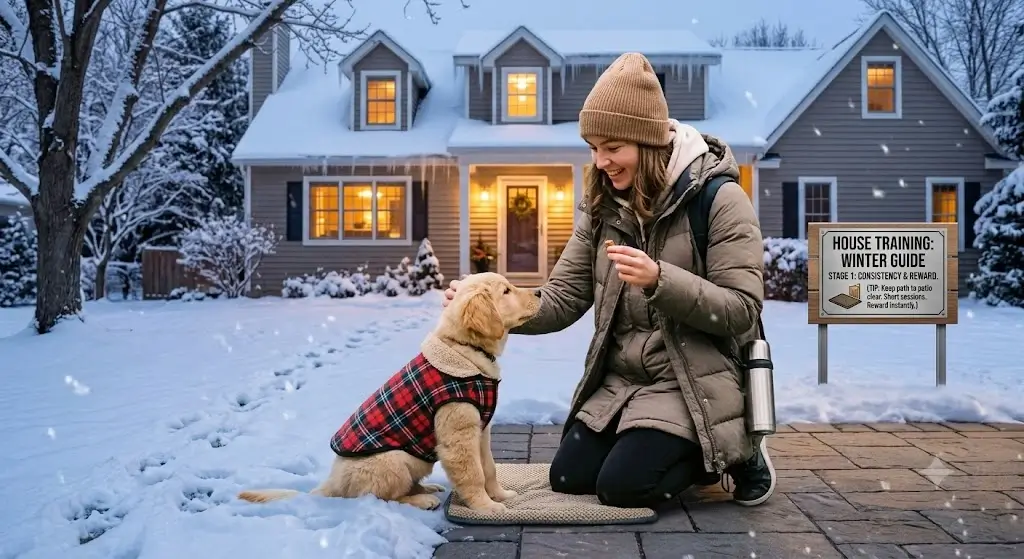
House Training a Puppy During Winter
House training a puppy during winter can be harder because cold temperatures, snow, ice, wind, darkness, and shorter outdoor sessions can interfere with a normal potty routine. The solution is not to abandon outdoor training. It is to make bathroom trips predictable, safe, fast enough to be practical, and rewarding while giving your puppy appropriate supervision indoors.
Why Winter Makes Puppy House Training Harder
Winter changes the environment in ways that can make a puppy less willing to eliminate outside. Snow can cover familiar grass. Ice can make surfaces uncomfortable or dangerous. Wind, rain, freezing temperatures, and darkness can shorten the time a puppy wants to stay outdoors.
There is also a behavioral problem: puppies may become focused on getting back inside rather than finishing the potty routine.
That creates a common pattern:
Cold outside → puppy rushes back indoors → does not eliminate → accident inside
The fix is better management. The puppy should not be forced to remain outdoors in unsafe conditions, but the potty trip should also not end simply because the puppy appears uncomfortable after a few seconds.
The Winter House-Training Rule
Make the potty opportunity brief, purposeful, and predictable.
Take the puppy to the same appropriate area, use the same cue, minimize distractions, allow enough time for elimination, and reward immediately after success. Understanding how foundation training integrates with unpredictable seasons is critical; review our complete roadmap on how to house train a puppy.
Winter training works best when you separate the purpose of the potty trip from outdoor recreation.
Do Puppies Need More Frequent Potty Trips in Winter?
Winter itself does not create one universal potty schedule for every puppy. Bathroom needs depend on age, development, body size, food and water intake, activity, sleep, and individual habits.
However, cold weather can change the quality of the potty opportunity. A puppy may spend less time outdoors, become distracted by snow, or return indoors before eliminating.
For that reason, winter training often requires more proactive management rather than simply assuming the puppy will communicate when it needs to go.
Pay particular attention after:
- Waking from a nap or overnight sleep.
- Eating.
- Drinking.
- Active play.
- Excitement.
- Returning from a period of confinement.
- Coming inside after an unsuccessful potty trip.
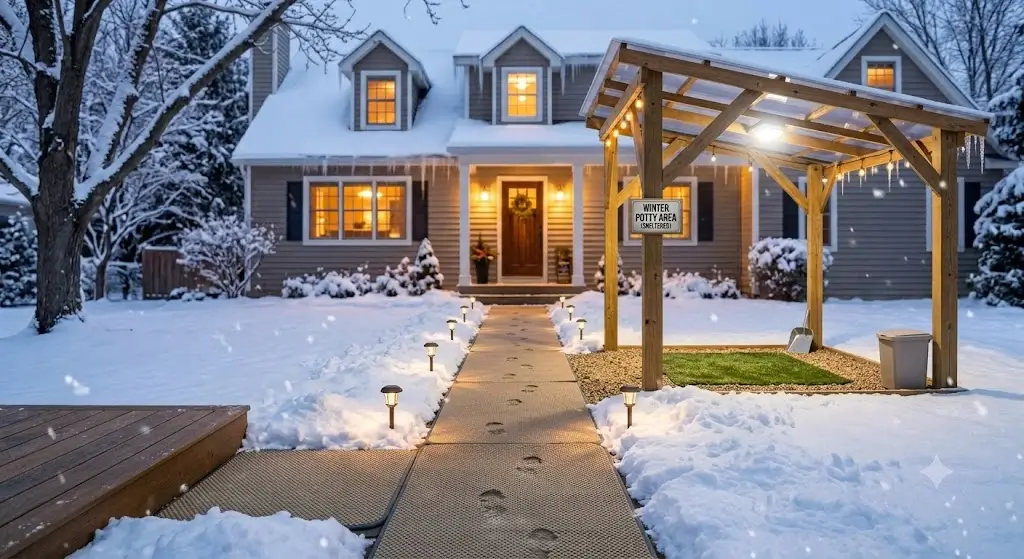
Set Up a Winter Potty Area
A designated winter potty area can make house training substantially easier.
If possible, keep one location reasonably accessible and clear of deep snow, standing water, sharp ice, and other hazards.
The goal is not to create a perfect lawn. The goal is to create a predictable bathroom location that your puppy can reach safely.
Reduce obstacles between the door and the designated potty area.
Avoid icy surfaces that could cause a puppy to lose footing.
Using the same area helps the puppy recognize the purpose of the trip.
A maintained area is easier to use and monitor.
How Snow Changes House Training
Snow can completely change the appearance and texture of a puppy’s normal potty area.
A puppy that normally eliminates on grass may hesitate when the grass is buried under snow. Some puppies may also find deep snow difficult to walk through.
If snow is expected, clear a small section of the normal potty area whenever practical.
This gives the puppy a familiar surface and reduces the amount of environmental change it has to process.
What If Your Puppy Refuses to Potty in Snow?
Do not assume the puppy is being stubborn.
The snow may feel unfamiliar, cold, deep, wet, or unstable under the puppy’s feet. If your puppy repeatedly stalls outside and waits to eliminate until returning indoors, read our troubleshooting steps on why won’t my puppy poop outside?
Start by making the bathroom area easier to access. Clear a small section, reduce distractions, use the familiar potty cue, and allow the puppy time to investigate.
If the puppy still does not eliminate, return indoors under close supervision and offer another appropriate opportunity rather than allowing unrestricted indoor access.
How Cold Is Too Cold for a Puppy?
There is no single temperature that is safe or unsafe for every puppy.
Cold tolerance varies with factors such as age, size, coat, acclimation, health, wind, moisture, and the actual outdoor conditions.
Young puppies deserve particular caution because they have less experience regulating themselves in cold environments and may not reliably communicate discomfort.
Watch the puppy rather than relying exclusively on the thermometer.
Winter Warning Signs to Watch For
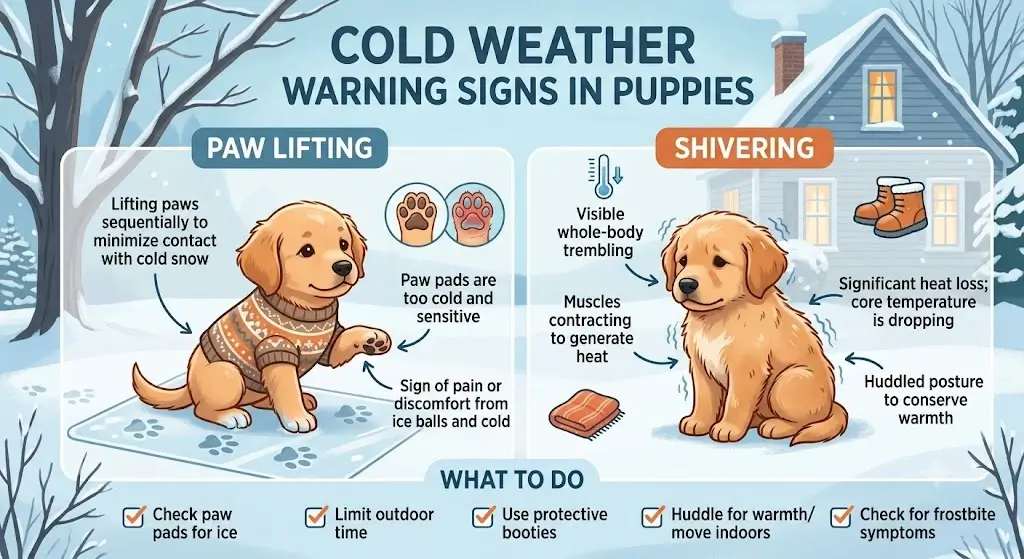
During cold-weather potty trips, watch for signs that the puppy is becoming uncomfortable or unable to cope with the conditions.
- Persistent shivering.
- Repeatedly lifting or protecting paws.
- Refusing to walk normally.
- Trying urgently to return indoors.
- Becoming unusually sluggish.
- Showing obvious discomfort from cold, ice, snow, or wet conditions.
If conditions are unsafe, move the puppy indoors and use an appropriate alternative plan while seeking veterinary advice when the puppy’s condition is concerning.
Should a Puppy Wear a Coat During Winter House Training?
A coat can be useful for some puppies in cold weather, particularly those with limited insulation or those that become uncomfortable quickly.
The important point is that clothing should support comfort rather than replace appropriate weather judgment.
A coat should fit properly and should not interfere with walking, elimination, or normal movement.
Some puppies need little or no clothing in moderate winter conditions, while others may benefit from additional protection. The puppy’s individual tolerance and the actual weather matter more than a universal clothing rule.
Protect Your Puppy From Ice Melt and De-Icing Products
Winter sidewalks and driveways may contain salt, de-icing chemicals, or other materials that can irritate a puppy’s paws.
After outdoor walks or potty trips, inspect the puppy’s paws and clean them as appropriate for the conditions.
Prevent the puppy from licking contaminated paws when possible.
If you suspect your puppy has ingested a potentially harmful de-icing product or develops concerning symptoms, contact a veterinarian or appropriate animal poison service promptly.
Create a Fast Winter Potty Routine
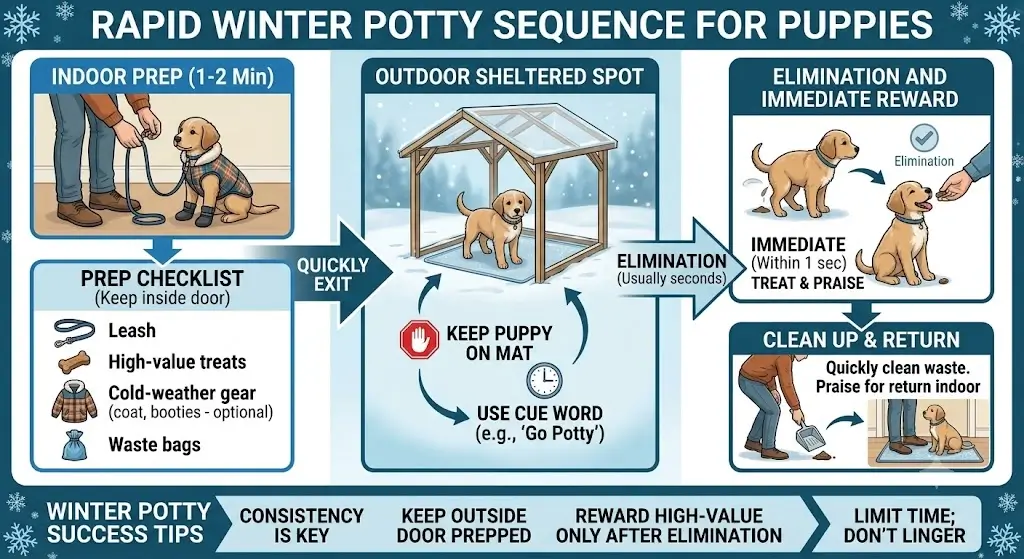
A useful winter routine minimizes unnecessary outdoor exposure while still giving the puppy a genuine chance to eliminate.
- Put the puppy on the leash before leaving.
- Go directly to the designated potty area.
- Use the familiar potty cue.
- Keep distractions low.
- Wait for elimination.
- Reward immediately after success.
- Return indoors if the weather is harsh.
If the puppy needs exercise, play, or enrichment, those activities can be handled separately when conditions are safe.
Do Not Turn Every Winter Potty Trip Into a Walk
Long walks are not necessary for every bathroom break.
When the weather is poor, the objective of the trip is simply to give the puppy a safe opportunity to eliminate.
This distinction can prevent a common training problem: the puppy becomes excited by snow, smells, or movement, forgets to potty, and then eliminates indoors after coming back inside.
What to Do if Your Puppy Runs Back to the Door
A puppy may run toward the door because it is cold or because it has learned that returning indoors is the fastest way to escape an uncomfortable environment.
If the puppy has not eliminated, avoid immediately rewarding the return indoors with unrestricted freedom.
Instead, bring the puppy inside under close supervision and offer another potty opportunity shortly afterward when conditions allow.
If the puppy is genuinely uncomfortable from the cold, prioritize safety and use a suitable backup bathroom arrangement rather than forcing the puppy to remain outdoors.
How to House Train a Puppy During a Winter Storm
Severe weather requires a different approach.
High winds, heavy snowfall, ice, flooding, extreme cold, lightning, or other hazardous conditions can make a normal outdoor potty routine impractical.
During these events, use the safest appropriate bathroom option available to you and return to the normal outdoor routine once conditions improve.
A temporary management adjustment is preferable to exposing a young puppy to dangerous weather.
Using Puppy Pads as a Winter Backup
An indoor potty option can be useful when weather temporarily prevents a safe outdoor trip.
The key is consistency.
If you use a pad, place it in one predictable location rather than moving it around the house.
Do not scatter multiple pads across rooms simply to reduce the chance of accidents. That can make the distinction between acceptable and unacceptable indoor locations less clear.
Winter House Training in an Apartment
Apartment puppies face a special winter problem: getting from the apartment to the appropriate outdoor location can take several minutes.
Elevators, hallways, lobby doors, stairs, and sidewalks all add delay between the puppy recognizing the need to eliminate and reaching the potty area.
During winter, be especially proactive with timing.
- Keep the leash and winter gear ready near the exit.
- Know the fastest safe route outside.
- Use the same outdoor bathroom area when practical.
- Watch closely during elevator and hallway transitions.
- Consider a temporary indoor backup plan for severe weather if appropriate.
Winter House Training at Night
Nighttime winter potty trips can be difficult because it is dark, cold, and often inconvenient to reach the outdoor area.
Make the route predictable and safe.
Use adequate lighting, appropriate clothing for the weather, and a leash.
Keep the trip focused on elimination rather than turning it into a play session.
After the puppy successfully eliminates, return to the normal sleeping routine.
Why Puppies Have More Indoor Accidents in Winter
Winter accidents usually come from a breakdown in management rather than a mysterious loss of training.
| Problem | Better response |
|---|---|
| Puppy refuses to stay outside | Make the potty area accessible and reduce exposure time safely. |
| Snow covers the normal area | Clear a small predictable potty section. |
| Puppy gets distracted | Use a quieter location and keep the trip purposeful. |
| Puppy returns inside without eliminating | Supervise closely and provide another potty opportunity. |
| Long apartment exit time | Start the trip proactively before urgency develops. |
| Severe weather | Use a safe temporary backup plan. |
What to Do When Your Puppy Has a Winter Accident
If you catch the puppy beginning to eliminate indoors, calmly interrupt and take the puppy to the appropriate bathroom location if it can be done safely.
If you discover the accident afterward, clean it thoroughly without punishment.
Then ask what caused the failure.
- Was the puppy outside recently but did not actually eliminate?
- Was the potty trip too short?
- Was the puppy distracted by snow or other activity?
- Was there an unusually long interval?
- Was the puppy given too much indoor freedom?
- Was the outdoor environment genuinely uncomfortable or unsafe?
The answer should determine the next training adjustment.
Why Punishment Makes Winter House Training Harder
Punishing an accident does not teach the puppy how to deal with snow, cold, darkness, or a new outdoor surface.
It can instead make elimination around people less comfortable, which may make the puppy more difficult to monitor.
Winter training is more effective when you change the environment, timing, supervision, or potty routine instead of punishing the result.
Reward Your Puppy Immediately After Pottying
Timing matters.
Give the reward immediately after the puppy finishes eliminating, while the behavior is still clear in the puppy’s experience.
If you wait until you are back inside, the reward becomes less clearly connected to the bathroom behavior.
Use the same reward system that has already worked during training.
How to Keep Winter Potty Training Consistent
Anticipate potty needs
Use meals, naps, play, and waking as scheduling cues.
Prepare the route
Keep the path and potty area safe and accessible.
Repeat the cue
Use the same bathroom signal and location whenever practical.
Reward success
Reinforce appropriate elimination immediately.
A Practical Winter Puppy Potty Schedule
The following is a framework rather than a rigid timetable. Adjust it to your puppy’s age, development, individual needs, and weather. If you are structuring daytime hours across specific puppy developmental weeks, review our 7-day puppy house training plan.
| Situation | Action |
|---|---|
| Immediately after waking | Go directly to the designated potty area. |
| After breakfast | Offer another appropriate potty opportunity based on the puppy’s normal pattern. |
| After active play | Use a calm potty trip before returning to indoor freedom. |
| After a long nap | Go out promptly. |
| Before bedtime | Provide a final appropriate potty opportunity. |
| Severe weather | Use a safe temporary alternative when necessary. |
Winter House Training for a Puppy in a Crate
A crate can help with supervision, but it does not eliminate the need for timely potty opportunities.
Use the crate as a management and rest area, not as a way to make a puppy wait beyond its reasonable needs.
When the puppy comes out after sleeping or resting, make a potty trip one of the first priorities.
If a puppy repeatedly soils its sleeping area, reassess the schedule, crate setup, cleaning, and the puppy’s individual needs rather than simply increasing confinement.
Winter House Training for a Puppy in a Playpen
A playpen can provide useful management when outdoor conditions make frequent trips inconvenient, but it should not become a substitute for an intentional potty routine.
Keep the puppy’s sleeping, play, and bathroom areas clearly organized if an indoor backup bathroom system is being used.
If outdoor elimination is the ultimate goal, continue practicing the outdoor routine whenever conditions are safe.
How to Train a Puppy to Potty on Different Winter Surfaces
Winter may expose your puppy to grass, snow, gravel, pavement, artificial turf, or other surfaces.
A puppy that has only learned one surface may hesitate when that surface disappears.
Before winter becomes severe, gradually introduce appropriate alternative surfaces while maintaining the same potty cue and reward.
The objective is not to make every surface acceptable. It is to help the puppy understand that the bathroom behavior is not dependent on one exact visual environment.
How to House Train a Puppy During Winter in a High-Rise
High-rise apartment living adds another layer of timing because the puppy may need to travel through elevators and common areas before reaching an outdoor bathroom location.
Start the potty trip before the puppy becomes desperate.
Keep winter gear and the leash ready near the exit.
Use the same outdoor location when practical and reward successful elimination before returning upstairs.
For severe weather, a carefully managed indoor backup may be useful, particularly for very young puppies.
What About Winter Potty Training for Small Puppies?
Small puppies can face a practical disadvantage during winter because their bodies are closer to cold surfaces and their individual bathroom capacity may differ from that of larger dogs.
Do not assume that a small puppy can follow the same schedule as an older or larger dog.
Use the puppy’s actual behavior and established routine to determine when additional opportunities are needed.
How to Clean Winter Accidents Properly
A winter accident should be cleaned as thoroughly as an accident in any other season.
Use an appropriate pet-safe cleaning method designed to remove the odor rather than simply covering it.
This matters because residual odor can make an indoor location more interesting as a bathroom site.
After cleaning, temporarily restrict access to the area if necessary while the puppy’s routine becomes reliable again.
Winter House Training Troubleshooting
| Symptom | Likely training issue | Adjustment |
|---|---|---|
| Puppy pees immediately after coming inside | Outdoor trip ended before elimination. | Supervise closely and retry the potty opportunity sooner. |
| Puppy only wants to play in snow | The environment is more rewarding than the bathroom task. | Use a quieter, more focused potty area. |
| Puppy refuses icy ground | Surface may be uncomfortable or unsafe. | Choose a safer cleared surface. |
| Accidents occur mainly at night | The nighttime interval or route may be difficult. | Make the route safer and adjust nighttime management. |
| Accidents begin suddenly | Could be training disruption or a health issue. | Review the routine and seek veterinary advice if persistent or unusual. |
A Winter House-Training Checklist
- ✓ Clear a safe, predictable potty area.
- ✓ Remove or avoid slippery ice where possible.
- ✓ Keep the fastest safe route to the bathroom accessible.
- ✓ Use the same potty cue.
- ✓ Go outside proactively after waking, eating, playing, and resting.
- ✓ Keep potty trips focused.
- ✓ Reward immediately after successful elimination.
- ✓ Watch for signs of cold-related discomfort.
- ✓ Check paws after exposure to treated winter surfaces.
- ✓ Use a safe indoor backup when severe weather makes outdoor elimination inappropriate.
- ✓ Clean accidents thoroughly.
- ✓ Never punish a puppy for an accident.
- ✓ Return to the normal routine when weather improves.
The Bottom Line: Winter Training Is a Management Problem
You do not need to choose between safe winter weather management and effective house training.
Give your puppy a predictable bathroom location, make the route safe, keep outdoor potty trips purposeful, and reward successful elimination immediately. When weather becomes genuinely unsafe, use a consistent temporary backup rather than forcing a puppy to remain outside. Once conditions improve, return to the normal outdoor routine. The strongest winter house-training plan is flexible about the environment but consistent about the behavior you want the puppy to learn.
Editorial note: This guide provides general puppy house-training information for U.S. households. Cold-weather tolerance varies substantially among individual puppies. Age, size, coat, acclimation, moisture, wind, health, and local conditions all matter. Do not force a puppy to remain outdoors in unsafe conditions. If a puppy shows concerning signs of cold exposure, paw injury, unusual elimination, pain, or persistent changes in bathroom behavior, seek appropriate veterinary guidance.
