
Why Is My Puppy Peeing in the Crate?
If your puppy keeps peeing in the crate, the problem usually has a specific cause. The puppy may be too young to hold urine for the length of the confinement period, the crate may be too large, the potty schedule may not match the puppy’s needs, or the puppy may be dealing with stress, excitement, illness, or a history of eliminating in confined spaces.
Crate accidents do not automatically mean that crate training has failed. The most useful approach is to determine why the puppy cannot remain clean in the crate and then change the conditions that are producing the accident.
If your puppy is peeing in the crate, first check potty timing, confinement duration, crate size, recent food and water intake, previous crate habits, and signs of illness or distress. Take the puppy out at appropriate intervals, clean the crate thoroughly, avoid punishment, and gradually build successful clean periods rather than expecting the puppy to hold urine longer than it physically can.
Why Is My Puppy Peeing in the Crate?
Puppies generally do not have adult bladder control, and the crate cannot override normal biological needs.
The most common explanations are:
- The puppy was left in the crate longer than the puppy could comfortably hold urine.
- The puppy needed to urinate because of a recent meal or drink.
- The puppy was placed in the crate without a successful potty trip first.
- The crate is too large and allows the puppy to create a separate bathroom area.
- The puppy has developed a habit of eliminating in confined spaces.
- The puppy is stressed, frightened, or highly aroused while confined.
- The puppy is waking from sleep and needs to urinate.
- Previous accidents were not cleaned well enough to remove odor.
- The puppy has a medical problem affecting urination.
The pattern matters. A puppy that occasionally has an accident after a long confinement period presents a different training problem from a puppy that repeatedly urinates in the crate after only a short period.
First Question: How Long Was Your Puppy in the Crate?
Before changing the crate, schedule, or training method, look at the length of confinement.
A puppy’s ability to remain clean varies with age, size, individual development, sleep, activity, fluid intake, and health. There is no single “maximum hours” rule that works for every puppy.
A common mistake is taking an approximate bladder-control guideline and treating it as a guaranteed amount of time every puppy can remain dry.
Use the puppy’s actual accident pattern as feedback. If accidents consistently occur before the planned crate break, the confinement interval is probably too long for that puppy at that time.
Why a Puppy May Pee in the Crate Overnight
Nighttime crate accidents are especially common in young puppies because sleeping through the entire night requires both physical bladder capacity and developmental maturity.
A puppy that wakes, becomes restless, sniffs, circles, whines, or changes position repeatedly may need a bathroom opportunity rather than simply more encouragement to stay in the crate.
If nighttime accidents are occurring, consider:
- When the puppy last eliminated before bedtime.
- Whether the puppy woke during the night.
- How much the puppy drank before bedtime.
- Whether the crate is located close enough for you to notice restlessness.
- Whether the puppy has recently changed its nighttime routine.
How Crate Size Can Cause Puppy Accidents
A crate should provide enough room for the puppy to stand, turn around, lie down, and change position comfortably.
If the crate is substantially larger than necessary, some puppies may use one section for sleeping and another section as a bathroom.
This is particularly relevant for puppies that have already learned that eliminating in a confined area is acceptable.
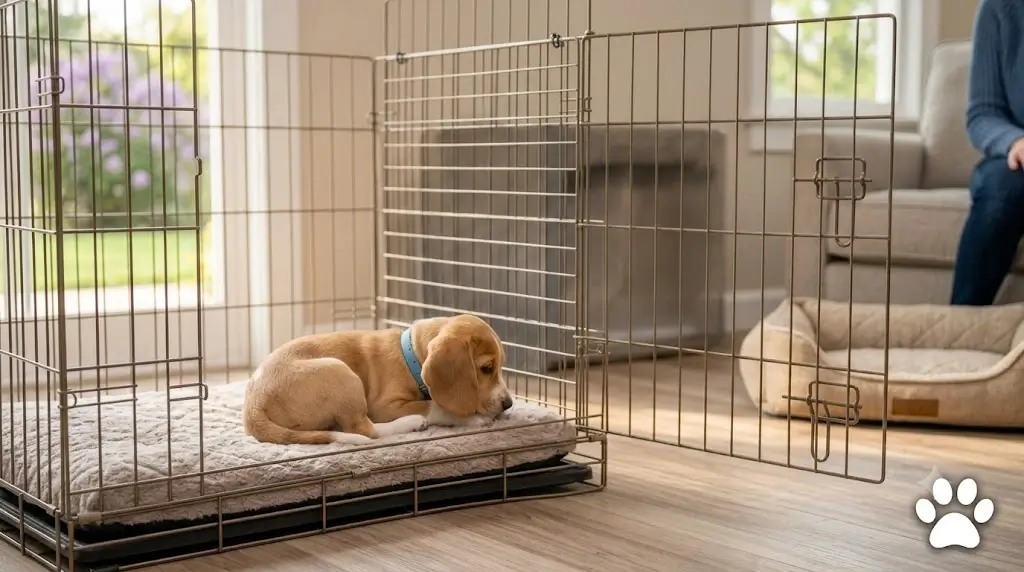
Crate size is a management factor, not a substitute for an appropriate potty schedule. Making the crate smaller does not solve an accident caused by excessive confinement or a medical problem.
How Big Should a Puppy Crate Be?
The puppy should have enough room to stand normally, turn around, lie down comfortably, and reposition without being cramped.
For growing puppies, a divider can allow the usable space to be adjusted as the puppy gets larger.
| Crate Condition | Potential Problem | What to Check |
|---|---|---|
| Too small | Discomfort and restricted movement | Can the puppy stand, turn, lie down, and reposition normally? |
| Appropriately sized | Best starting point for management | Enough room for normal posture without unnecessary extra space. |
| Very large | May allow a sleeping zone and bathroom zone | Consider a properly positioned divider for a growing puppy. |
Why Is My Puppy Peeing in the Crate but Not the House?
This pattern can provide an important clue.
If a puppy reliably stays clean in the house while supervised but repeatedly urinates in the crate, investigate the crate-specific conditions first.
Possible explanations include:
- The crate period is too long.
- The crate is associated with stress.
- The puppy has learned to eliminate in that particular confined area.
- The puppy’s previous environment encouraged indoor elimination.
- The puppy is placed in the crate after drinking or eating without a potty break.
- The crate bedding has retained urine odor.
In this situation, simply increasing crate time is unlikely to solve the underlying problem.
Why Does My Puppy Pee in the Crate but Hold It When Loose?
This can happen when the puppy has a strong location-specific habit. Many of these lingering confinement habits also require troubleshooting when looking at how to house train an adult dog that missed early boundary training.
A puppy may understand that a particular area is acceptable for elimination even though the puppy has started learning not to eliminate elsewhere.
Previous living conditions can matter. Puppies raised in environments where sleeping, eating, and eliminating occurred close together may have less developed avoidance of soiling their resting area.
The solution is usually consistent management, frequent opportunities to eliminate in the desired location, careful cleaning, and gradual reinforcement of clean crate periods.
Could the Puppy Be Peeing in the Crate Because of Separation Stress?
Stress can affect bathroom behavior, but not every crate accident is separation anxiety.
Look at what happens when the puppy enters the crate.
| Pattern | What It May Suggest |
|---|---|
| Accident after a long nap | Normal bathroom need or insufficient potty timing. |
| Accident after extended confinement | Confinement interval may exceed current bladder capacity. |
| Accident shortly after being crated only when alone | Stress or separation-related factors may deserve investigation. |
| Accident even during short, calm crate sessions | Check potty timing, previous habits, crate setup, and health. |
If the puppy shows severe distress whenever left alone, address the emotional component separately rather than treating the urine accident as a simple house-training failure.
Should You Punish a Puppy for Peeing in the Crate?
No.
Punishment after an accident does not teach the puppy where elimination should occur. It can also make the crate associated with unpleasant experiences.
Instead, clean the area, determine why the accident happened, and adjust the management plan.
Accident → clean thoroughly → identify the likely cause → shorten or adjust the next confinement period → provide a timely potty opportunity → reinforce successful elimination.
How to Stop a Puppy From Peeing in the Crate
Use the following sequence rather than changing everything at once. Integrating these steps with our master guide on how to stop puppy accidents ensures you are managing both indoor freedom and confinement appropriately.
- Take the puppy outside before entering the crate.
- Confirm that the puppy actually eliminates.
- Use an appropriately sized crate.
- Keep confinement periods appropriate for the puppy.
- Provide a potty break after waking.
- Provide a potty opportunity after meals, drinking, and active play when appropriate.
- Watch for restlessness or other signals that the puppy needs to go.
- Clean every previous accident thoroughly.
- Reward successful outdoor elimination.
- Gradually increase clean crate periods rather than making a large jump.
Always Potty the Puppy Before Crating
A crate should not be used as a substitute for taking the puppy outside.
If the puppy has a predictable need to eliminate, provide the bathroom opportunity before confinement.
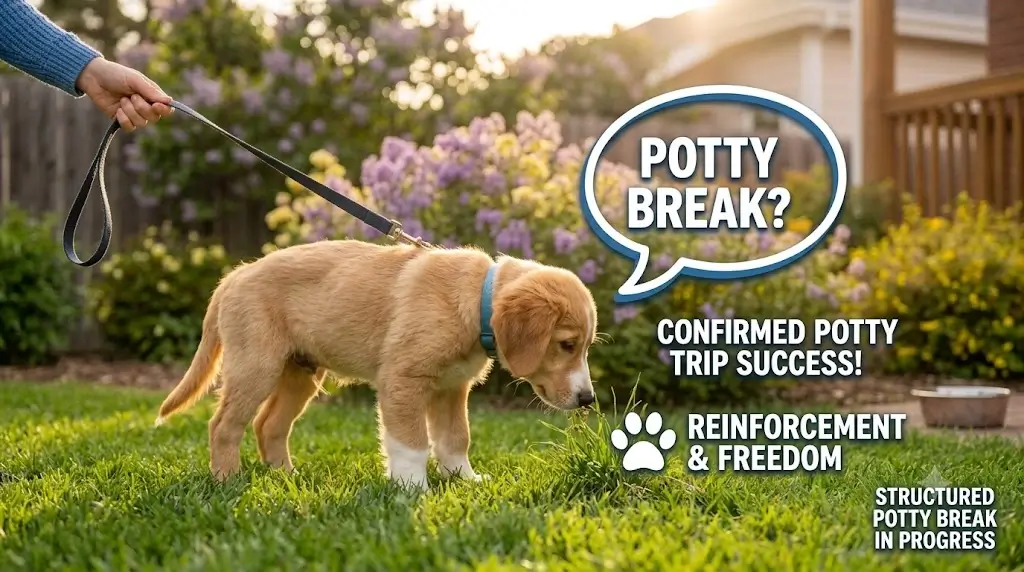
This is especially important:
- After waking.
- After eating.
- After drinking.
- After active play.
- Before a planned longer rest period.
- Before bedtime.
The exact schedule should be based on the individual puppy rather than a rigid universal timetable.
What If My Puppy Won’t Pee Before Going in the Crate?
If the puppy refuses to eliminate outside, do not automatically assume the puppy is empty. If outdoor distractions or weather are causing hesitation, check our guide on why won’t my puppy pee outside to get your puppy focused during potty breaks.
Keep the puppy under appropriate supervision and provide another opportunity later rather than using a long crate session as the solution.
Puppies can become distracted outdoors, especially when there are interesting sights and smells.
A focused bathroom trip followed by a reward can help establish a clearer routine.
How to Handle a Puppy Who Pees in the Crate After Drinking
Drinking can increase the need to urinate. That does not mean you should restrict normal access to water simply to prevent accidents.
Instead, account for drinking when planning potty opportunities.
If you notice that crate accidents repeatedly follow drinking, use the pattern to improve timing and supervision.
Water restriction is not an appropriate substitute for understanding a puppy’s normal hydration and bathroom needs.
What to Do Immediately After Finding Pee in the Crate
- Remove the puppy calmly.
- Provide a bathroom opportunity if the puppy still needs to eliminate.
- Remove soiled bedding.
- Clean the crate and affected surfaces with an appropriate pet urine cleaner.
- Check whether urine has reached the crate tray, seams, bedding, or nearby floor.
- Review how long the puppy was confined.
- Review what happened immediately before crating.
- Shorten or adjust the next confinement interval if appropriate.
Do not make the puppy remain in a soiled crate. Cleanliness matters for both welfare and future training.
Why Cleaning the Crate Thoroughly Matters
Dogs can detect odor residues that humans may no longer notice.
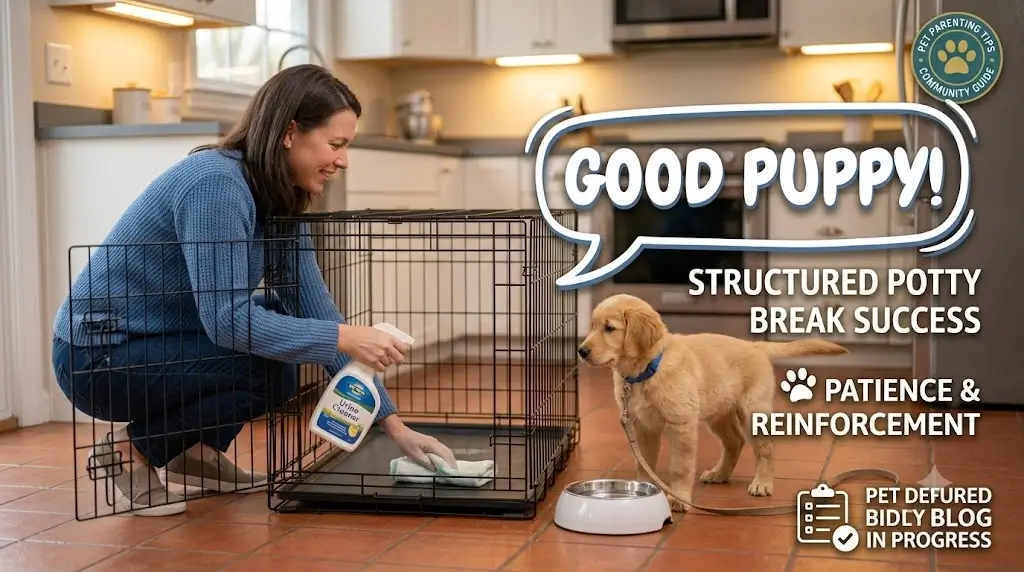
If urine odor remains in bedding, a plastic tray, fabric crate cover, or surrounding floor, the puppy may be more likely to return to the same location.
Clean both visible surfaces and any material that absorbed urine.
If bedding repeatedly becomes soiled, temporarily simplify the setup while you identify the cause. The goal is easier cleaning and better management, not making the puppy uncomfortable.
Should You Put a Puppy Pad in the Crate?
It depends on the purpose of your training plan.
If your goal is specifically to teach the puppy that the crate is a clean sleeping area and elimination happens outdoors, routinely placing a potty pad inside the crate can work against that distinction.
However, different households have different circumstances, and some puppies cannot physically maintain a clean crate for the intended confinement period.
If a puppy repeatedly has accidents because the confinement period exceeds the puppy’s current physical ability, the better first solution is usually to improve potty timing, supervision, or the schedule rather than simply expecting the puppy to hold longer.
Why Is My Puppy Peeing on the Crate Bedding?
Bedding can create a softer, absorbent surface that resembles other places where a puppy has learned to eliminate.
If accidents repeatedly occur on blankets, towels, or plush bedding, remove only what is necessary for safe, comfortable crate management while you troubleshoot the problem.
The objective is to make the crate easy to keep clean while maintaining appropriate comfort.
How to Tell Whether the Problem Is Timing or Crate Training
Often, a puppy pees in the crate simply because they were crated right after an incomplete outdoor trip. Learning why does my puppy pee right after coming inside can show you how to confirm a full outdoor pee before returning indoors.
| Observation | More Likely Explanation |
|---|---|
| Puppy stays clean for short sessions but has accidents during longer sessions | Confinement interval is probably too long. |
| Puppy enters crate after eliminating and still urinates almost immediately | Investigate stress, previous elimination habits, crate setup, and possible health factors. |
| Puppy only has accidents overnight | Nighttime bathroom needs and developmental bladder control may be involved. |
| Puppy urinates on bedding but not elsewhere in the crate | Surface preference or absorbent bedding may be contributing. |
| Sudden increase in urinary accidents | Consider a routine change or medical issue. |
Why Puppies Sometimes Have Crate Accidents After Sleeping
Sleeping can delay elimination because the puppy is inactive and unaware of the passing time. Once the puppy wakes, the need to urinate may become immediate.
For this reason, waking from a nap or overnight sleep should be treated as a strong potty-training trigger.
Take the puppy to the appropriate bathroom area promptly after waking rather than allowing an extended period of indoor activity first.
How to Build Longer Clean Crate Periods
Longer confinement should be earned through successful shorter sessions.
- Start with a duration the puppy can reliably handle.
- Potty before the session.
- Keep the crate comfortable and predictable.
- End the session before the puppy is likely to have an accident.
- Provide a potty opportunity after release.
- Gradually extend duration when the puppy remains consistently clean.
If an increase in duration produces repeated accidents, reduce the interval rather than repeatedly testing the same limit.
Crate Training Schedule Example
A schedule should be adapted to the puppy, but the structure below illustrates how potty opportunities can be integrated with crate use.
| Event | Suggested Training Action |
|---|---|
| Wake up | Provide a prompt potty opportunity. |
| Meal | Monitor bathroom needs and provide an appropriate opportunity afterward. |
| Active play | Provide another potty opportunity when the puppy’s behavior indicates a need. |
| Before crate rest | Give the puppy an opportunity to eliminate first. |
| After crate rest | Take the puppy out promptly. |
This structure is more useful than relying on an age-based formula alone because individual puppies vary substantially.
What If My Puppy Pees in the Crate While I’m at Work?
If the puppy is routinely confined for longer than the puppy can comfortably remain clean, the solution is not to expect better self-control.
Consider arranging an appropriate bathroom break during the day through a responsible caregiver, family member, dog walker, or another suitable arrangement.
The exact option depends on the puppy’s age, training stage, health, and household circumstances.
A crate is a management tool, not a way to extend a puppy’s physical bladder capacity.
What If the Puppy Was Adopted From a Shelter or Rescue?
A newly adopted puppy may arrive with a different elimination history.
The puppy may have previously lived in a kennel, pen, foster environment, or other setting where eliminating near sleeping areas was unavoidable or learned.
Do not assume that a new puppy understands your household’s crate and potty rules immediately.
Establish a predictable routine and treat the first days as a new training period rather than expecting the puppy to transfer previous habits perfectly.
Why Rescue Puppies May Need a Different Crate Strategy
A rescue puppy may have unfamiliar associations with confinement.
If the puppy becomes highly distressed in the crate, work on positive crate associations separately from potty training.
Use short, successful sessions and avoid making the crate the place where the puppy is routinely left beyond its physical or emotional tolerance.
Could a Urinary Problem Cause Crate Accidents?
Yes. House-training problems should not automatically be assumed to be behavioral.
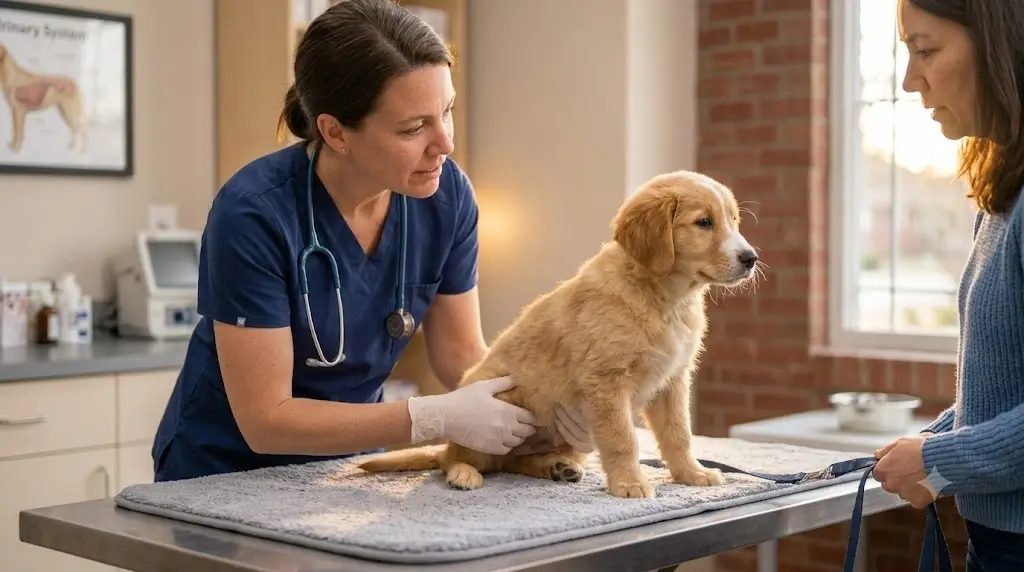
Pay particular attention when a previously reliable puppy suddenly begins having frequent accidents.
Veterinary evaluation is appropriate when there are concerning signs such as:
- Straining to urinate.
- Repeated attempts to urinate.
- Producing unusually small amounts.
- Blood in the urine.
- Apparent pain.
- Markedly increased thirst.
- Sudden major changes in urination.
- Lethargy or other signs of illness.
If your puppy appears unable to urinate or is repeatedly straining with little or no urine produced, seek veterinary care promptly.
How to Keep a Crate Accident From Becoming a Habit
Repeated accidents create repeated opportunities for the puppy to practice eliminating in the crate.
Your management goal is therefore to reduce unsuccessful confinement periods.
- Identify the current accident interval.
- Reduce confinement before that interval.
- Increase successful outdoor potty trips.
- Clean previous accidents thoroughly.
- Use an appropriately sized crate.
- Gradually rebuild duration.
Do Not Make the Crate a Punishment Area
The crate works best as a predictable resting and management space.
Sending a puppy into the crate because of an indoor accident can create an unhelpful association between the crate and punishment.
Instead, calmly interrupt inappropriate behavior when you catch it, provide the correct bathroom opportunity, and reserve the crate for appropriate management and rest.
A Simple 7-Day Plan to Stop Crate Peeing
Day 1: Find the Pattern
Record when the puppy eats, drinks, sleeps, enters the crate, leaves the crate, eliminates, and has accidents.
Day 2: Fix Potty Timing
Make sure the puppy receives an appropriate bathroom opportunity before crate sessions.
Day 3: Check the Crate
Confirm that the crate allows comfortable movement without unnecessary excess space.
Day 4: Shorten Risky Sessions
If accidents occur after a predictable amount of time, shorten the confinement interval.
Day 5: Improve Cleaning
Clean the crate tray, bedding, surrounding floor, and any other contaminated surfaces thoroughly.
Day 6: Reinforce Success
Reward successful outdoor elimination immediately and calmly.
Day 7: Gradually Rebuild Duration
If the puppy is consistently staying clean, increase crate duration in small steps rather than making a large jump.
Crate-Peeing Troubleshooting Checklist
- ☐ My puppy goes potty before entering the crate.
- ☐ I know whether the puppy actually eliminated before crating.
- ☐ The crate is appropriately sized.
- ☐ The puppy is not being confined longer than the current routine supports.
- ☐ I provide a potty opportunity immediately after waking.
- ☐ I account for meals, drinking, and active play.
- ☐ Previous urine has been cleaned thoroughly.
- ☐ I am not using the crate as punishment.
- ☐ I monitor the puppy for stress or distress in the crate.
- ☐ I watch for sudden changes in urination or illness signs.
Frequently Asked Questions
Why is my puppy suddenly peeing in the crate?
Check for a change in confinement duration, potty timing, food or water intake, routine, stress, crate setup, or health. A sudden change in a previously reliable puppy deserves extra attention.
Why does my puppy pee in the crate but not outside?
The puppy may not have successfully eliminated outside, may be distracted outdoors, or may have developed a location-specific elimination habit. Review the outdoor routine and crate history.
How do I stop my puppy from peeing in the crate?
Potty the puppy before crating, use an appropriately sized crate, shorten confinement periods when necessary, provide timely potty breaks, clean accidents thoroughly, and gradually build successful clean crate periods.
Is my puppy peeing in the crate because the crate is too big?
A crate that is much larger than necessary can make it easier for a puppy to separate a sleeping area from a bathroom area. Check that the crate provides comfortable movement without excessive unused space.
Should I put a pee pad in my puppy’s crate?
If your goal is to establish the crate as a clean sleeping area and teach outdoor elimination, routinely using a pee pad inside the crate may blur that distinction. Address confinement duration and potty timing first.
How long can a puppy stay in a crate without peeing?
There is no universal safe duration for every puppy. Age, development, size, sleep, fluid intake, health, and individual bladder control all matter. Use the puppy’s actual behavior and accident pattern to determine an appropriate schedule.
Why does my puppy pee in the crate at night?
Young puppies may wake during the night and need to eliminate. Make sure the puppy has a bathroom opportunity before bedtime and respond to nighttime restlessness when appropriate.
Should I punish my puppy for peeing in the crate?
No. Punishment does not teach the correct bathroom location and may create negative associations with the crate. Clean the accident and adjust the training and management plan instead.
Why does my puppy pee on the crate bedding?
Absorbent bedding can become a preferred elimination surface, especially if the puppy has previously learned to urinate on soft materials. Clean contaminated bedding thoroughly and simplify the setup while troubleshooting.
Can stress cause a puppy to pee in the crate?
Stress can contribute to accidents, particularly when urination occurs primarily during crate confinement or separation. Look at the puppy’s overall behavior and work on positive, gradual crate associations.
Why is my older puppy still peeing in the crate?
Review confinement duration, potty timing, crate size, previous elimination habits, stress, and health. An older puppy with persistent accidents may need a more individualized assessment rather than simply longer crate intervals.
When should I call a veterinarian about crate accidents?
Seek veterinary advice for sudden changes, frequent or painful urination, straining, blood in the urine, difficulty urinating, unusual thirst, lethargy, or other signs of illness.
Final Answer: Why Your Puppy Is Peeing in the Crate
A puppy that pees in the crate is usually giving you useful information about the current training setup.
The first things to check are potty timing, confinement duration, crate size, previous elimination habits, stress, and health.
Do not assume that a puppy can hold urine simply because the puppy is inside a crate. A crate can help with house training, but it cannot replace regular bathroom opportunities or accelerate physical bladder development.
The most effective strategy is to create repeated successful cycles: potty opportunity → successful elimination → immediate reinforcement → appropriate crate rest → prompt potty opportunity after release.
If accidents continue despite appropriate scheduling and management, or if the puppy’s urinary behavior changes suddenly, investigate medical and behavioral causes rather than simply extending crate time.
