
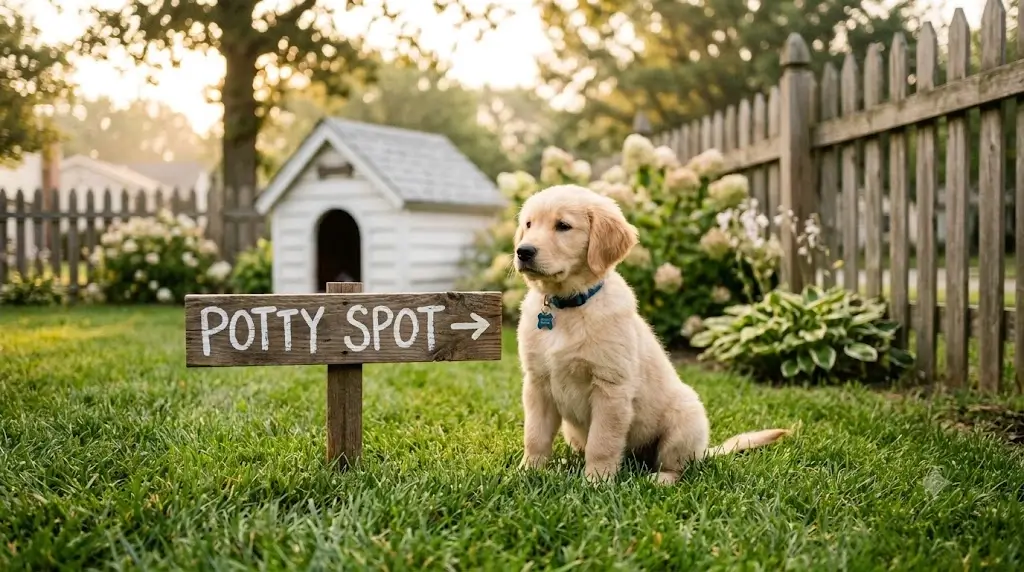
The solution is not to force the puppy to poop. Instead, learn how to house train a puppy by making outdoor bathroom trips predictable, quiet, appropriately timed, and rewarding while preventing indoor mistakes.
Why Won’t My Puppy Poop Outside?
Puppies do not automatically understand that the outdoors is the correct place to poop. They have to learn the location, routine, surface, timing, and behavior through repeated experience.
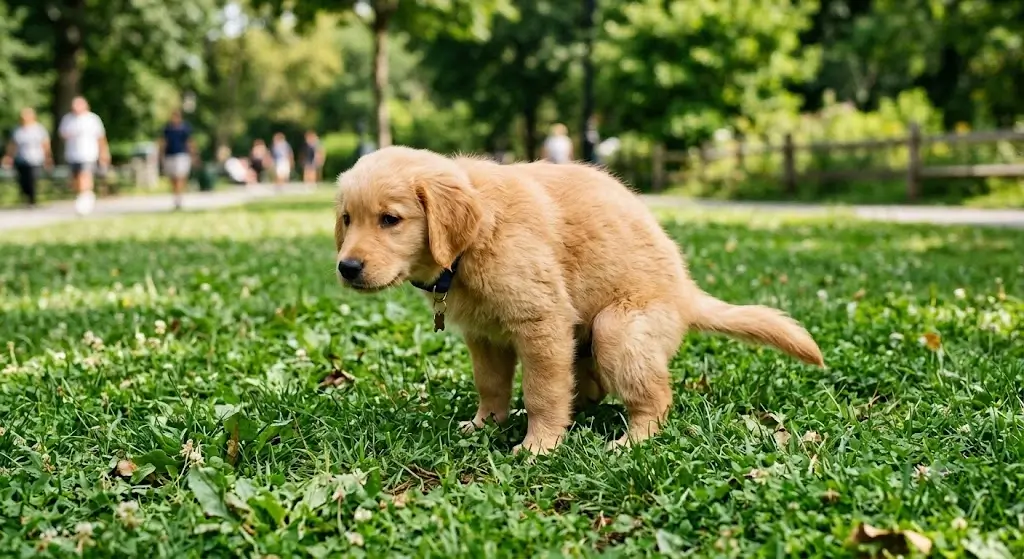
Common reasons a puppy refuses to poop outside include:
- The puppy is distracted by people, dogs, traffic, smells, or sounds.
- The puppy does not actually need to poop yet.
- The puppy feels uncomfortable in the weather.
- The outdoor surface feels unfamiliar.
- The puppy is nervous in the neighborhood.
- The puppy has learned that indoors is a more comfortable bathroom location.
- The puppy associates the end of outdoor time with pooping and delays elimination.
- The potty trip is too stimulating or playful.
- The puppy is taken outside after the urge has already become difficult to manage.
- A change in diet or digestion has altered the normal schedule.
- Constipation or another medical issue is making defecation uncomfortable.
The most useful question is not simply, “Why won’t my puppy poop?” It is “What happens during the entire bathroom sequence?”
Why Does My Puppy Hold Its Poop Outside?
Some puppies learn to delay bowel movements when they are outside because they do not yet feel comfortable eliminating in that environment.
This can happen when the puppy is surrounded by unfamiliar sights, smells, sounds, people, or animals.
A puppy may also become so interested in exploring that the bathroom urge temporarily becomes secondary.
When the puppy returns indoors and relaxes, the urge may become stronger, resulting in an indoor accident.
Why Does My Puppy Poop Inside but Not Outside?
This pattern often means the puppy has developed a preference for the indoor environment rather than lacking the ability to eliminate.
Indoors may feel safer, quieter, warmer, or more familiar. The puppy may also have developed a surface preference for carpet, rugs, pads, flooring, or another indoor material.
The goal is to gradually make outdoor elimination the more predictable and rewarding option.
Do not give the puppy unrestricted access to the house immediately after an unsuccessful outdoor potty trip. That creates a situation where the puppy can wait outside and then quickly eliminate indoors.
Why Does My Puppy Poop Right After Coming Inside?
If your puppy repeatedly poops within minutes of coming indoors, the outdoor trip probably did not result in a bowel movement.
The puppy may have been distracted, uncomfortable, or simply needed more time.
When you come back inside, supervise closely rather than assuming the puppy is finished.
If the puppy begins sniffing, circling, wandering toward a familiar accident location, or showing other pre-potty signals, take the puppy outside again.
Why Won’t My Puppy Poop Outside in the Morning?
Morning is often a useful potty-training opportunity because the puppy has spent several hours resting.
If your puppy refuses to poop outdoors in the morning, avoid turning the first outdoor trip into a long play session.
Take the puppy to the designated bathroom area, keep the environment calm, and give the puppy a focused opportunity to eliminate.
If the puppy does not poop, return indoors only with appropriate supervision and try again later.
Why Won’t My Puppy Poop Outside After Eating?
Eating can be associated with increased bowel activity in dogs, which makes post-meal potty opportunities useful for many puppies.
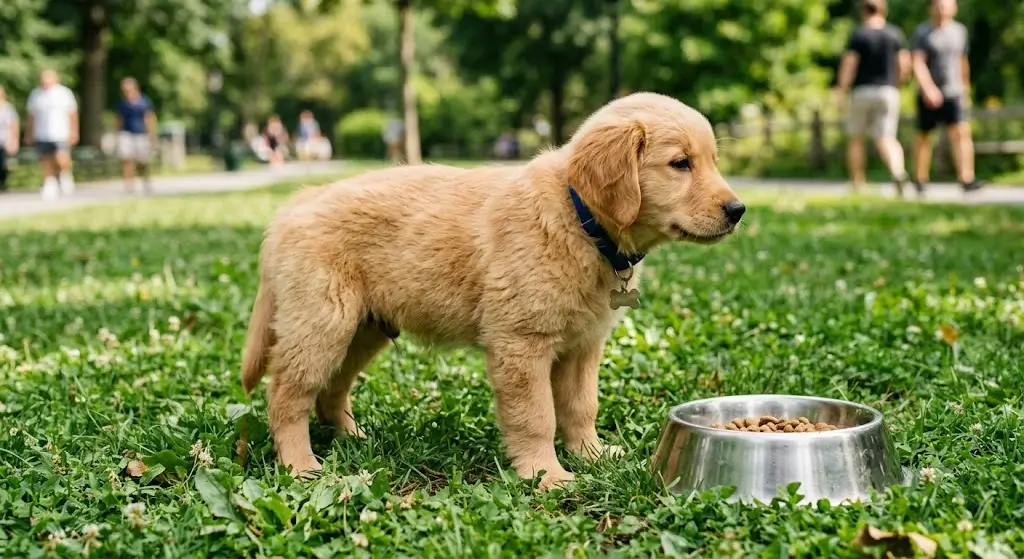
Rather than guessing when to head outside, following a structured puppy house training schedule based on age and feeding times can significantly reduce missed triggers.
| What You Observe | What It May Mean | Training Response |
|---|---|---|
| Poops shortly after eating | Meal is a predictable trigger. | Schedule an outdoor opportunity around that pattern. |
| Sniffs but does not poop | May be distracted or not ready. | Keep the trip calm and supervise after returning indoors. |
| Poops soon after returning inside | Outdoor trip ended before elimination. | Improve timing and supervision. |
| Suddenly stops pooping normally | Could involve diet, constipation, or illness. | Monitor closely and contact a veterinarian if concerning. |
Why Is My Puppy Too Distracted to Poop Outside?
Puppies experience the outdoors as a large collection of new information.
Other dogs, birds, vehicles, people, scents, leaves, insects, and sounds can compete with the bathroom task.
A puppy may spend the entire trip exploring without realizing that the goal was elimination.
For potty training, use a quieter area when possible and separate the bathroom portion of the trip from the play portion.
How to Get a Puppy to Poop Outside
The most reliable approach is to create repeated opportunities for the puppy to succeed outdoors while minimizing opportunities to practice indoor elimination.
- Use a consistent outdoor bathroom location.
- Choose a relatively quiet area.
- Take the puppy outside around predictable triggers.
- Keep the initial bathroom period calm.
- Give the puppy enough time to eliminate.
- Reward immediately after the puppy poops outside.
- Allow additional outdoor activity after successful elimination when appropriate.
- If the puppy does not poop, supervise carefully after returning indoors.
- Try again when the puppy shows signs of needing to go.
Step 1: Use the Same Potty Area
A consistent bathroom location can make the routine easier for a puppy to understand.
Familiar smells and predictable surroundings can help establish the area as the place where elimination occurs.
Choose a location that is safe, practical, and appropriate for your puppy’s health and vaccination circumstances.
Step 2: Reduce Outdoor Distractions
If your puppy spends the entire trip watching people, chasing leaves, greeting dogs, or exploring, move the bathroom portion of the routine to a quieter area if possible.
Keep your own behavior calm.
Avoid turning the first minute outside into an exciting game when the puppy needs to focus on elimination.
Step 3: Give the Puppy Time to Poop
Some puppies eliminate quickly while others need time to sniff and settle before defecating.
Avoid rushing the puppy back indoors simply because the first few minutes produced no result.
At the same time, a very long outdoor session is not necessary if the puppy is clearly distracted.
The goal is a calm, purposeful opportunity rather than a battle of endurance.
Step 4: Reward Outdoor Pooping Immediately
When the puppy poops outside, reinforce the behavior promptly.
Food treats can be particularly useful because they provide clear feedback, but praise, play, sniffing opportunities, or another appropriate reward can also be valuable.
The reward should follow the desired behavior closely enough that the puppy can connect the two events.
Step 5: Make Pooping Outside Not Mean “Fun Is Over”
Some puppies learn that once they poop, the owner immediately ends the outdoor experience and returns home.
If the puppy enjoys being outdoors, this can create an unintended reason to delay elimination.
A useful training strategy is to reward the poop and then allow a little additional appropriate outdoor activity.
The puppy can learn that pooping outside is part of the routine rather than a signal that the enjoyable part of the outing is finished.
What to Do If Your Puppy Does Not Poop Outside
Do not simply release the puppy into the house and walk away.
If the puppy has a reason to need to poop but does not do so outside, maintain close supervision after returning indoors.
- Return indoors calmly.
- Keep the puppy near you.
- Watch for sniffing, circling, restlessness, or other signals.
- Take the puppy back outside when signs appear.
- Reward successful outdoor elimination.
This prevents the puppy from learning that refusing to poop outside results in immediate access to a preferred indoor bathroom location.
How Long Should You Wait for a Puppy to Poop Outside?
There is no universal number of minutes that works for every puppy.
A better approach is to combine time with behavior.
If the puppy is calmly sniffing and appears to be preparing to eliminate, give the puppy an appropriate opportunity.
If the puppy is clearly distracted, playing, or showing no signs of needing to go, returning indoors under close supervision and trying again later may be more productive.
Should I Walk My Puppy Until It Poops?
Walking can stimulate movement and provide opportunities to sniff, but endless walking is not necessary for house training.
Some puppies become more distracted the longer they are outside.
A focused bathroom trip followed by a walk or exploration period after successful elimination can be easier for many puppies to understand.
Why Does My Puppy Poop on Grass but Not Concrete?
Puppies can develop surface preferences.
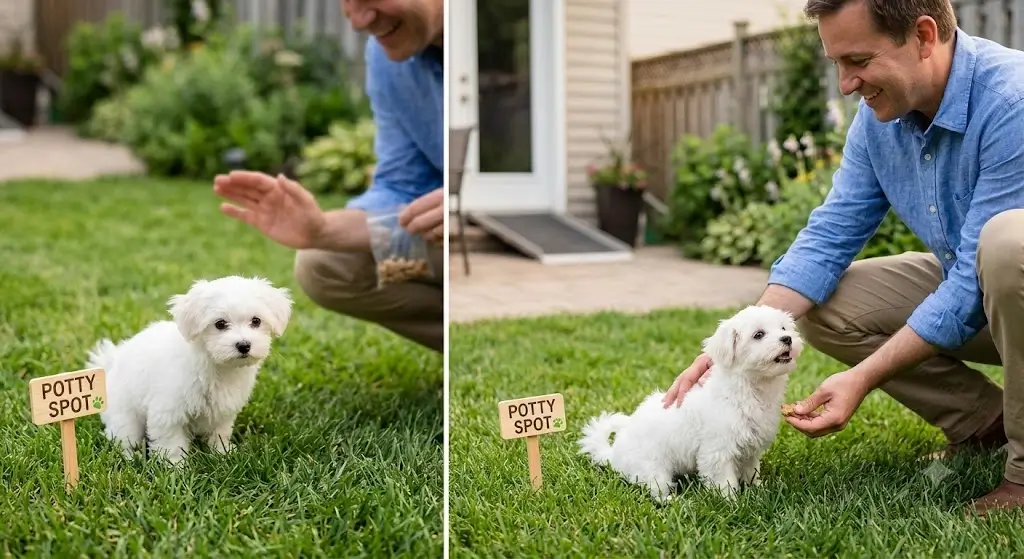
A puppy accustomed to grass may hesitate on concrete, gravel, artificial turf, wet pavement, or another unfamiliar surface.
If your puppy consistently eliminates on one surface but refuses another, the surface itself may be part of the explanation.
Introduce new surfaces gradually and reward successful elimination on the desired surface.
Why Won’t My Puppy Poop Outside in the Rain?
Rain can make a bathroom area physically uncomfortable or unfamiliar.
Wet grass, puddles, wind, umbrellas, dripping sounds, and changes in scent can all alter the outdoor environment.
If possible, use a sheltered, familiar bathroom area and keep the trip focused.
Do not assume the puppy is being stubborn simply because the weather is unpleasant.
Why Won’t My Puppy Poop Outside in Cold Weather?
Cold temperatures can make puppies reluctant to remain outside long enough to eliminate.
Very young, small, or short-coated puppies may be particularly uncomfortable in cold conditions.
Use an appropriate sheltered area and follow your veterinarian’s advice for safe outdoor exposure in severe weather.
Why Won’t My Puppy Poop Outside at Night?
Darkness changes the sensory environment.
Shadows, unfamiliar sounds, wildlife, colder temperatures, and reduced visibility can make some puppies reluctant to eliminate outdoors.
Use a familiar, safely illuminated bathroom area when possible and keep nighttime potty trips calm and predictable.
Why Does My Puppy Only Poop Outside When Nobody Is Watching?
Some puppies prefer privacy when eliminating.
If your puppy becomes uncomfortable when people approach, avoid crowding the puppy during the bathroom routine.
Stay nearby for safety but give the puppy enough space to relax.
If the puppy is consistently unable to eliminate when a particular person is present, observe whether posture, leash tension, eye contact, or environmental pressure is contributing.
Why Does My Puppy Only Poop Outside on Walks?
Movement and sniffing may help your puppy relax enough to eliminate.
This is not necessarily a problem if the walk is practical for your household.
However, if you want the puppy to use a specific nearby bathroom area, gradually build the same calm sniffing and elimination routine there.
Why Does My Puppy Refuse to Poop in the Yard?
A backyard is not automatically a comfortable bathroom location.
Some puppies prefer a particular surface, location, smell, level of privacy, or amount of space.
Check whether something in the yard is making the puppy uncomfortable.
- Loud appliances.
- Construction noise.
- Other animals.
- Unfamiliar people.
- Wet or muddy surfaces.
- Very bright or dark conditions.
- Objects the puppy finds frightening.
- Excessive play opportunities.
Do Puppies Need Privacy to Poop?
Individual puppies differ.
Some are comfortable eliminating while their owner stands nearby. Others become distracted or inhibited when someone watches closely.
Give the puppy enough space to relax while maintaining appropriate supervision.
Why Is My Puppy Scared to Poop Outside?
Fear can interfere with normal elimination behavior.
A puppy may be worried about traffic, unfamiliar dogs, people, loud sounds, slippery surfaces, weather, or a previous unpleasant experience.
If fear appears to be the main factor, reduce the intensity of the environment instead of forcing the puppy to remain in a frightening situation.
Gradual positive exposure to the environment can help build confidence.
How Previous Indoor Accidents Can Create an Outdoor Potty Problem
Puppies can develop preferences based on repetition.
If a puppy repeatedly poops on a particular indoor surface, that surface can become familiar and predictable.
The outdoor environment may then feel comparatively unfamiliar.
Thoroughly clean indoor accident areas, restrict access when appropriate, and create many successful repetitions outdoors.
Should You Use Puppy Pads If Your Puppy Won’t Poop Outside?
Puppy pads can be useful in some living situations, but they can also create a different elimination preference if the long-term goal is exclusively outdoor bathroom use.
If you are transitioning from pads to outdoors, move the training gradually and reinforce outdoor elimination heavily.
The best setup depends on your home, schedule, veterinary guidance, and the puppy’s current training stage.
How to Transition From Puppy Pads to Outside
- Identify the puppy’s normal bathroom timing.
- Move the bathroom opportunity closer to the outdoor transition.
- Take the puppy to the outdoor bathroom location at predictable times.
- Reward successful outdoor pooping immediately.
- Reduce reliance on the indoor pad gradually.
- Clean indoor accident locations thoroughly.
- Increase outdoor reinforcement while reducing indoor opportunities.
Avoid changing too many variables at once. Consistency makes it easier for the puppy to understand the new location.
How Food Can Help Make Potty Timing More Predictable
A consistent feeding routine can make bowel patterns easier to observe.
When meals happen at predictable times, owners can identify when their puppy usually needs to poop and schedule outdoor opportunities around those times.
Avoid using excessive food simply to manipulate elimination. The objective is predictable routine, not overfeeding.
How to Track Your Puppy’s Poop Schedule
A simple log can reveal patterns that are difficult to notice from memory.
| Time | Event | Result | Notes |
|---|---|---|---|
| Morning | Outdoor potty trip | Pooped / did not poop | Weather, distractions, surface |
| After meal | Outdoor potty trip | Pooped / did not poop | Time since meal |
| After nap | Outdoor potty trip | Pooped / did not poop | Behavior before trip |
| Accident | Indoor elimination | Location | What happened immediately before? |
After several days, the data may show that your puppy’s bathroom timing is much more predictable than it initially seemed.
What to Do When Your Puppy Poops Inside After Refusing Outside
Do not punish the puppy.
Instead, treat the event as information about the timing and management system.
- Clean the area thoroughly.
- Record the accident time.
- Record when the puppy last ate.
- Record the previous outdoor attempt.
- Identify distractions or environmental problems.
- Adjust the next outdoor opportunity.
- Increase supervision after unsuccessful outdoor trips.
Why Punishing a Puppy for Not Pooping Outside Can Backfire
Punishment does not teach the puppy which outdoor behavior you want.
It can also make elimination around people less comfortable.
The better strategy is to reward the behavior you want and manage the environment so the puppy has fewer opportunities to practice the behavior you do not want.
How to Teach a Puppy That Outside Is the Bathroom
Dogs learn through repeated associations.
Your job is to create a clear sequence:
- Bathroom opportunity outdoors.
- Successful poop.
- Immediate reward.
- Additional appropriate outdoor activity.
- Return home after the outdoor routine.
Repeating this sequence makes the desired behavior increasingly predictable.
What If My Puppy Has Not Pooped All Day?
A puppy that has not defecated for an unusual period should be assessed in the context of its normal schedule, appetite, behavior, stool history, and overall health.
Do not use human laxatives, enemas, or other medications unless specifically directed by a veterinarian.
If the puppy is repeatedly straining, appears painful, vomits, becomes unusually tired, refuses food, has a swollen or painful abdomen, or otherwise seems unwell, contact a veterinarian promptly.
Medical Reasons a Puppy May Avoid Pooping Outside
Sometimes the issue is not really an outdoor training problem.
Pain or difficulty associated with defecation can cause a puppy to delay or avoid pooping.
Possible contributors include constipation, gastrointestinal problems, dietary changes, parasites, or other medical conditions.
Veterinary evaluation is especially important when a change in elimination behavior occurs suddenly or is accompanied by other symptoms.
When Should You Call a Veterinarian?
Contact your veterinarian if your puppy appears unable to poop or develops concerning symptoms.
- Repeated straining without producing stool.
- Obvious pain during attempts to defecate.
- Repeated vomiting.
- Blood in the stool.
- Severe or persistent diarrhea.
- Marked lethargy.
- Loss of appetite.
- Abdominal swelling or significant discomfort.
- Signs of dehydration.
- A sudden persistent change in bowel habits.
How Weather and Environment Change Outdoor Potty Training
Outdoor potty training takes place in a changing environment.
A puppy that succeeds in a quiet backyard on a mild morning may struggle on a busy sidewalk during a storm.
When a previously reliable puppy suddenly refuses to poop outdoors, check the environment before assuming the training has regressed.
| Environment | Possible Problem | Practical Adjustment |
|---|---|---|
| Heavy rain | Wet or uncomfortable surface. | Use a sheltered potty area. |
| Busy sidewalk | People, dogs, and traffic. | Find a quieter location. |
| Cold weather | Discomfort and reluctance to stay outside. | Use a safe sheltered area and follow veterinary guidance. |
| Darkness | Unfamiliar sights and sounds. | Use a familiar, safely illuminated area. |
| New surface | Surface preference. | Introduce the surface gradually. |
A Practical 7-Day Reset When a Puppy Refuses to Poop Outside
If you need a complete routine overhaul to resolve stubborn bathroom habits, consider using our structured 7-day puppy house training plan alongside these steps:
Day 1: Find the Pattern
Record meals, outdoor attempts, successful poops, indoor accidents, naps, and play.
Day 2: Choose a Better Potty Location
Select a safe, familiar, low-distraction area.
Day 3: Improve Timing
Schedule outdoor opportunities around the puppy’s actual bowel pattern rather than relying only on generic timing rules.
Day 4: Reduce Distractions
Make the initial bathroom portion of the trip calm and predictable.
Day 5: Increase Reinforcement
Reward outdoor pooping immediately and consistently.
Day 6: Prevent Indoor Rehearsal
If the puppy does not poop outside, supervise closely indoors rather than allowing unrestricted freedom.
Day 7: Review the Results
Compare successful outdoor poops and indoor accidents with the beginning of the week. If there is no improvement or health concerns appear, reassess the approach and contact your veterinarian when appropriate.
Puppy Won’t Poop Outside: Quick Checklist
- ☐ Is my puppy actually showing signs of needing to poop?
- ☐ Am I taking the puppy outside around predictable triggers?
- ☐ Is the bathroom area quiet enough?
- ☐ Does my puppy dislike the surface?
- ☐ Is weather making the puppy uncomfortable?
- ☐ Am I giving enough time for a calm bathroom opportunity?
- ☐ Am I rewarding immediately after outdoor pooping?
- ☐ Am I allowing play after successful elimination?
- ☐ Do I supervise closely after an unsuccessful outdoor trip?
- ☐ Have I thoroughly cleaned previous indoor accident areas?
- ☐ Has my puppy’s diet or routine recently changed?
- ☐ Are there signs that the problem could be medical rather than behavioral?
Frequently Asked Questions
Why won’t my puppy poop outside?
Puppies may refuse to poop outdoors because they are distracted, nervous, uncomfortable with the surface or weather, unfamiliar with the location, not yet ready to poop, or accustomed to eliminating indoors.
Why does my puppy hold poop outside?
A puppy may delay elimination because the outdoor environment feels unfamiliar or distracting. Some puppies need a calmer, more predictable bathroom location and more appropriate timing.
Why does my puppy poop inside but not outside?
Indoor surroundings may feel safer or more familiar, or the puppy may have developed a preference for a particular surface. Consistent outdoor opportunities, supervision, cleaning, and immediate rewards can help change the pattern.
Why does my puppy poop right after coming inside?
The puppy may not have actually pooped outside. Distractions or discomfort can cause the puppy to delay elimination until returning indoors.
How do I get my puppy to poop outside?
Use a consistent low-distraction potty area, take the puppy outside around predictable bathroom triggers, wait calmly, reward outdoor pooping immediately, and supervise closely after unsuccessful outdoor trips.
How long should I wait for my puppy to poop outside?
There is no universal time that works for every puppy. Give the puppy a calm opportunity, watch for elimination behavior, and if the puppy does not go, return indoors under close supervision and try again when appropriate.
Why won’t my puppy poop outside in the rain?
Rain can make the surface uncomfortable and can change the sights, sounds, and smells of the bathroom area. A sheltered familiar location can make outdoor elimination easier.
Why won’t my puppy poop outside in the cold?
Cold weather can make a puppy reluctant to remain outdoors. Use a safe sheltered bathroom area and follow appropriate veterinary guidance for outdoor exposure.
Why won’t my puppy poop outside at night?
Darkness can make the outdoor environment unfamiliar or intimidating. A familiar and safely illuminated bathroom area can reduce environmental difficulty.
Can puppies be too distracted to poop outside?
Yes. People, dogs, traffic, sounds, scents, and play opportunities can compete with the bathroom task. A quieter potty location can help.
Should I punish my puppy for not pooping outside?
No. Punishment does not teach the desired bathroom location and may make elimination around people less comfortable. Reward successful outdoor elimination instead.
Why does my puppy only poop on grass?
Puppies can develop surface preferences. A puppy accustomed to grass may hesitate on concrete, gravel, wet pavement, or another unfamiliar surface.
Why won’t my puppy poop in the yard?
The yard may contain distractions or something the puppy finds uncomfortable. Check for noise, other animals, unfamiliar objects, wet surfaces, or excessive stimulation.
Can puppy pads make outdoor potty training harder?
Puppy pads can be useful in some situations, but they may reinforce an indoor elimination preference when the long-term goal is exclusively outdoor potty training. A gradual transition can help.
What if my puppy has not pooped all day?
Consider the puppy’s normal bowel schedule and overall condition. If the puppy is repeatedly straining, painful, vomiting, lethargic, refusing food, or otherwise unwell, contact a veterinarian promptly.
When should I call a veterinarian if my puppy won’t poop?
Veterinary attention is appropriate when a puppy appears unable to defecate, repeatedly strains without producing stool, shows pain, vomits, becomes lethargic, loses appetite, develops abdominal discomfort, or has another concerning change in health.
Final Answer: Why Your Puppy Won’t Poop Outside
When a puppy refuses to poop outside, the first step is to determine whether the puppy is not ready, distracted, uncomfortable, afraid, or physically unable to eliminate.
If the puppy is healthy but repeatedly waits until returning indoors, focus on the training environment: use a consistent bathroom location, reduce distractions, improve timing, give the puppy an appropriate opportunity to eliminate, reward successful outdoor pooping immediately, and supervise closely after unsuccessful trips.
If the puppy suddenly stops eliminating normally, repeatedly strains, appears painful, vomits, becomes unusually tired, refuses food, or develops other concerning symptoms, treat the situation as a potential health problem rather than simply a potty-training failure.
Takeaway: Set your puppy up for success by making outdoor trips calm, predictable, and heavily rewarded, while eliminating indoor accident rehearsal through close supervision.
