
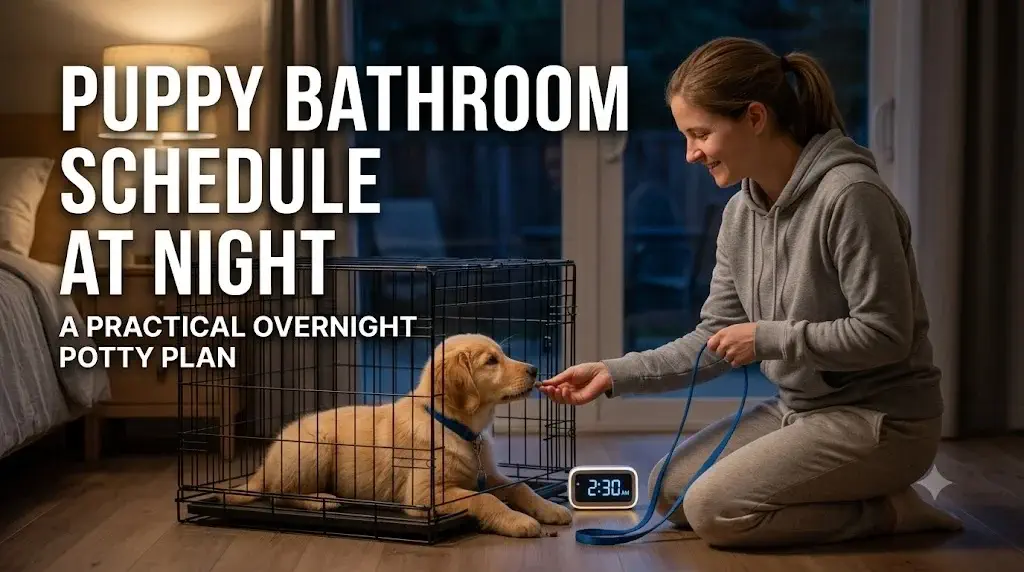
AKC & AVMA NOCTURNAL PROTOCOLS 2026
Puppy Bathroom Schedule at Night
A puppy bathroom schedule at night coordinates juvenile circadian physiology, anti-diuretic hormone secretion, and den-confinement instincts to eliminate overnight accidents. While daytime housebreaking relies on active metabolic triggers like play and digestion, nocturnal bladder management demands sensory reduction, structured bedroom crate placement, and silent elimination trips. Implementing an evidence-based puppy bathroom schedule at night enables owners to distinguish between genuine physiological bladder pressure and behavioral attention-seeking, accelerating uninterrupted eight-hour sleep maturity.
Quick Reference Specification: Nocturnal Canine Elimination Matrix
This calibrated physiological matrix benchmarks nocturnal developmental milestones, biological mechanisms, tactical interventions, maximum holding capacities, and veterinary sleep safety standards for a puppy bathroom schedule at night in 2026.
| Developmental Stage / Age | Physiological Mechanism | Tactical Nighttime Intervention | Max Overnight Holding | Safety Benchmark |
|---|---|---|---|---|
| 8–9 Weeks Old | Low nocturnal ADH; rapid renal fluid filtration | Bedside crate + proactive 2:30 AM alarm break | 3–4 hours maximum sleep | AVMA Pediatric Urinary Standards |
| 10–11 Weeks Old | Expanding detrusor compliance; mild ADH surge | Responsive trip or single 3:30 AM alarm break | 4–5 hours continuous sleep | AAHA Juvenile Sleep Protocols |
| 12–15 Weeks Old | Maturing circadian melatonin & renal concentration | Eliminate midnight alarm; wake on soft signal only | 5–6.5 hours continuous sleep | AKC Pediatric Behavioral Guidelines |
| 16+ Weeks (Adult) | Full sphincter tone; mature nocturnal ADH cycle | 10:00 PM final potty → 6:30 AM morning break | 7–8 hours uninterrupted sleep | PuppyPottyGuide Overnight Standard |
What a Good Puppy Bathroom Schedule at Night Looks Like
Structured nocturnal protocols divide overnight management into four distinct physiological phases. Rather than testing bladder holding endurance, a reliable nighttime routine creates predictable opportunities for clean success while the canine nervous system matures.
A practical nighttime routine incorporates these four foundational pillars:
1. Evening Wind-Down
Dim household lighting, conclude active play sessions, and supervise digestion after dinner.
2. Final Pre-Bed Potty
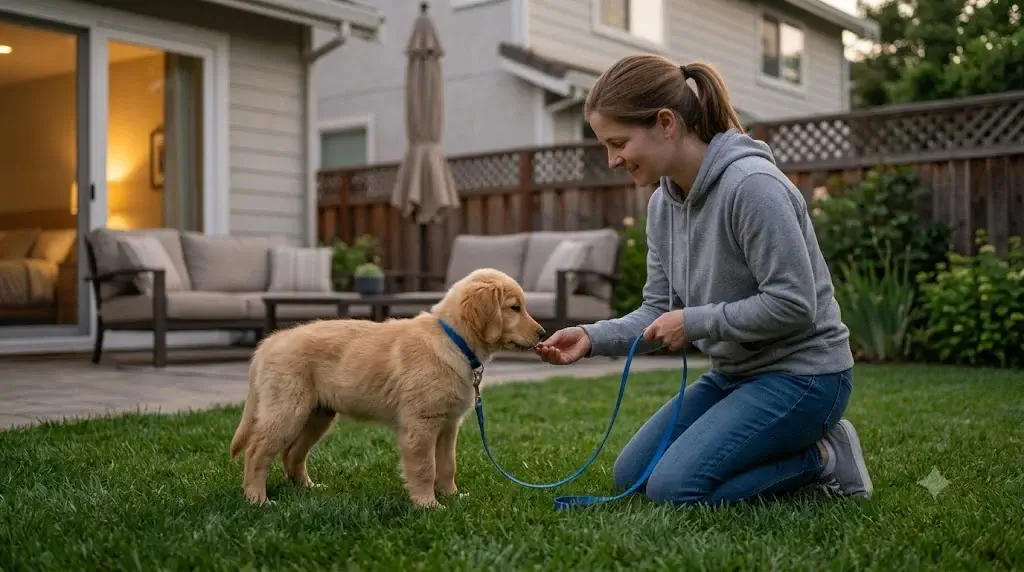
Lead the puppy to the outdoor relief turf immediately prior to latching the bedroom crate door.
3. Silent Overnight Trip
Provide a calm, direct, zero-play elimination break if the puppy wakes with genuine urgency.
4. Morning Wake-Up
Escort the puppy outside within sixty seconds of morning waking to prevent carpet accidents.
Sample Puppy Bathroom Schedule at Night
A standardized evening-to-morning timetable synchronizes metabolic digestion with household sleeping hours. This framework accommodates typical working households while respecting juvenile canine physiology:
For complete 24-hour daytime schedules, consult our master Puppy House Training Schedule.
Do Puppies Need to Go Potty During the Night?
Developing renal nephrons and immature pituitary glands necessitate overnight elimination breaks in canines under twelve weeks of age. While adult dogs produce high concentrations of anti-diuretic hormone (ADH) to concentrate urine during sleep, young puppies maintain high metabolic fluid turnover around the clock.
Instead of guessing whether your puppy requires nocturnal breaks, track these five behavioral markers:
- The puppy awakens spontaneously at predictable intervals (such as 2:30 AM or 3:15 AM).
- Motor restlessness, circling, or scratching at the crate door precedes whining.
- Urination occurs within sixty seconds of touching the outdoor grass.
- Moist or soiled bedding appears inside the crate pan by morning.
- The puppy settles back to sleep immediately upon returning to the crate.
Puppy Nighttime Potty Schedule by Developmental Stage
Chronological age dictates anatomical bladder volume and hormonal fluid concentration capacity. As canine neuro-pathways mature between eight and sixteen weeks, nocturnal holding intervals expand predictably:
| Developmental Age | Recommended Nighttime Protocol | Diagnostic Behavioral Clues |
|---|---|---|
| 8–10 Weeks Old | 10:00 PM final potty break + proactive 2:30 AM alarm trip; carry directly to turf. | Cannot hold past 4 hours; high accident risk if unassisted. |
| 10–12 Weeks Old | 10:00 PM final potty break; responsive 3:30 AM trip only if puppy signals softly. | Some puppies sleep 5–6 hours; sporadic overnight breaks. |
| 12–16 Weeks Old | 10:00 PM final potty break → 6:00 AM wake-up; eliminate middle-of-night alarms. | Continuous dry nights; sleeping through until dawn. |
| 16+ Weeks (Mature) | Standard adult routine: final 10:30 PM break to 6:30–7:00 AM morning relief. | Full physiological bladder and sphincter control. |
For age-specific protocols, examine our detailed guides on the 8-Week-Old Puppy Bathroom Schedule and 10-Week-Old Puppy Bathroom Schedule.
How Many Times Should a Puppy Go Potty at Night?
Juvenile puppies typically require one to two outdoor elimination breaks between ten in the evening and six in the morning. Younger or toy-breed puppies possess smaller bladders and may require two relief breaks (e.g., 1:30 AM and 4:30 AM), whereas medium-to-large breed puppies often transition quickly to a single 3:00 AM trip.
Should You Wake a Puppy Up to Pee at Night?
Proactive alarms prevent bladder distress and whining during the initial two weeks of home acclimation. Setting an alarm for 2:30 AM allows owners to take an eight-week-old puppy outside before bladder pressure causes distress barking or pan soiling.
Once a puppy demonstrates clean crate pans for seven consecutive nights, shift from proactive waking to responsive management. Let the puppy sleep undisturbed; wake up only if they stir and signal genuine bathroom urgency.
How to Tell if Your Puppy Really Needs a Nighttime Potty Trip
Distinct physical restlessness differentiates genuine physiological elimination pressure from attention-seeking isolation distress. Knowing which vocalizations indicate physical urgency prevents handlers from reinforcing demand barking:
Genuine Bathroom Urgency
Puppy slept quietly for 3+ hours, suddenly stands up, paces or circles tightly, scratches at crate floor, and eliminates immediately on grass.
Social Attention Distress
Puppy whines immediately upon being crated (10–15 minutes in), lies down while crying, paws at your hands, and sniffs aimlessly outside without voiding.
What to Do When Your Puppy Wakes Up at Night
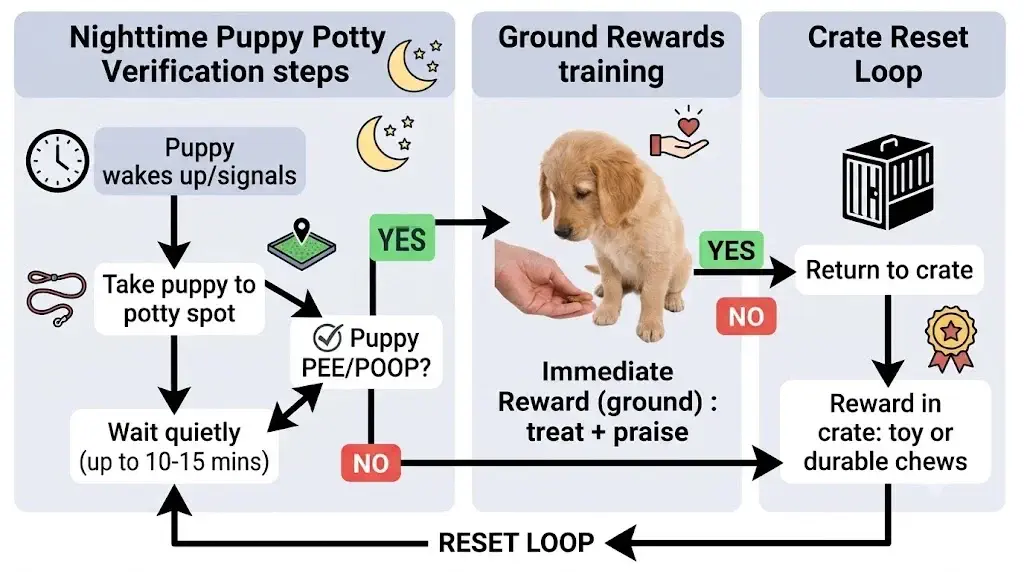
Standardized procedural calm prevents nocturnal trips from becoming rewarding social events. Follow this systematic six-step handling sequence:
Never unlatch the crate door while the puppy is actively barking; wait for a momentary pause so quiet behavior is reinforced.
Use a dim phone flashlight or low nightlight; avoid turning on overhead room lights that disrupt melatonin cycles.
Physically carry young puppies across rugs and through hallways to prevent accidental squatting en route.
Stand like a tree on a 6-foot lead for three to five minutes; allow quiet sniffing without tossing toys or exploring.
Provide a single small treat at ground level with soft vocal affirmation immediately upon voiding completion.
Carry the puppy back indoors and latch the crate door immediately; avoid cuddling, play sessions, or kitchen snacks.
Why Nighttime Potty Trips Should Be Boring
Over-stimulating nocturnal interactions inadvertently condition puppies to wake up for social playtime. If middle-of-the-night trips involve cheerful voices, petting, or roaming the living room, the puppy learns that nighttime waking triggers rewarding stimulation.
Keeping middle-of-the-night outings purely functional reinforces the mental association that night is for sleeping, not entertainment.
What Time Should a Puppy Have Its Last Potty Before Bed?
Final elimination breaks must occur immediately prior to crate confinement rather than hours earlier in the evening. Taking a puppy out at 8:30 PM and allowing them to roam the home until 10:30 PM leaves newly accumulated urine in their bladder when crated.
Align the final bathroom trip with your actual bedtime. Put the puppy on-leash, walk outside at 10:00 PM, verify urination, and transition them straight into the sleeping crate with zero intervening indoor playtime.
Should a Puppy Go Potty Right Before Bed Even If It Already Went?
Juvenile canines frequently produce secondary urine voidings within thirty to forty-five minutes of an initial break. A puppy that urinated at 9:15 PM during family playtime can easily accumulate sufficient urine by 10:00 PM to cause midnight crate discomfort.
Always offer a designated final potty opportunity immediately before latching the crate door. Even a small secondary void significantly extends continuous overnight holding duration.
How Evening Play Affects the Nighttime Bathroom Schedule
High-arousal physical exercise accelerates intestinal peristalsis and bladder filling late in the evening. Energetic games of chase, tug, or wrestling raise adrenaline, which increases metabolic waste production right before bedtime.
Conclude vigorous exercise at least 60 minutes before bedtime. Transition to soothing activities like licking a frozen rubber toy to lower heart rate and cortisol levels.
What About Water Before Bed?
Managing evening water intake prevents nocturnal bladder over-distension without compromising hydration safety. Removing the open bulk water bowl two hours prior to bedtime (e.g., 8:00 PM for a 10:00 PM bedtime) allows the puppy’s body to process and void circulating fluids before sleep.
Puppy Night Bathroom Schedule With Crate Training
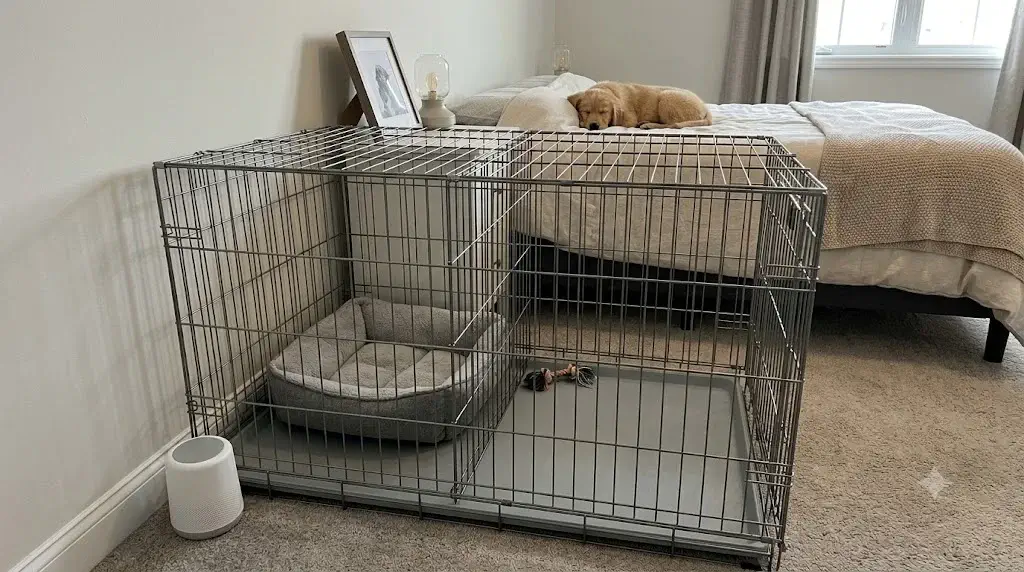
Bedside crate positioning utilizes den-preservation instincts while keeping handlers responsive to genuine waking cues. Locating the puppy’s crate in the owner’s bedroom provides auditory feedback when the puppy stirs, allowing timely intervention before accidents occur.
Before turning out the lights:
- Provide adequate daytime exercise and mental enrichment so the puppy is pleasantly tired.
- Walk the puppy outside for their verified final pre-bed elimination trip.
- Adjust the crate divider so interior space allows only standing, turning, and lying down comfortably[cite: 9].
- Run a steady white noise machine to mask exterior nocturnal noises[cite: 1, 9].
- Escort the puppy outside immediately upon morning wake-up.
Review comprehensive bedtime management strategies in our complete guide on House Training a Puppy Before Bed.
What If Your Puppy Cries in the Crate at Night?
Evaluating elapsed sleep duration clarifies whether nighttime crying stems from full bladders or separation anxiety. A puppy that whines after sleeping quietly for three to four hours is signaling physical urgency; take them outside promptly on-leash.
Conversely, a puppy that whines ten minutes after entering their crate at 10:00 PM is experiencing normal developmental separation distress. Address initial settling distress by placing the crate right next to your bed where the puppy can hear your breathing and scent your presence.
Nighttime Puppy Potty Training in an Apartment
Vertical residential transit introduces critical delays that require proactive handling to prevent hallway soiling. Navigating carpeted corridors, elevators, and locked lobby doors at 2:30 AM can turn minor bladder pressure into an emergency accident.
Stage Nighttime Gear
Place slip-on shoes, coat, leash, keys, and treats directly beside your front exit door.
Physically Carry the Pup
Carry your young puppy through interior hallways and elevators to suppress squatting reflexes.
Real-Grass Balcony Box
Use a real-grass patch on a secure balcony for high-floor units to preserve natural turf preferences.
Silent Elevator Protocol
Keep interactions strictly quiet during transit to maintain nocturnal sleepy states.
Nighttime Potty Training During Cold or Bad Weather
Inclement weather and freezing overnight temperatures inhibit elimination reflexes in small pediatric puppies. Cold rain, wind, or snow can startle an infant puppy, causing them to freeze or pull toward the door without voiding.
Keep a warm canine fleece coat near the door. Walk directly to a sheltered relief spot (such as beneath a covered patio awning or evergreen tree canopy) to shield the puppy from precipitation. If severe winter storms make outdoor access hazardous, an artificial turf tray placed in a garage provides a safe, substrate-consistent alternative[cite: 2, 3].
Why Puppies Have Nighttime Accidents After Several Dry Nights
Intermittent developmental regressions frequently follow minor disruptions to evening routines or health status. Experiencing three consecutive dry nights does not mean physical housebreaking is permanently complete.
Common culprits behind unexpected overnight accidents include:
- Late-evening feeding or unexpected treats given right before bed.
- Excessive water drinking following late-night wrestling or zoomies.
- Mild gastrointestinal upset or subclinical urinary tract infections.
- Travel, houseguests, or subtle shifts in bedtime hours.
- Prematurely removing the crate divider before the puppy is ready[cite: 9].
How to Reset a Puppy Night Bathroom Schedule After an Accident
Targeted schedule adjustments re-establish clean overnight routines without compromising training confidence. When an overnight accident occurs, execute this structured recovery plan:
Determine whether the accident occurred early in the night (11:30 PM) or during the pre-dawn hours (4:30 AM).
Set an alarm ahead of the documented accident window to empty the bladder proactively.
Decontaminate the plastic crate pan and surrounding baseboards using an enzymatic cleaner to destroy uric acid crystals.
Keep the crate floor bare or use an unpadded crate mat; soft bedding absorbs urine and masks soiling sensations[cite: 1, 9].
Maintain the tighter schedule until five consecutive clean nights occur before pushing intervals out again.
Should You Use Puppy Pads at Night?
Absorbent puppy pads often blur substrate preferences, delaying outdoor housebreaking reliability. Placing pee pads inside or beside a crate teaches puppies that eliminating on soft indoor surfaces is acceptable, which often generalizes to bedroom rugs and blankets.
| Household Living Setup | Recommended Nocturnal Strategy |
|---|---|
| Suburban home with yard access | Prioritize outdoor-only relief; eliminate all indoor pads to avoid substrate confusion. |
| High-rise urban apartment | Utilize a real-grass balcony box rather than fabric pads to condition natural turf preferences. |
| Working owners on long night shifts | Use an exercise pen with a separated turf box, keeping the sleeping crate pad-free. |
| Long-term outdoor training goal | Phase out temporary indoor options systematically as soon as overnight control improves. |
How to Prevent Nighttime Accidents
Systematic management routines reduce nocturnal accidents and reinforce reliable sleep habits. Incorporate these twelve core preventative habits:
- Lead the puppy outside for a verified elimination break immediately before bed[cite: 1, 2].
- Lift the main water bowl two hours prior to bedtime while ensuring daytime hydration[cite: 1, 2].
- Provide a calm relief break following vigorous evening play sessions.
- Respond immediately to genuine middle-of-the-night waking signals.
- Keep nighttime trips low-light, quiet, and strictly business-focused.
- Avoid rigid holding formulas; adapt trips to your puppy’s physical performance.
- Position the sleeping crate in your bedroom to monitor restlessness cues.
- Clean all indoor accident spots thoroughly with a CRI-certified enzymatic cleaner.
- Log overnight waking timestamps to spot recurring elimination patterns.
- Adjust your alarm schedule proactively if accidents happen at predictable times.
- Maintain fresh daytime water access to prevent evening thirst spikes.
- Seek clinical veterinary care if nocturnal accidents appear suddenly with straining.
How to Know When Your Puppy Is Ready to Sleep Through the Night
Consistent dry crate bedding over fourteen consecutive nights signals physiological readiness to sleep through the night. Calendar age alone does not determine maturity; look for these four reliable indicators:
Consecutive Dry Nights
The puppy remains completely dry for two straight weeks without middle-of-the-night trips.
Quiet Nocturnal Rest
The puppy sleeps soundly for 7 hours without pacing, crying, or scratching at the crate.
Orderly Morning Exit
The puppy awakens calmly and walks directly to the outdoor grass without urgency accidents.
Den Preservation Habit
The puppy actively avoids soiling sleeping surfaces and signals cleanly when urgent.
What If My Puppy Sleeps Through the Night but Has Morning Accidents?
Post-sleep motor activity triggers rapid bladder evacuation within sixty seconds of waking. When a puppy sleeps cleanly all night but urinates on the living room floor, the breakdown lies in the morning transition routine, not overnight holding capacity.
Do not allow the puppy to stretch on carpets, greet family members, or drink water before heading outside. Carry or walk them straight to the grass the moment the crate door opens.
What If My Puppy Wakes Very Early Every Morning?
Environmental stimuli like sunrise, ambient sounds, and hunger often prompt persistent 5:00 AM waking. If your puppy voids promptly when taken outside at dawn, their early wake-up is driven by bladder urgency.
If the puppy sniffs casually without eliminating, adjust environmental triggers: install blackout curtains over bedroom windows, run a white noise machine to mask exterior dawn sounds[cite: 1, 9], and ensure dinner is served by 6:00 PM so morning hunger does not disrupt sleep.
What If My Puppy Goes Potty Outside but Still Has an Accident Overnight?
Incomplete double-voiding and late-evening hydration can cause accidents several hours into sleep. Even if a puppy pees at 10:00 PM, residual bladder urine or active kidney processing can overwhelm holding capacity by 2:00 AM.
Confirm both urination and defecation during the final pre-bed trip. If accidents continue occurring at 2:00 AM, re-introduce a proactive alarm at 1:45 AM for several nights. If nighttime urination remains unusually frequent despite tight schedule controls, schedule a veterinary urinalysis to check for subclinical infections.
Nighttime Puppy Bathroom Schedule for a 12-Week-Old Puppy
Maturing neurological control enables most twelve-week-old puppies to sleep six to seven hours continuously. At this developmental stage, nocturnal bathroom needs become far more predictable:
Nighttime Puppy Bathroom Schedule for a 10-Week-Old Puppy
Ten-week-old canines display transitional nocturnal patterns, typically requiring one brief overnight relief trip. While bladder capacity expands, many puppies cannot comfortably hold urine past the five-hour mark.
Maintain a final pre-bed trip at 10:00 PM and plan for a responsive or scheduled 3:30 AM relief break. If your puppy sleeps quietly until 6:00 AM without waking, allow them to rest undisturbed without interrupting their sleep cycle.
Nighttime Puppy Bathroom Schedule for an 8-Week-Old Puppy
Immature pediatric physiology caps continuous eight-week-old overnight holding capacity at three to four hours. At eight weeks, kidneys filter urine rapidly and urethral sphincters lack muscle tone.
Place the puppy’s crate directly beside your bed to detect early stirring. Schedule a proactive alarm break around 2:30 AM to empty the bladder before distress whining begins, ensuring positive reinforcement and preventing crate soiling.
How to Track Your Puppy’s Overnight Bathroom Pattern
A written overnight tracking log provides objective data on developmental holding progression. Record nightly timestamps for two weeks to identify patterns and guide schedule adjustments:
| Calendar Date | Bedtime Latch | Final Potty Trip | Nighttime Waking | Void Verified? | Morning Wake |
|---|---|---|---|---|---|
| Monday | 10:00 PM | 9:55 PM | 2:30 AM (Whimpered) | Yes (Urine) | 6:30 AM (Dry) |
| Tuesday | 10:00 PM | 9:55 PM | 3:15 AM (Restless) | Yes (Urine) | 6:30 AM (Dry) |
| Wednesday | 10:00 PM | 9:55 PM | None (Slept through) | — | 6:30 AM (Dry) |
Reviewing this log clarifies whether waking times are naturally pushing later into the morning, indicating readiness for longer sleep stretches.
When Nighttime Urination Is Not Just a Training Problem
Abrupt increases in nighttime urinary frequency accompanied by straining indicate clinical urinary tract disease. Not all nocturnal accidents stem from behavioral or schedule causes.
Consult your veterinarian immediately if you observe any of these warning signs:
- Straining with only tiny droplets produced, or crying during urination.
- Cloudy, blood-tinged, or strong-smelling urine indicating potential cystitis.
- A sudden surge in nighttime accidents after weeks of clean sleep.
- Excessive, unquenchable water consumption during late evening hours.
- Involuntary urine leaking while sound asleep in the crate.
Common Nighttime Potty Training Mistakes
Operational missteps during overnight management inadvertently reinforce nocturnal waking habits. Avoid these seven frequent training errors:
Using Rigid Age Formulas
Relying strictly on theoretical holding formulas ignores individual canine physiological development.
Waiting for Intense Screaming
Missing subtle motor stirring forces puppies into severe distress barking before getting relief.
Turning Trips into Playtime
Engaging in cheerful talk or petting teaches puppies that 2:30 AM is an enjoyable social hour.
Allowing Post-Trip Roaming
Failing to re-crate immediately invites unattended accidents on dark living room carpets.
Dangerous Water Deprivation
Withholding water during hot days to prevent night accidents creates serious medical risks.
Punishing Overnight Accidents
Scolding causes anxiety, encouraging puppies to hide future accidents or soil silently.
Nighttime Puppy Potty Training: A Simple Decision Tree
Clear behavioral branching rules guide consistent handling during overnight waking events. Use this diagnostic decision framework:
Puppy Asleep and Dry?
Let the puppy rest undisturbed; do not wake them unless maintaining an active 8-week alarm plan.
Puppy Wakes Restless?
Provide a calm, boring, on-leash trip directly to the outdoor grass spot.
Puppy Eliminates Promptly?
Deliver quiet praise, return immediately indoors, and re-latch the bedroom crate door.
Puppy Does Not Void?
Return quietly to the crate after 5 minutes; avoid play, roaming, or treating[cite: 3].
Accident Precedes Trip?
Move the next night’s alarm 45 minutes earlier to intercept bladder fullness.
14 Consecutive Dry Nights?
Phase out middle-of-the-night alarms and allow uninterrupted sleep until morning.
Nighttime Puppy Bathroom Checklist
Standardized operational protocols ensure clean crate pans and prevent overnight regressions. Follow this complete procedural checklist:
- Establish a calm, predictable evening wind-down routine 60 minutes before bed.
- Provide an outdoor relief break 15 to 20 minutes after dinner kibble.
- Take the puppy outside for a verified final elimination trip immediately before crating[cite: 1, 2].
- Keep shoes, leash, and a dim flashlight staged directly beside the exit door.
- Respond promptly to genuine nighttime bathroom signals like standing, pacing, or whining.
- Keep middle-of-the-night trips dark, silent, and strictly focused on business.
- Return the puppy directly to their bedside crate immediately following voiding.
- Escort the puppy outside within sixty seconds of morning wake-up.
- Record overnight waking times and accident patterns in a notebook.
- Adjust your alarm schedule proactively if accidents happen at consistent times.
- Lift the bulk water bowl two hours before bed while ensuring proper daytime hydration[cite: 1, 2].
- Never punish, scold, or startle a puppy for overnight accidents.
- Decontaminate soiled surfaces with certified bio-enzymatic cleaner.
- Consult a veterinarian if nighttime urination changes suddenly or involves straining.
Frequently Asked Questions
How often should a puppy go potty at night?
Young puppies aged 8 to 10 weeks typically require one or two overnight bathroom breaks, holding for 3 to 4 hours while asleep. Puppies aged 10 to 12 weeks often need one break, and most canines transition to sleeping through the night (7 to 8 hours) by 16 weeks of age.
Should I wake my puppy up to pee at night?
Yes, setting a proactive nighttime alarm around 2:30 AM is beneficial for young 8-week-old pups to prevent crate accidents and avoid reinforcing crying. Once a puppy stays consistently dry for seven consecutive nights, shift to responsive waking only when they stir.
What time should my puppy have its last potty before bed?
The final potty trip should take place immediately prior to latching the bedroom crate door (e.g., 10:00 PM for a 10:00 PM bedtime), rather than hours earlier in the evening.
How long can a puppy hold its pee overnight?
Canine overnight holding capacity is roughly one hour longer than chronological age in months when resting quietly (e.g., an 8-week-old can hold 3 to 4 hours; a 12-week-old can hold 4 to 5 hours). Adult dogs aged four months and older can generally hold for seven to eight hours overnight.
Why does my puppy wake up at 2 AM?
A 2:00 AM wake-up usually indicates physiological bladder pressure from immature kidneys filtering fluids. However, external noises, sudden drops in ambient room temperature, or separation anxiety can also prompt nighttime waking.
Should nighttime puppy potty trips be boring?
Yes. Keeping nighttime breaks dark, quiet, and business-focused prevents puppies from associating overnight waking with rewarding social playtime.
Should I limit water before bedtime?
Lifting the bulk water bowl two hours prior to bedtime helps prevent bladder over-distension overnight. Never restrict water during hot weather or withhold daytime hydration as a housebreaking shortcut.
When can a puppy sleep through the night without potty breaks?
Most puppies develop the physical bladder capacity and hormonal regulation (ADH) to sleep through the night between 12 and 16 weeks of age, provided evening food and fluid routines remain consistent.
What if my puppy has an accident overnight after several dry nights?
Review recent changes in evening feeding, water intake, or activity levels. Clean the crate pan thoroughly with an enzymatic cleaner, remove absorbent plush bedding, and temporarily move your alarm 45 minutes earlier to reset the routine[cite: 1, 9].
Is it normal for puppies to have nighttime accidents?
Yes. Early housebreaking is an ongoing developmental learning curve. Immature urethral sphincters and hormonal cycles make occasional overnight accidents completely normal during the first month at home.
Should I use puppy pads at night?
Avoid placing absorbent pee pads inside sleeping crates, as they condition puppies to soil soft bedding textures. For high-rise apartments, a real-grass balcony box is preferable to maintain natural turf preferences.
What if my puppy wakes up but does not pee outside?
Wait calmly on-leash for five minutes. If no voiding occurs, carry the puppy back inside, place them directly into their crate, and re-attempt the outdoor break in 15 minutes if they show continued restlessness[cite: 3].
The Bottom Line
A successful puppy bathroom schedule at night balances developmental biological limits with low-stimulation handling routines.
Begin with an immediate pre-bed outdoor relief trip, maintain a dim and quiet bedside crate environment, and respond calmly to genuine physiological waking signals with zero playtime. Track nightly timestamps to measure developmental progress, adjust alarm intervals proactively when accidents occur, and gradually phase out middle-of-the-night breaks as bladder holding capacity matures. With consistent evening management, your puppy will smoothly transition from frequent nocturnal trips to dependable, uninterrupted eight-hour sleep.
Editorial note: This article provides general puppy house-training information for U.S. households, aligned with American Kennel Club (AKC) behavioral principles and American Veterinary Medical Association (AVMA) pediatric care standards. Individual puppies differ in size, developmental maturity, breed predispositions, feeding schedules, sleep patterns, and elimination needs. Veterinary guidance should take priority whenever a puppy exhibits sudden, painful, unusually frequent, or otherwise abnormal elimination symptoms.
