
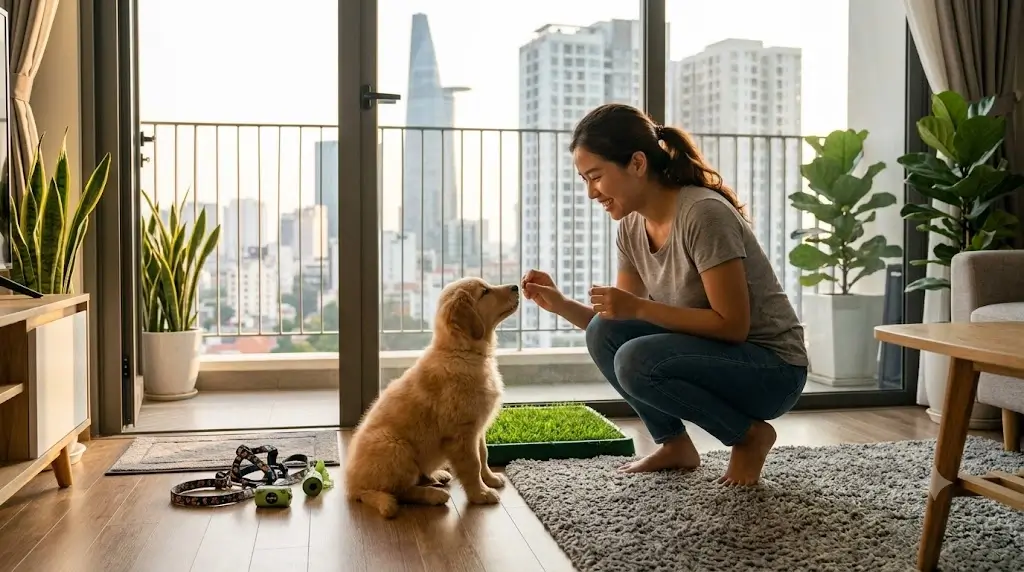
House Training a Puppy in an Apartment: Step-by-Step Guide
Successfully mastering house training a puppy in an apartment requires one extra layer of planning: accounting for hallways, elevators, stairs, lobbies, and travel time before reaching the designated outdoor relief area. A practical apartment plan bridges the gap between your living space and outdoor bathroom spots smoothly.
Quick Answer: How Do You House Train a Puppy in an Apartment?
To succeed at house training a puppy in an apartment, build a proactive schedule centered on transit time rather than waiting for urgency. Take your puppy out immediately after waking, meals, naps, and active play. Prepare your leash and supplies by the door in advance to navigate hallways and elevators without delay. To establish core foundational habits alongside apartment living, follow our complete guide on how to house train a puppy.
- Identify the closest designated outdoor bathroom area.
- Calculate total transit time (hallways, stairs, elevators).
- Take the puppy outside proactively around daily events.
- Keep leash, harness, and waste bags right by the front door.
- Supervise actively indoors using crates or playpens.
- Reward outdoor elimination immediately at the potty spot.
- Clean indoor accidents thoroughly with enzymatic cleaners.
- Adjust trip frequency as your puppy develops bladder control.
Why House Training a Puppy in an Apartment Is Different
In a suburban home with a private yard, the distance between your living room and grass is only a few feet. In contrast, house training a puppy in an apartment introduces multiple logistical stages.
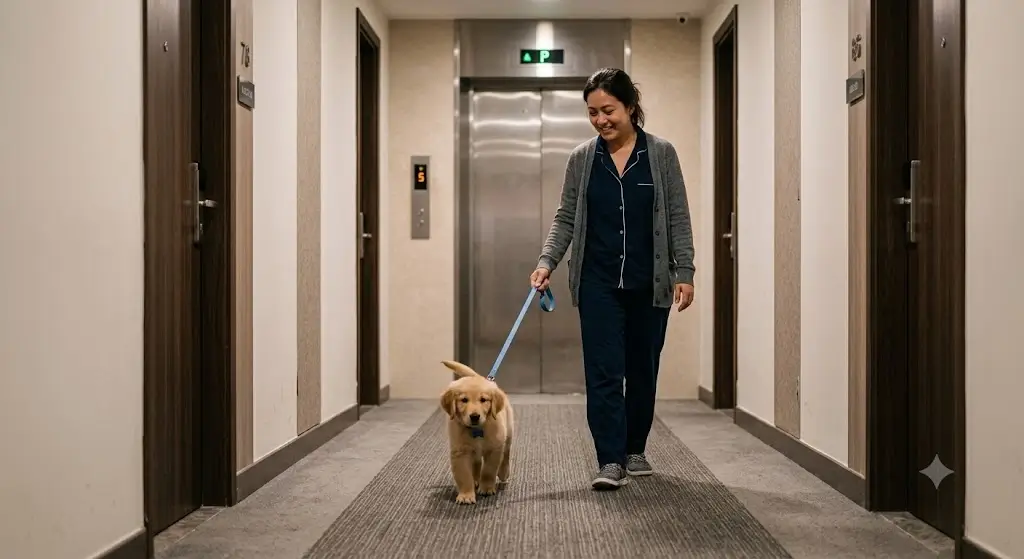
Each extra step adds seconds or minutes of delay. A young puppy that could comfortably reach a backyard may have an accident while waiting for an elevator. This makes house training a puppy in an apartment partly a logistical challenge that requires early departures.
Build an Apartment-Specific Bathroom Plan
Before bringing your dog home, define the exact outdoor spot you will use for elimination.
Know building rules and pet policies
Apartment complexes usually have clear rules regarding designated pet relief zones, waste disposal stations, leash requirements, and elevator etiquette. Always comply with property regulations.
Map the quickest route
Walk your route beforehand. Identify the fastest exit, emergency stairwells, and the most direct outdoor route to your relief area.
Organize gear by the door
- Sturdy leash and comfortable harness.
- Roll of waste bags.
- High-value training treats.
- Weather gear (raincoat, umbrella).
- Enzymatic cleaning spray staged indoors.
Choose the Fastest Practical Bathroom Route
During the early weeks of house training a puppy in an apartment, the shortest route is the most effective. Avoid long scenic routes until the puppy has eliminated.
Separating bathroom trips from casual walks prevents your puppy from delaying elimination just to stay outside longer.
How to Handle Elevator Delays and Crowds
Elevators represent the biggest delay when house training a puppy in an apartment.
Leave before signals become critical
Never wait until your puppy is actively whining or pacing by the door before heading into the hallway.
Carry young puppies when appropriate
Carrying a very young puppy down the hall and in the elevator naturally discourages squatting while transit is underway.
Apartment Stairs and Puppy Potty Training
If you live on a lower floor, stairs provide a fast alternative to elevators. However, young puppies with developing joints should be carried down steep staircases until they are physically mature and confident.
Create an Apartment Puppy Potty Schedule
A predictable daily routine minimizes indoor accidents. For a comprehensive 7-day system that integrates smoothly into apartment living, try our 7-day puppy house training plan.
| Daily Trigger | Routine Action | Apartment Consideration |
|---|---|---|
| Immediately upon waking | Carry puppy outside promptly. | Have shoes and leash ready by the bedside. |
| 15–30 mins after meals | Direct trip to outdoor potty spot. | Account for elevator transit time. |
| After active indoor play | Offer outdoor bathroom break. | Excitement speeds up bladder fill rate. |
| Immediately after naps | Head straight downstairs. | Carry puppy through hallways to avoid leaks. |
| Before bedtime | Final quiet outdoor relief break. | Keep the nighttime trip calm and focused. |
Learn Your Puppy’s Subtle Bathroom Signals
Because transit takes several minutes in multi-story buildings, recognizing early pre-potty signals is crucial when house training a puppy in an apartment.
- Abruptly stopping active play.
- Sniffing baseboards or rugs intensely.
- Spinning in tight circles.
- Drifting toward the front door or hallways.
- Sudden restlessness or unexplained whining.
Catching these signals early gives you the required window to navigate the building without accidents.
Supervise Your Puppy Between Bathroom Trips
Unsupervised freedom in an apartment leads to hidden accidents behind couches or in hallways. Use a combination of crates, puppy playpens, and tethering to keep eyes on your puppy during active indoor hours.
Reward Outdoor Elimination Correctly
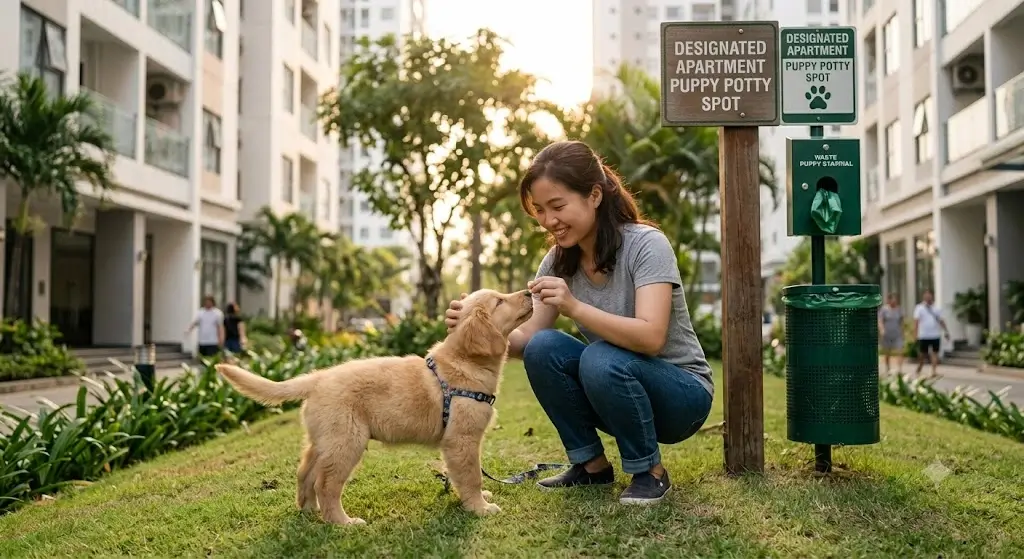
Timing is everything when you house train a puppy in an apartment. Deliver praise and a high-value treat within two seconds of completion while still outside at the potty spot, rather than waiting until you return upstairs.
Should You Use Puppy Pads in an Apartment?
Potty pads or fresh-grass balcony patches offer a temporary solution for high-rise buildings where outdoor access takes more than 5–10 minutes. However, pads teach dogs that eliminating on indoor soft surfaces is acceptable. If your primary goal is outdoor elimination, transition off pads as soon as possible.
How to Transition From Puppy Pads to Outside
-
Move pads progressively closer to the exit
Gradually shift the indoor pad toward the apartment front door over several days.
-
Anchor trips to outdoor schedules
Take the puppy downstairs during predictable post-meal and wake-up windows.
-
Reward outdoor elimination enthusiastically
Make outdoor success far more rewarding than using the indoor pad.
-
Remove indoor pads entirely
Once outdoor habits are consistent, remove pads and maintain strict indoor supervision.
Using a Crate for Apartment House Training
A crate provides a secure den that leverages your puppy’s natural instinct to avoid soiling its sleeping area. In an apartment, crate training keeps your dog safe, prevents destructive chewing, and simplifies overnight house training.
Apartment Puppy House Training at Night
Overnight trips in an apartment require extra preparation because navigating quiet corridors in the dark can be challenging. For complete overnight strategies, read our guide on how to house train a puppy at night.
What to Do About Puppy Accidents in an Apartment
If an accident occurs, avoid scolding or punishment. Instead, evaluate the breakdown: was departure delayed, was supervision missed, or did the elevator take too long? Adjust departure times earlier for future trips.
What If the Puppy Has an Accident in the Elevator?
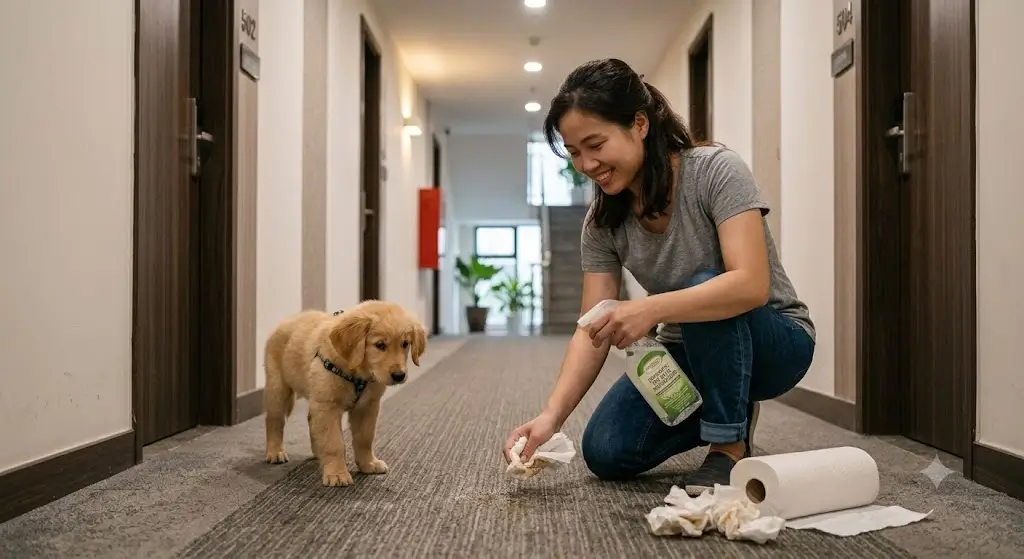
Accidents in shared spaces like elevators or lobbies happen. Carry emergency wipes and poop bags at all times. Clean the area promptly, notify building staff if required, and carry your puppy through common areas during the next few training days.
Managing Bad Weather in an Apartment Routine
Rain, snow, or extreme cold can make outdoor apartment trips challenging. Equip your puppy with water-resistant gear, keep drying towels beside the front door, and use covered building alcoves or designated sheltered relief zones when severe weather strikes.
Noise Control and Neighbor Considerations
Minimizing barking and whining during hallway transit maintains positive neighbor relations. Practice polite door manners, keep high-value treats on hand to redirect attention in elevators, and provide adequate mental enrichment inside your unit.
Common Mistakes When House Training in an Apartment
1. Treating the apartment door as the finish line
The bathroom is the outdoor grass, not the hallway outside your unit door.
2. Waiting for urgent crying before leaving
Elevator delays turn mild bladder urgency into unavoidable hallway accidents.
3. Giving full apartment freedom too early
Unsupervised puppies quickly find quiet corners or rugs to eliminate on.
4. Rewarding after getting back upstairs
Puppies cannot connect a reward given in the apartment with an action performed outside ten minutes earlier.
When Apartment Accidents Signal a Medical Issue
If a previously reliable puppy suddenly begins urinating frequently in small amounts, shows blood in the urine, or drinks water excessively, consult your veterinarian to rule out a urinary tract infection (UTI).
Apartment House-Training Checklist
- Designate a specific outdoor relief area compliant with building rules.
- Time hallway and elevator transit to leave before urgency strikes.
- Keep leash, harness, and waste bags right beside the entrance.
- Supervise with crates or exercise pens during unsupervised hours.
- Reward outdoor elimination immediately on the grass with high-value treats.
- Clean all indoor mistakes thoroughly using enzymatic cleaners.
- Carry young puppies through lobbies and elevators to avoid leaks.
The Apartment House-Training Formula
House training a puppy in an apartment does not require a private yard. With proactive scheduling, fast transit routes, active supervision, and prompt outdoor reinforcement, your puppy will master clean bathroom habits in any building setting.
Frequently Asked Questions
How do you house train a puppy in an apartment without a yard?
To succeed at house training a puppy in an apartment without a yard, establish a consistent schedule around daily biological triggers, map out the fastest route outside, supervise closely indoors, and reward outdoor elimination immediately.
How often should I take a puppy outside in an apartment?
Young puppies generally need to go outside every 1 to 2 hours while awake, plus immediately after waking up, eating, drinking, or vigorous play. Always add 5–10 minutes of buffer time for elevator travel.
Should I use puppy pads when living in a high-rise apartment?
Puppy pads can serve as a temporary bridge if outdoor access involves long elevator rides. However, if your long-term goal is outdoor training, direct outdoor trips establish clearer habits faster.
How do I stop my puppy from peeing in the apartment hallway or elevator?
Carry your puppy through common areas and elevators until outside. Leaving 5–10 minutes earlier before the bladder is completely full also prevents transit accidents.
How do I manage nighttime potty breaks in an apartment?
Prepare shoes, leash, and keys beside your bed. Move calmly and quietly through the building to the relief spot, keep lights dim, and return directly to the sleeping crate once finished.
