
How to House Train a Puppy at Night: Complete Step-by-Step Guide
Understanding how to house train a puppy at night requires a different approach than daytime potty training because the puppy is asleep, household activity stops, and young puppies lack the physical bladder capacity to stay dry overnight. Building a structured bedtime routine, managing sleeping spaces, and providing low-key overnight relief ensure steady progress.
Quick Answer: How Do You House Train a Puppy at Night?
To master how to house train a puppy at night, establish a consistent evening sequence: calm winding-down activity, an intentional final bathroom trip, and placement in a safe, appropriately sized crate. Most young puppies need at least one scheduled overnight potty break. When taking your puppy outside at night, keep interactions quiet, boring, and focused purely on elimination before returning straight to bed.
As physical maturity develops and overnight dryness becomes consistent, you can phase out middle-of-the-night trips. To reinforce indoor habits around the clock alongside nighttime management, see our complete guide on how to house train a puppy.
Why Nighttime House Training Is Different
Daytime training allows for continuous observation of body language, sniffing, and circling. At night, prevention relies almost entirely on proactive management, confinement, and biological timing because both you and your dog are asleep.
Young puppies have limited hormonal concentration of urine during sleep and smaller bladders. Approaching the process of how to house train a puppy at night as a developmental milestone rather than a test of discipline prevents frustration and speeds up clean habits.
The core objective when learning how to house train a puppy at night is minimizing overnight accidents while teaching the puppy that dark hours are strictly for sleeping and rapid bathroom breaks.
Key distinction:When you house train a puppy at night, you are managing biological limits rather than testing daytime communication cues.
Set Up the Sleeping Area Before Bedtime
A well-prepared sleep environment is foundational to how to house train a puppy at night smoothly.
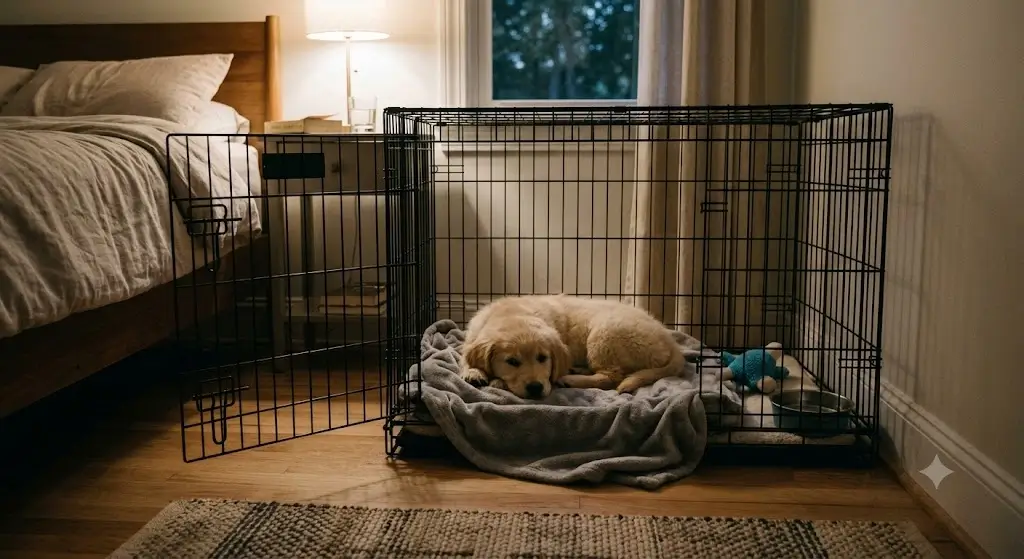
Keep the sleeping location consistent
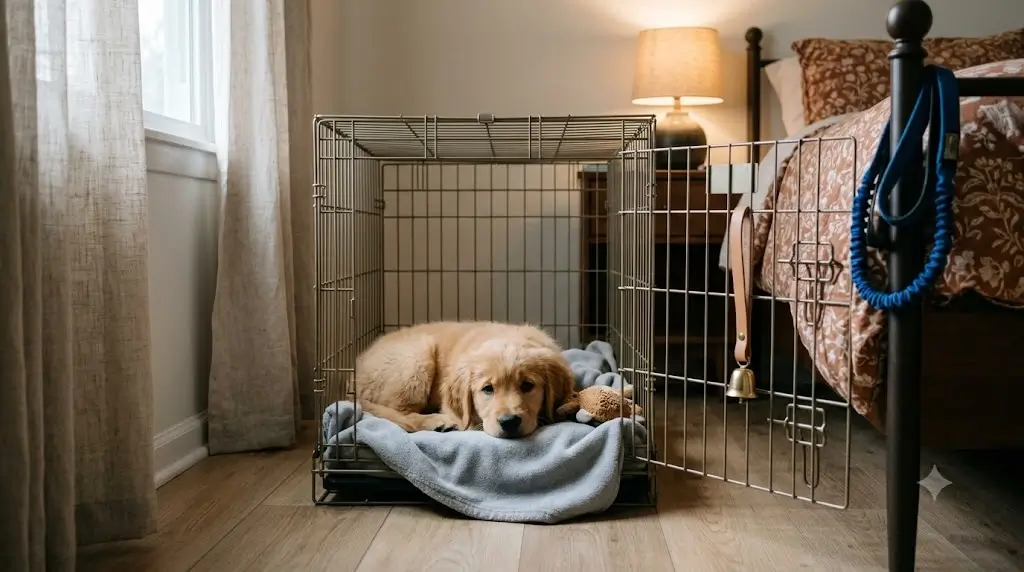
Placing the crate in your bedroom during the first few weeks makes it easy to hear early waking cues, restlessness, or whining before an accident happens inside the crate.
Use an appropriately sized crate
The crate should only be large enough for your puppy to stand up, turn around, and lie down comfortably. Excess room invites the puppy to eliminate in one corner and sleep in the other, undermining your progress as you house train a puppy at night.
Prepare your overnight exit route
Keep slip-on shoes, a leash, and outdoor lighting right beside the door so middle-of-the-night bathroom trips happen without delay.
Nighttime preparation checklist
- Secure, comfortable crate positioned close to your bed.
- Leash and collar placed right next to the exit.
- Clear, unobstructed path to the outdoor potty spot.
- Dim flashlight or soft hallway lighting ready.
- Enzymatic spray and paper towels staged for quick cleanup.
Build a Predictable Bedtime Routine
A structured evening routine is essential to how to house train a puppy at night because it signals that the active daytime cycle has ended.
-
Wind down evening stimulation
Switch from vigorous play to gentle handling or quiet chewing 45–60 minutes before bedtime.
-
Complete evening care routines
Maintain standard meal and water schedules without drastic restrictions.
-
Offer a dedicated final bathroom opportunity
Take your puppy out to empty its bladder completely right before tucking it into the crate.
-
Transition quietly to the crate
Place the puppy in its sleeping quarters with minimal excitement, turn off the lights, and settle down.
To balance daytime events with evening wind-down, explore our guide on how to build a puppy bathroom routine.
The Final Bathroom Trip Before Bed
The final outing of the evening plays a pivotal role in how to house train a puppy at night successfully.
Keep your puppy on a leash at the designated potty spot. Give it several quiet minutes to empty its bladder and bowels, praise calmly upon completion, and bring it straight indoors without initiating games.
Golden rule for bedtime:Potty break first, direct transition to the crate second. Keeping this pattern predictable helps puppies settle faster.
How to Handle Overnight Bathroom Trips

Most puppies under 14 weeks old need at least one overnight break. Handling these interruptions correctly is vital when learning how to house train a puppy at night.
Keep night trips completely boring
Avoid energetic talking, baby talk, or turning on bright overhead lights. The goal is to keep the puppy in a sleepy state.
Go directly to the designated spot
Carry or walk the puppy on a leash directly to its regular outdoor area. Allow a couple of minutes to eliminate, offer low-key praise, and walk right back inside.
Avoid accidental nighttime play rewards
If overnight trips involve playtime or affection, your puppy will learn that waking up earns entertainment rather than just bathroom relief.
What to Do When a Puppy Cries at Night
Learning to interpret nighttime crying is a major milestone in how to house train a puppy at night.
When your puppy whines in the crate, evaluate the situation quickly:
- Has it been more than 3–4 hours since the last bathroom break?
- Did the puppy drink water or eat close to bedtime?
- Is the puppy pacing, scratching, or turning circles in the crate?
If an elimination break is due, take the puppy outside calmly on a leash. If the puppy just went out 15 minutes prior, offer soft verbal reassurance without letting it out to play.
Never punish nighttime vocalizations or accidents.Punishment causes stress and crate aversion, which severely disrupts your efforts to house train a puppy at night.
Using a Crate to House Train a Puppy at Night
A crate utilizes a dog’s natural instinct to keep its sleeping area clean, making it the most effective tool to house train a puppy at night.
Benefits of nighttime crate training
- Stops unsupervised indoor wandering and accidents in the dark.
- Protects curious puppies from chewing household hazards overnight.
- Makes subtle waking and shifting noises easy for owners to detect.
Always introduce crate games and positive associations during the daytime so the crate feels like a safe, relaxing den.
Should You Use Puppy Pads at Night?
If your ultimate goal is outdoor house training, using indoor puppy pads at night often delays progress. Pads encourage dogs to eliminate on soft indoor textures, blurring boundaries.
Unless living in a high-rise apartment or managing medical limitations, maintaining direct outdoor trips is the fastest way to house train a puppy at night cleanly.
Example Schedule: How to House Train a Puppy at Night
Use this overnight routine framework to establish structure. For a complete 24-hour training system, use our 7-day puppy house training plan.
| Time Window | Routine Step | Purpose in Night Training |
|---|---|---|
| 8:00 PM – 9:30 PM | Wind down & quiet time | Reduces excitement and prepares body for rest. |
| 10:00 PM | Final outdoor potty trip | Ensures an empty bladder before entering the crate. |
| 10:15 PM | Bedtime in crate | Establishes clear sleep associations. |
| 2:00 AM – 3:00 AM | Quiet overnight bathroom break | Prevents developmental bladder overflow for young pups. |
| 6:00 AM – 6:30 AM | Immediate morning potty break | Starts the daytime routine without indoor delays. |
How Age and Bladder Capacity Impact Nighttime Training
Physical bladder holding capacity increases as a puppy matures. Realistic expectations are key to successfully mastering how to house train a puppy at night.
| Puppy Age | Typical Overnight Capacity | Recommended Nighttime Strategy |
|---|---|---|
| 8–10 weeks | 3–4 hours | Plan 1 to 2 proactive overnight alarm breaks. |
| 11–14 weeks | 5–6 hours | Usually requires only 1 middle-of-the-night potty trip. |
| 16+ weeks | 7–8 hours | Many puppies sleep through the night consistently. |
What to Do About Nighttime Puppy Accidents
If an accident occurs overnight, avoid scolding. Quietly take the puppy outside to finish, clean the crate thoroughly, and set your alarm 30 minutes earlier the next night to intercept future accidents.
How to Clean a Nighttime Puppy Accident
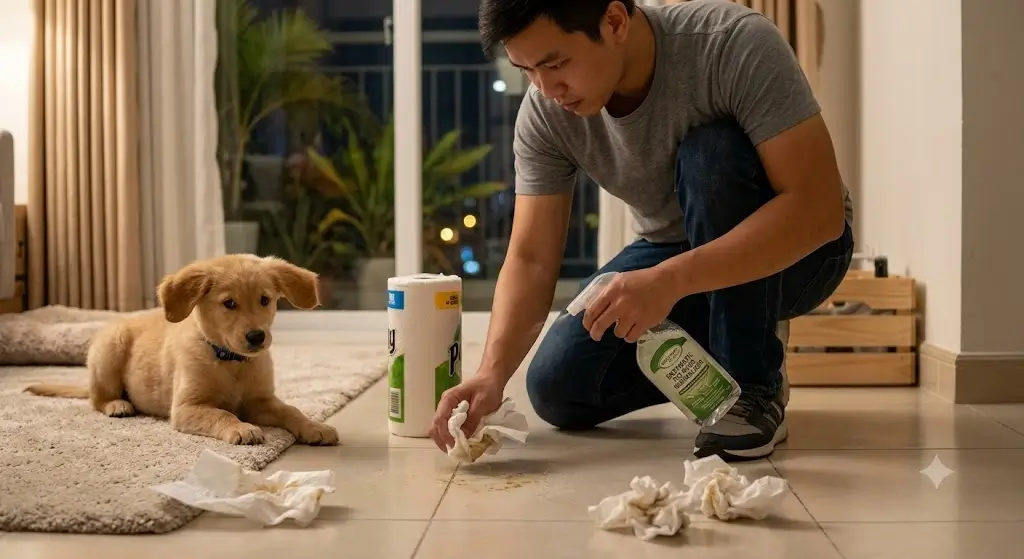
Thorough cleanup is critical when you house train a puppy at night because lingering scent markers trigger repeated soiling in the crate.
- Remove all soiled bedding and wash immediately.
- Blot up liquid completely with paper towels.
- Saturate the crate floor with a dedicated enzymatic cleaner.
- Let the cleaner sit for the full manufacturer-recommended contact time.
- Wipe dry and ensure good ventilation before returning your puppy to bed.
When to Reduce Overnight Bathroom Trips
You can begin phasing out nighttime alarms when your puppy wakes up dry for 7–10 consecutive days and sleeps peacefully through the previous alarm window.
How to Help a Puppy Settle Back Down
After an overnight potty break, place the puppy back into the crate, give a calm cue like “sleep time,” and turn off all lights immediately so the pup connects night waking only with sleep.
Common Nighttime House-Training Mistakes
1. Making overnight trips fun
Cuddling, lights, or toys teach puppies that night waking produces rewarding playtime.
2. Expecting full 8-hour capacity too early
Expecting an 8-week-old puppy to hold urine all night leads to avoidable crate soiling.
3. Using non-enzymatic cleaning sprays
Standard cleaners mask odors to humans but leave scent markers that attract repeat accidents.
4. Punishing nighttime mistakes
Scolding creates crate fear and anxiety without teaching appropriate elimination habits.
When Nighttime Accidents Require Veterinary Care
If a previously clean puppy suddenly begins having multiple overnight accidents, strains to urinate, or displays excessive thirst, consult your veterinarian to check for urinary tract infections (UTIs) or other medical concerns.
Nighttime Puppy House-Training Checklist
- Crate placed in a quiet, temperature-stable room near your bed.
- Consistent pre-bed wind-down routine practiced every evening.
- Dedicated outdoor bathroom break conducted right before lights out.
- Overnight potty trips kept dim, quick, and boring.
- Accidents cleaned exclusively with enzymatic cleaners.
- Nighttime trips reduced gradually based on consistent morning dryness.
Frequently Asked Questions
How do I house train a puppy at night?
To house train a puppy at night, combine a predictable bedtime routine, a final pre-bed potty trip, an appropriately sized crate, and quiet, low-stimulation overnight bathroom breaks until bladder control matures.
Should I wake my puppy up to pee at night?
For young puppies under 12 weeks, setting an alarm for an overnight bathroom trip prevents accidents before bladder urgency peaks. You can gradually eliminate this alarm as your puppy matures.
Where should a puppy sleep during nighttime house training?
A crate placed in your bedroom is ideal when learning how to house train a puppy at night, as it allows you to hear early restlessness and respond before an accident occurs.
How long does it take to house train a puppy at night?
Most puppies develop the physical bladder capacity to sleep through the night between 12 and 16 weeks of age when supported by a consistent nighttime routine.
What if my puppy keeps having accidents in the crate at night?
Check that the crate is not too large, verify the final potty break was successful, schedule an earlier overnight trip, and clean all crate surfaces with an enzymatic cleaner.
