
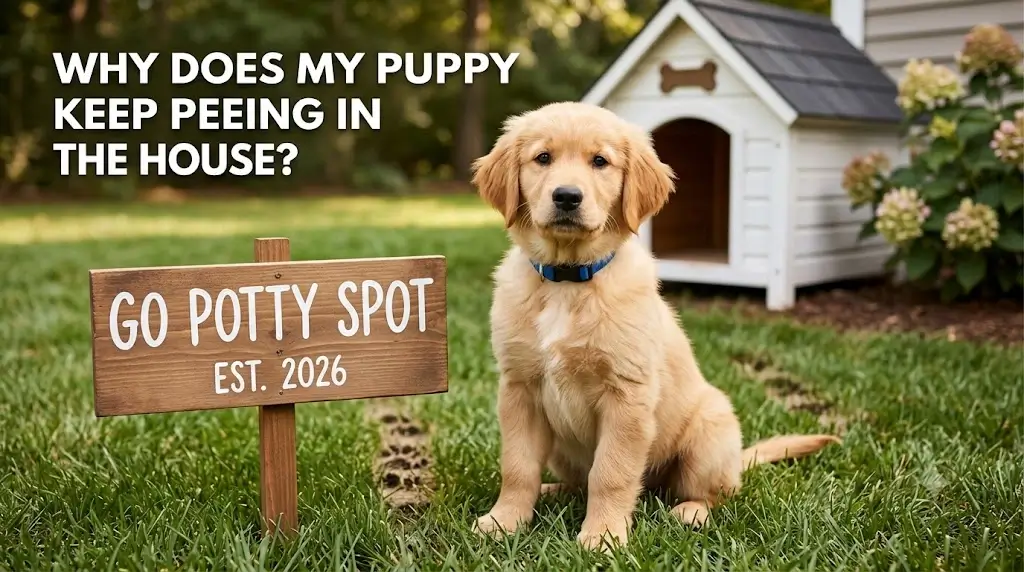
Quick answer:If your puppy keeps peeing in the house, first increase the frequency of potty trips, supervise the puppy closely, take them outside after predictable triggers such as waking, eating, drinking, playing, and napping, and reward outdoor urination immediately. If accidents are sudden, unusually frequent, painful, associated with other symptoms, or continue despite appropriate training, contact your veterinarian.
Why Does My Puppy Keep Peeing in the House?
When asking why does my puppy keep peeing in the house, repeated indoor urination is usually a sign that one or more parts of the house-training system are not yet reliable.
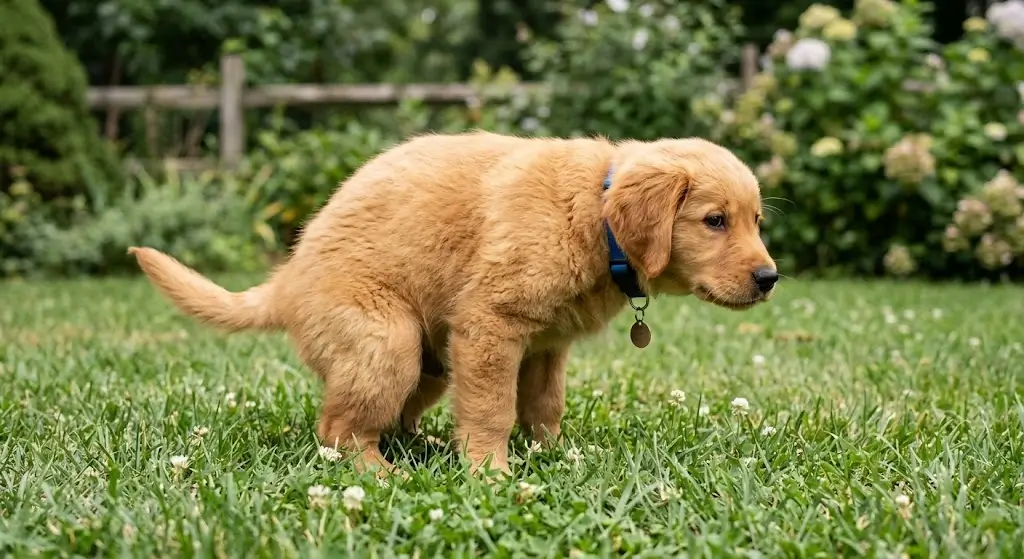
The problem can come from several different factors:
- The puppy is being taken outside too infrequently.
- The puppy has not learned a clear bathroom location.
- The puppy has too much unsupervised freedom.
- The owner is missing the puppy’s pre-potty signals.
- The puppy becomes distracted outside and does not eliminate.
- The puppy is rewarded too late after peeing outside.
- Indoor urine odor remains in previously soiled areas.
- The puppy has developed a preference for an indoor surface.
- The puppy is being asked to hold urine longer than is realistic for its age or individual needs.
- A medical problem may be contributing to frequent urination.
The fastest way to resolve why your puppy keeps peeing in the house is to identify which of these factors is actually occurring instead of treating every accident as the same problem. For a complete overview of the process, read our comprehensive guide on how to house train a puppy.
Is It Normal for Puppies to Pee in the House?
Yes. Indoor accidents are a normal part of early house training.
A young puppy does not automatically understand that the entire house is a living area while a particular outdoor location is the bathroom. That distinction has to be learned through repetition, supervision, and reinforcement.
The important question is not whether a puppy has ever had an accident. The more useful question is whether the puppy’s overall pattern is improving.
Signs of progress: Fewer accidents, longer successful periods indoors, more predictable outdoor elimination, faster response to the potty routine, and increasingly recognizable signals before the puppy needs to go.
Top Reasons Your Puppy Keeps Peeing in the House
1. The Puppy Is Too Young to Be Fully Reliable
Puppies are still developing physical control and learning bathroom habits. A puppy may understand the concept of going outside and still have accidents because the physical and behavioral routine is not yet dependable.
Expecting adult-level reliability from a young puppy can lead to unrealistic schedules and preventable accidents.
2. Potty Trips Are Too Infrequent
One of the most common causes of repeated accidents is simply not providing enough opportunities to eliminate outside.
Instead of waiting for the puppy to become visibly desperate, take the puppy outside proactively around predictable events.
3. The Puppy Gets Too Much Freedom
A puppy with unrestricted access to several rooms can walk away from the owner, find a quiet corner, and urinate before anyone notices.
During early training, controlled access is useful because it allows the owner to observe behavior and respond quickly.
4. The Puppy Does Not Understand What “Go Potty” Means
Saying a bathroom cue does not automatically teach the puppy its meaning.
The cue becomes useful when it is repeatedly paired with the actual elimination behavior and followed by appropriate reinforcement.
5. The Puppy Is Distracted Outside
A puppy may walk outside, become fascinated by leaves, sounds, people, smells, or other animals, and return indoors without eliminating.
Several minutes later, the puppy may urinate inside because the biological need has not disappeared.
6. The Puppy Is Not Rewarded Quickly Enough
Reinforcement is most useful when it occurs close to the behavior you want to strengthen.
If the puppy urinates outside and the reward happens much later, the connection between outdoor elimination and the reward becomes less precise.
7. Previous Accident Areas Still Smell Like Urine
Dogs can detect odors that humans may no longer notice. If urine odor remains in a carpet, rug, floor seam, or other absorbent material, the area may continue to function as an attractive bathroom location.
8. The Puppy Has Learned a Surface Preference
Puppies can develop preferences for grass, carpet, pads, concrete, dirt, or other surfaces.
A puppy that repeatedly urinates on carpet may not understand why carpet is different from grass. The training goal is to make the desired bathroom surface predictable and reinforce its use.
9. The Puppy Is Being Asked to Wait Too Long
Potty schedules should reflect the puppy’s age, size, activity, water intake, sleep, meals, and individual behavior rather than a rigid universal formula.
A puppy that is consistently having accidents near the end of a scheduled interval may simply need more frequent opportunities.
10. There May Be a Medical Problem
Training is not the only possible explanation for frequent urination.
If urination becomes unusually frequent, painful, difficult, bloody, or suddenly changes after a period of reliable behavior, contact a veterinarian.
How Often Should I Take My Puppy Outside to Pee?
There is no single potty interval that works for every puppy. A practical schedule should consider age, size, recent water intake, meals, sleep, activity, and the puppy’s individual pattern.
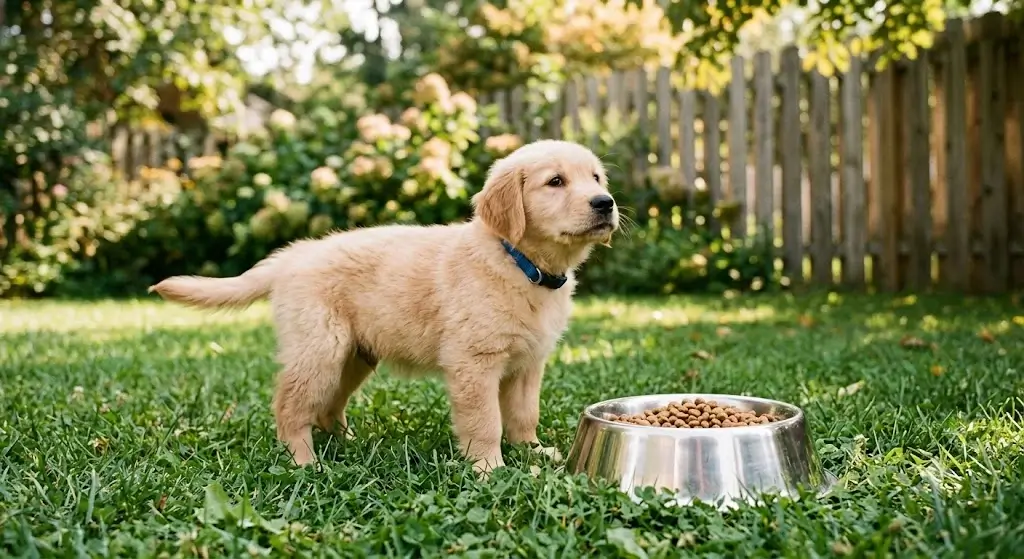
During active house training, provide outdoor opportunities around predictable triggers rather than relying only on the clock. You can align these triggers with an age-appropriate puppy house training schedule to maintain consistency throughout the day.
| Trigger | What to Do | Why It Matters |
|---|---|---|
| Immediately after waking | Take the puppy outside | Sleeping often ends with a bathroom need. |
| After a meal | Provide a potty opportunity | Eating can be followed by elimination. |
| After a nap | Go outside promptly | Prevents post-sleep accidents. |
| After active play | Offer another potty trip | Activity can change bathroom needs. |
| After substantial drinking | Monitor closely and provide an opportunity | Increased fluid intake can affect urination. |
| Before bedtime | Take the puppy outside | Creates a consistent nighttime routine. |
| When the puppy signals | Respond promptly | Reinforces communication. |
If accidents continue, shorten the interval between potty opportunities rather than waiting for the puppy to fail repeatedly.
Why Does My Puppy Pee Inside Right After Coming Inside?
This is a particularly frustrating pattern, but it usually has a practical explanation.
The puppy may not have actually emptied its bladder outside. Outdoor distractions can interrupt the behavior, or the puppy may not yet understand that the trip is specifically for elimination.
Another possibility is that the puppy becomes relaxed and active after returning indoors, making the need to urinate more obvious.
What to do
- Take the puppy to the same appropriate bathroom area.
- Keep the initial potty trip calm and low-distraction.
- Give the puppy time to investigate and eliminate.
- When the puppy finishes, reward immediately.
- If the puppy does not eliminate, maintain close supervision after returning inside.
- Try another outdoor trip rather than allowing unrestricted indoor roaming.
Why Does My Puppy Pee on the Carpet but Not Outside?
Carpet can feel different from hard flooring and may resemble a soft natural substrate to a puppy that has not yet learned the household rule.
Repeated accidents can also create an odor association that makes the same area more likely to be used again.
The solution is not to punish the puppy for liking carpet. Instead:
- Restrict access to carpeted areas during early training.
- Clean previous accident areas thoroughly.
- Increase outdoor potty opportunities.
- Reward outdoor elimination immediately.
- Gradually reintroduce carpeted rooms after reliability improves.
Why Does My Puppy Pee in the Same Spot Every Time?
Repeated use of one indoor location often results from a combination of odor, habit, surface preference, and easy access.
If the puppy repeatedly returns to the same spot, treat that area as a management problem rather than waiting for the puppy to “understand” that it is wrong.
- Block access temporarily.
- Clean the area thoroughly with an appropriate pet-urine cleaner.
- Increase supervision.
- Take the puppy outside more proactively.
- Reward successful outdoor elimination.
Why Does My Puppy Pee in the House at Night?
Nighttime accidents can happen because the puppy is still developing reliable overnight bathroom habits or because the final potty opportunity occurs too early.
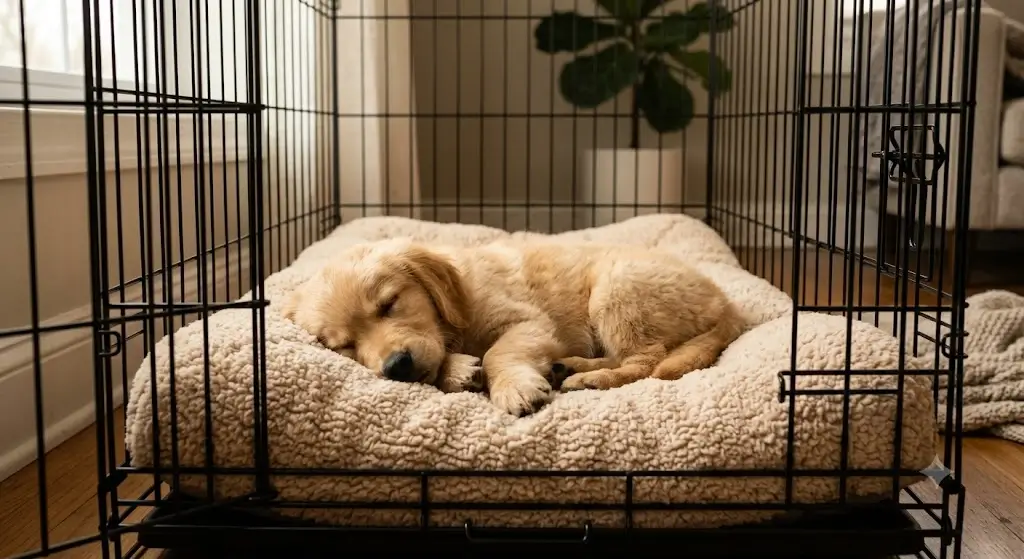
Create a predictable bedtime routine and take the puppy outside shortly before settling down for the night.
Young puppies may still require overnight bathroom opportunities. The appropriate schedule depends on the individual puppy rather than a universal age-based guarantee.
If nighttime urination suddenly increases after the puppy had been reliably dry, consider contacting your veterinarian.
Why Does My Puppy Keep Peeing in the House After Being Potty Trained?
A puppy can appear house trained before the behavior is fully reliable.
If you are confused about why your puppy keeps peeing in the house after making good progress, temporary setbacks can occur after:
- Moving to a new home.
- Changes in household routine.
- Changes in feeding schedule.
- Visitors or unusual activity.
- Travel.
- Changes in outdoor access.
- Periods of increased excitement.
- Too much freedom too quickly.
If accidents return, temporarily go back to the previous successful level of supervision and scheduling.
How to Stop a Puppy From Peeing in the House
The most reliable strategy is to improve the entire training system rather than focusing on the accident itself.
1. Increase Potty Opportunities
If the puppy is having frequent accidents, take the puppy outside more often.
2. Supervise Indoors
Keep the puppy within sight during periods when accidents are likely.
3. Reduce Unsupervised Freedom
Use an appropriate confined or gated area when direct supervision is not possible.
4. Use the Same Bathroom Location
Consistency makes the desired location easier to recognize.
5. Reward Outdoor Peeing Immediately
Deliver praise or another appropriate reward as soon as the puppy finishes.
6. Clean Indoor Accidents Thoroughly
Remove urine odor rather than simply masking it.
7. Track the Pattern
Record meals, naps, outdoor trips, successful elimination, and accidents to identify predictable triggers.
8. Expand Freedom Gradually
Give access to additional rooms only after the puppy is reliable in the current environment.
Should I Punish My Puppy for Peeing Inside?
No. Punishment is not a useful way to teach a puppy where to urinate.
If you discover a puddle after the fact, the puppy cannot meaningfully connect a delayed correction with the earlier elimination.
If you catch the puppy beginning to urinate, calmly interrupt when practical and take the puppy to the appropriate bathroom location. If the puppy finishes outside, reinforce that behavior.
Do not use the accident as a confrontation.The useful training information is where you want the puppy to eliminate, not how upset the owner is about the mistake.
What Should I Do If I Catch My Puppy Peeing Inside?
Stay calm.
If you notice the puppy beginning to urinate, interrupt without frightening the puppy and move toward the outdoor bathroom location.
If the puppy finishes outside, reward immediately.
If the puppy has already finished, simply clean the area thoroughly and review what happened before the accident.
Ask:
- How long had it been since the last potty trip?
- Had the puppy recently woken up?
- Had the puppy eaten or drunk?
- Was the puppy playing?
- Was the puppy unsupervised?
- Did the puppy show a signal?
- Was the outdoor trip too distracting?
How to Clean Puppy Pee From the House
Thorough accident cleanup is an important part of house training.
Use a pet-safe enzymatic urine cleaner appropriate for the surface and follow its label directions.
Pay attention to:
- Carpet fibers and carpet padding.
- Rugs and mats.
- Floor seams and grout.
- Baseboards and door frames.
- Upholstery and furniture edges.
- Corners and hidden spaces behind furniture.
Avoid relying only on a fragrance to cover the smell. The goal is to break down the urine enzymes completely.
Why Supervision Is So Important During Puppy Potty Training
Supervision allows you to prevent accidents before they happen.
When a puppy is wandering through the house alone, the owner may only discover the accident after the behavior is finished.
When the puppy remains nearby, subtle behaviors such as sniffing, circling, pacing, or heading toward a quiet corner can become useful warning signals.
Supervision is therefore not about watching the puppy forever. It is a temporary management strategy while the desired bathroom habit becomes reliable.
How Much Freedom Should a Puppy Have During House Training?
Give the puppy only as much freedom as they can currently handle successfully.
If the puppy is reliable in one room but has accidents when given access to the entire house, the solution is usually to reduce access again.
Freedom should follow reliability. Do not increase access simply because the puppy has reached a certain age or because several days have passed.
Why Does My Puppy Pee When Excited?
Some puppies urinate during highly exciting social situations. This can be different from ordinary house-training accidents.
Excitement-related urination may occur during greetings, intense play, or interactions with unfamiliar people.
Keep greetings calm, reduce excessive stimulation, and provide regular bathroom opportunities before predictable high-energy events.
If the behavior is persistent, severe, or accompanied by other urinary changes, discuss it with a veterinarian or qualified behavior professional.
Why Does My Puppy Pee When I Come Home?
Coming home can create a burst of excitement that makes urinary control more difficult for some puppies.
Keep greetings calm and consider taking the puppy outside soon after arriving home rather than creating a long, energetic greeting inside.
The goal is to reduce the intensity of the situation while also giving the puppy an appropriate bathroom opportunity.
Why Does My Puppy Pee in the House After Playing?
Play can be a predictable trigger for another potty trip.
Puppies can become absorbed in activity and fail to recognize their own bathroom signals until the need becomes urgent.
This creates a predictable transition between high-energy activity and bathroom time.
Why Does My Puppy Pee After Drinking Water?
Increased fluid intake can naturally be followed by increased urination.
Do not solve house-training problems by unnecessarily restricting normal access to water. Instead, observe drinking patterns and provide appropriate bathroom opportunities.
Excessive thirst or a marked change in drinking behavior, particularly when accompanied by increased urination or other symptoms, should be discussed with a veterinarian.
Why Does My Puppy Pee in the Crate?
A puppy that repeatedly urinates in the crate may be experiencing a schedule or management problem, may be spending too long between bathroom opportunities, or may not yet have developed reliable elimination control.
Crate training and house training should be coordinated rather than treating the crate as a place where the puppy is expected to remain indefinitely without a bathroom opportunity.
If crate accidents are frequent or sudden, review the schedule and consider medical causes when appropriate.
How to Use a Potty Log to Find the Problem
A potty log can reveal patterns that are difficult to notice from memory.
| Time | Event | Outside? | Result | Notes |
|---|---|---|---|---|
| Morning | Woke up | Yes | Peed | Rewarded immediately |
| After breakfast | Meal | Yes | No pee | Distracted |
| Later morning | Free play | No | Indoor accident | Had been unsupervised |
The example above reveals a likely management problem: the puppy had an unsuccessful outdoor trip followed by unsupervised play.
Recording the sequence helps you change the system rather than simply reacting to the accident.
A Simple 7-Day Puppy Potty Reset
If your puppy is repeatedly having accidents, a temporary reset can make the routine clearer. For step-by-step guidance to stop indoor messes, check out our structured 7-day puppy house training plan.
Days 1–2: Tight Management
- Keep the puppy close during awake periods.
- Increase outdoor potty opportunities.
- Use the same general bathroom area.
- Reward successful outdoor elimination immediately.
- Clean all known accident areas.
Days 3–4: Identify Patterns
- Track meals, naps, play, drinking, and accidents.
- Look for recurring pre-potty signals.
- Adjust the schedule around predictable triggers.
Days 5–7: Test Reliability
- Allow slightly more freedom if accidents have decreased.
- Continue immediate reinforcement.
- Return to tighter management if accidents increase.
This is not a guarantee that a puppy will become fully house trained in seven days. It is a structured way to address why your puppy keeps peeing in the house and identify what needs to change.
When Should You Worry About a Puppy Peeing Too Much?
Frequent urination can sometimes be part of normal puppy behavior, but there are situations where it should not simply be attributed to incomplete house training.
Contact a veterinarian if your puppy has:
- Sudden changes in urination.
- Repeated attempts to urinate.
- Straining or apparent difficulty urinating.
- Signs of pain or discomfort.
- Blood in the urine.
- Markedly increased thirst.
- A major increase in urine volume.
- Vomiting, diarrhea, lethargy, or other concerning symptoms.
- Frequent accidents despite an appropriate, consistent training routine.
A puppy that suddenly changes from reliable bathroom behavior to frequent accidents deserves particular attention.
Could a UTI Cause My Puppy to Pee in the House?
A urinary tract problem can cause changes in urination, including increased frequency or discomfort. However, an indoor accident by itself does not establish a diagnosis.
If your puppy is repeatedly attempting to urinate, producing unusually small amounts, showing discomfort, having blood in the urine, or suddenly urinating much more frequently, contact your veterinarian.
A veterinarian can determine whether medical testing is appropriate.
When Is Repeated Puppy Peeing a Training Problem Instead of a Medical Problem?
Training-related accidents often follow predictable situations such as waking, eating, playing, extended indoor freedom, or missed potty trips.
Medical problems become more important to consider when the pattern changes suddenly, the puppy appears uncomfortable, urination is unusually frequent, or other physical symptoms appear.
These categories can overlap, so persistent problems should not be diagnosed solely from behavior at home.
Should You Limit Your Puppy’s Water to Prevent Accidents?
House training should not be based on unnecessary water restriction.
Instead, maintain appropriate access to water and use predictable potty opportunities to manage normal urination.
If your puppy is drinking substantially more than usual or appears unusually thirsty, that is a reason to discuss the change with your veterinarian rather than simply restricting water.
Why Taking the Puppy Outside Is Not Enough
Simply opening the door or taking the puppy outside does not guarantee that house training will improve.
The puppy needs a clear sequence:
- Go to the appropriate bathroom location.
- Have enough opportunity to eliminate.
- Receive immediate reinforcement after successful elimination.
- Return indoors under appropriate supervision.
If the puppy repeatedly goes outside but does not eliminate, the problem may be distraction, timing, insufficient opportunity, or lack of a learned bathroom routine.
How to Teach a Puppy That Outside Is the Bathroom
The puppy learns this through repeated associations rather than a single lesson.
Use the same general outdoor location, provide opportunities at predictable times, and reinforce successful elimination immediately.
Once the pattern becomes familiar, the puppy can begin anticipating the routine.
What If My Puppy Refuses to Pee Outside?
Avoid turning the potty trip into a long, exciting play session.
Bring the puppy to the appropriate bathroom area and keep the environment relatively calm. Give the puppy an opportunity to eliminate.
If nothing happens, return indoors only with close supervision and try again later.
The key is preventing the puppy from treating the unsuccessful outdoor trip as permission to immediately wander around the house unsupervised.
Should I Use Puppy Pee Pads?
Pee pads can be useful in some household situations, but they establish an indoor bathroom option.
If your ultimate goal is outdoor-only elimination, using pads can add another transition step because the puppy must eventually learn that the acceptable bathroom location has changed.
If pads are necessary or preferred, use one clearly defined location and keep the routine consistent.
Why Puppy Potty Training Sometimes Regresses
Potty training is not always a straight line.
A puppy may have several successful days followed by an accident. One accident does not necessarily mean the training has failed.
Look for changes in:
- Freedom and roaming access.
- Daily schedule and timing.
- Supervision levels.
- Sleep quality and duration.
- Meals and diet consistency.
- Activity levels.
- Household environment or visitors.
- Stress or overexcitement.
- Underlying physical health.
If the regression is caused by a management change, returning temporarily to the previous successful routine often provides a clearer path forward.
How to Prevent Puppy Pee Accidents Before They Happen
Prevention is easier than repeatedly correcting accidents.
- ☐ Take the puppy outside after waking.
- ☐ Provide a potty opportunity after meals.
- ☐ Take the puppy out after naps.
- ☐ Take the puppy out after active play.
- ☐ Watch after substantial drinking.
- ☐ Supervise closely indoors.
- ☐ Restrict access to unsupervised rooms.
- ☐ Watch for sniffing, circling, pacing, or other individual signals.
- ☐ Use a consistent outdoor bathroom location.
- ☐ Reward outdoor urination immediately.
- ☐ Clean accidents thoroughly with enzymatic cleaner.
- ☐ Record recurring accident patterns in a log.
- ☐ Increase management if accidents increase.
- ☐ Consider veterinary evaluation for sudden or unusual urinary changes.
Common Puppy Potty Training Mistakes
Mistake #1: Waiting for the Puppy to Ask
Young puppies may not know how to communicate the need to go outside. Proactive trips are more reliable during early training.
Mistake #2: Giving Too Much Freedom
Unrestricted access makes accidents harder to prevent.
Mistake #3: Staying Outside Too Long Without a Plan
A distracted puppy may treat the trip as playtime rather than a bathroom opportunity.
Mistake #4: Rewarding Too Late
Reinforcement should follow successful elimination as closely as practical.
Mistake #5: Punishing After an Accident
Delayed punishment does not teach the correct bathroom location.
Mistake #6: Ignoring Carpet and Fabric Odors
Residual odor can contribute to repeated use of the same area.
Mistake #7: Increasing Freedom Too Quickly
Reliability should determine freedom, not the calendar.
Mistake #8: Assuming Every Accident Is Behavioral
Sudden or unusual urinary changes can have medical causes.
Puppy Potty Training Decision Tree
Use this simple decision process when an accident occurs:
Did the puppy pee indoors?
↓
Was the puppy unsupervised?
Yes → Reduce unsupervised freedom and improve management.
No → Continue below.
Was it a predictable potty time?
Yes → Increase the frequency or timing of outdoor trips.
No → Continue below.
Was the puppy outside but did not pee?
Yes → Reduce distractions, allow another opportunity, and supervise closely after returning indoors.
No → Continue below.
Was the accident sudden or associated with urinary symptoms?
Yes → Contact your veterinarian.
How to Know If Your Puppy Is Actually Improving
Do not judge progress by whether the puppy has had zero accidents. Better indicators include:
- Accidents are becoming less frequent.
- The puppy stays dry for longer appropriate periods.
- The puppy eliminates faster after reaching the outdoor location.
- The puppy begins heading toward the exit.
- The puppy becomes more predictable after meals and naps.
- The puppy can handle slightly more freedom without accidents.
- The owner can anticipate potty needs more accurately.
These are signs that the bathroom routine is becoming established.
Frequently Asked Questions
Why does my puppy keep peeing in the house?
Common causes for why a puppy keeps peeing in the house include immature house-training skills, an infrequent potty schedule, too much indoor freedom, missed potty signals, outdoor distractions, surface preferences, residual urine odor, or an underlying medical issue.
How do I stop my puppy from peeing in the house?
Increase potty opportunities, supervise closely, restrict unsupervised access, use a consistent outdoor bathroom location, reward outdoor urination immediately, and clean indoor accidents thoroughly.
Why does my puppy pee inside right after coming inside?
The puppy may not have eliminated outside, may have been distracted, or may still need another bathroom opportunity. Keep the puppy supervised after an unsuccessful outdoor trip and try again.
Why does my puppy pee on the carpet?
Carpet may feel like an appropriate bathroom surface to a puppy that has not learned the difference between indoor and outdoor substrates. Residual urine odor can also encourage repeated accidents.
Why does my puppy keep peeing in the same spot?
Residual odor, habit, surface preference, and easy access can all contribute. Clean the area thoroughly, block access temporarily, and increase outdoor reinforcement.
Should I punish my puppy for peeing inside?
No. Punishment does not teach the puppy where to eliminate and can interfere with communication. Focus on prevention, supervision, and reinforcement of outdoor elimination.
How often should I take my puppy outside to pee?
Provide frequent opportunities based on the puppy’s age, size, recent meals, drinking, sleep, activity, and individual needs. Always prioritize trips after waking, eating, naps, and active play.
Why does my puppy pee at night?
Young puppies may not yet have reliable overnight bathroom control. Establish a consistent bedtime potty routine and provide overnight opportunities when necessary for the individual puppy.
Why does my puppy pee after playing?
Active play can be a predictable trigger for another bathroom trip. Take the puppy outside after play and reward successful elimination.
Why does my puppy pee when excited?
Some puppies urinate during highly exciting greetings or interactions. Keep greetings calmer, provide appropriate potty opportunities, and discuss persistent problems with a veterinarian or qualified behavior professional.
Should I restrict my puppy’s water to prevent accidents?
Do not use unnecessary water restriction as a house-training strategy. Maintain appropriate access to water and manage bathroom opportunities. Marked changes in thirst should be discussed with a veterinarian.
Could a UTI cause my puppy to pee in the house?
Urinary problems can cause changes in urination, including increased frequency or discomfort. Indoor accidents alone do not diagnose a UTI. Contact a veterinarian if your puppy shows urinary symptoms or sudden changes.
Why did my puppy start having accidents after being potty trained?
Changes in routine, environment, freedom, schedule, excitement, or health can cause setbacks. Return temporarily to a more structured routine and consider veterinary evaluation if the change is sudden or persistent.
How long does puppy potty training take?
There is no universal timeline. Puppies develop physical control and reliable habits at different rates. Judge progress by decreasing accidents and increasing reliability rather than a fixed number of days.
When should I call a veterinarian about my puppy peeing in the house?
Contact a veterinarian for sudden urinary changes, frequent attempts to urinate, straining, pain, blood in the urine, markedly increased thirst, major changes in urine volume, other concerning symptoms, or persistent accidents despite an appropriate training routine.
Final Answer: Why Your Puppy Keeps Peeing in the House
If you are still wondering why does my puppy keeps peeing in the house, your puppy probably is not doing it because they are being stubborn or trying to disobey you. More often, the puppy is still learning the bathroom routine, the schedule needs adjustment, the puppy has too much freedom, or the desired behavior is not being reinforced clearly enough.
Start with the basics: take the puppy outside at predictable times, especially after waking, eating, sleeping, drinking, and playing. Supervise closely indoors, restrict unsupervised access, use a consistent bathroom location, and reward successful outdoor urination immediately.
When an accident happens, treat it as information. Ask what happened immediately beforehand and change the schedule or management system accordingly.
Most importantly, do not ignore a sudden change in urination. If the puppy is urinating unusually often, appears uncomfortable, strains, has blood in the urine, drinks substantially more than usual, or develops other symptoms, veterinary evaluation is appropriate.
The Core House-Training Ru
