
AKC & AVMA WEATHER PROTOCOLS 2026
House Training a Puppy in Bad Weather
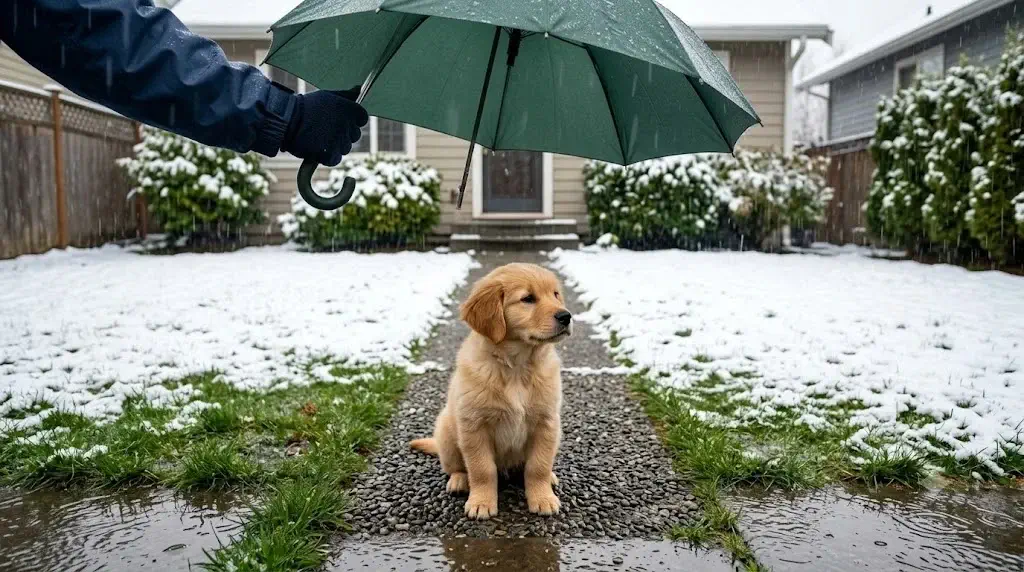
House training a puppy in bad weather requires adapting management protocols: extreme cold, deep snow, driving rain, wind, and heat trigger intense sensory avoidance that causes puppies to hold elimination until returning indoors. The solution is not to abandon the routine or force a puppy to endure hazardous exposure. Successfully managing house training a puppy in bad weather relies on establishing a weather-proof potty zone, keeping outdoor exposures under five minutes, rewarding immediately on the turf, and deploying controlled indoor backups during dangerous meteorological events.
Quick Reference Specification: Bad-Weather House Training Matrix
This calibrated environmental matrix benchmarks weather classifications, sensory stressors, primary training interventions, maximum dwell limits, and veterinary safety standards for house training a puppy in bad weather in 2026.
| Weather Classification | Sensory / Physiological Stressor | Primary Training & Physical Intervention | Maximum Outdoor Dwell | Industry Safety Benchmark |
|---|---|---|---|---|
| Manageable Wet / Cold | Paw pad chill & wet blade texture | Fixed 6-ft leash + immediate ground reward | 3–5 minutes maximum | AKC Routine Adherence Standard |
| Deep Snow Accumulation | Abdominal freezing & footing loss | Shoveled 6×6-ft grass trench + boot barrier | 3 minutes focused attempt | AVMA Cold Injury Prevention |
| Sub-Zero Wind Chill (<20°F) | Rapid core hypothermia in toy breeds | Insulated thermal jacket + direct carry | 2–3 minutes maximum | Tufts Animal Condition Assessment |
| Extreme Ambient Heat (>90°F) | Pad burns & rapid hyperthermia | Shaded natural grass + dawn/dusk shifts | 3 minutes; avoid asphalt | AAHA Thermal Burn Criteria |
| Severe Convective Storms | Acoustic trauma & lightning hazard | Temporary indoor real-grass or pad station | 0 minutes (Indoor zero-exposure) | NOAA Severe Weather Safety Protocol |
Why Bad Weather Causes House-Training Problems
Extreme weather conditions disrupt juvenile sensory thresholds, triggering acute instinctual avoidance reflexes in developing puppies. A puppy accustomed to stepping onto warm, predictable grass hesitates when that substrate becomes icy, waterlogged, noisy from high winds, or pelted by driving sleet.
Inclement weather complicates every stage of the bathroom trip. Young dogs must contend with freezing surfaces, damp belly fur, rattling umbrellas, slick sidewalks, blowing debris, and reduced ambient scents. These intense sensory distractions cause puppies to forget their physical urgency, resulting in a classic housebreaking failure loop:
Weather becomes unpleasant → puppy avoids eliminating → puppy returns indoors → accident
Understanding this biological pattern is crucial: going outside is not synonymous with successfully eliminating outside. Recognizing this distinction is the cornerstone of house training a puppy in bad weather without long-term regressions.
The Main Rule: Separate Potty Trips From Walks
Dedicated elimination trips must remain completely detached from recreational outdoor walking during inclement weather. When conditions are poor, attempting to combine physical exercise, neighborhood socialization, and bathroom elimination creates confusion and prolongs uncomfortable exposure.
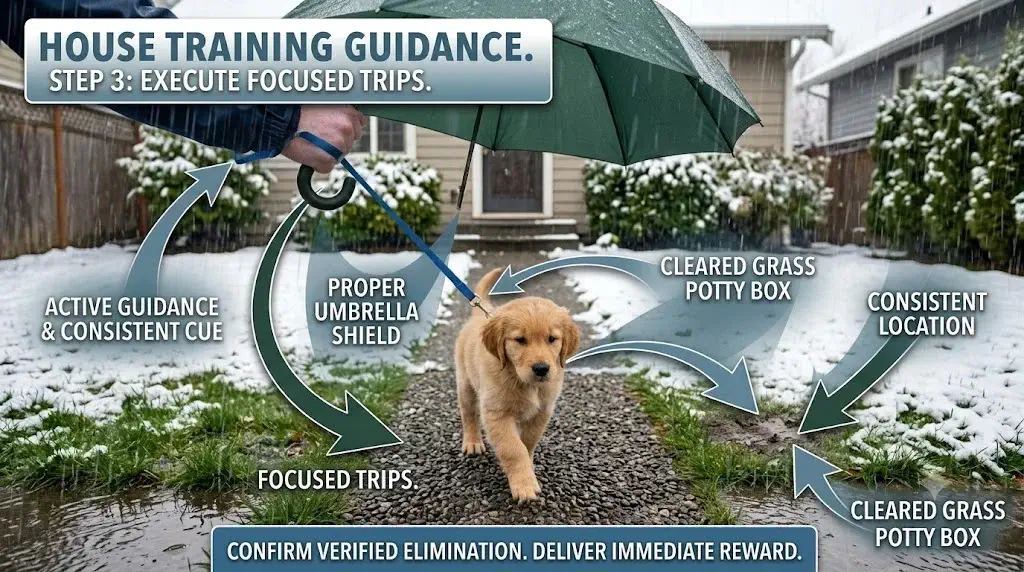
During severe cold, precipitation, or heavy wind, structure the trip as a single-purpose mission: take the puppy directly to the designated spot, recite the potty cue once, remain stationary for three to five minutes, reward actual voiding immediately, and bring the puppy straight inside. Save physical exercise and leash manners for indoor games or milder weather windows.
Equip gear indoors → proceed directly to designated relief spot → issue verbal cue → verify complete voiding → deliver ground-level reward → return indoors for drying.
What Counts as Bad Weather for a Puppy?
Canine thermal tolerance varies dramatically across breed morphology, coat density, and body surface area. An environmental temperature that barely affects a thick-coated Alaskan Malamute can induce hypothermic shivering in a short-coated Chihuahua within two minutes.
When implementing house training a puppy in bad weather, evaluate meteorological conditions across three standardized risk categories:
Manageable Weather
Light rain, flurries, cool winds, or temperatures between 32°F and 45°F where brief outdoor trips remain physiologically safe.
Challenging Weather
Heavy downpours, deep snowdrifts, temperatures below 20°F, or heat above 90°F that require apparel and shoveling.
Unsafe Weather
Convective lightning, flash flooding, sub-zero wind chills, gale-force winds, or severe hailstorms where outdoor trips must be canceled.
How to House Train a Puppy When the Weather Is Bad
Systematic procedural preparation ensures rapid outdoor execution before environmental discomfort triggers behavioral shutdown. Follow this seven-step protocol for house training a puppy in bad weather:
- Prepare before the puppy becomes urgent: Fasten boots, secure jackets, and stage towels near the entryway before opening the door.
- Use the same bathroom location: Familiar olfactory anchors speed up elimination decisions when sensory stimuli are overwhelming.
- Go directly to the spot: Carry toy breeds or walk medium-to-large pups on a 6-foot fixed leash to bypass puddles or snow banks.
- Use your established potty cue: Recite your verbal command once clearly, signaling that the trip is strictly for business.
- Wait for actual elimination: Monitor physical posturing closely rather than assuming standing on turf indicates voiding.
- Reward immediately: Deliver a high-value treat at ground level within three seconds of bladder or bowel completion.
- Return indoors promptly: Escort the puppy inside immediately to establish that eliminating quickly ends cold or wet exposure.
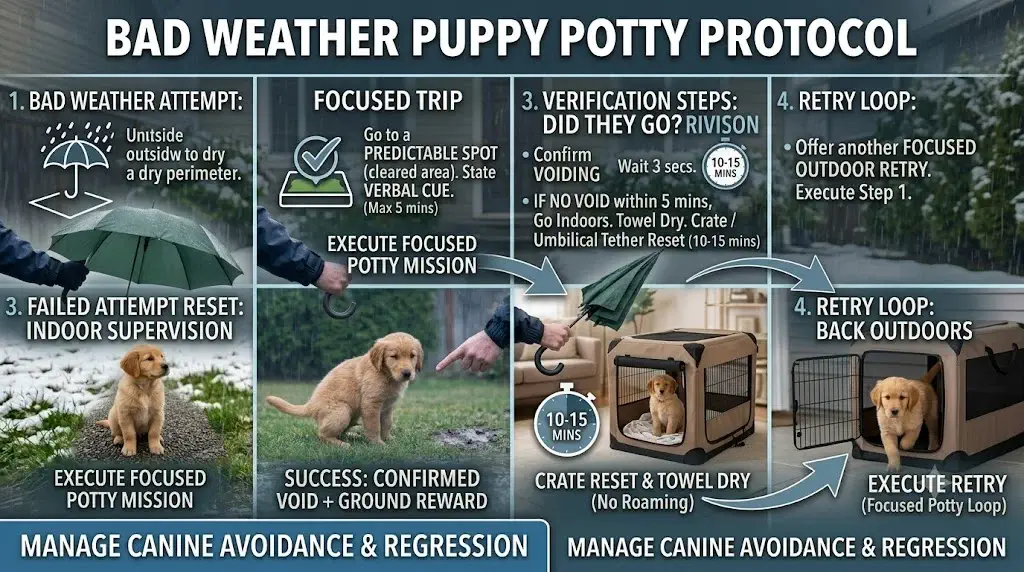
If the puppy fails to eliminate, do not grant unrestricted house freedom. Maintain direct umbilical supervision or enforce a 10-minute crate reset before attempting a second focused trip.
House Training a Puppy in Rain
Liquid saturation washes out familiar territorial scent markings while creating adverse tactile paw sensation. Many puppies dislike cold mud, deep standing water, and water droplets splashing onto their backs.
Select a relief area with rapid subterranean drainage and natural overhead protection, such as an architectural overhang or thick evergreen canopy. Avoid low-lying turf where water pools and roadway runoff collects. The objective of house training a puppy in bad weather is not creating a bone-dry landscape, but providing a safe, predictable surface the puppy can tolerate. For specialized wet-weather tactics, consult our companion guide on House Training a Puppy in the Rain.
House Training a Puppy in Snow
Deep snowdrifts chill juvenile abdominal tissue and remove visual lawn boundaries, triggering potty refusal. A young puppy encountering snow taller than their chest will panic, flounder, or attempt to climb back onto the porch rather than squatting.
Clear a dedicated 6×6-foot patch of grass with a snow shovel immediately after fresh snowfall. Shovel a clear, direct walking trench from your exterior door to this relief box, ensuring the puppy does not have to trudge through deep powder. Avoid applying harsh, toxic chemical de-icing rock salts along this path, as chemical salts cause severe caustic paw burns and induce gastrointestinal poisoning if licked off paws.
House Training a Puppy in Cold Weather
Low ambient temperatures cause involuntary muscle shivering that inhibits urethral sphincter relaxation. Cold snaps create two distinct hurdles: puppies refuse to remain outside, and frozen ground chills bare paw pads quickly.
Efficiency is paramount when house training a puppy in bad weather during winter. Stage all coats, leashes, and treats indoors in advance. Carry young puppies directly to the relief site to prevent heat loss from walking across freezing concrete. Watch for clear clinical signs of hypothermic distress: lifting paws off the ground alternately, full-body shivering, whimpering, or curling into a ball. If these occur, abort the outdoor trip immediately.
House Training a Puppy in Hot Weather
High surface temperatures on artificial turf and masonry cause thermal paw pad burns within sixty seconds of contact. When summer air temperatures reach 85°F, unshaded asphalt and concrete surfaces quickly climb past 125°F.
Always execute the “7-second back-of-hand test” on hard surfaces before allowing your puppy to walk on them. Relocate summer potty breaks to deep shaded natural turf, and shift the primary schedule to cooler early-morning and late-evening hours. Keep summer trips brief, provide fresh, cool water indoors, and watch for respiratory signs of canine heat distress such as heavy panting, brick-red gums, or sluggish movement.
House Training a Puppy in Strong Wind
High wind velocities generate erratic kinetic movement and acoustic roar that overload developing canine sensory systems. Wind makes puppies nervous because tree branches sway, trash cans rattle, doors slam, and blowing leaves simulate predatory movement.
When managing house training a puppy in bad weather during high winds, position your potty station along a sturdy structural windbreak, such as the leeward side of a solid fence or garage wall. Keep the puppy close on a short 4-foot lead, stand between the wind and the dog to create a physical buffer, and maintain a calm, grounded posture to help your puppy feel secure.
House Training During Thunderstorms
Severe convective storms present acute electrical hazards and acoustic trauma risks that preclude safe outdoor training. Lightning, falling branches, flying debris, and torrential downpours make outdoor trips unsafe.
Never force a terrified puppy outdoors during an active thunderstorm simply to maintain schedule continuity. Forcing a dog into a storm induces severe acoustic phobias and noise-related panic that can take months of behavioral therapy to undo. If a storm is active, deploy a pre-established indoor backup station (such as a real-grass tray in the garage or utility room), returning to outdoor habits once the storm front clears.
Create a Weather-Proof Potty Location
Dedicated architectural micro-zones provide physical protection from seasonal extremes while preserving essential outdoor elimination habits. Establishing an engineered bathroom zone simplifies house training a puppy in bad weather throughout winter and monsoon seasons.
| Architectural Feature | Functional Benefit for Bad Weather Housebreaking |
|---|---|
| Consistent Relief Perimeter | Conditioned scent anchors encourage faster elimination decisions in freezing air. |
| Rapid Sub-Surface Drainage | Prevents water pooling, slush accumulation, and frozen ice dams under paw pads. |
| Slip-Resistant Substrate | Provides firm mechanical footing so puppies can balance and squat without slipping. |
| Overhead Structural Shelter | Canopies or rooflines block heavy rain, sleet, and driving crosswinds. |
| Direct Entryway Proximity | Shortens transit distances to minimize hypothermia and accidental slip injuries. |
Should You Use a Covered Outdoor Potty Area?
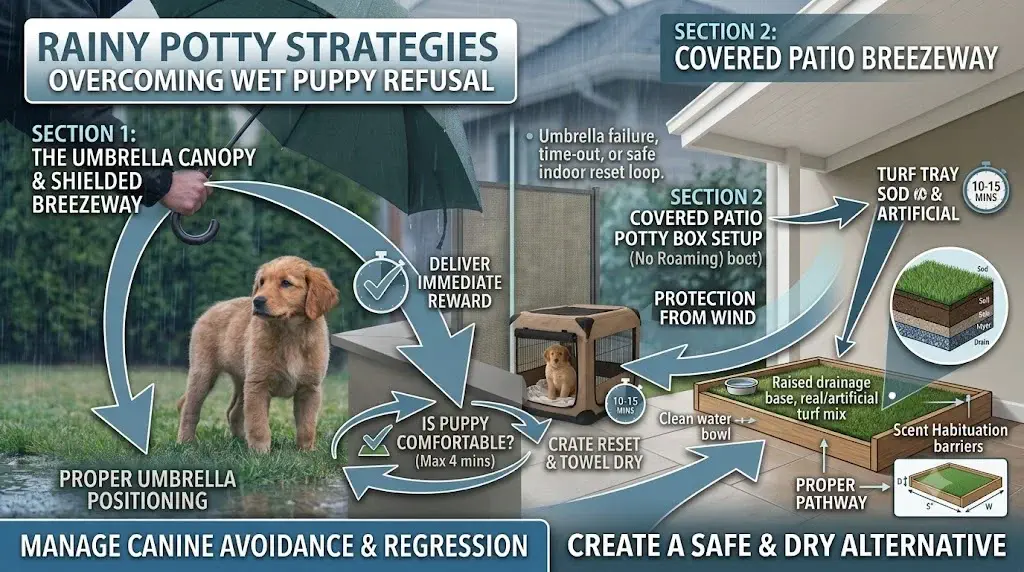
Canopy-protected outdoor zones reduce precipitation exposure while preserving essential outdoor substrate habits. A covered porch, carport, or temporary 10×10-foot pop-up canopy prevents puppies from feeling overwhelmed by driving rain or snow.
Ensure the covered area features natural sod, artificial turf, or pea gravel over a rubber drainage mat. Maintain strict spatial consistency: do not alternate between uncovered lawns and covered porches from day to day, as shifting locations can confuse young dogs. Once mild weather returns, transition the puppy gradually back to open turf.
Should a Puppy Wear a Raincoat or Winter Coat?
Insulated waterproof outerwear prevents hypothermia in juvenile canines lacking mature subcutaneous fat reserves. Small, toy, and short-coated breeds lose core body heat quickly when exposed to cold rain or sleet.
Select weather gear designed for function rather than style:
- Ensure an ergonomic underbelly cutout that prevents urine splash-back on the fabric.
- Choose quiet, non-crinkling materials that do not startle noise-sensitive puppies.
- Desensitize your puppy to wearing the garment indoors with treats before bad weather hits.
Protective clothing should keep trips comfortable, not serve as an excuse to keep a young puppy outside in extreme cold.
What If My Puppy Refuses to Go Outside?
Systematic behavioral assessment pinpoints whether avoidance is triggered by temperature, substrate wetness, or wind noise. Puppies rarely display generalized obstinance; they react to specific environmental stressors.
Determine the precise trigger by asking: “What environmental variable changed compared to our last successful trip?” If the puppy avoids wet turf, lay down a rubber runner or dry boards. If they fear driving rain, hold a large umbrella over the elimination area. Identifying the exact sensory obstacle allows you to adjust the setup rather than blaming the puppy.
What to Do When a Puppy Refuses to Potty Outside
Prolonged outdoor standoffs increase hypothermia risks and reinforce stubborn indoor escape behaviors. If conditions are safe but the puppy refuses to eliminate after four minutes, follow this protocol:
- Bring the puppy indoors calmly without verbal reprimands.
- Towel dry damp paws and coat thoroughly to restore core body warmth.
- Place the puppy directly into their crate or maintain umbilical tethering.
- Prevent access to carpeted areas or common accident spots.
- Offer a second focused outdoor attempt after 10 to 15 minutes of crate rest.
- Deliver immediate, high-value reinforcement the moment outdoor elimination occurs.
This protocol prevents puppies from learning that refusing to go outside earns immediate indoor freedom.
How to Handle Indoor Puppy Pads During Bad Weather
Stationary indoor backup stations provide safe contingency relief during extreme meteorological hazards. When sub-zero blizzards or severe thunderstorms make outdoor excursions dangerous, an indoor backup is necessary.
To use an indoor backup without derailing your long-term outdoor housebreaking:
- Confine the backup pad or real-grass box to a single uncarpeted room (such as a laundry room or garage).
- Place pads inside a rigid, raised-lip silicone tray to prevent floor leaks and border chewing.
- Maintain the exact same verbal potty cue and reward schedule used outdoors.
- Resume outdoor potty trips as soon as severe weather passes.
Apartment House Training in Bad Weather
Multi-stage transit delays across high-rise residential properties amplify bladder urgency during inclement weather. Apartment dwellers must navigate hallways, elevators, stairwells, and lobbies before reaching outdoor relief areas.
Bad weather makes every second of transit count. Stage all boots, leashes, and coats beside the door so you are ready to move quickly. Carry young puppies through lobbies to prevent midway accidents on common hallway carpets. For high-rise apartments facing severe winter conditions, a real-grass balcony box offers a reliable intermediate solution that preserves natural turf preferences.
Bad Weather and Nighttime Potty Trips
Reduced nocturnal visibility paired with severe weather heightened juvenile fear responses and prolongs outdoor trips. Freezing night winds and shadows make young puppies hesitant to leave the security of the home.
Equip yourself with a high-lumen headlamp or flashlight to clearly illuminate the potty zone. Keep nighttime trips strictly business: no games, no talking, and no wandering. Lead the puppy directly to the cleared spot on a short leash, give the cue, reward quietly upon voiding, and return immediately to the crate for sleep.
Why Puppies Have Accidents After Bad-Weather Potty Trips
Thermal re-warming indoors causes constricted abdominal sphincters to relax, releasing un-voided urine onto domestic flooring. A puppy shivering outside often rushes through the door with a full bladder, only to eliminate once they reach a warm living room rug.
| Observed Behavior | Underlying Physiological / Behavioral Cause | Targeted Management Correction |
|---|---|---|
| Bolts straight to the door | Urgent flight drive to escape freezing air or wet precipitation. | Clear a sheltered 6×6-ft turf zone and shield the puppy with an umbrella. |
| Sniffs constantly without squatting | Sensory overload; washed-out or frozen territorial scent markers. | Enforce a 10-minute crate reset indoors, then retry for 3 minutes. |
| Accident occurs 2 mins post-entry | Abdominal sphincters relax in warm ambient indoor air. | Maintain direct umbilical supervision immediately upon entering. |
| Refuses to walk on snow | Cold thermal shock on sensitive, bare paw pad tissue. | Shovel a walking trench and apply pet-safe protective paw balm. |
How to Prevent a Weather-Related House-Training Regression
Proactive confinement tightening prevents seasonal weather disruptions from unraveling core housebreaking habits. A puppy that seemed fully reliable during summer may regress when winter hits because the outdoor experience feels completely unfamiliar.
When bad weather arrives, adjust your indoor management immediately:
Tighter Supervision
Maintain direct line-of-sight monitoring, especially following an unproductive outdoor attempt.
Predictable Timing
Escort the puppy outside on a strict schedule rather than waiting for them to signal at the door.
Restricted Territory
Gate off carpeted bedrooms and basements using sturdy freestanding baby gates.
High-Value Rewards
Use irresistible treats (like freeze-dried liver) to make eliminating in the cold worth the effort.
Do Not Punish Weather-Related Accidents
Aversive physical scolding induces elimination anxiety and prompts puppies to void covertly in hidden corners. Indoor accidents during severe weather stem from management oversights, not canine disobedience.
If you discover an accident, clean it thoroughly without scolding. Ask yourself where the breakdown occurred: was the trip cut short by shivering? Was the snow path too deep? Was the puppy given too much freedom upon entering? Adjust your management protocol rather than scolding the dog. For deeper behavioral fixes, explore our guide on How to Prevent Repeat Puppy Accidents.
How to Clean an Accident Properly
CRI-certified bio-enzymatic digesters hydrolyze insoluble uric acid crystals, eliminating residual pheromone scent markers. Standard household cleaners, ammonia, and vinegar merely mask odors to human noses while leaving scent cues detectable to dogs.
Blot fresh urine immediately using clean paper towels under firm downward pressure. Saturate the contaminated fibers with a high-potency bio-enzymatic cleaner to digest organic urea and bile pigments, keeping the area damp for 15 minutes. For complete product testing and reviews, consult our Best Puppy Accident Cleaners guide.
A Bad-Weather Potty Schedule
Anchoring outdoor relief breaks to natural digestion and sleep cycles minimizes outdoor exposure while preventing accidents. Adjust your daily routine around key physiological triggers:
| Biological Trigger | Bad-Weather Tactical Execution |
|---|---|
| Waking up in the morning | Carry the puppy directly from the crate to the shoveled or sheltered potty area immediately. |
| 15–20 mins post-feeding | Lead out on a short 6-foot lead; allow 3 to 4 minutes of focused standing in the cleared zone. |
| Following vigorous indoor play | Interrupt play and execute a focused relief break before granting continued indoor freedom. |
| Unsuccessful outdoor trip | Confine to crate for 10 minutes indoors, then execute an immediate 3-minute outdoor retry. |
| Directly before bedtime | Provide a final, quiet outdoor trip; reward calmly and return straight to the crate. |
For complete 24-hour timeline management, follow our master Puppy House Training Schedule.
How to Teach Weather Flexibility Before You Need It
Gradual environmental habituation during mild conditions builds resilience against severe seasonal weather shifts. Do not wait for the first major blizzard or torrential downpour to introduce your puppy to wet or cold textures.
When weather is mild, expose your puppy to varying outdoor surfaces: wet morning grass, damp gravel, cool concrete, and breezy yards. Pair these sensory experiences with high-value treats and playful praise. Building confidence on diverse surfaces during mild weather ensures that seasonal shifts do not cause anxiety or potty refusal.
The Best Way to Handle Different Weather Conditions
Systematic matching of meteorological challenges to targeted tactical interventions maintains housebreaking consistency year-round. Use this operational guide across specific weather conditions:
| Weather Condition | Targeted Tactical Management Strategy |
|---|---|
| Light Rain | Use normal bathroom turf; hold an umbrella overhead and keep the trip under 4 minutes. |
| Heavy Downpour | Move to a covered porch, pop-up canopy, or breezeway equipped with an artificial turf tray. |
| Deep Snow | Shovel a 6×6-ft grass patch and walking trench; avoid toxic chemical de-icing rock salts. |
| Sub-Zero Cold | Equip an insulated thermal jacket; carry the puppy out and cap exposure at 2 to 3 minutes. |
| Extreme Heat (>90°F) | Relocate to deep shaded grass; test surfaces with your hand to prevent severe paw pad burns. |
| Gale-Force Wind | Position the potty spot behind a solid structural wall or fence to shield against sensory shock. |
| Thunderstorms / Lightning | Never force a puppy outside in active storms; deploy a temporary indoor grass tray or pad station. |
Bad Weather House Training Mistakes to Avoid
Procedural inconsistencies and unrealistic expectations during bad weather inadvertently reinforce indoor elimination habits. Avoid these ten common bad-weather training errors:
- Assuming the puppy went because it went outside: Always verify actual elimination before heading back in.
- Waiting until the puppy is desperate: Cold weather increases urgency; take proactive breaks.
- Forcing outdoor exposure in dangerous storms: Safety always takes priority over outdoor rules.
- Constantly shifting the bathroom location: Frequent changes add confusion; maintain a predictable spot.
- Granting free indoor run after a failed trip: An unproductive trip means the puppy still needs to go.
- Using harsh punishment for indoor accidents: Scolding induces fear and encourages covert soiling.
- Extending outdoor trips in freezing cold: Prolonged exposure causes distress and negative conditioning.
- Allowing contact with chemical de-icing salts: Toxic salts cause paw burns and gastrointestinal illness.
- Introducing unfamiliar clothing during a storm: Desensitize your puppy to gear indoors on dry days.
- Stopping outdoor house training completely: Abandoning the routine turns bad weather into a permanent regression.
When Bad Weather Is Not the Real Problem
Sudden urinary regressions accompanied by pain, straining, or unusual odor signal underlying clinical urological disease. Not all housebreaking breakdowns stem from weather resistance.
Consult your veterinarian immediately if regressions accompany any of these symptoms:
- Painful straining with only small dribbles produced (stranguria/dysuria).
- Pinkish, cloudy, or bloody urine indicating hematuria or infection.
- Compulsive licking of the genital region following urination attempts.
- A sudden, dramatic increase in daily water intake (polydipsia).
- Lethargy, fever, or whimpering while attempting to squat.
Urinary tract infections (UTIs), bladder crystals, or structural conditions require clinical veterinary diagnostics and medication rather than management adjustments.
Bad-Weather House Training Checklist
Standardized operational routines establish household cleanliness and prevent regressions during seasonal weather extremes. Follow this complete procedural checklist:
- ✓ Stage all leashes, coats, boots, and towels directly beside the entryway.
- ✓ Shovel a 6×6-foot grass box and direct walking trench through deep snowdrifts.
- ✓ Avoid applying caustic chemical de-icing rock salts along puppy transit routes.
- ✓ Use the exact same verbal potty cue upon reaching the relief area.
- ✓ Keep bad-weather trips focused and limited to 3 to 5 minutes maximum.
- ✓ Visually verify complete bladder or bowel voiding before heading inside.
- ✓ Deliver high-value treats at ground level within three seconds of completion.
- ✓ Enforce a 10-minute crate reset indoors following any unsuccessful outdoor trip.
- ✓ Use a designated indoor tray backup only during severe, dangerous storms.
- ✓ Towel dry damp paws and coats immediately upon stepping indoors.
- ✓ Decontaminate indoor accidents thoroughly with a CRI-certified bio-enzymatic cleaner.
- ✓ Resume the normal outdoor schedule as soon as hazardous conditions pass.
The Bottom Line: Manage the Environment, Protect the Routine
Bad weather does not have to derail your puppy’s housebreaking progress.
The most effective strategy for house training a puppy in bad weather is making the routine predictable while adapting the setup to seasonal conditions. Use a familiar relief spot, shorten trips when conditions are uncomfortable, reward successful elimination immediately on the turf, and tighten indoor supervision when a trip is unproductive. During severe storms, safety always comes first—use a consistent indoor backup. Once conditions improve, resume the normal outdoor routine rather than treating weather interruptions as training failures.
