
CRI & NWFA SUBSTRATE STANDARDS 2026
How to Remove Puppy Urine Stains: Step-by-Step Guide
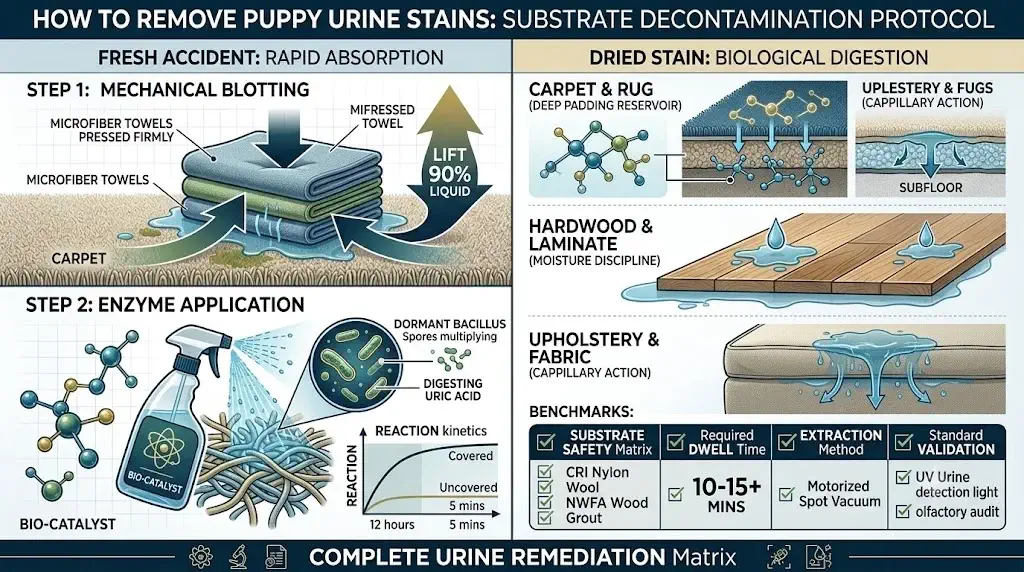
The best way to remove puppy urine stains is to act quickly, absorb as much urine as possible, treat the remaining stain with a surface-compatible cleaner, and let the area dry completely. Fresh urine is usually easier to remove than dried urine, while carpet can be more difficult because liquid may penetrate below the visible surface into open-cell padding. Learning how to remove puppy urine stains requires diagnosing the exact biochemical stage of the mess: fresh liquid demands prompt absorption, while dried deposits require enzymatic breakdown of hardened uric acid salts.
The cleaning method should also depend on the material. Carpet, area rugs, upholstery fabrics, sealed hardwood, laminate planks, and natural stone flooring do not respond to moisture and cleaning chemicals in the same way. Applying saturated carpet cleaners onto finished hardwood risks edge cupping and veneer failure, whereas using abrasive scrub brushes on delicate nylon or wool carpet distorts fiber twists permanently.
For a fresh accident, speed is your biggest operational advantage. For an older stain, you may need to rehydrate and extract the affected area before treating it. The American Kennel Club (AKC) recommends prompt cleanup and thorough odor eradication because remaining urine scent cues trigger instinctual re-marking. Independent 2026 testing confirms that matching chemical action to substrate porosity is the only way to achieve complete decontamination.
Quick Reference Specification: Puppy Urine Stain Removal Matrix
This calibrated mechanical and chemical matrix benchmarks remediation steps, required dwell times, chemical agents, and extraction tools across domestic flooring substrates in 2026.
| Substrate Type | Primary Chemical Catalyst | Optimal Dwell Time | Moisture & Extraction Method | Standard & Authority Protocol |
|---|---|---|---|---|
| Carpet & Rugs | Bio-enzymatic bacterial cultures (Bacillus spores) | 10–15 mins (up to 12 hrs covered) | Microfiber blot or motorized spot extractor | CRI Seal of Approval / AKC Guidelines |
| Sealed Hardwood | Neutral-pH surfactant or wood-safe enzyme mist | 3–5 mins maximum (no pooling) | Immediate dry towel wipe + ambient air fan | NWFA Finish Maintenance Protocol |
| Laminate & Vinyl | Mild surfactant or multi-surface cleaner | 2–5 mins before evaporative wipe | Damp microfiber pad followed by dry cloth | NALFA Moisture Resistance Standard |
| Upholstery Fabric | Low-moisture enzymatic foam cleaner | 10 mins under damp cloth | Downward firm blot; avoid cushion flooding | Furniture Care Code W or WS |
| Washable Bedding | Enzymatic laundry additive (Protease/Lipase) | Full 30–45 min wash cycle | Cold water pre-rinse + high-spin cycle | Consumer Reports Laundry Standard |
Quick Answer: How to Remove Puppy Urine Stains
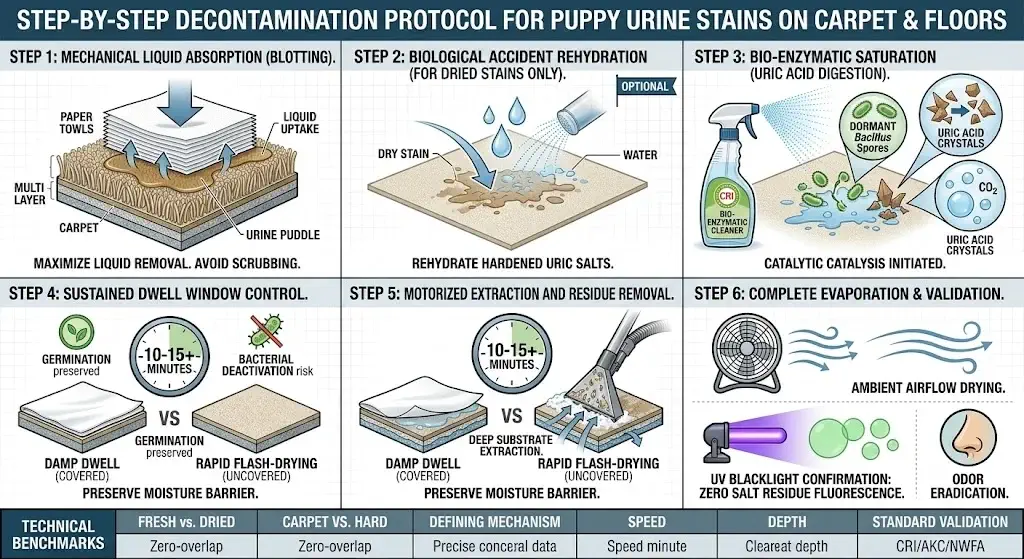
Immediate mechanical blotting combined with bio-enzymatic digestion prevents urine from permanently binding to domestic textile fibers. When determining how to remove puppy urine stains efficiently, execute the following nine-step operational procedure:
- Blot fresh urine immediately: Use clean paper towels to draw liquid upward before it seeps into subflooring.
- Remove as much liquid as possible: Apply firm downward pressure until towels lift dry from the surface.
- Identify the surface: Check whether the accident is on synthetic carpet, natural wool, hardwood, or tile.
- Use a cleaner designed for that surface: Select a verified enzymatic solution for textiles or a pH-neutral spray for wood.
- Follow the product’s recommended contact time: Allow biological enzymes 10 to 15 minutes of dwell moisture to digest urea.
- Blot or extract rather than aggressively scrubbing: Press clean cloths down to absorb dissolved residues without fraying pile.
- Allow the area to dry completely: Maintain room airflow using fans to prevent mold or bacterial growth.
- Inspect the stain and odor after drying: Use ambient light and a UV blacklight to confirm zero salt deposits remain.
- Repeat or use deeper extraction if contamination remains: Deploy a water extraction vacuum if fluid reached the carpet pad.
For puppy urine on carpet, an enzymatic pet-stain cleaner is often a sensible starting point because it is designed to address organic residue. Consumer Reports also recommends enzymatic pet-stain cleaners as one option for pet accidents, while its 2026 testing shows that individual products and cleaning chemistries can perform differently.
What You Need: Complete Urine Decontamination Kit
Standardized cleaning kits require absorbent blotting media, calibrated chemical cleaners, and optional mechanical extractors to resolve indoor pet messes. You can handle most small puppy urine stains with a basic cleanup kit:
- Paper towels or clean absorbent white microfiber towels
- A surface-compatible pet urine cleaner from our tested Best Puppy Accident Cleaners guide
- Clean room-temperature water when the product instructions require it
- A soft-bristle brush or microfiber cloth for gentle agitation
- A wet-dry vacuum or carpet extractor for larger or deeper carpet stains
- Nitrile gloves to maintain hygienic protection during waste cleanup
- A 395nm UV blacklight to identify invisible dried uric salt perimeters
- A sealed trash bag to dispose of contaminated paper products immediately
You do not need to use multiple cleaning chemicals. The priority is choosing the right product for the surface and type of contamination.
How to Remove a Fresh Puppy Urine Stain
Fresh liquid urine exhibits low surface tension and neutral pH, allowing prompt extraction before chemical oxidation bonds pigments to fiber cores. When understanding how to remove puppy urine stains when they first occur, execute this 4-step rapid protocol:
Step 1: Blot Immediately
Place several layers of paper towels or a clean absorbent towel over the wet area. Press down firmly to absorb the liquid. Replace saturated towels and continue until little moisture transfers to the towel. Do not aggressively scrub the urine into the carpet or fabric. Blotting removes liquid; rubbing can spread it across surrounding fibers and damage backing material. AKC recommends absorbing as much fresh urine as possible before treating the remaining stain and odor.
Step 2: Treat the Remaining Stain
Once excess urine has been absorbed, apply an appropriate pet urine cleaner according to the product’s instructions. If you are using an enzyme-based cleaner, do not automatically wipe it away immediately. Enzymatic products can require meaningful contact time, and the exact procedure varies by formula.
Step 3: Blot or Extract
Follow the product directions for removing the cleaner and remaining moisture. For a small spot, clean towels may be sufficient. For a larger carpet accident, mechanical extraction can remove more liquid from the carpet pile and backing.
Step 4: Let It Dry
Allow the area to dry completely before judging the final result. A damp carpet can temporarily smell different from a fully dry carpet, so the final odor assessment should be made after drying.
How to Remove Dried Puppy Urine Stains
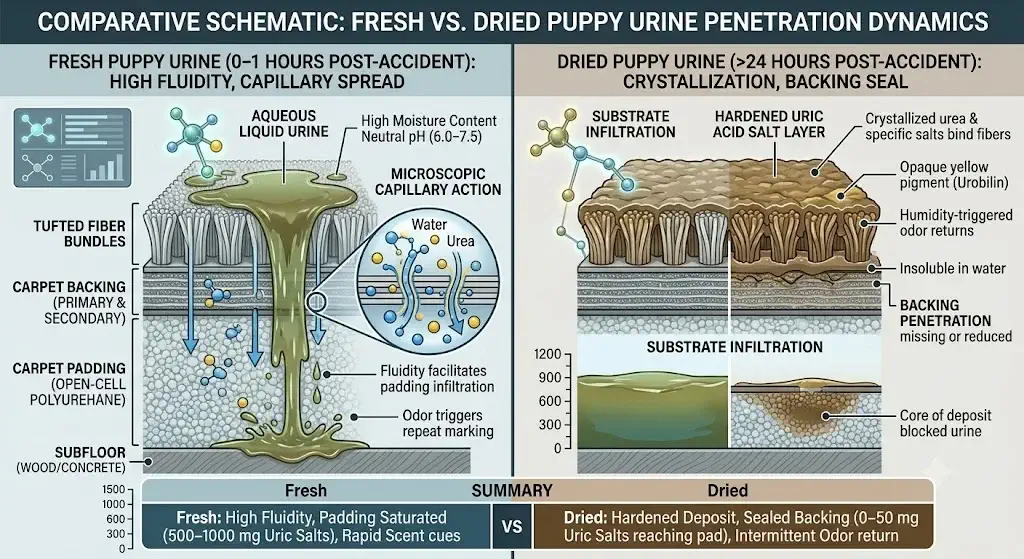
Dried urine undergoes alkaline hydrolysis to form insoluble uric acid crystal salts that require liquid rehydration before enzymatic digestion can occur. When figuring out how to remove puppy urine stains that have already cured, execute this systematic process:
- Locate the full affected area: Use a UV blacklight to illuminate the fluorescent salt perimeter, which is typically larger than visible surface marks.
- Rehydrate the stain: Mist lukewarm (not hot) water lightly over the dry patch to dissolve hardened crystals.
- Extract initial dissolved moisture: Blot firmly with microfiber towels or run a wet extraction vacuum.
- Apply an enzymatic pet-stain cleaner: Saturate the zone generously, allowing fluid to mirror the volume of the original accident.
- Preserve the biological dwell window: Cover the area with a clean damp cloth for 30 to 60 minutes (or up to 12 hours for old yellow stains).
- Blot or extract as directed: Press dry towels down to pull dissolved organic waste out of the backing.
- Let the area dry completely: Maintain room ventilation and inspect again once moisture has fully evaporated.
AKC specifically recommends rehydrating and extracting dried urine from carpet before using an enzymatic cleaner when needed. It also advises avoiding steam cleaners because high thermal heat permanently cooks protein molecules into carpet polymers. Consumer Reports similarly notes that deeper contamination often requires motorized extraction equipment from our Best Carpet Cleaners for Dog Urine benchmark.
How to Remove Puppy Urine Stains From Carpet
Carpet tufts, primary polypropylene backing, and open-cell foam padding form a multi-layered matrix that traps liquid urine beneath the surface. Depending on the size of the spill, follow these two carpet protocols:
Fresh Carpet Stain
- Blot immediately with clean paper towels.
- Continue downward blotting until moisture transfer stops.
- Apply a carpet-compatible urine stain cleaner carrying the CRI Seal of Approval.
- Follow the specified 10-to-15-minute contact dwell time.
- Blot or extract the area using a dry towel or spot vacuum.
- Allow it to dry completely under ambient air circulation.
Large or Deep Carpet Stain
If urine soaked through carpet backing into underlying polyurethane padding, surface spraying alone cannot solve the problem. In those cases, the sub-surface reservoir can be three times wider than the surface spot. Consumer Reports notes that extraction machines are essential for deep messes, using pressurized water rinsing and heavy vacuum suction to lift liquids out of padding.
How to Remove Puppy Urine Stains From a Rug
Area rugs contain delicate natural fibers and vegetable dyes that bleed when exposed to aggressive solvents or excessive alkaline moisture. Follow this careful protocol for area rugs:
- Blot immediately: Absorb fresh liquid from the pile surface.
- Inspect the underside: Flip the rug to check whether urine has soaked through to the floor or rug pad.
- Place a protective moisture barrier underneath: Slide a plastic sheet under the rug to protect hardwood beneath.
- Apply a cleaner approved for rug fibers: Use neutral-pH wool-safe formulas if treating oriental or handmade rugs.
- Allow controlled dwell time: Maintain 5 to 10 minutes of light moisture without soaking the foundation yarns.
- Blot thoroughly and elevate: Lift the rug section onto drying racks to allow airflow to both sides.
Consumer Reports confirms that small pet accidents readily migrate into rug pads, meaning replacing the inexpensive underlay pad is often necessary to eliminate lingering odor completely.
How to Remove Puppy Urine Stains From Hardwood
Hardwood planks absorb aqueous liquid rapidly, causing irreversible black discoloration and edge cupping along tongue-and-groove joints. Wood requires significantly faster moisture control than synthetic carpets:
- Press dry paper towels or microfiber cloths onto the puddle immediately.
- Replace cloths until the wood surface feels dry to touch.
- Use a cleaner specifically formulated for polyurethane or factory-finished wood from our Best Hardwood Floor Cleaners for Pet Urine guide.
- Apply a light spray mist rather than pouring liquid directly over plank seams.
- Wipe away all excess solution within 2 to 3 minutes.
- Allow the floor to dry completely with the aid of a floor fan.
Fresh urine is manageable, but if liquid enters raw wood or open seam joints, black stains from uric acid reacting with wood tannins may require professional sanding and refinishing under NWFA standards.
How to Remove Puppy Urine Stains From Laminate Flooring
Laminate flooring consists of compressed high-density fiberboard (HDF) cores that swell permanently when liquid penetrates edge seams. Exercise strict moisture discipline on laminate:
- Blot the urine puddle immediately using super-absorbent cloths.
- Use a residue-free cleaner approved for laminate by NALFA guidelines.
- Avoid pooling water or leaving wet dwell cloths sitting on joints.
- Wipe away every trace of cleaning moisture within 2 minutes.
- Buff the floor completely dry with a clean microfiber towel.
Never apply high-moisture enzyme soaking protocols intended for carpets onto laminate planks, as moisture absorption will cause irrecoverable seam crowning.
How to Remove Puppy Urine Stains From Upholstery
Upholstery fabrics conceal dense polyurethane foam cushions that draw pet urine deep into the furniture core through capillary action. Check the furniture cleaning code (W, S, WS, or X) before starting:
- Blot the fabric surface firmly with white cloths to lift moisture.
- Avoid aggressive rubbing that can pill or stretch delicate woven fibers.
- Apply a fabric-compatible pet urine foam cleaner to limit liquid volume.
- Allow the active foam to dwell for 10 minutes according to label instructions.
- Press dry towels down with substantial body weight to extract fluid from the cushion.
- Direct a portable fan toward the cushion to expedite complete internal evaporation.
If the cushion retains a strong ammonia odor after surface treatment, the contamination has penetrated the inner foam core, requiring sub-surface extraction or cushion core replacement.
How to Remove Puppy Urine Stains From Bedding
Removable pet bedding allows complete fabric immersion, enabling enzymatic laundry detergents to break down embedded biological waste during wash cycles. Laundering washable items requires this procedure:
- Rinse excess urine under cold running water before placing in the washing machine.
- Check the manufacturer care tag for maximum temperature limits.
- Add an enzymatic laundry detergent containing active proteases and lipases.
- Run a complete wash cycle using cold or warm water (avoid boiling heat).
- Tumble dry on low heat or line dry naturally outdoors.
- Confirm complete odor eradication before placing bedding back into the puppy crate.
Consumer Reports specifically recommends enzymatic laundry formulations for washable textiles, warning that ordinary detergents leave microscopic uric crystals bound to fabric weaves.
Should You Use an Enzyme Cleaner for Puppy Urine?
Enzyme cleaners represent the gold standard for biological pet urine decontamination because they catalyze the molecular breakdown of uric acid. When considering how to remove puppy urine stains permanently, bio-enzymes convert organic soils into inert water and carbon dioxide.
The American Kennel Club (AKC) strongly advises pet owners to deploy enzymatic formulations for thorough scent removal. However, not all products perform identically. Consumer Reports’ 2026 laboratory testing demonstrates that while enzymes excel at destroying hidden odor compounds, certain high-potency non-enzyme oxidizers can lift surface stains faster. For an in-depth biochemical breakdown of mechanisms, explore our guide on Enzyme Cleaner vs Regular Pet Cleaner.
How Long Should You Leave an Enzyme Cleaner on Puppy Urine?
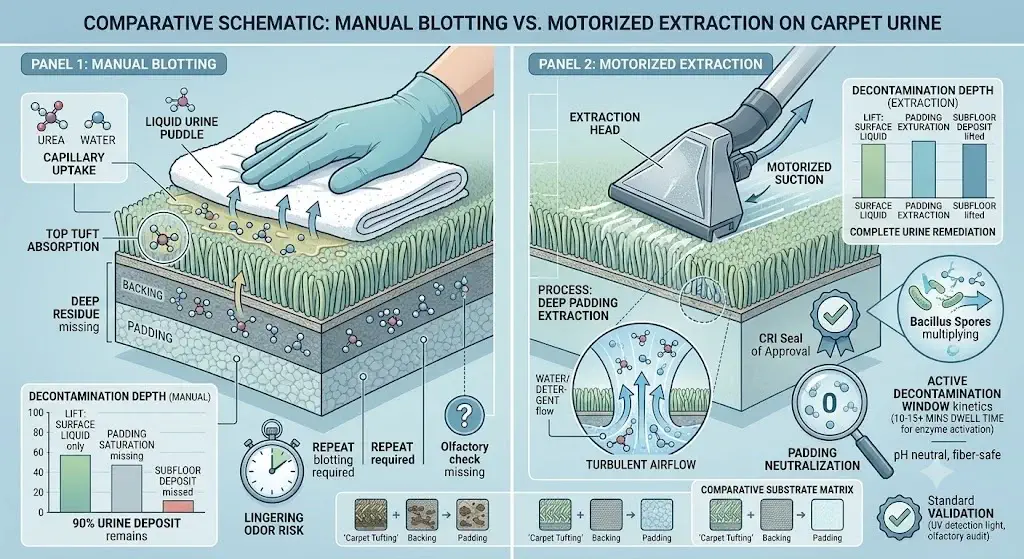
Biological enzyme cultures require sustained moisture contact for 10 to 15 minutes minimum to metabolize dense protein deposits. There is no single universal dwell time applicable to every cleaning scenario.
For fresh surface dribbles, a 10-to-15-minute dwell window is sufficient before blotting. For severe dried urine stains that have hardened into carpet backing, covering the treated area with a damp microfiber cloth for 8 to 12 hours maintains the moisture level needed for Bacillus spores to complete biological digestion. Always follow manufacturer instructions on our vetted Best Enzyme Cleaners for Puppy Urine to avoid premature evaporation.
Why Does the Puppy Urine Stain Keep Coming Back?
Hygroscopic uric acid salts absorb ambient moisture from indoor air, generating recurring ammonia odors long after surfaces dry. If yellow marks or pungent scents reappear weeks after cleaning, common causes include:
- Urine soaked downward into porous carpet padding, creating an untreated sub-surface reservoir.
- Capillary action wicked dried urine residues from backing back up to the fiber tips during drying.
- The cleaning solution was blotted away prematurely before enzymes could digest the crystal core.
- The liquid expanded horizontally underneath the carpet, spreading twice as wide as the surface stain.
- A quaternary disinfectant or acidic home remedy was applied previously, killing active enzyme bacteria.
- The puppy repeatedly marked the same territorial boundary.
To eliminate lingering airborne odors throughout living areas, consult our dedicated Best Puppy Odor Eliminators review.
How to Remove the Yellow Color From Puppy Urine
Urobilin bile pigments bond to synthetic textile dye sites, requiring oxidizing chemical agents to bleach yellow stains. Removing visual yellow discoloration is an aesthetic challenge distinct from odor digestion.
A cleaner may successfully eliminate ammonia scent while leaving a visible yellow mark, or bleach the stain while leaving uric crystals behind. To resolve both problems: first apply an enzymatic cleaner to digest the biological uric crystals, allow it to dry, and then treat any lingering yellow urobilin discoloration with a mild, carpet-safe hydrogen peroxide solution.
What Not to Do When Removing Puppy Urine Stains
Incorrect cleaning techniques cause irreversible fiber distortion and chemically bond pet urine odors into household textiles. Avoid these critical maintenance errors:
Don’t Scrub Aggressively
Aggressive scrubbing untwists carpet pile yarns and forces liquid contamination deeper into backing.
Don’t Use Steam on Urine-Contaminated Carpet
The AKC warns that thermal heat from steam mops permanently binds animal protein chains into synthetic carpet fibers.
Don’t Flood Hardwood Flooring
Excessive moisture causes plank expansion, buckling, and finish separation along wood seams.
Don’t Mix Cleaning Chemicals
Combining ammonia, vinegar, bleach, or enzyme cleaners produces toxic fumes and renders biological enzymes useless.
Don’t Assume Perfume Means Clean
Synthetic fragrances temporarily mask volatile malodors while underlying bacteria continue generating ammonia gas.
Can Vinegar, Baking Soda, or Bleach Remove Puppy Urine Stains?
Common household chemicals fail to hydrolyze insoluble uric acid crystals and can trigger renewed canine territorial marking. Here is what laboratory evaluations show regarding home remedies:
| Household Remedy | Chemical Efficacy | Potential Risks & Verdict |
|---|---|---|
| Distilled White Vinegar | Temporary acid neutralization | Consumer Reports warns strong smells can trigger repeat territorial marking |
| Baking Soda (Sodium Bicarbonate) | Light surface odor absorption | Cannot reach padding; creates a gummy paste when mixed with wet urine |
| Chlorine Bleach | Harsh surface oxidizer | Dangerous: Releases toxic chloramine gas when mixed with urine ammonia; strips carpet dyes |
How to Prevent Puppy Urine Stains From Becoming Repeat Spots
Rigorous scent eradication combined with predictable outdoor elimination schedules stops puppies from re-soiling the same indoor spots. Once the physical stain is removed, reinforce training fundamentals:
- Take the puppy outside at scheduled intervals matching their age (typically every 1–2 hours).
- Escort the puppy outdoors immediately after waking, eating, and vigorous play.
- Supervise closely inside the home using playpens or umbilical leashes.
- Reward successful outdoor elimination within 3 seconds using high-value treats.
- Restrict unsupervised access to previously soiled carpeted rooms.
- Eradicate residual pheromone scent trails using certified bio-enzymes.
When to Call a Professional Carpet Cleaner
Commercial hot-water extraction and sub-surface vacuum claws become necessary when repeated accidents penetrate subfloors. Call a certified professional remediation service when:
- Urine has repeatedly saturated the same area over several weeks.
- The smell persists despite multiple enzymatic treatments and complete drying.
- Fluid has wicked into the plywood or concrete subfloor beneath the carpet pad.
- Delicate antique wool rugs or silk fabrics require specialized immersion washing.
The AKC recommends professional cleaning when persistent odor remains after thorough DIY treatment or when multiple deep stains cover broad square footage.
Frequently Asked Questions (FAQ)
What is the fastest way to remove a puppy urine stain?
How do I remove puppy urine stains from carpet?
How do I remove dried puppy urine from carpet?
Will an enzyme cleaner remove puppy urine stains?
Why does my puppy urine stain smell after cleaning?
Can I use vinegar to remove puppy urine stains?
Can baking soda remove puppy urine?
Can I use bleach on puppy urine?
Can I steam clean puppy urine from carpet?
How do I remove puppy urine from hardwood?
How do I remove puppy urine from a rug?
How do I remove puppy urine from upholstery?
Why does my puppy keep peeing in the same spot?
When should I replace carpet after puppy urine?
When should I call a professional cleaner?
Bottom Line: Treat the Contamination, Not Just the Smell
The key to learning how to remove puppy urine stains is to treat the underlying biological contamination rather than simply masking the odor with synthetic fragrance. Fresh accidents must be blotted immediately to halt liquid migration into sub-layers. Dried carpet stains require controlled rehydration and enzymatic dwelling to break down hardened uric acid crystals.
For hardwood and laminate floors, strict moisture control is essential to prevent edge cupping, while deep carpet contamination necessitates motorized extraction. Blot quickly, treat the correct surface, give the cleaner adequate dwell time, extract thoroughly, and let the substrate dry completely. This disciplined protocol preserves your home flooring investment while establishing a clean foundation for successful puppy housebreaking.
